Heard but not seen: The White-browed Gibbon

[Something warm and cuddly hanging from a tree, as Christmas approaches!]

Of all the apes, gibbons are the hardest to see but the easiest to hear: listen to this troop calling, and imagine hearing it deep in the forest:

Seeing them is another matter.

We were at the Hoolock Gibbon Sanctuary two hours east of Kaziranga, which has a stable and even  increasing population of White-browed Gibbons, more properly known as Western Hoolock Gibbons, Bunopithecus hoolock.

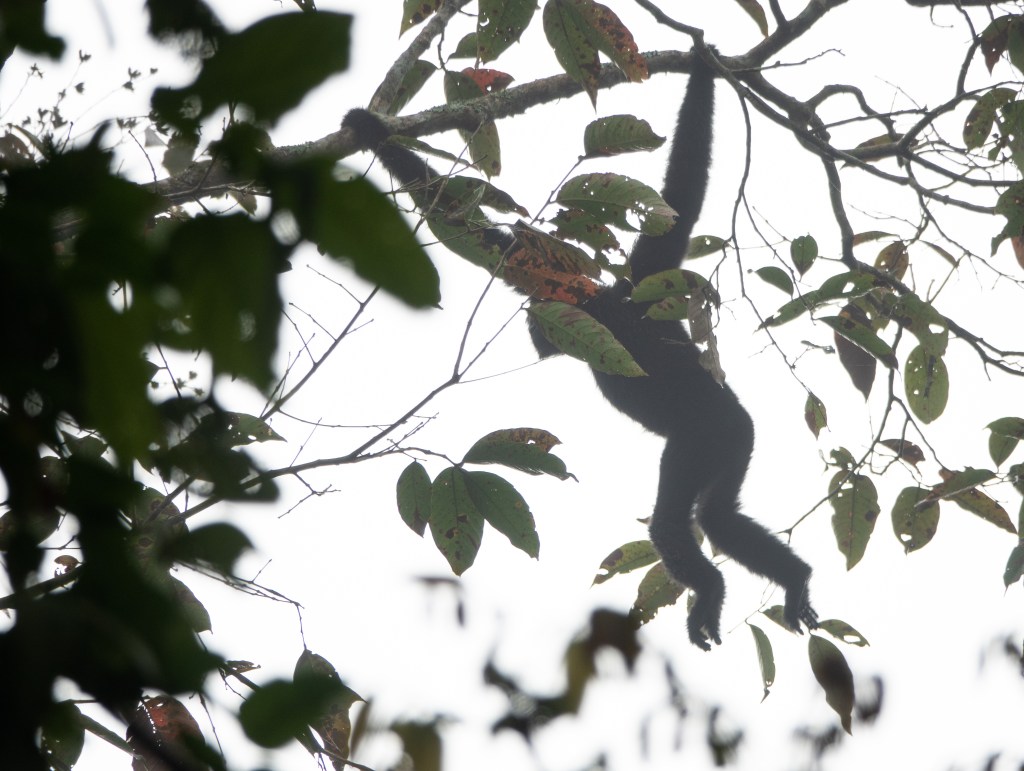
They move around high in the canopy, brachiating*:
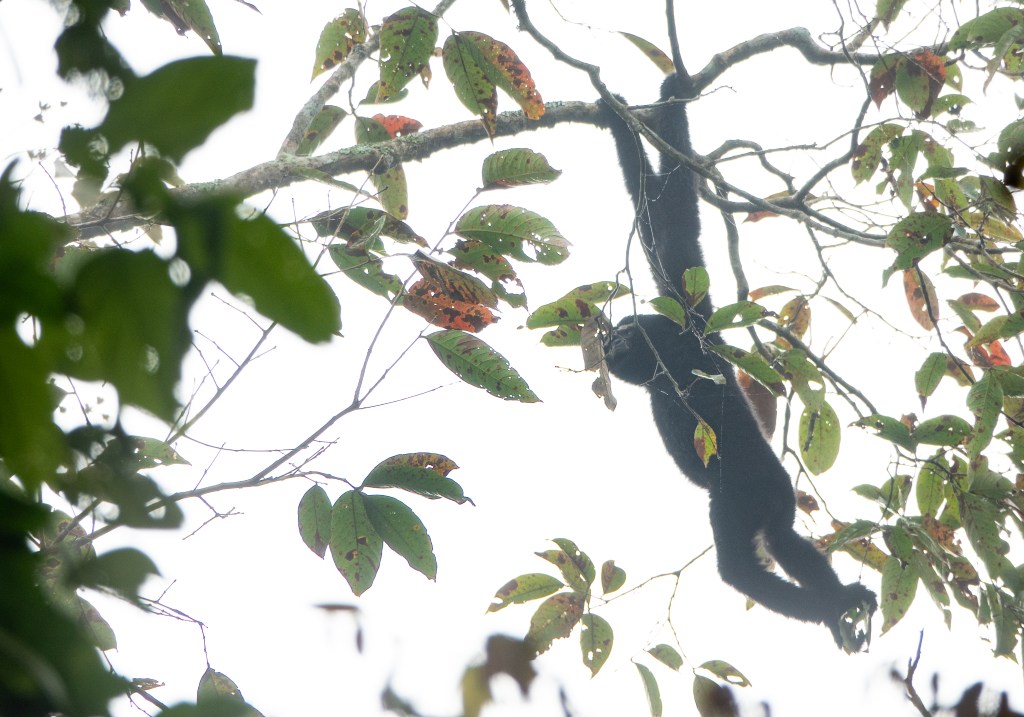
 

But getting a clear view let alone a close-up is hard. This is either a male or a juvenile: both are black with dramatic white eyebrows, just visible in this photo, most of which is a picture of his/her bottom.
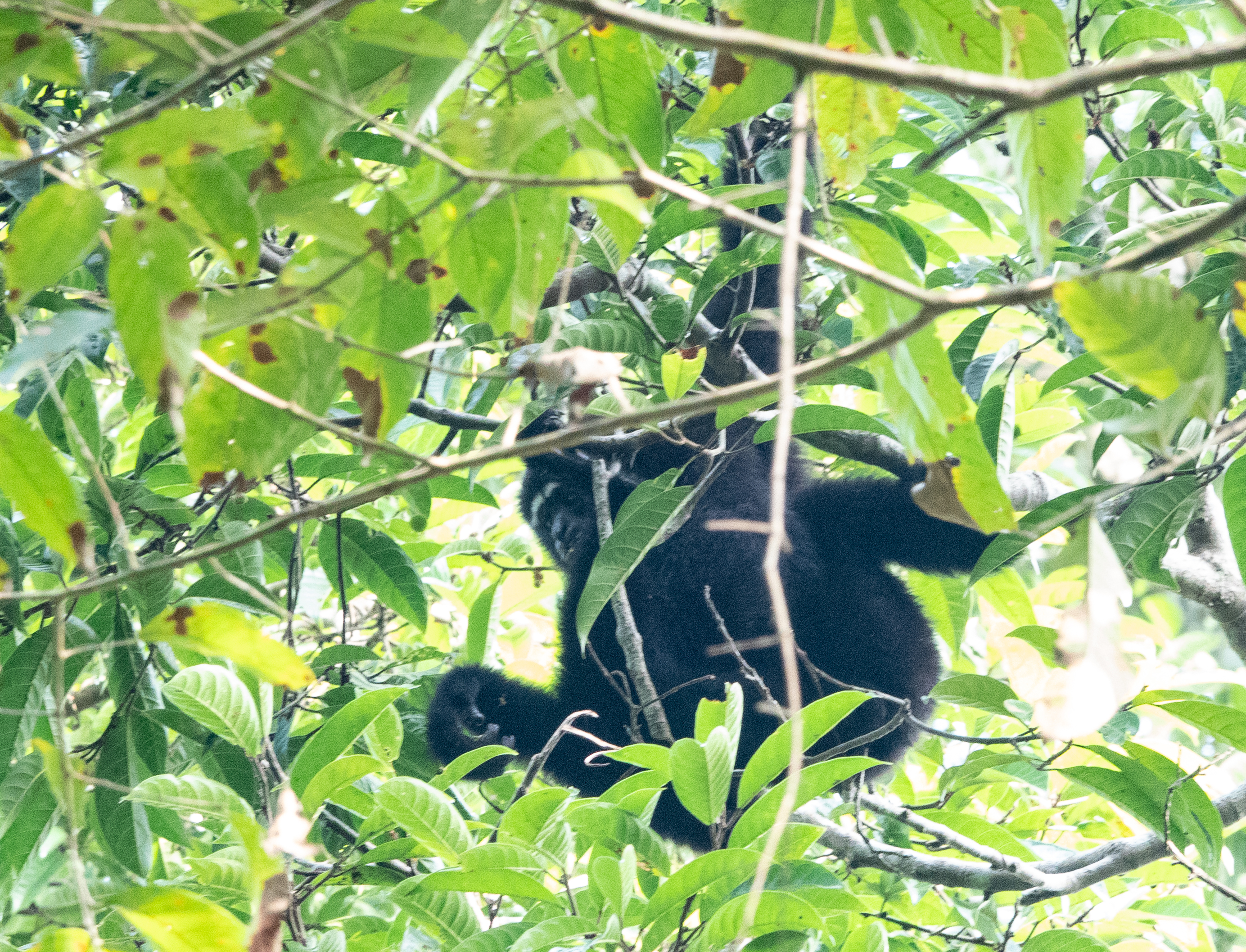
Western Hoolock Gibbon

But every now and then you get lucky: look at the astonishing length of those arms.
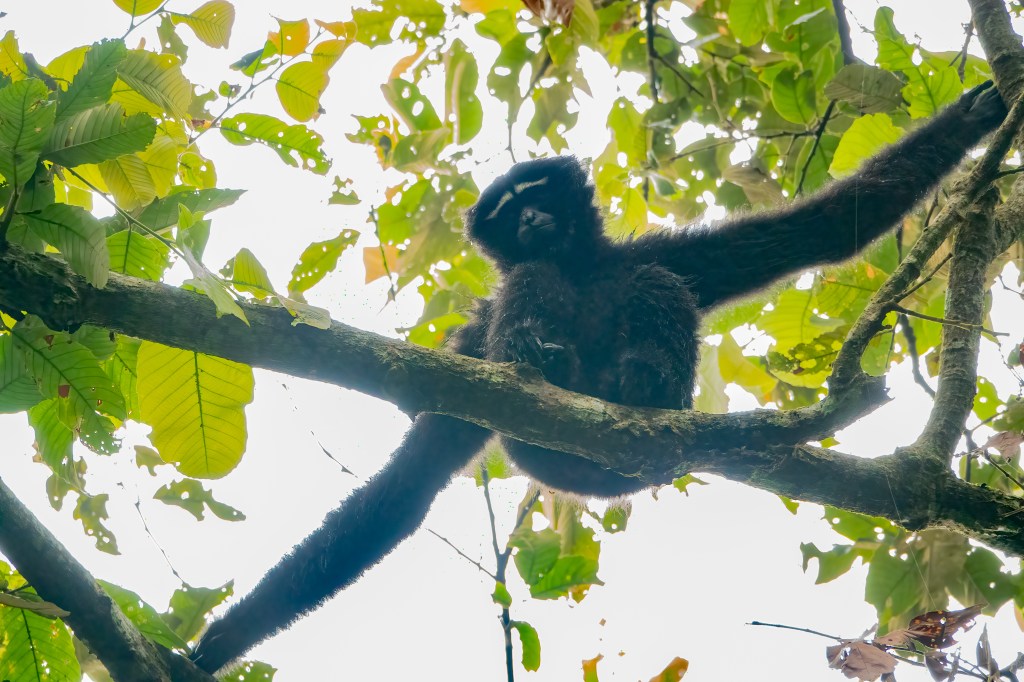
Their arms are almost twice as long as their legs, and when they descend to the ground (rarely) they have to hold their arms above their heads. On the ground, they are about a meter tall, the height of a small child.

The mature females are naturally blonde (so teenage gibbon girls don’t need peroxide) , and note the bulging biceps that come from doing chin-ups all day long:

Western Hoolock Gibbon

Here is a closeup of the female and baby:
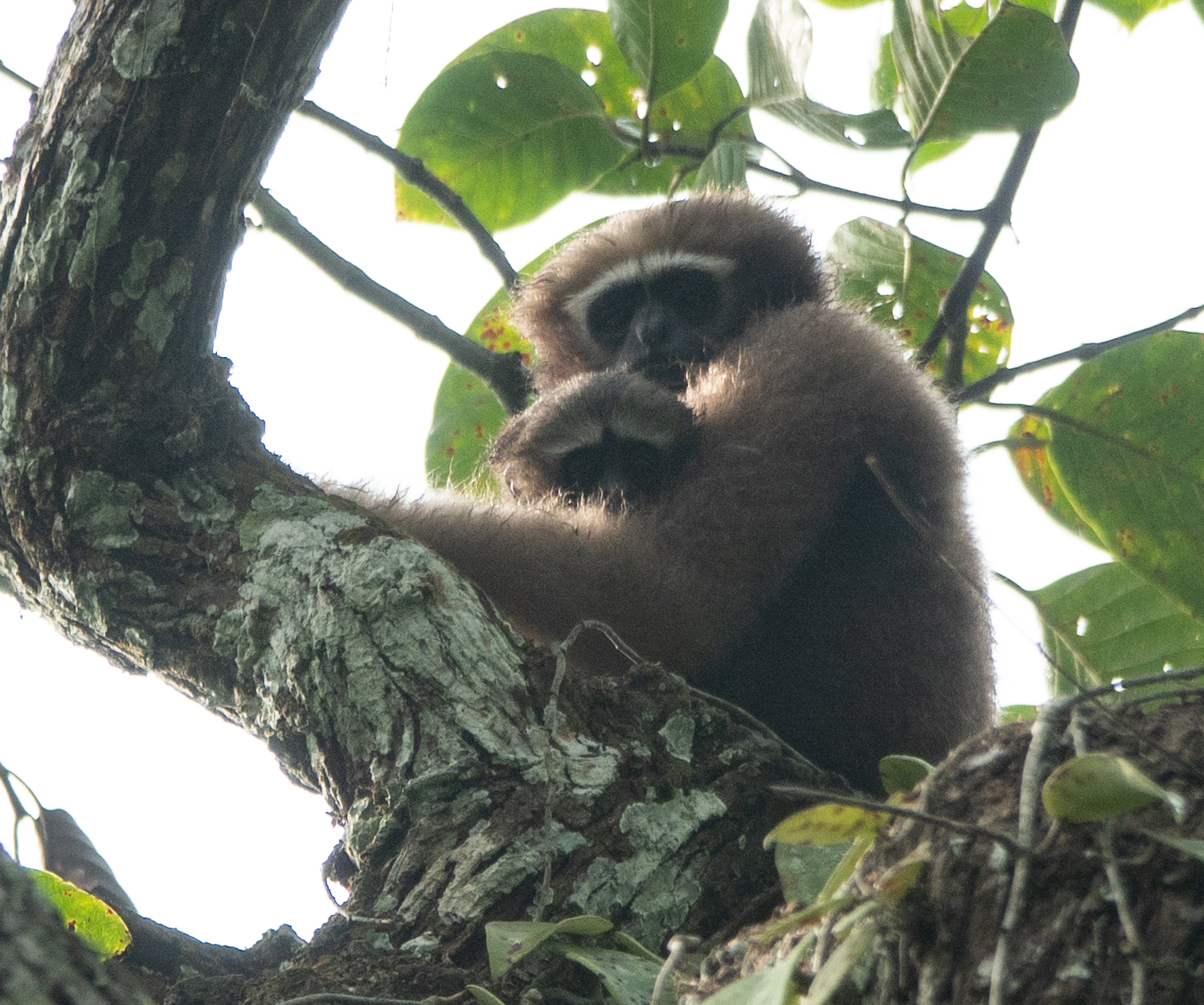
Western Hoolock Gibbon

Hoolock gibbons are thought to mate for life, and a family group has an adult pair and 1-4 juveniles of varying ages. They are considered endangered, numbering around 100,000 globally, and 90% of those are in Myanmar. Their population has fallen by about 50% over the last 40 years (three generations), largely due to habitat loss, and this decline is forecast to continue.

*Brachiating is using only your arms to move around, like a gymnast on the horizontal bar.

PS: Apes, unlike monkeys, have no tails. Gibbons are Lesser Apes, as opposed to the chimps, bonobos, orangutans, gorillas, and humans, all of which are Great Apes, aka Hominids.
Swamped

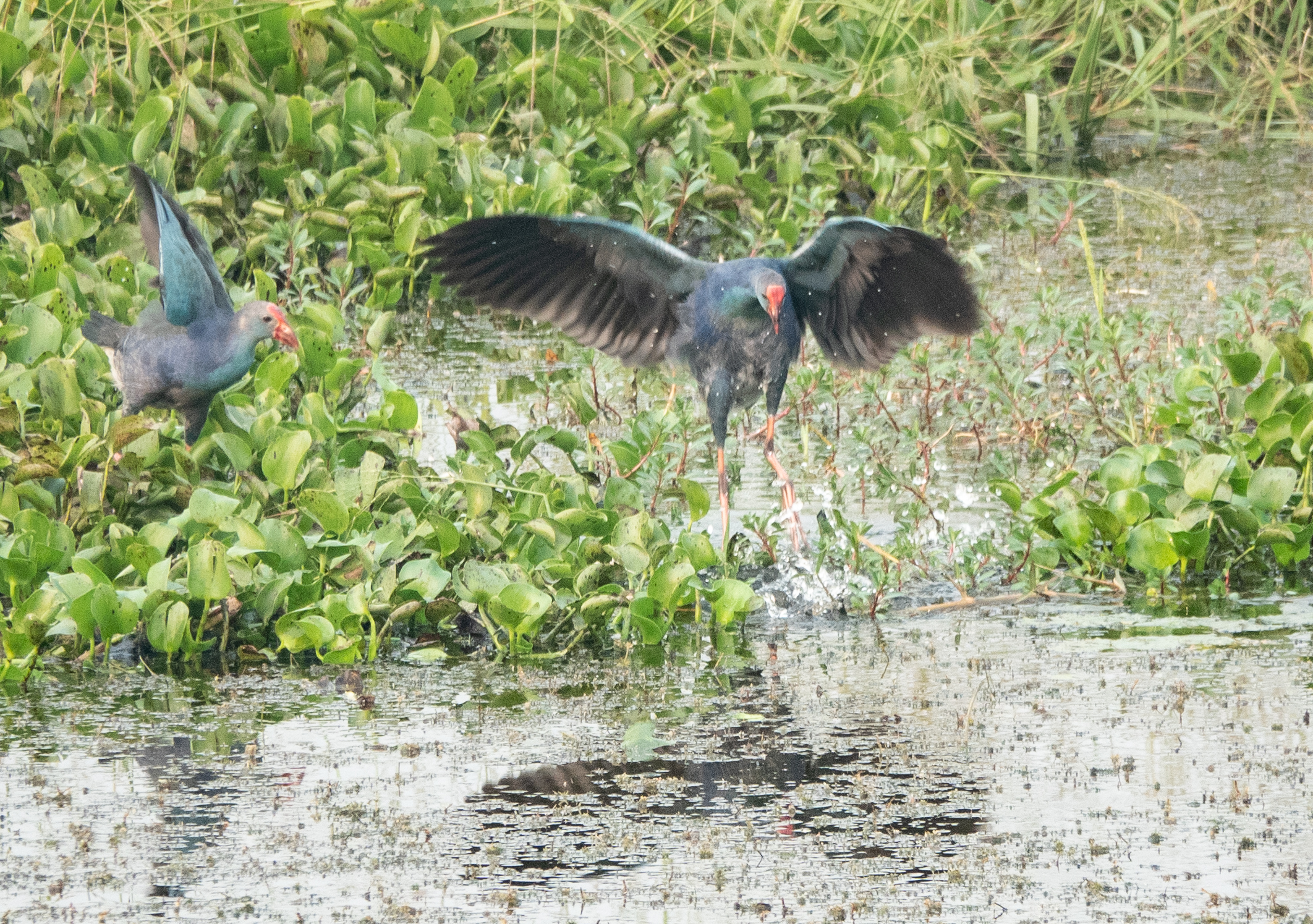
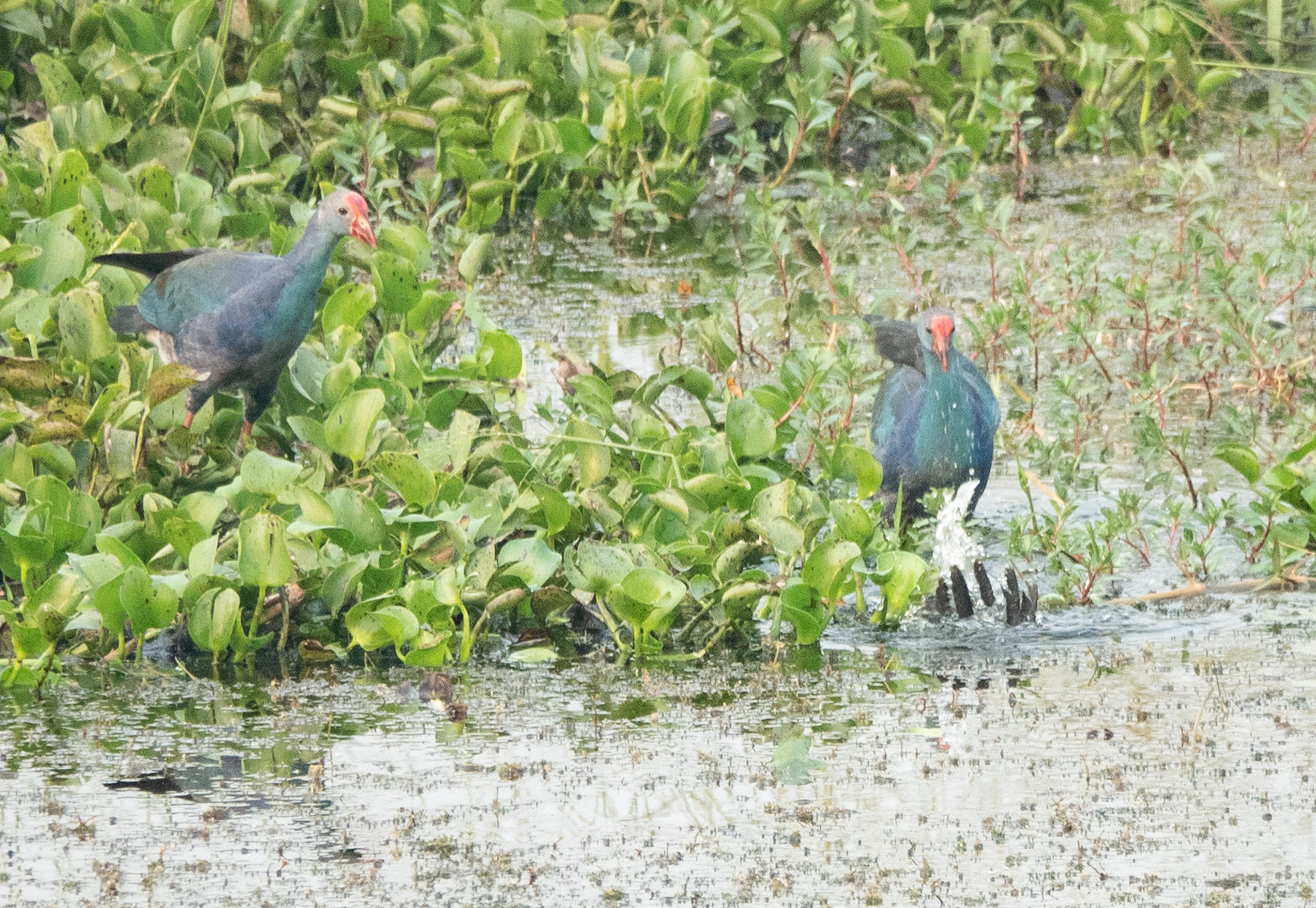
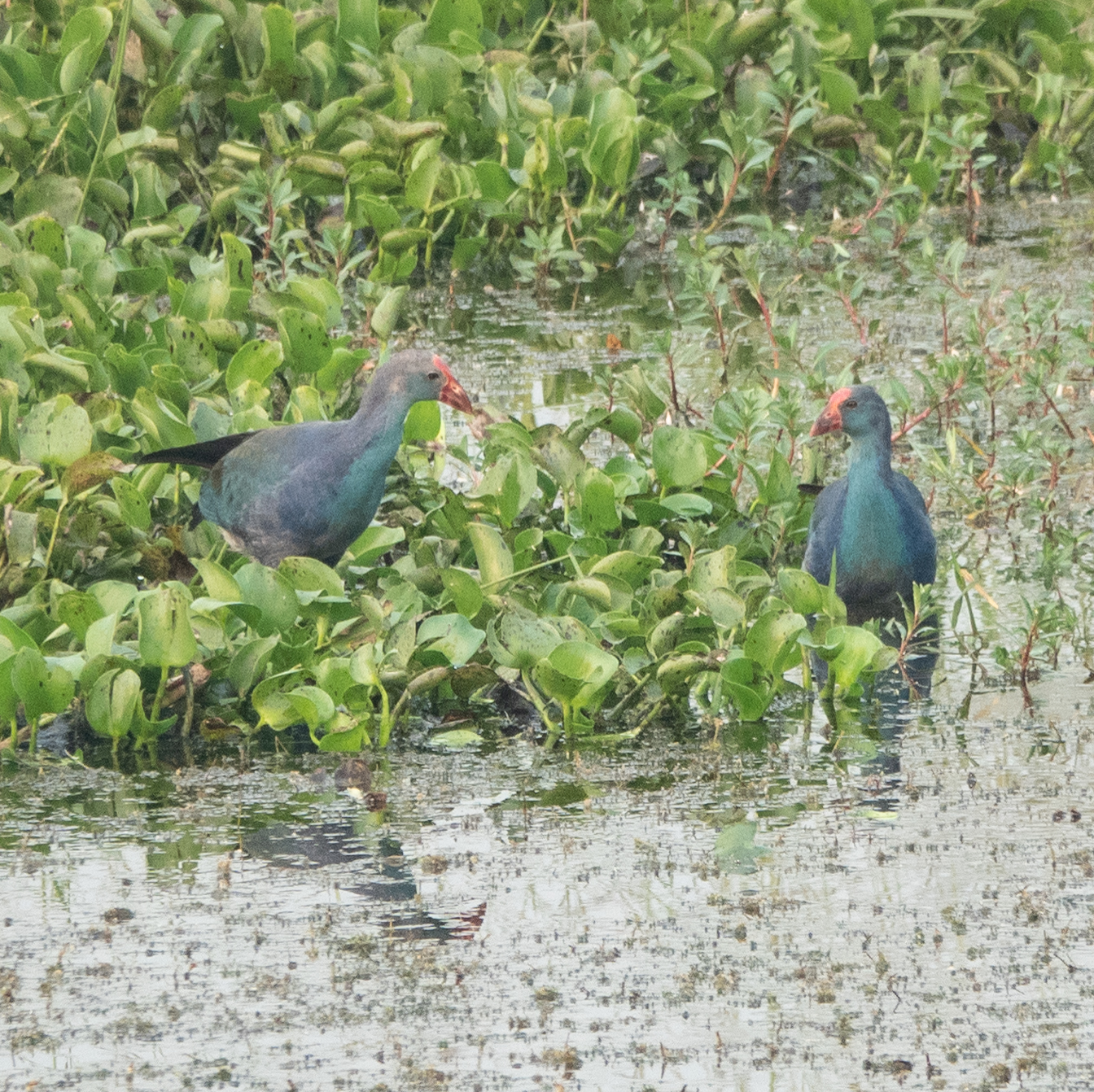
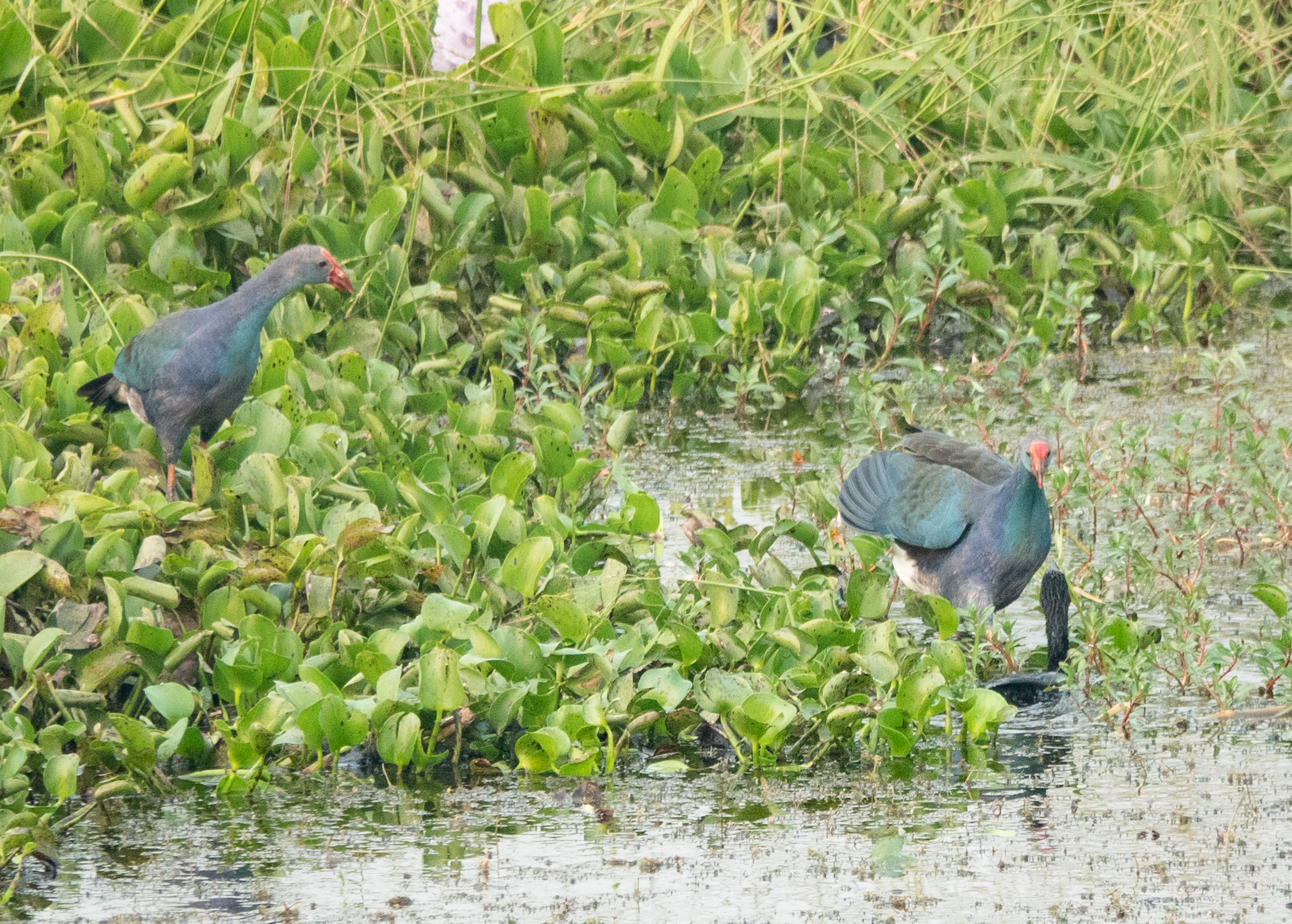
Grey-headed Swamphens Porphyrio poliocephalus are a species of Purple Swamphen found from the Middle East through Nepal and India to Northern Thailand. In the 1990’s some got loose in southern Florida, where they are now established. They are a sort of rail, and wade around in marshes and shallow ponds. Their bill is bright red, very large, with a shield on top that covers part of the head.

DSC09441

These ones must I think have been nesting, because a cormorant came near (right foreground), and they attacked it fiercely:

Purple Swamphens, attacking cormorant

One of the swamphens kicked and pecked it:

Purple Swamphens, attacking cormorant

And eventually they fully submerged it, or perhaps it dived and fled:

Purple Swamphens, attacking cormorant

Either way, Swamphens 1 Cormorant 0.

Bird substitutes

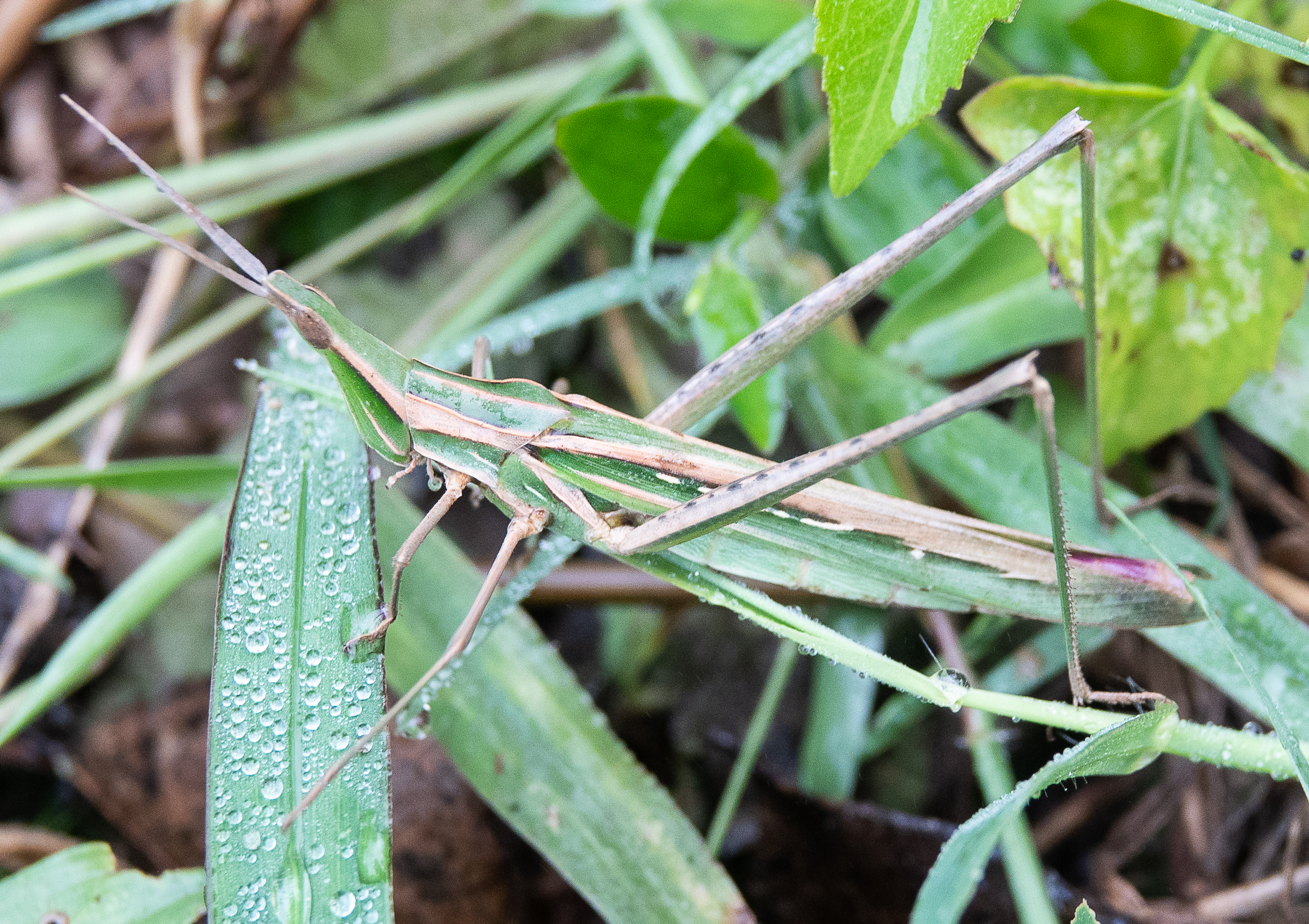
My two travel companions are birders, so one morning at around 6.30am I found myself standing in Chitwan, in the wet reeds, in the mist, trying and failing to see various very small birds. So I wandered around looking for other interesting things. First, the aptly named Toothpick Grasshopper (our guide’s name for it; I think it is a member of Atractomorpha, which means ‘arrowhead’):

Toothpick Grasshopper

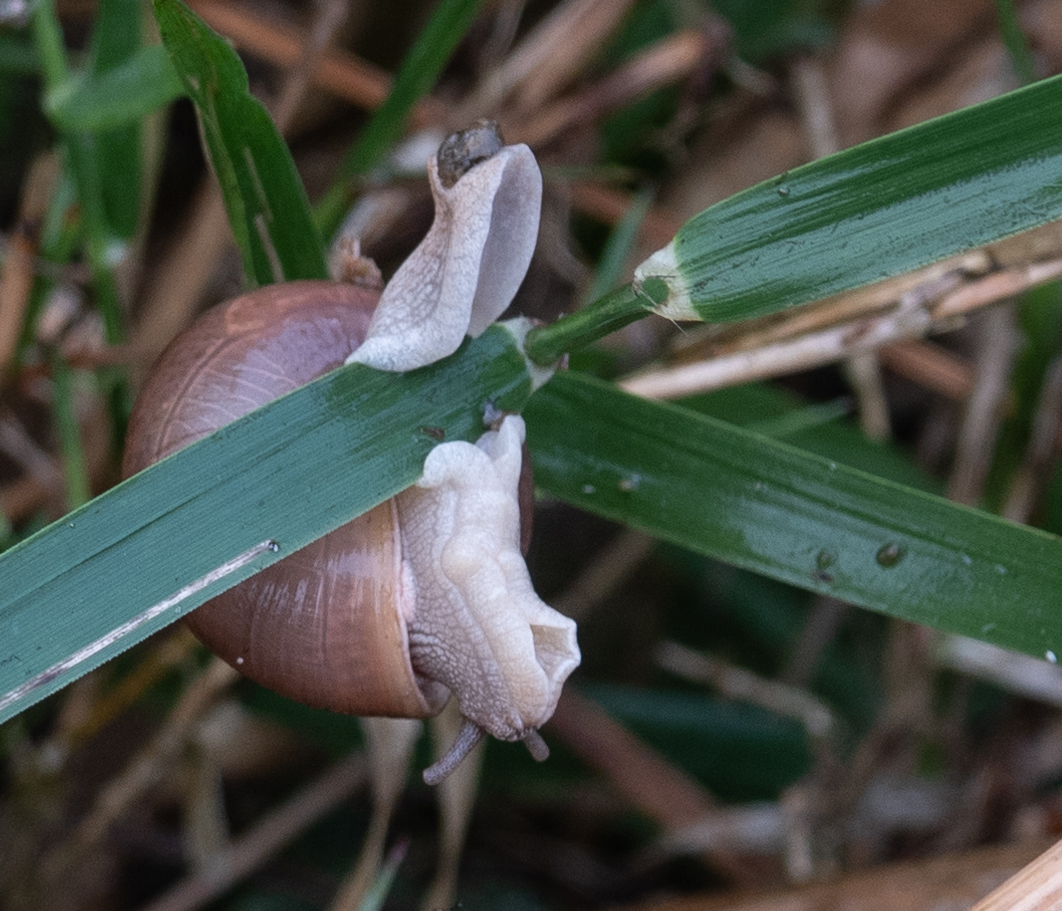
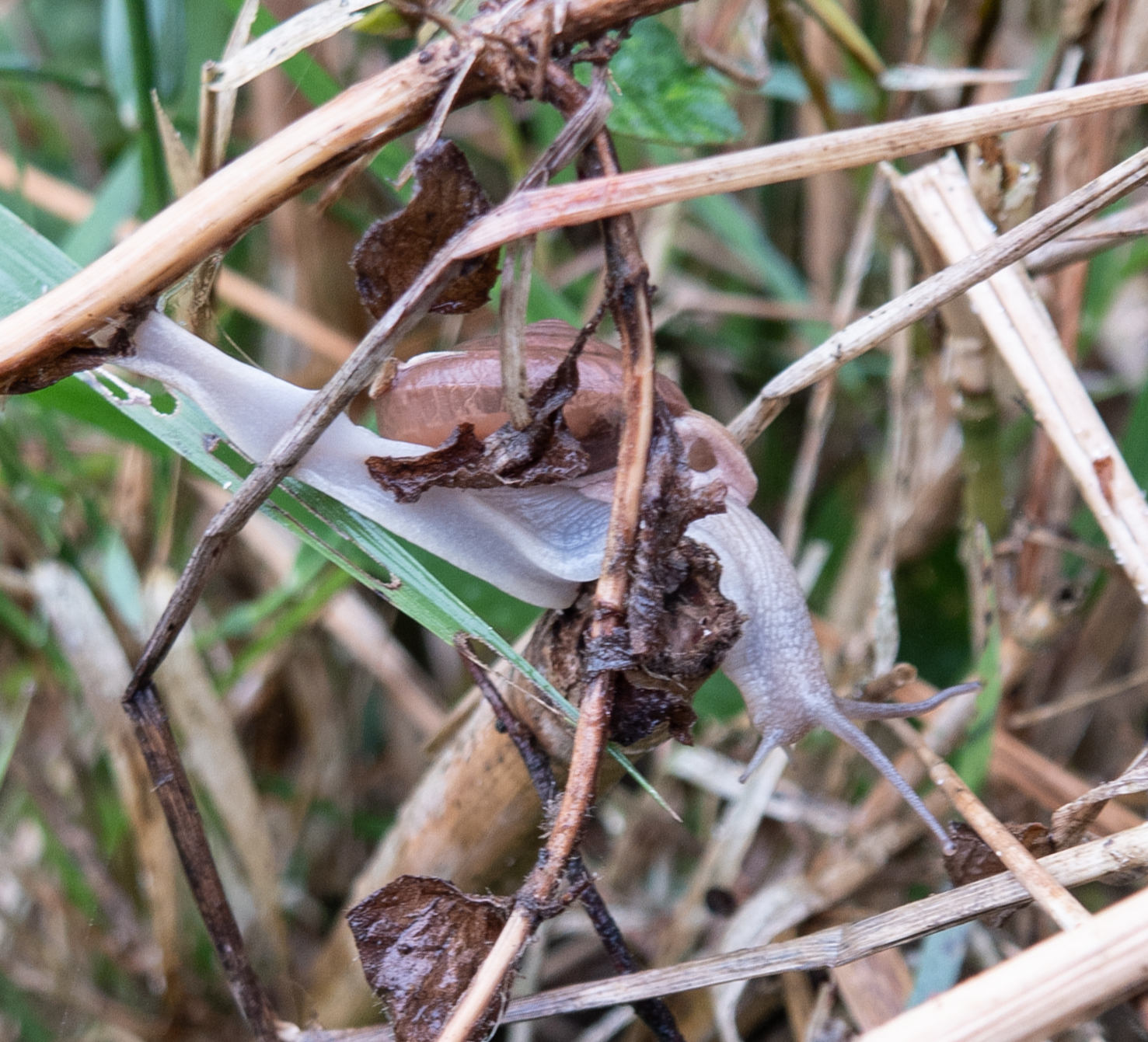
And then, a small snail on a blade of grass. It turns out that if you watch a snail for 18 minutes and 30 seconds, it reveals itself to be a remarkably agile mountaineer. It started wrapped around one blade of grass:

Snail

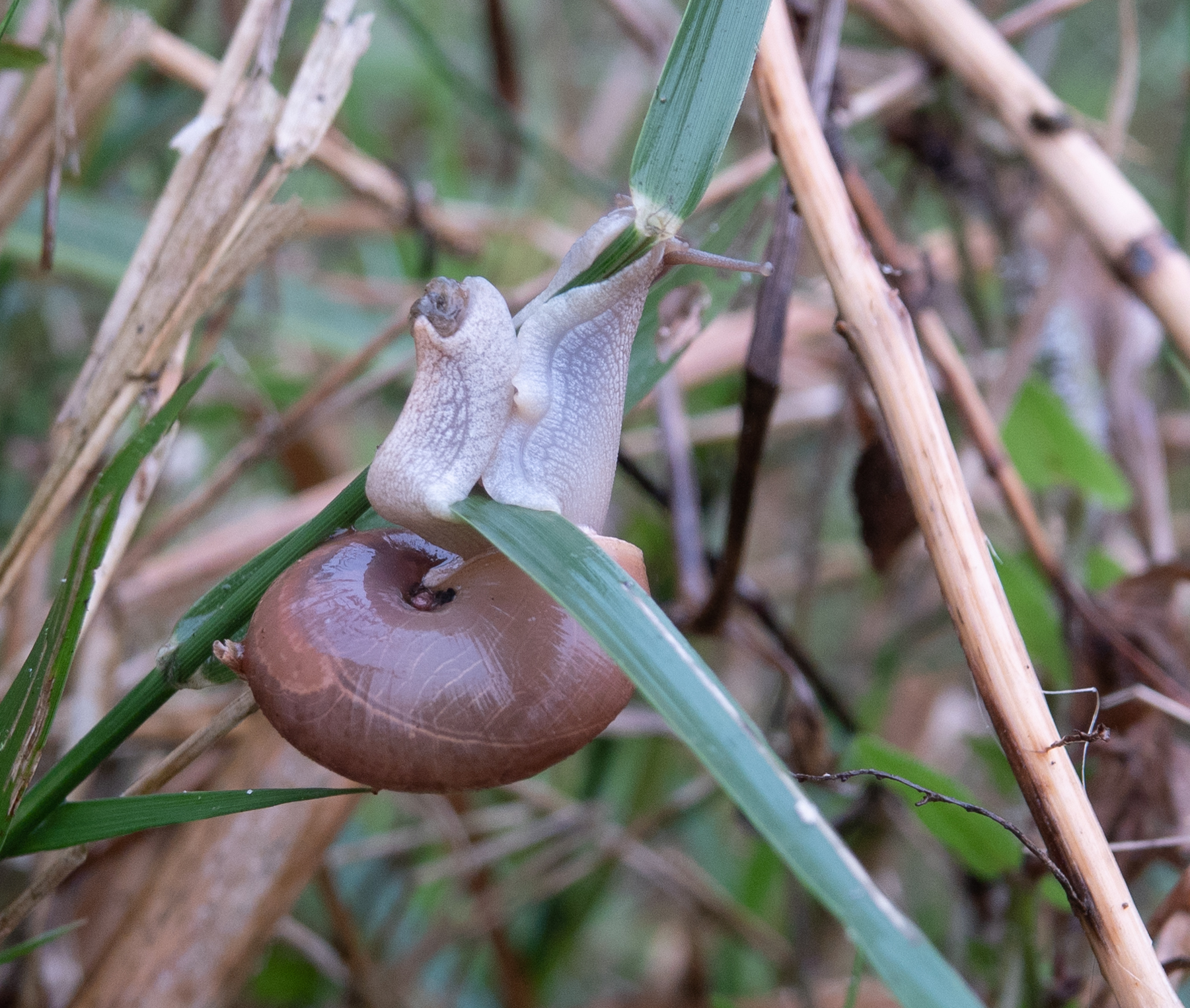
and then moved sideways to an adjacent one, without letting go of the first..

Snail

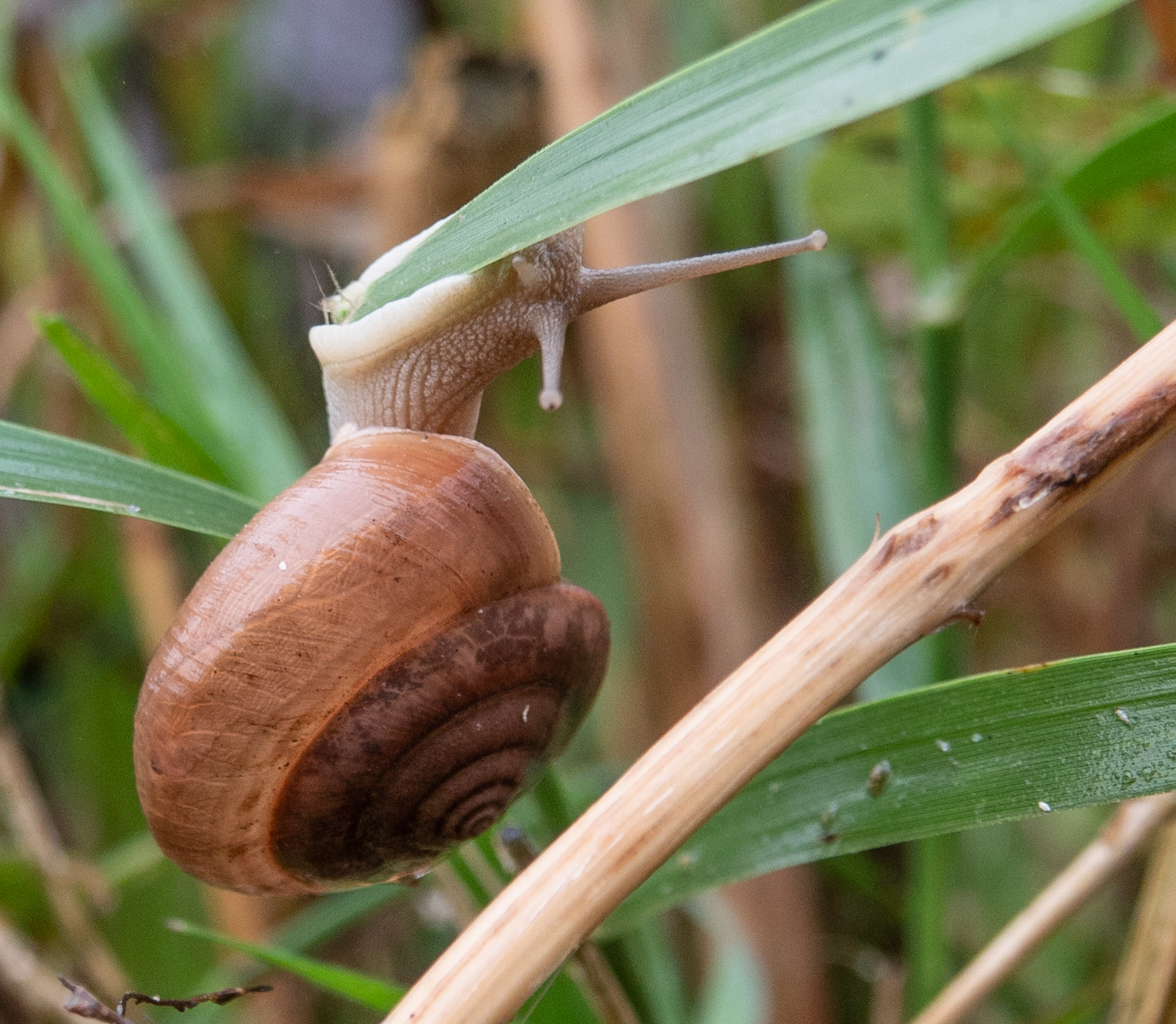
Next it fully committed to a single blade:

Snail

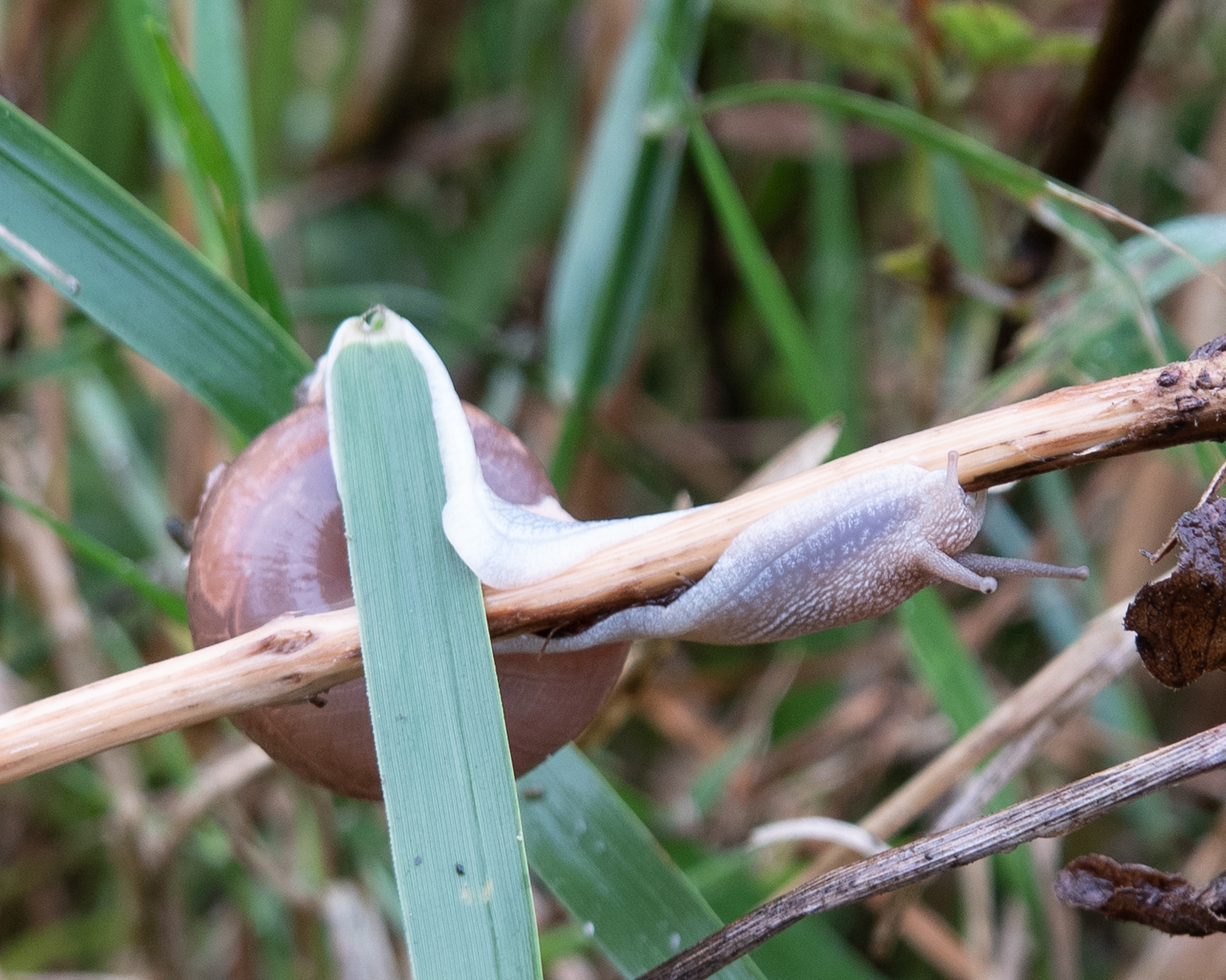
I was then distracted by an elephant (which is much easier to see than a bird), and when I returned my gaze to the snail it had lunged sideways onto the dried stalk next door, stretching its body so it could still stay attached to the safety of its launching pad.

Snail

In this last shot, the dead leaves rather mess up the view, but if you look carefully you can get a good idea of how elongated the snail can be at full stretch, with its rear end still attached to that dried stalk in the previous photo, and its shell carefully balanced halfway along:

Snail

In that 18 minutes it traveled about six inches, which by my calculations is an average speed of 20 inches per hour, or about .000031 mph.

Why would anyone watch birds when there are snails to be had?

Rhinoceri* Part III: combat?

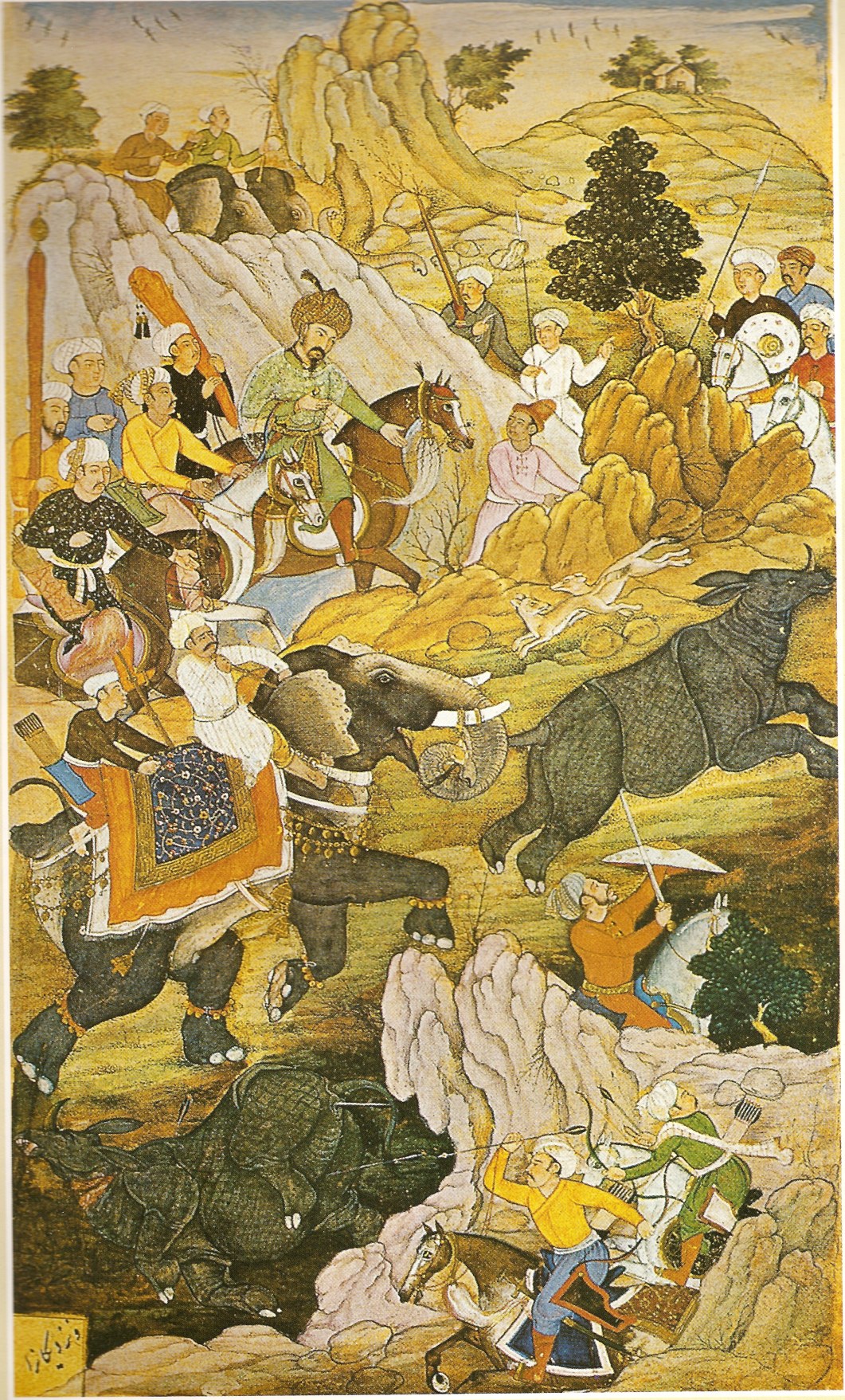
One-horned rhinos look fearsome, and Mughal emperors used to stage gladiatorial combats between rhinos and elephants., which the rhinos often won. Of course, first you had to catch your rhino. In 1525 the Emperor Babur wanted to show his young son Humayun his first rhino, and this painting records the event. The rhino apparently retreated.

RhinoHuntBabur

In Chitwan our elephant was distinctly leary of the rhino, and kept her distance.

The rhino’s horn is not designed for fighting, instead they use their fearsome incisor teeth, two of which can just be glimpsed here:

DSC00272

The male’s teeth grow up to 8cm (3in) long; this was the best view I could get of a full-length tooth!

DSC00274

The teeth can inflict wounds even through their apparently impregnable 4cm-thick skin:

DSC06358

Just a scratch when you weigh 2.75 tons.

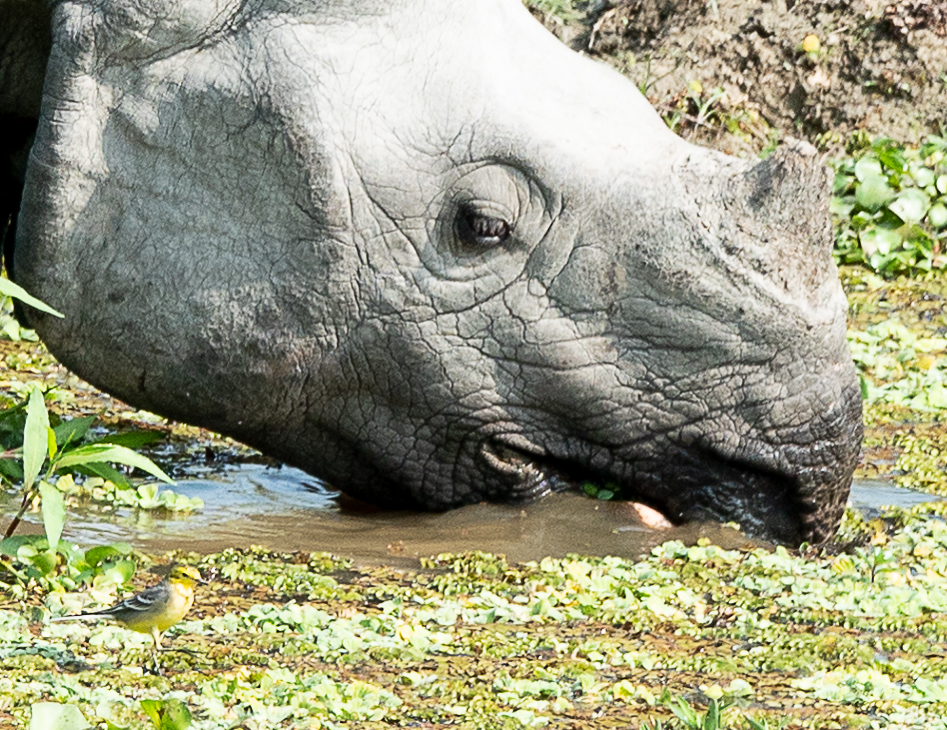
I think I have run out of interesting rhino photos and facts: mostly they just graze like very large peaceful tanks, and the nearby birds and animals carry on with life next to them without fear: look closely and you will see an unconcerned Citrine Wagtail in the foreground of this photo:

rhino, citrine wagtail

*The plural of rhinoceros is matter of dispute in some quarters, and might make for a good pub-quiz question. Options include rhinoceros, rhinoceroses, rhinoceri, rhinoceroi, and rhinocerotes. Spellcheck only likes rhinoceroses! My usual solution is to duck the issue and say rhinos.


Rhinoceros unicornis Part II: Little ones

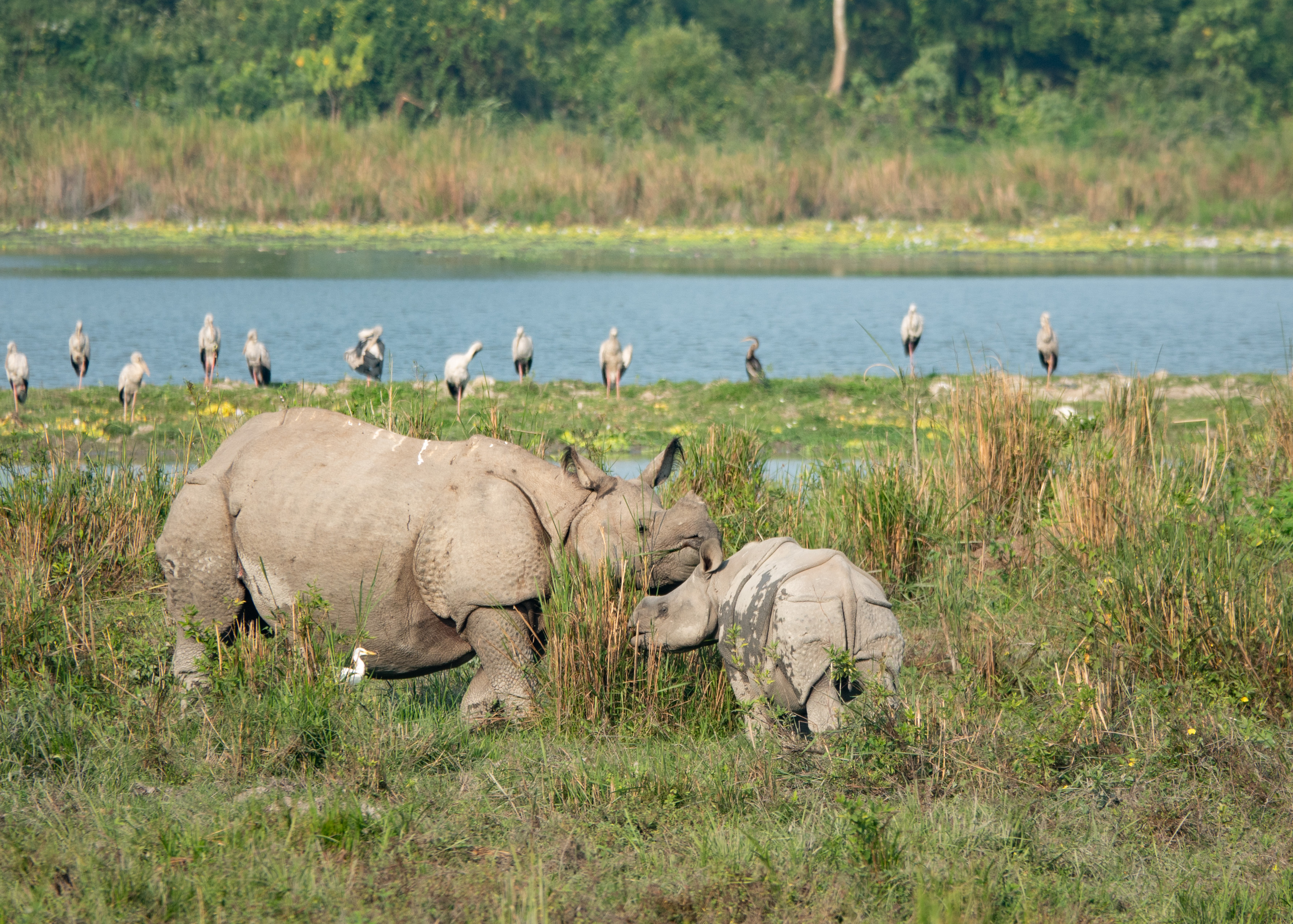
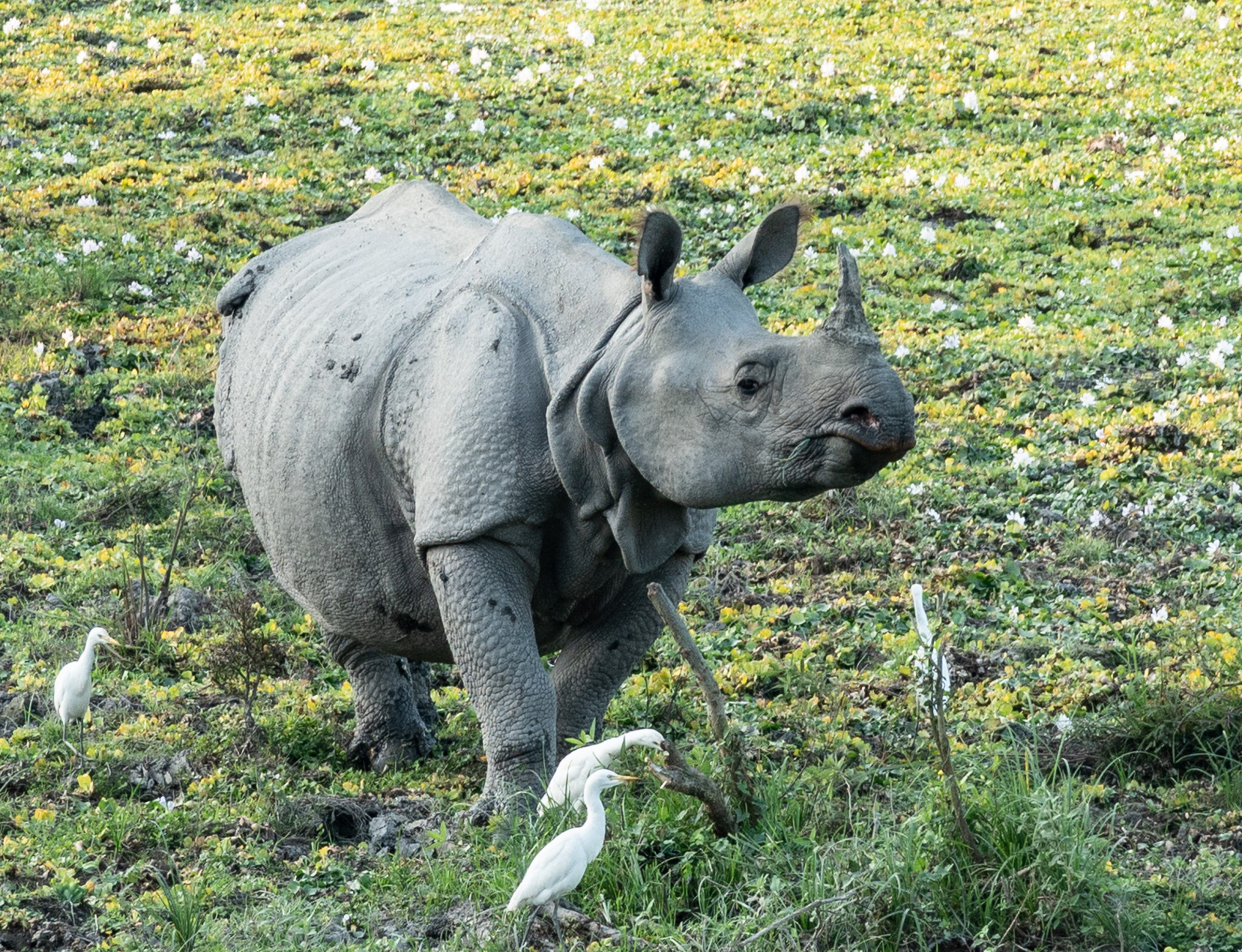
In Chitwan we saw the rhino deep in the long grass from the back of an elephant, but in Kaziranga they were everywhere, grazing out in the open, many with young.

Indian one-horned Rhino

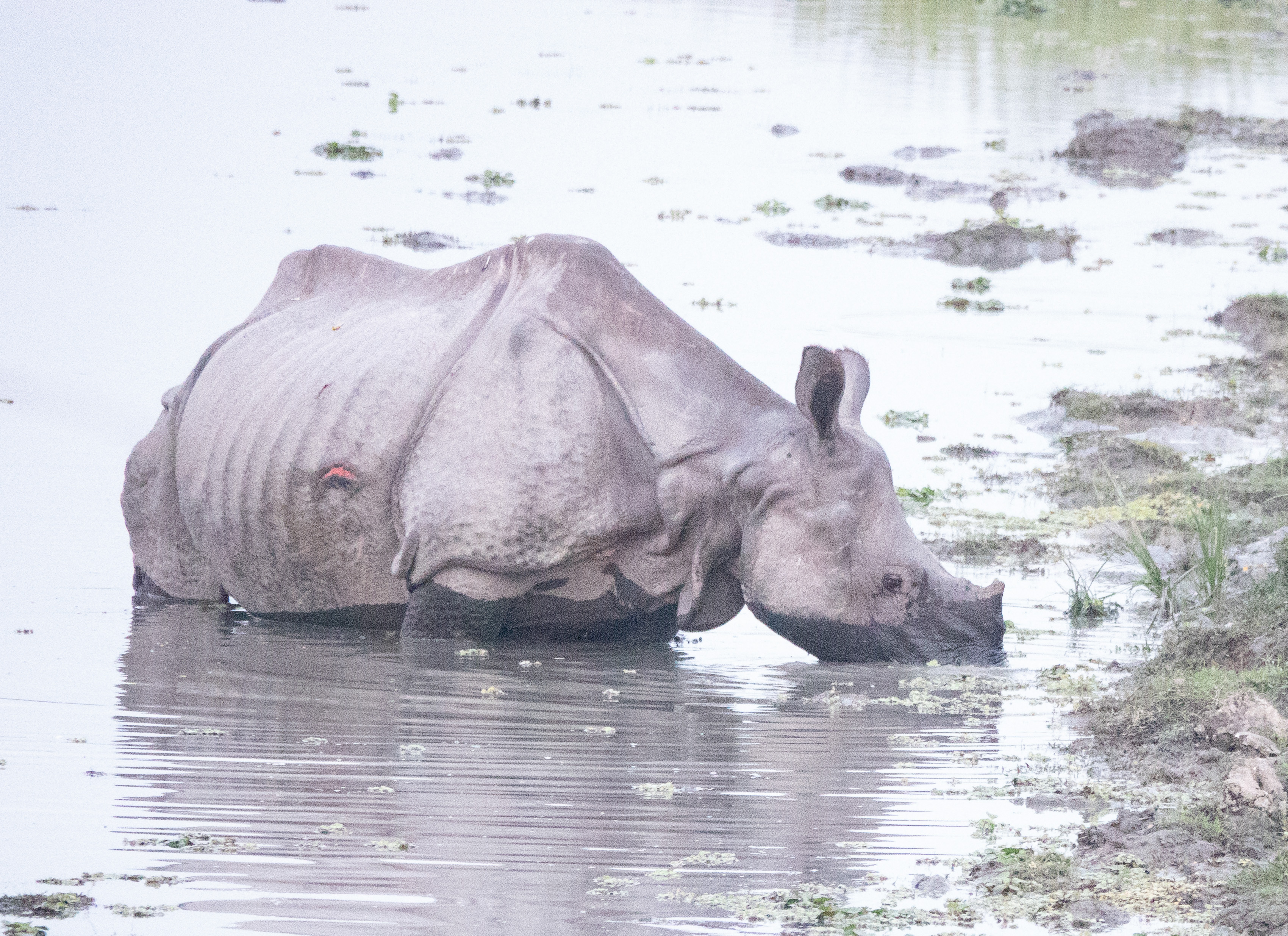
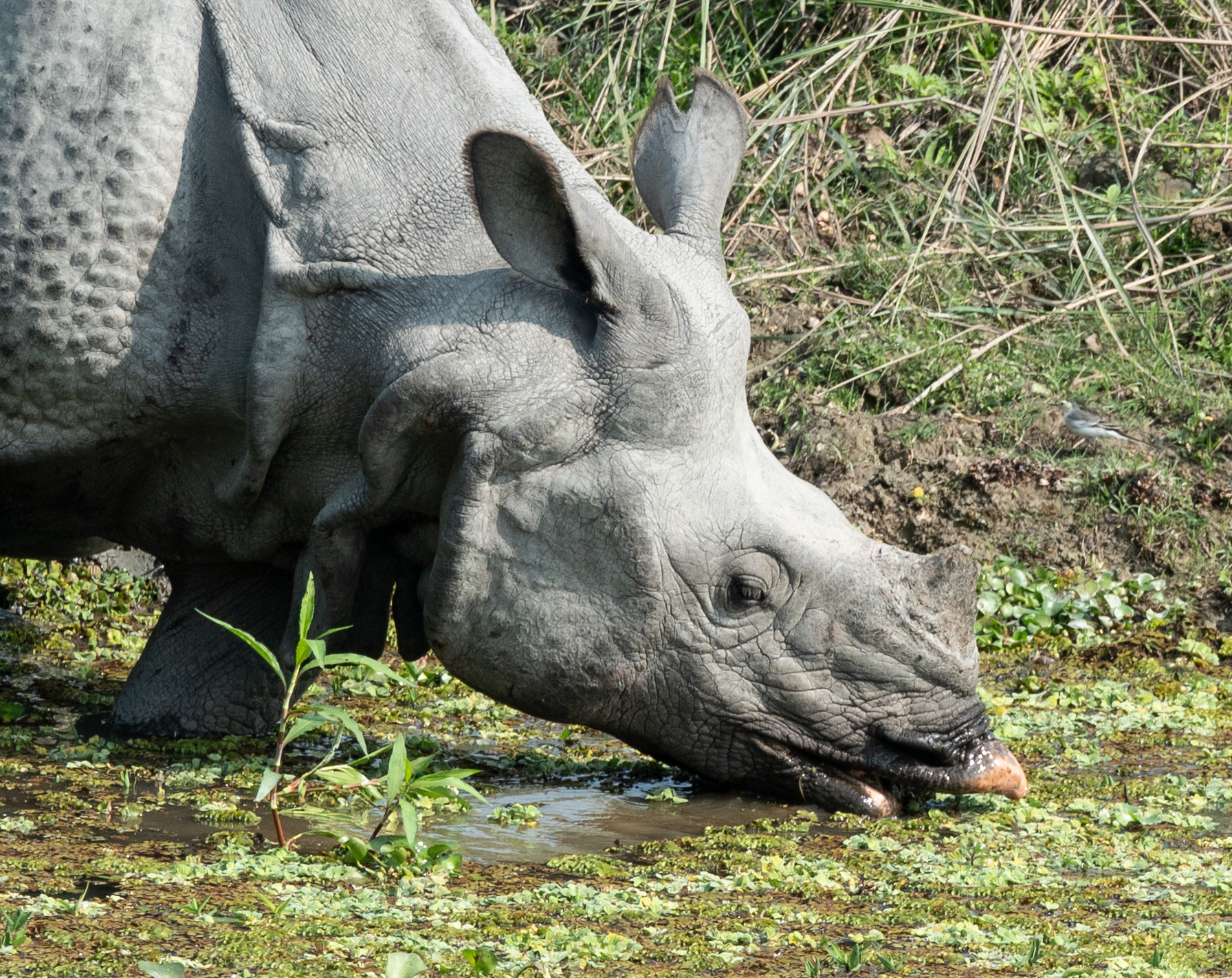
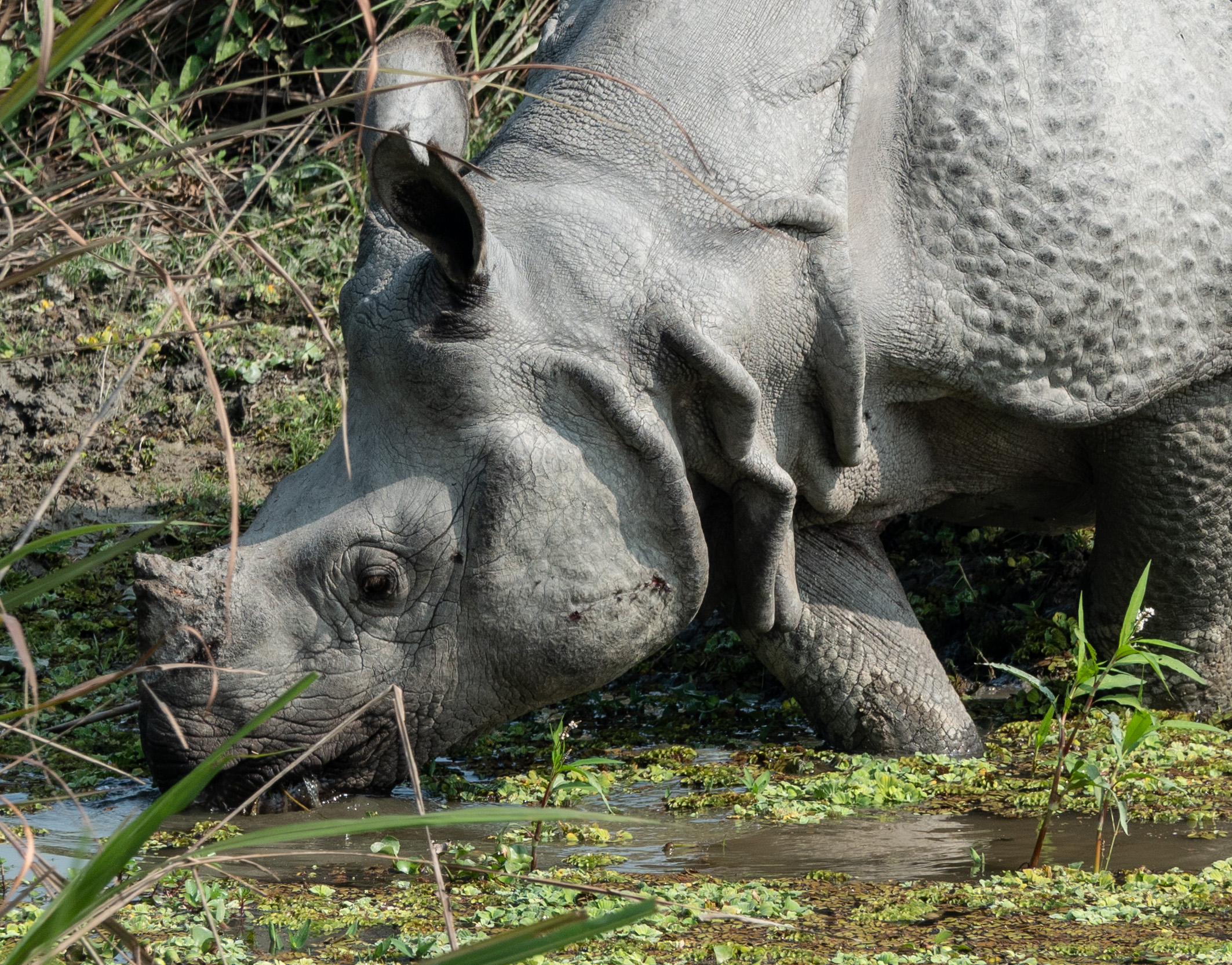
They have a pointed prehensile upper lip like the Black Rhino, and they are semi-aquatic, feeding in and even under the water:

Indian one-horned Rhino

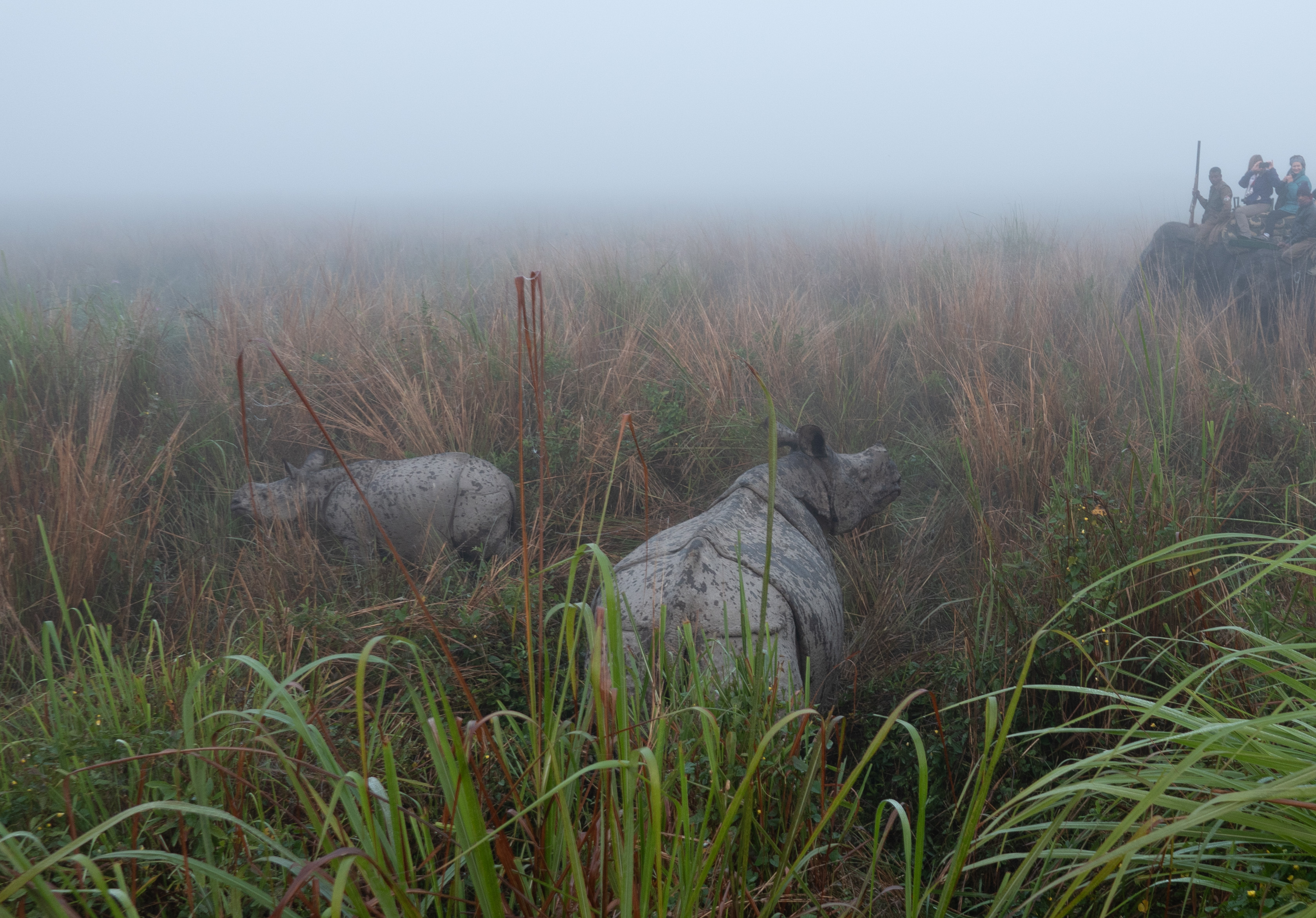
In Kaziranga we also went out on elephants, at dawn in a thick but magical mist :

Elephant ride with rhino

Being atop an elephant allows for close-ups from an unusual angle:

Elephant ride with rhino

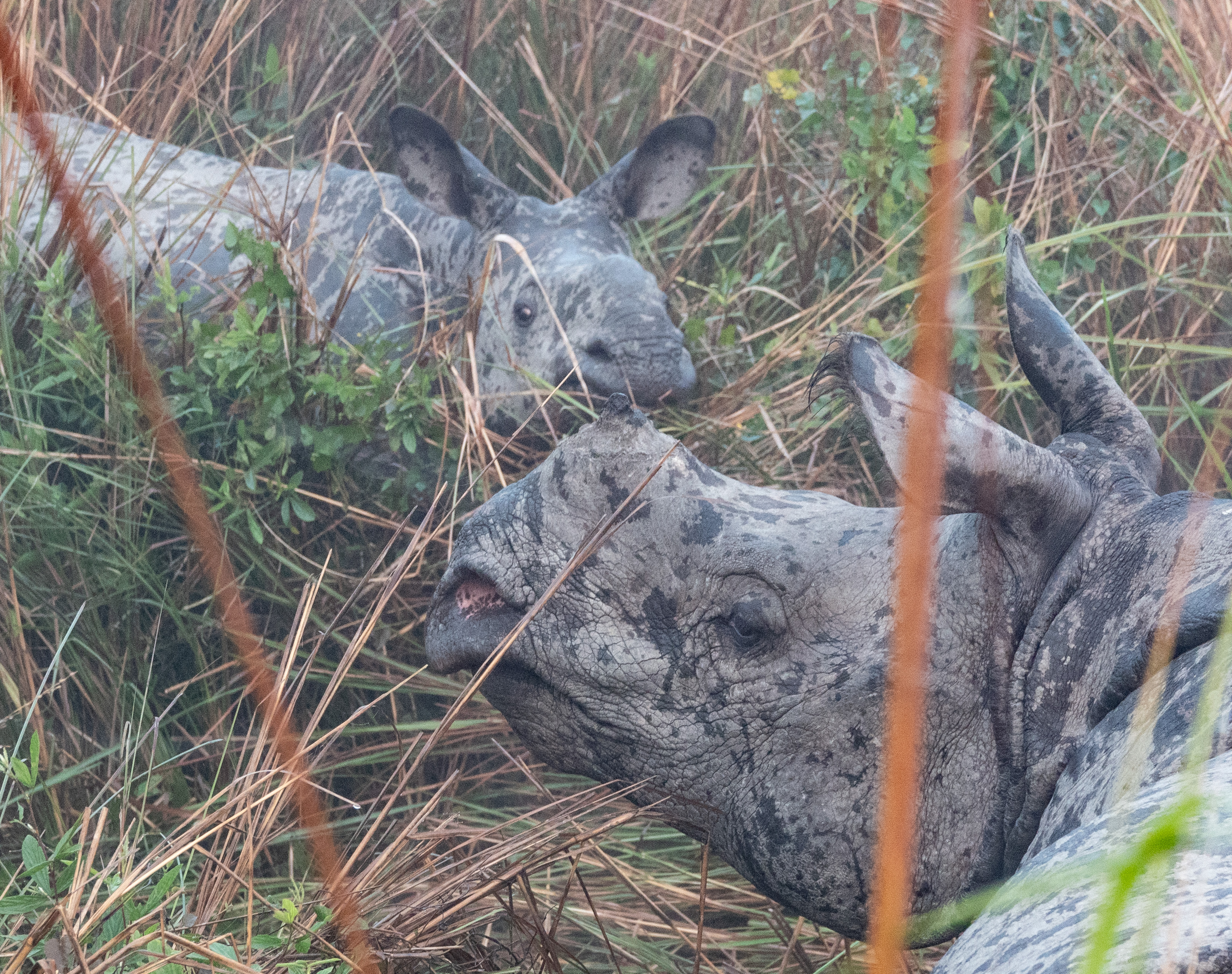
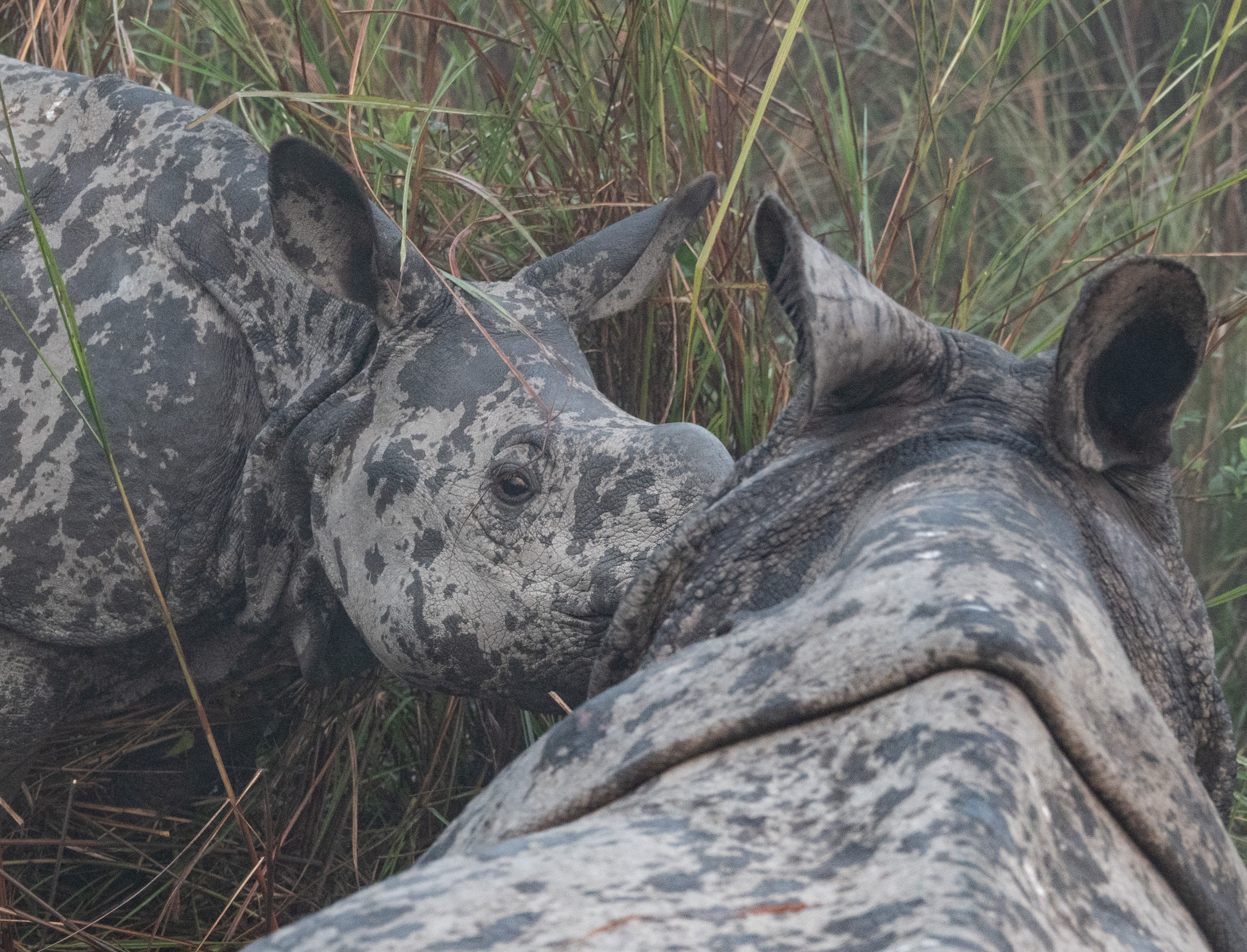
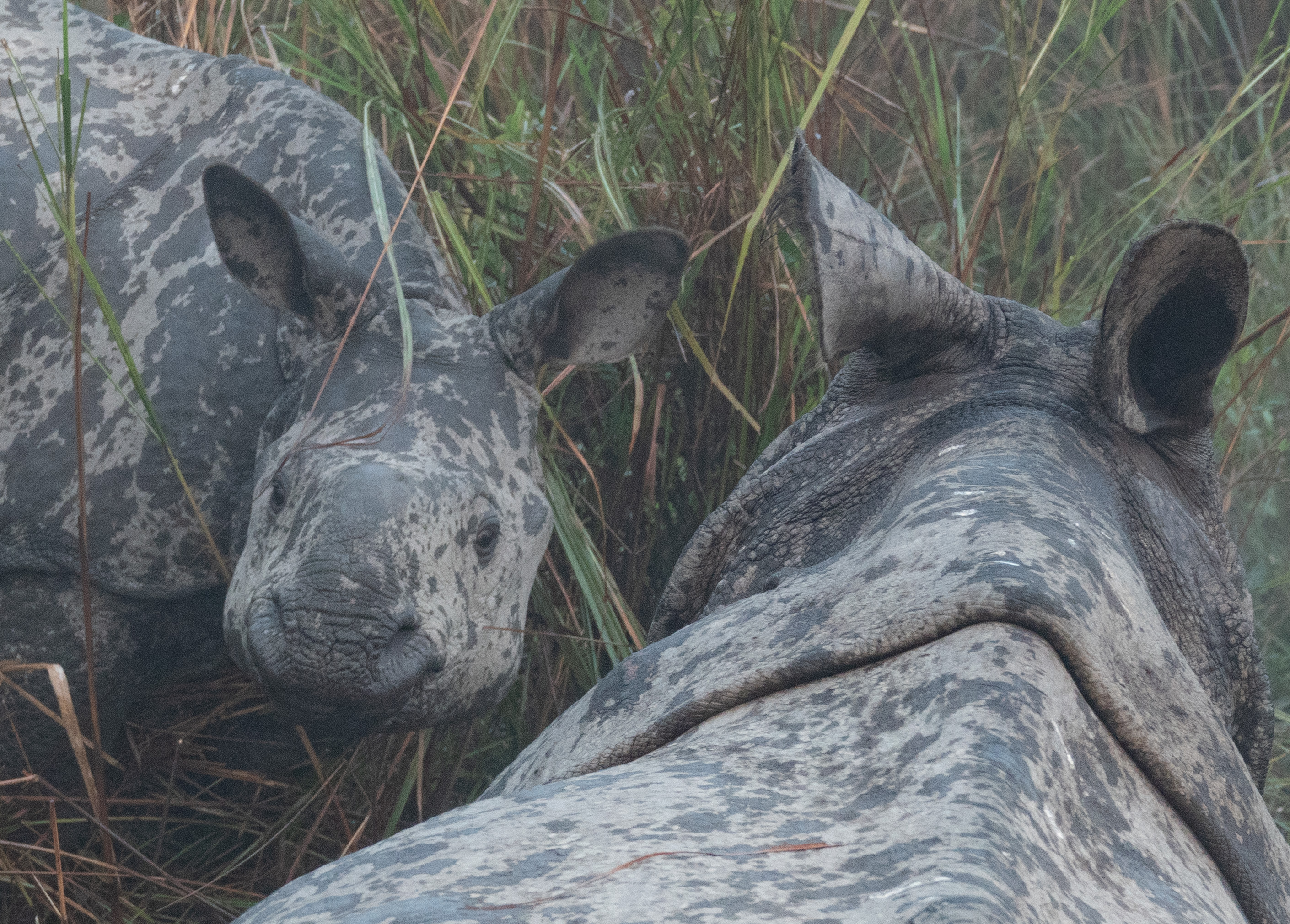
The baby has no horn yet, but you can see a smooth bump where it is trying to come through: the teething pains must be horrendous:

Elephant ride with rhino

Personally I think it looks most irresistible from the front:

Elephant ride with rhino

They didn’t seem overly bothered by the elephants, or vice-versa. Our guide told us that when he started 20 years ago, they would flee from tourists, but that they are now habituated, and largely ignore them.

The unique R. unicornis: Part I

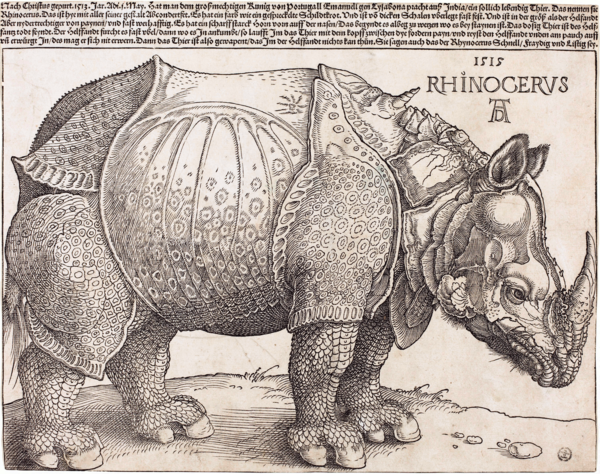
We all know that the Black Rhino Diceros bicornis,  and the White Rhino, Ceratotherium simum, are critically endangered, but there even fewer surviving Greater One-horned Rhino, or Indian Rhino, Rhinoceros unicornis. First made famous in Europe by Dürer in 1551, in a slightly imaginative rendition (he never saw the actual rhino, which was in Lisbon), it is clearly an Indian rhino because of the astonishing thick folded skin, and the single horn.

The_Rhinoceros_(NGA_1964.8.697)_enhanced

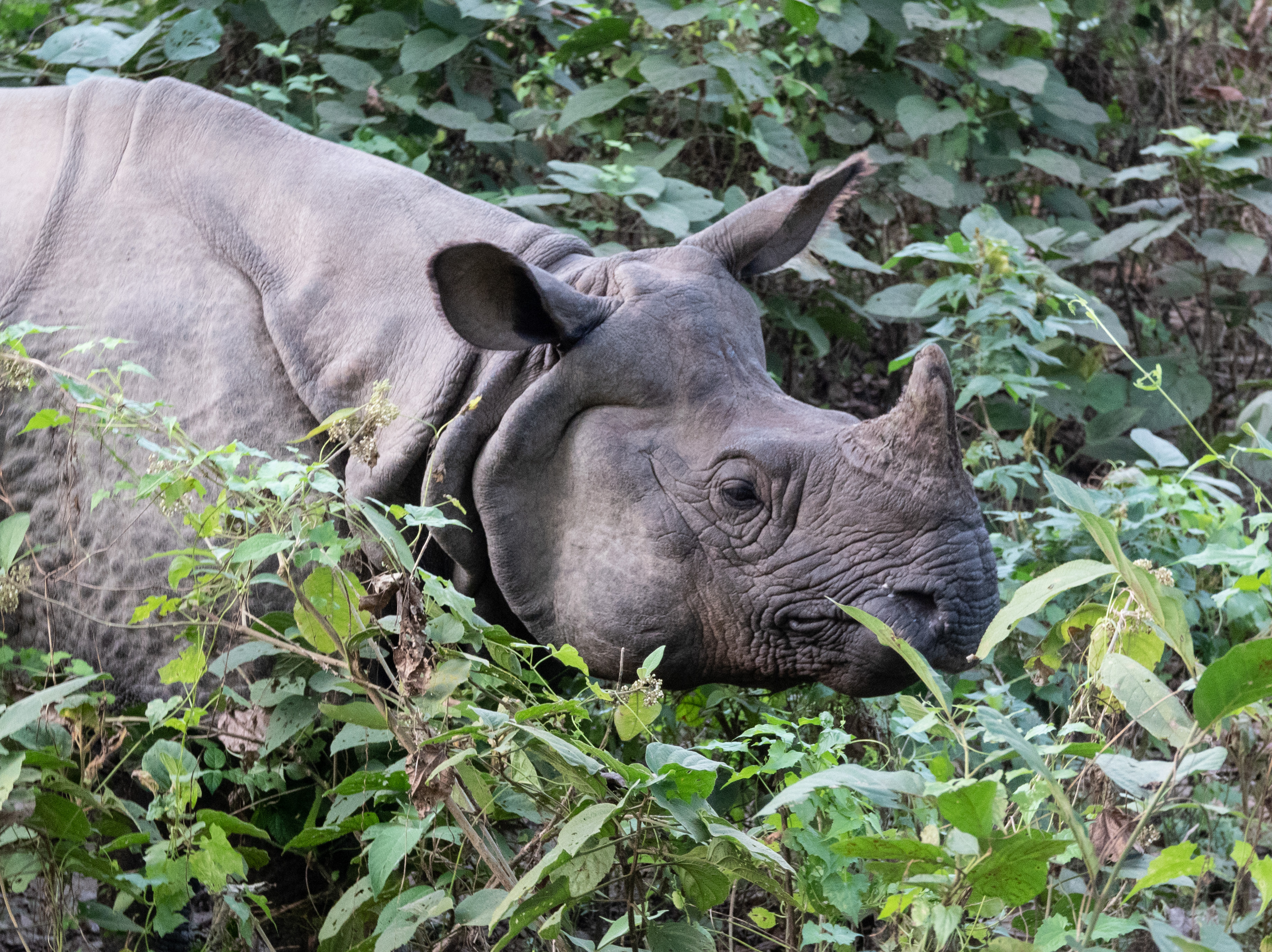
Here is the real thing; this one has worn its horn down foraging:

Indian one-horned RhinoBut this one has a fine horn:
Indian one-horned rhino

and so does this one:

DSC00515

From behind, the armour-plate is even more impressive:

Indian one-horned rhino

The neck folds are enough to make aging dowagers feel good by comparison:

Indian one-horned Rhino

This rhino weighs as much as the African White Rhino, 1,800 – 2,500 kg, much more than the African Black Rhino. We visited the two places in the world where almost all the surviving one-horned rhino live. Chitwan in Nepal has about 600, and Kaziranga in Asaam has about 2,413 (70% of the world population of 3500).

The IUCN classifies them as Vulnerable, not Critically Endangered, because the population though fragmented is increasing. The poaching threat is apparently somewhat lower than for the African rhinos, maybe because they only have one horn, and a lot of ones we saw had worn it down? But the proximity to the major markets in China and Vietnam makes it appealing to poachers nonetheless. The anti-poaching efforts are very aggressive, and there is a great deal of concern about whether it is appropriately regulated, and its effects on the local community. Here is a disturbing article, for those who are interested:

https://www.bbc.co.uk/news/world-south-asia-38909512

In Part II, you will meet the next generation of rhino.

Successful fish-stalking*

One for the birds. And next time, by popular request, I will show you rhinos

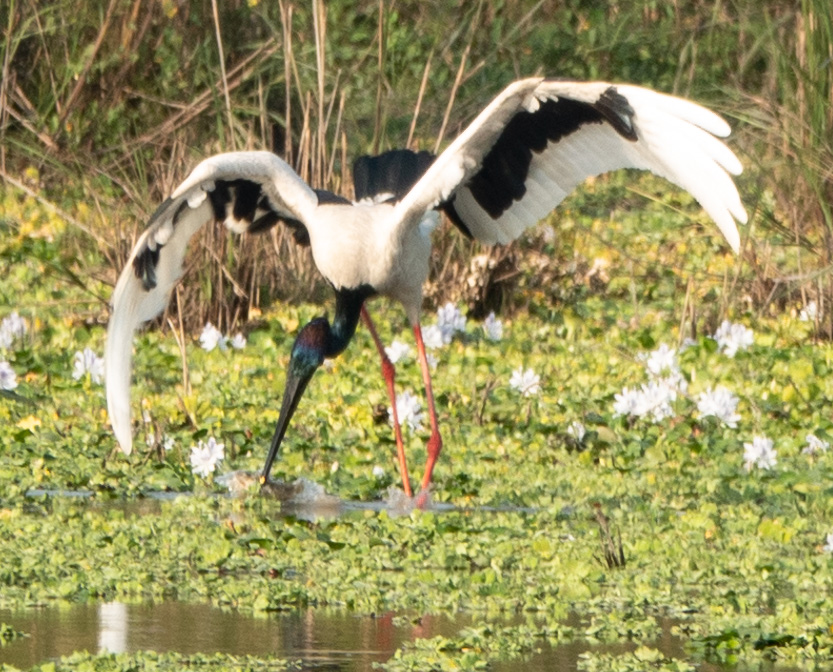
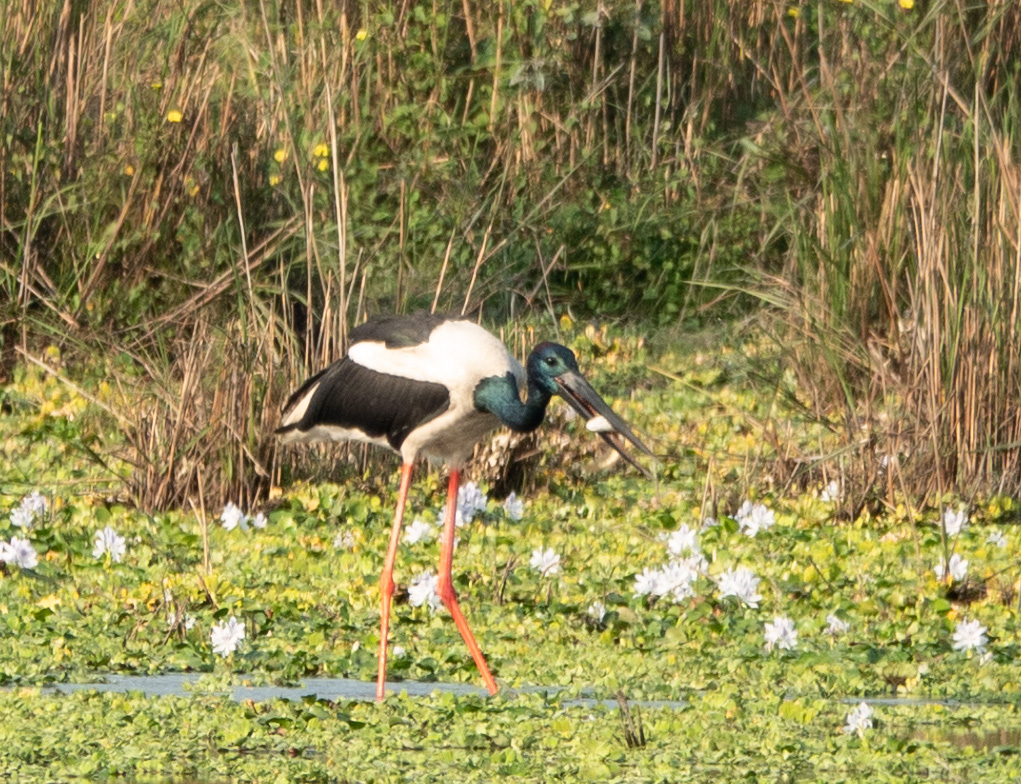
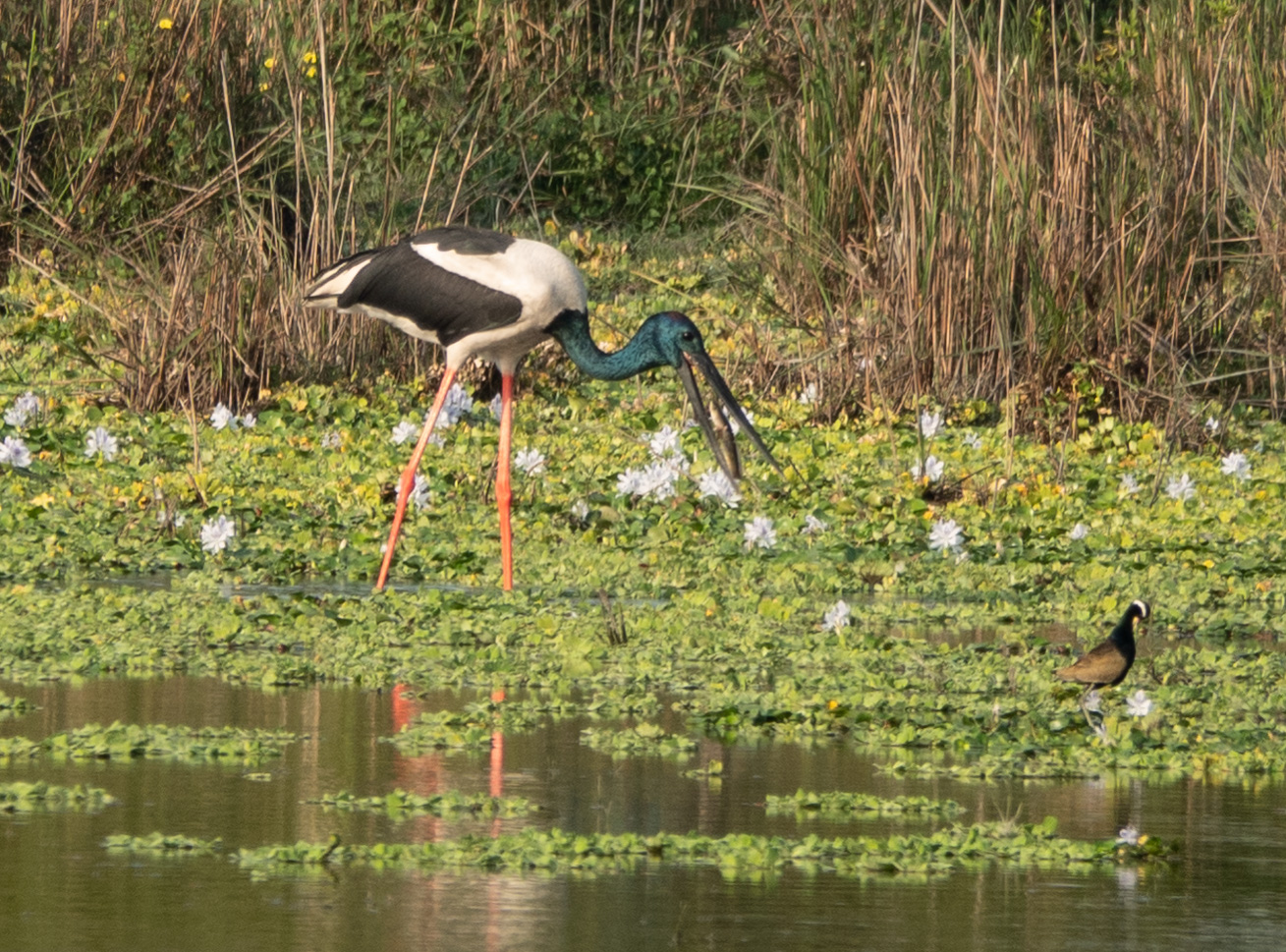
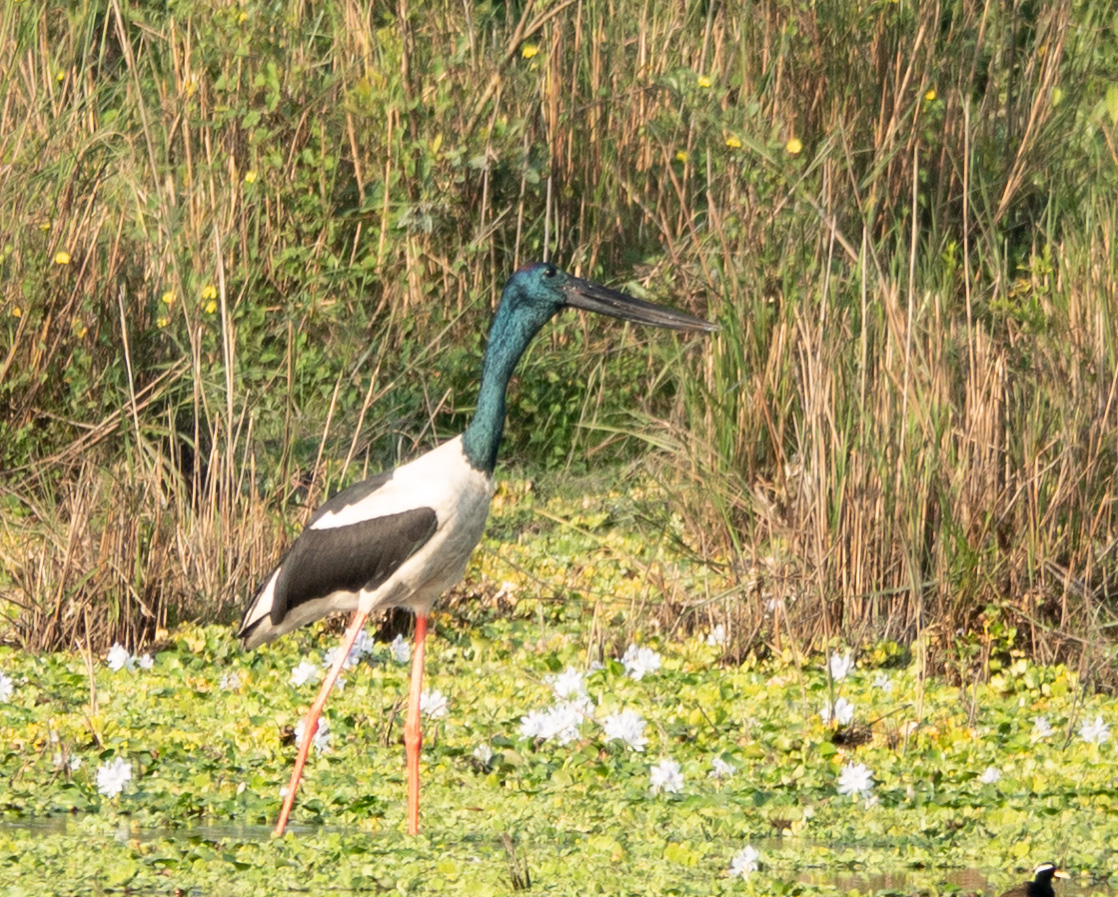
The Black-necked Stork, Ephippiorhynchus asiaticus, is a splendid bird, five feet (150cm) tall, with black and white plumage, an iridescent blue-green-black neck, and bright red legs.

This one was on the far side of a shallow lake, hunting. Look closely, and you can see he has just grabbed a fish:

Black-necked Stork

He gets a grip:

Black-necked Stork

Then turns it around, head first:

Black-necked Stork

And it is traveling down his gullet, all gone, in six seconds start to finish.

Black-necked Stork

These storks are widespread in India, and Australia, but they are thinly distributed, and declining in numbers. There are probably about 1000 total in India, and 10,000 in Australia. They are on the IUCN Red List as Near Threatened. Kaziranga has a healthy and stable population. This one is an adult male, because males have a brown iris, and females have a yellow iris.

*In British English, ‘stork’ and ‘stalk’ sound the same, hence my title. Really BAD pun, sorry.

Golden spiders

As usual after a trip, I’m going to post things a bit at a time, and try to mix up mammals, birds, bugs, and reptiles. Today I shift from tigers to spiders.

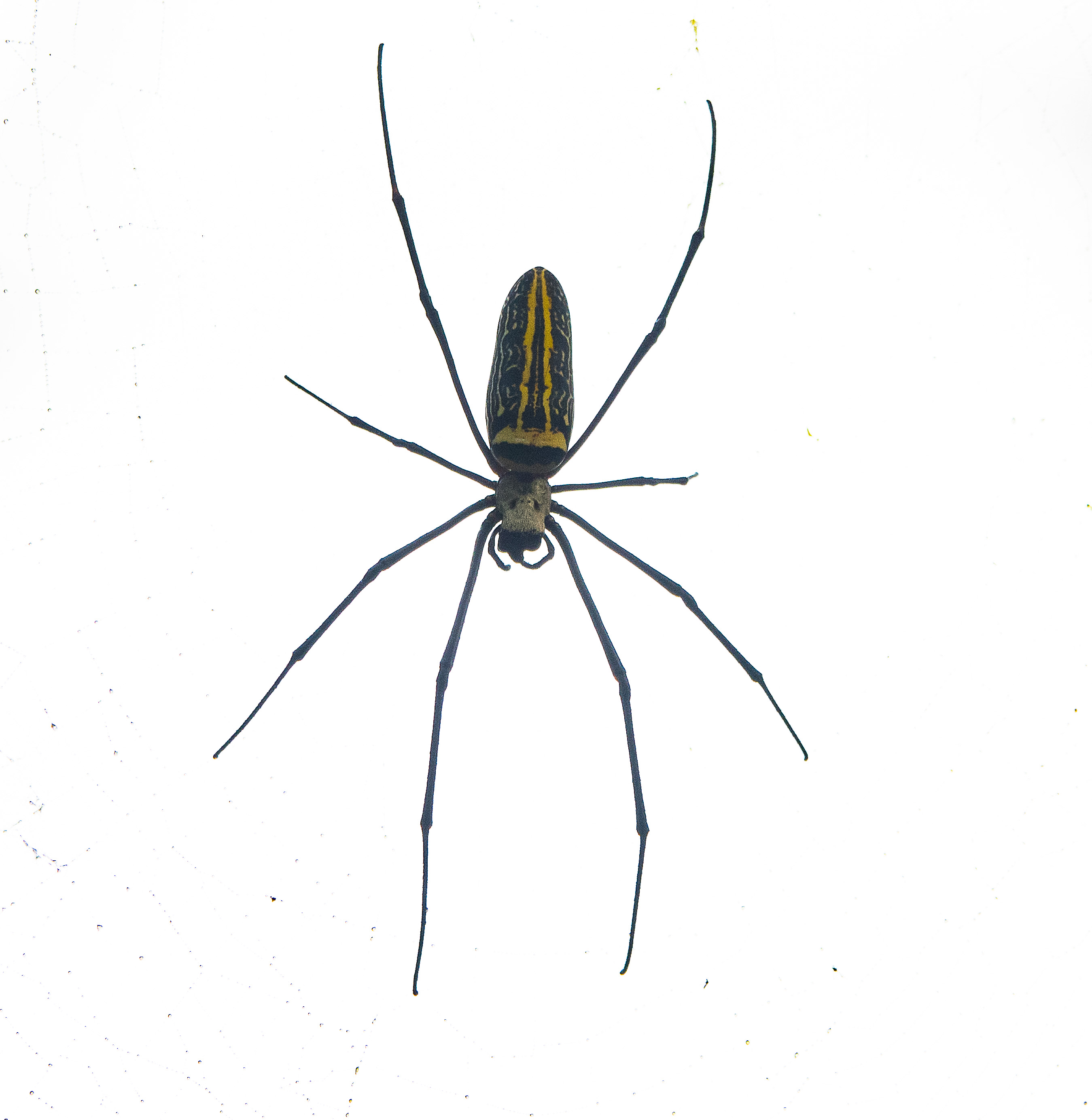
Every now and then we would see the most enormous spiders suspended in their webs from the trees by the path. They were about the size of my palm, and the local guide called them Giant Wood Spiders, an accurate description. I am fairly sure they are actually  the giant golden orb weaverNephila Pilipes.

DSC08705

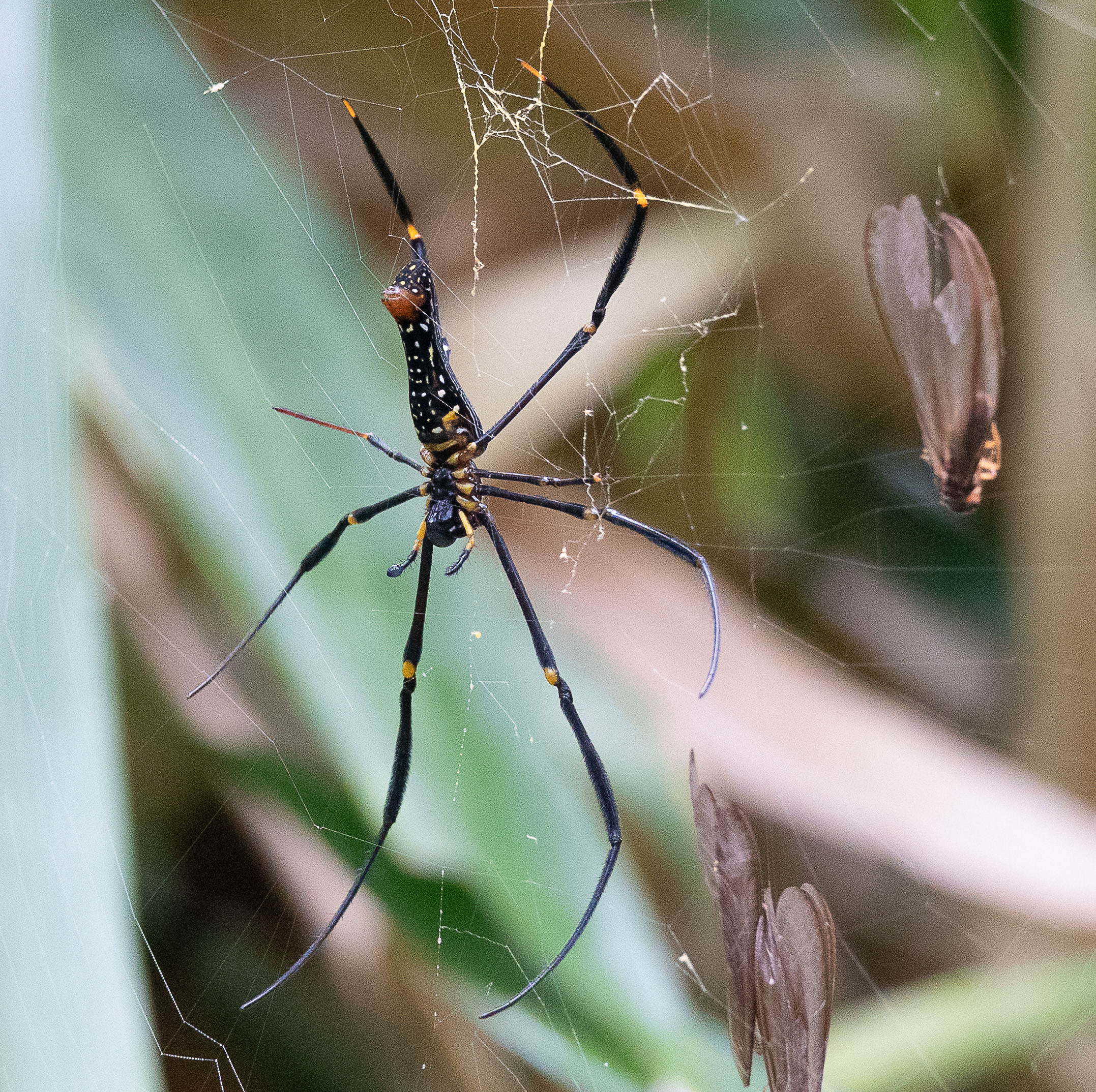
The females are much larger than the males, and their undersides are spectacular:

DSC06428

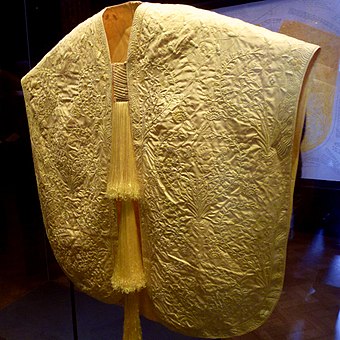
If you look carefully, you can see the spinnerets at work, and notice that their webs shimmer gold when they catch the sunlight. Two enterprising artists, Simon Peers and Nicholas Godley,  have collected vast quantities of Nephila silk in Madagascar and used it to weave a golden garment, exhibited at the V&A in London:

340px-Spider_silk_cape

You can see a video about this extraordinary project here: http://www.vam.ac.uk/content/articles/g/golden-spider-silk/

In Chitwan we also saw a very tiny yellow spider, rapelling itself up towards the safety of a leaf.

DSC08979

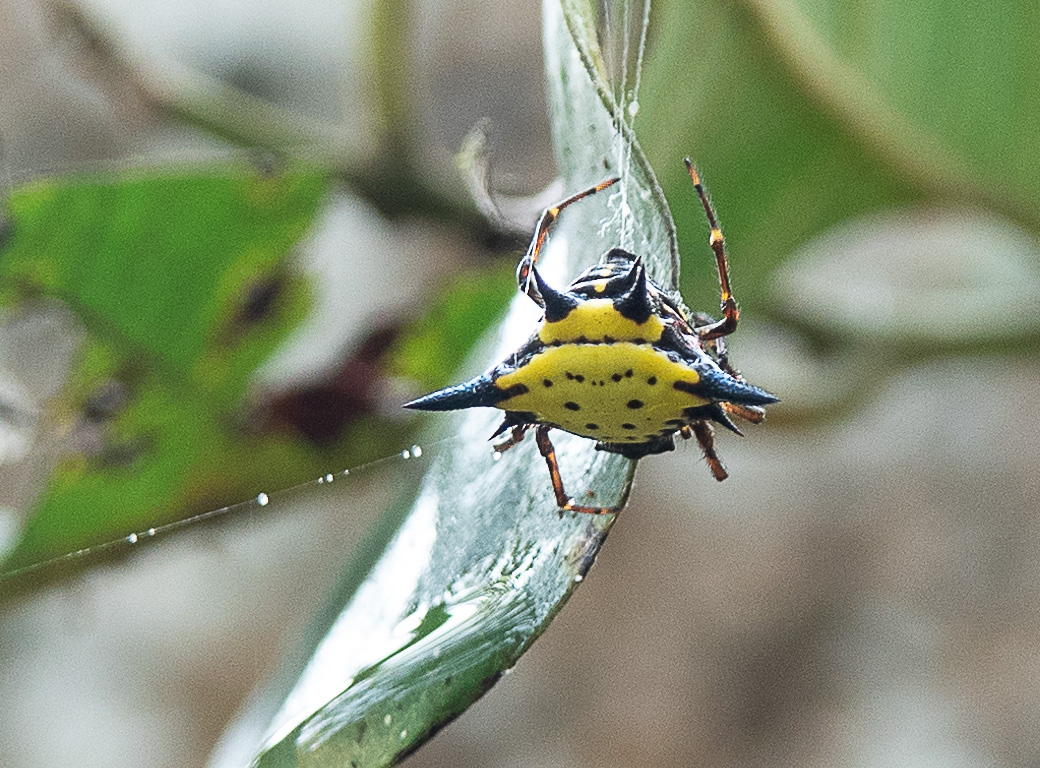
This small jewel is a female Hasselt’s spiny spider, Gasteracantha hasselti.  Gasteracantha comes from the Greek for ‘stomach’, and for ‘spine’, a good description. Spiny spiders are found in Asia, Australia, and the Pacific.

PS:   For L and E from Granny

The eensy weensy spider
Went up the water spout.
Down came the rain and
Washed the spider out.
Out came the sun and
Dried up all the rain.
And the eensy weensy spider
Went up the spout again.

Burning bright

I am just back from a wonderful trip to Nepal and India, with the main goal of seeing the Indian One-horned Rhino (watch this space). But the first thing anyone asks is whether we saw tigers, so I thought I’d get that out of the way first.

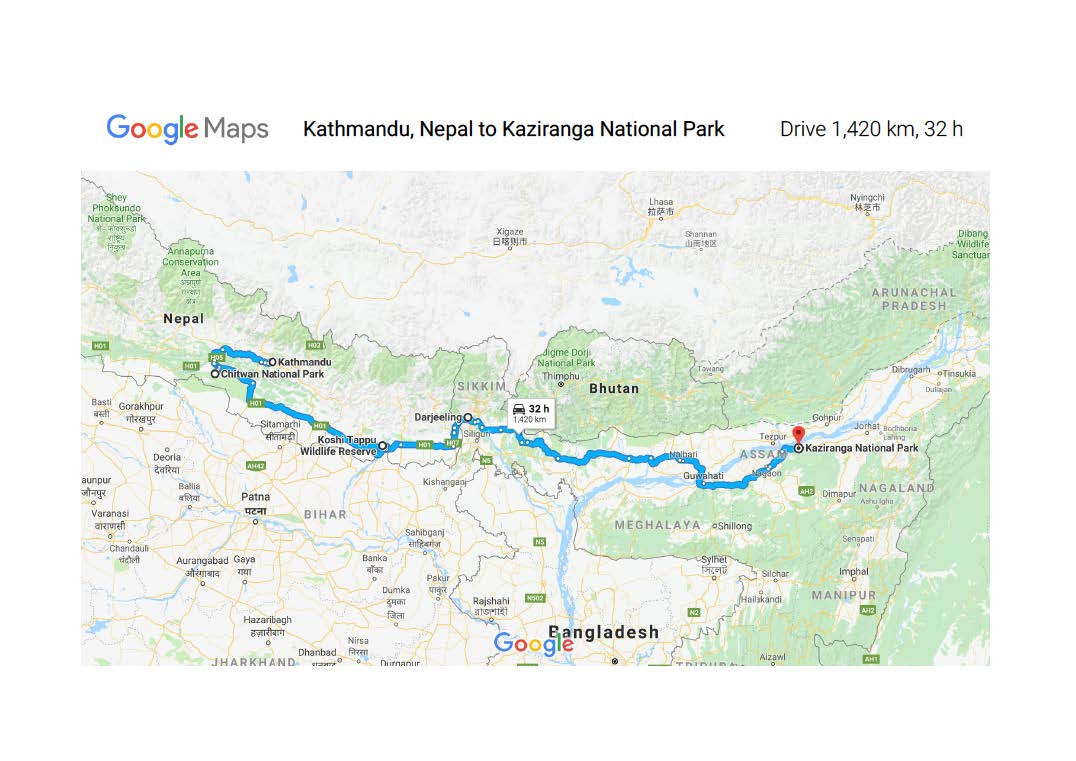
This is where we went: southern Nepal, and Assam (a little-known corner of north-east India, sandwiched between Bhutan to the North, Bangladesh to the South, and Myanmar to the East).

Map of India tripWe went to three parks: Chitwan and Koshi Tappu in southern Nepal, and Kaziranga in Assam, India. Chitwan and Kaziranga have tigers, but they are rarely seen, especially at this time of year when the grass is green and as tall as an elephant’s eye (truly).
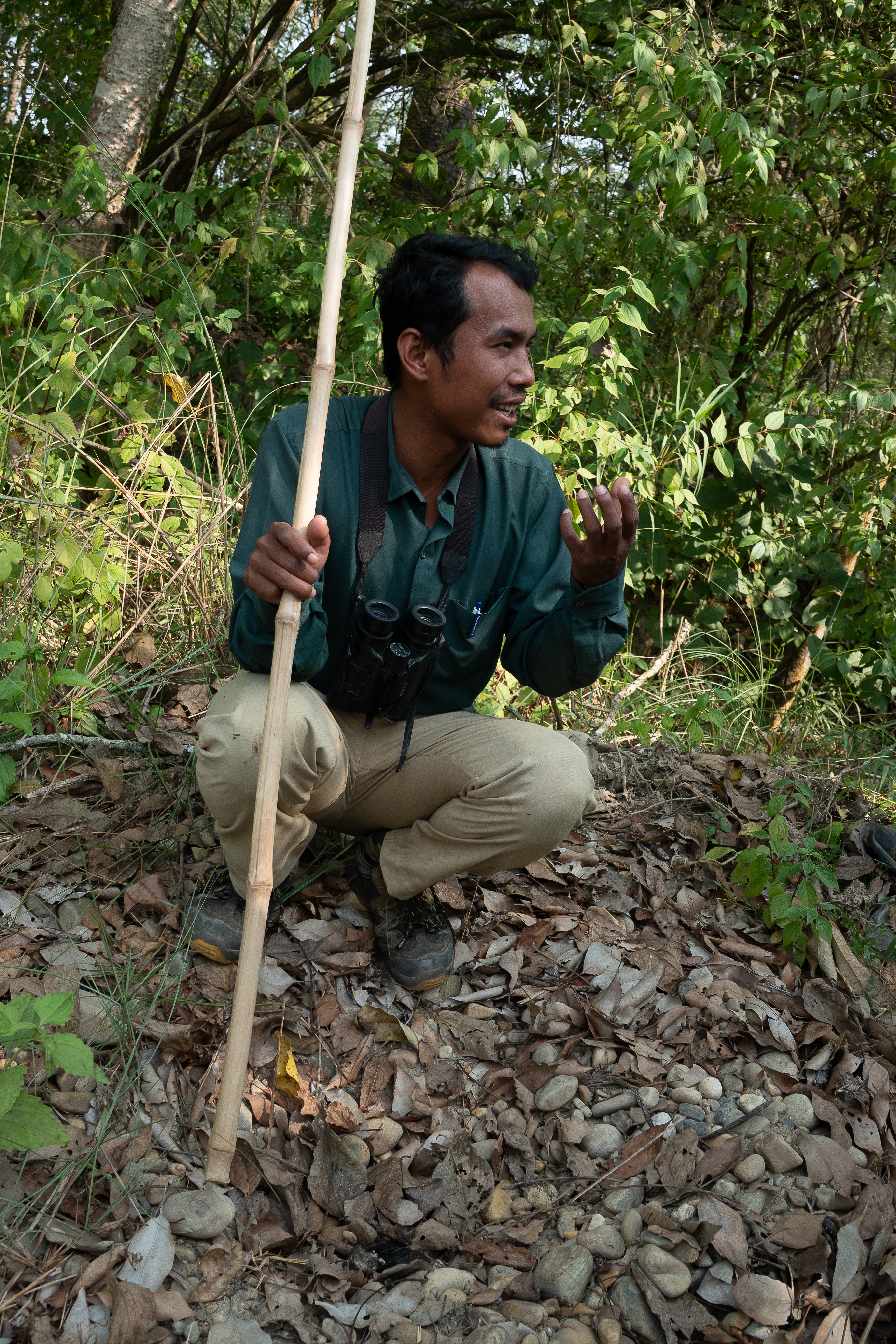
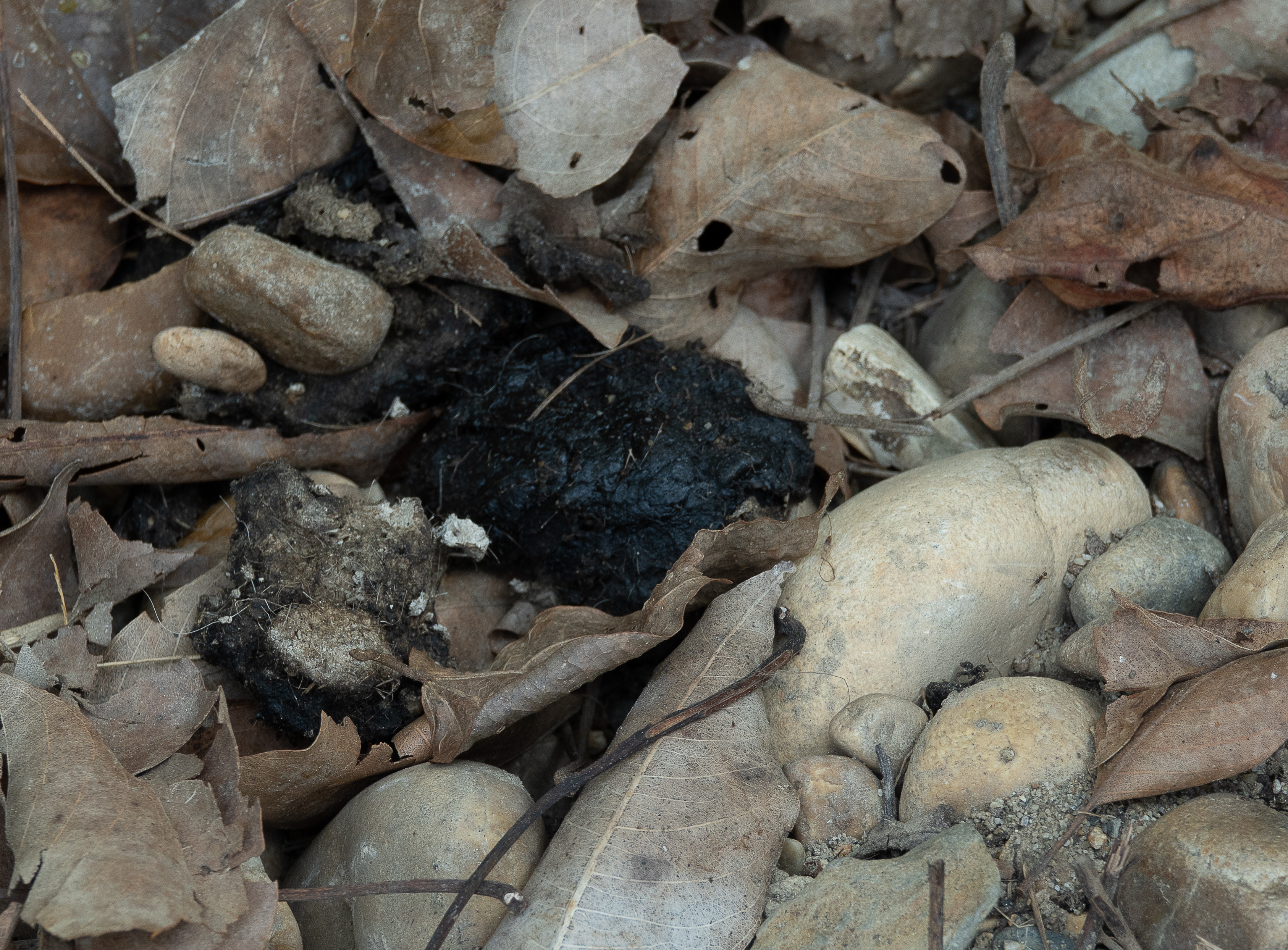
In Chitwan, we were on foot when we saw fresh tiger scat (yes, Leigh, really), here being pointed out to us by our terrific young guide, Rajiv.

DSC09076

and zooming in..

DSC09075

Then we smelled the unmistakable smell of a kill, by the stench of it pretty close by. Rajiv saw the marks in the sand where the tiger had dragged its kill, so he told us not to move, and went to investigate. Unlike the guides in Africa and in India, in Nepal the guides don’t carry guns, so on balance we were not sorry that the tiger was nowhere to be found!

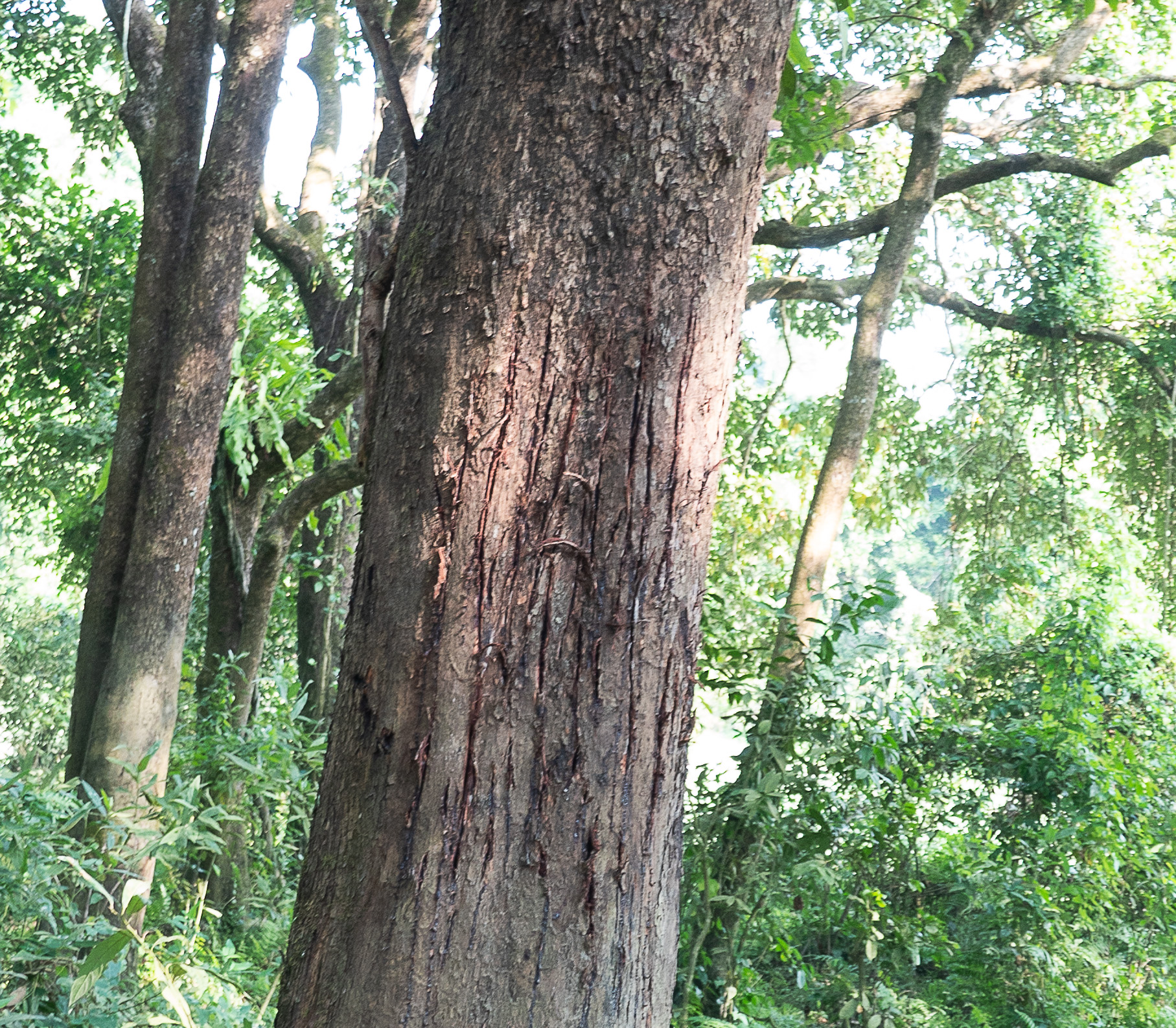
In Kaziranga there were a couple of tigers that a few people had seen in the previous week, and we saw a tree with rather impressive tiger claw marks on it:

DSC00761

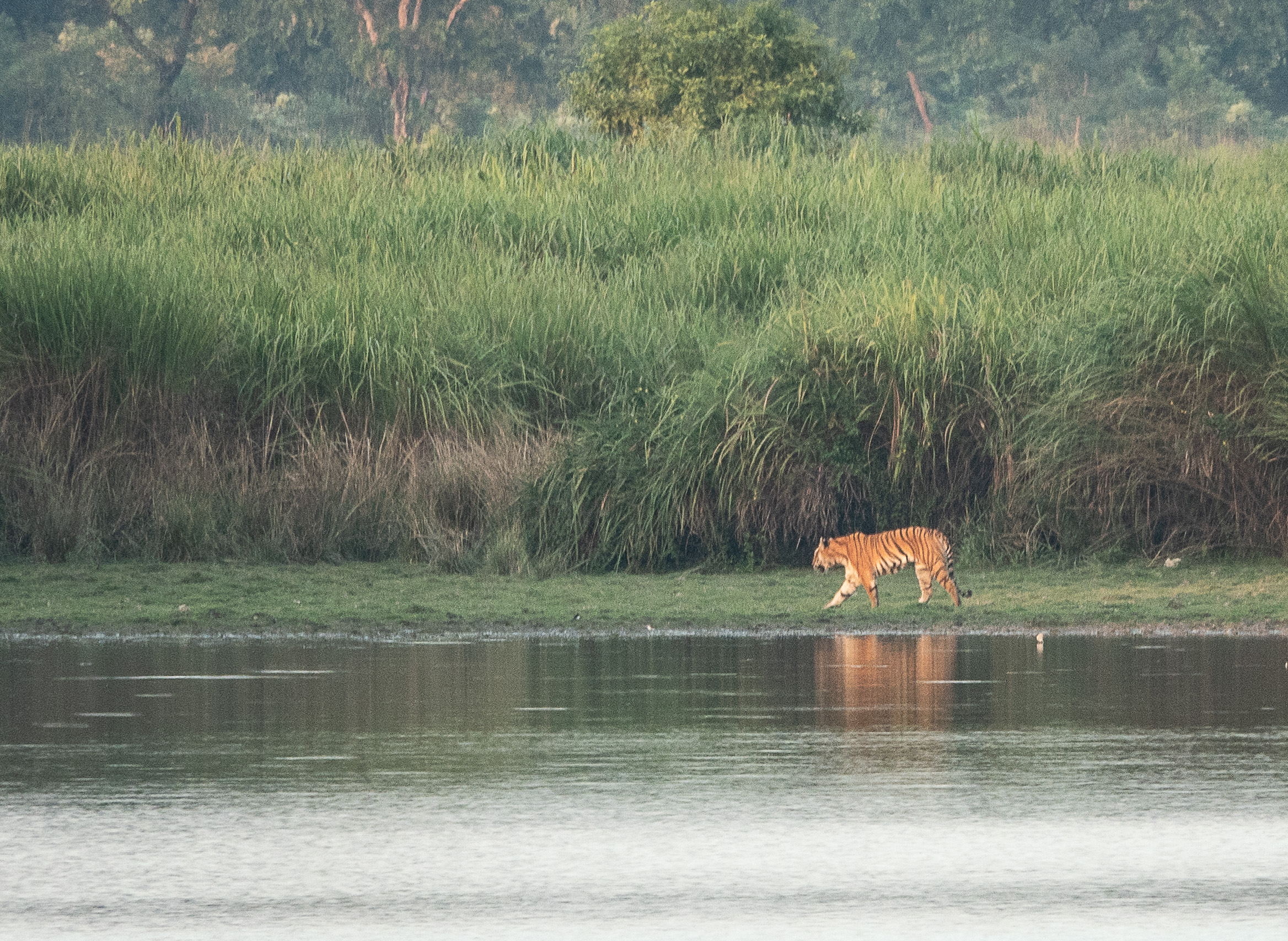
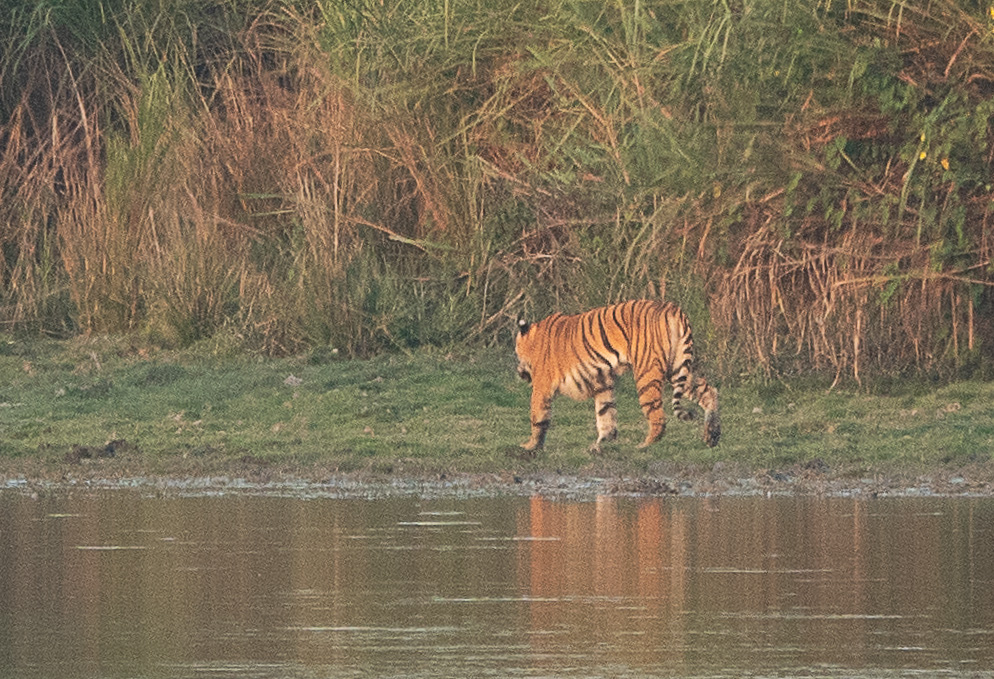
But we didn’t hold out much hope of actually seeing one, and we were focused on other things. Then, at the very end of our very last day, as we looked across a lake at dusk, there she was, maybe a quarter of a mile away, for about half a minute, a blaze of tawny orange walking along the water’s edge in the dying sun:

DSC06564

No other jeep was there to see it, just us. It was the eve of my birthday, not a bad gift:

DSC06556

Tiger numbers across India have stabilized and may be slightly increasing, so my hope is that my grandchildren will have a chance to see tigers too one day. Kaziranga is believed to have about 104 tigers (up from 83 in 2014), but they are not collared, and accurate counts are very hard.


Autumn waterbirds*

This is the last post for a couple of weeks, because I am heading off to Nepal and Assam. When I return, I will show you what I have seen.

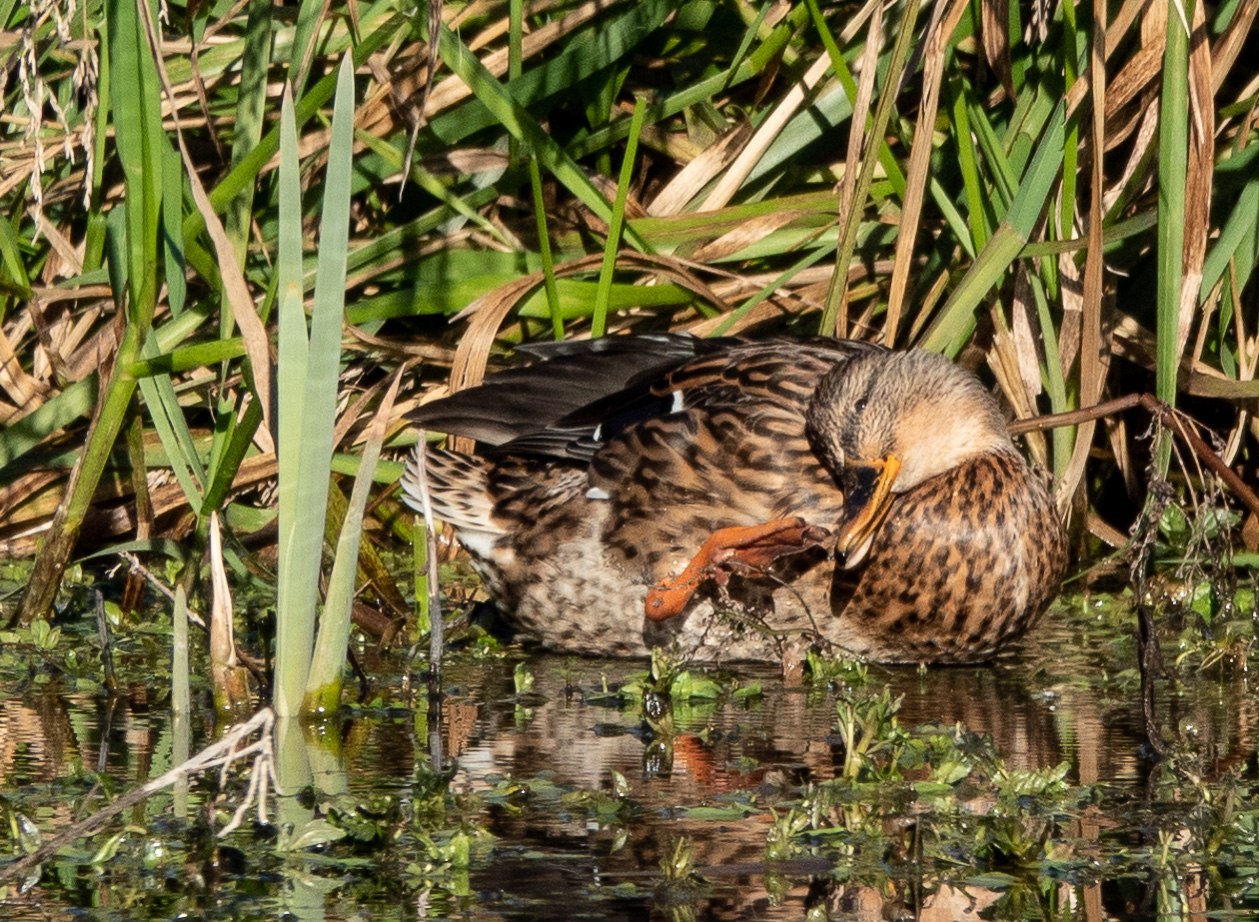
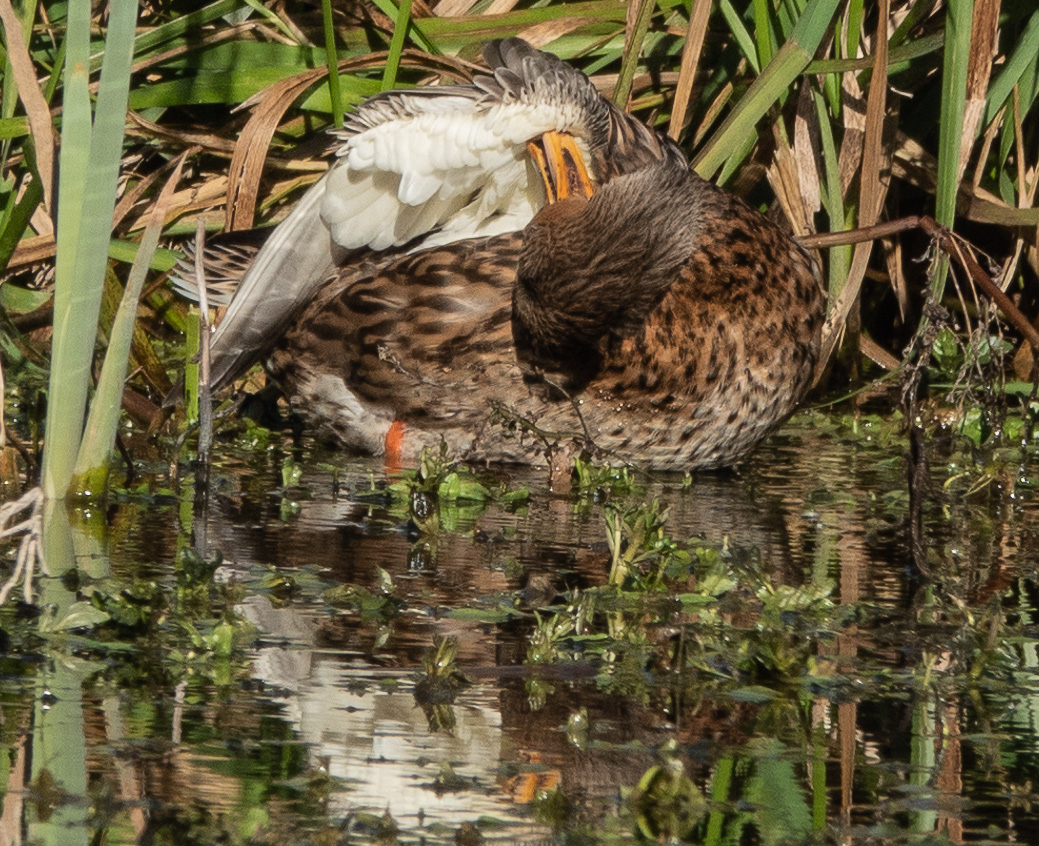
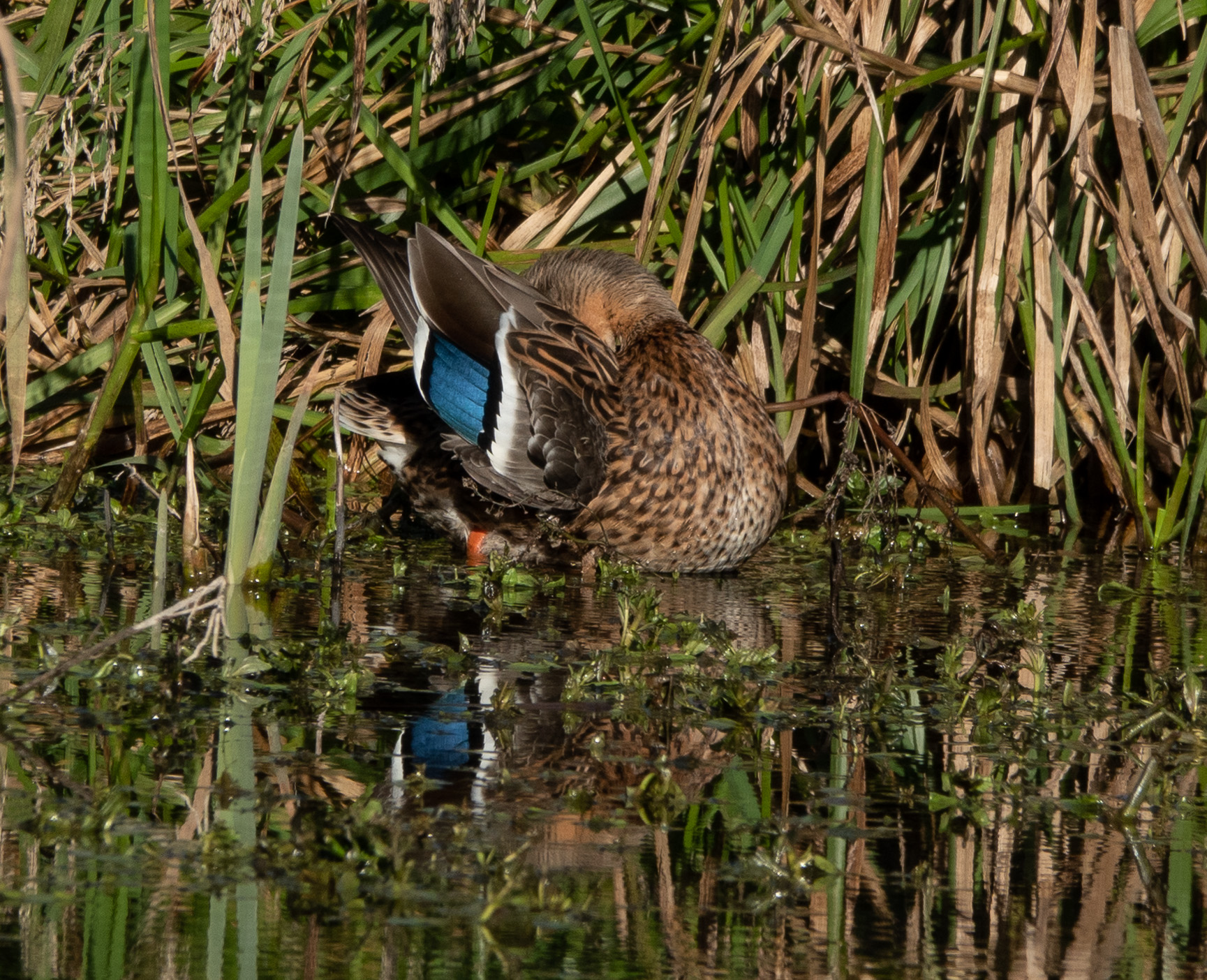
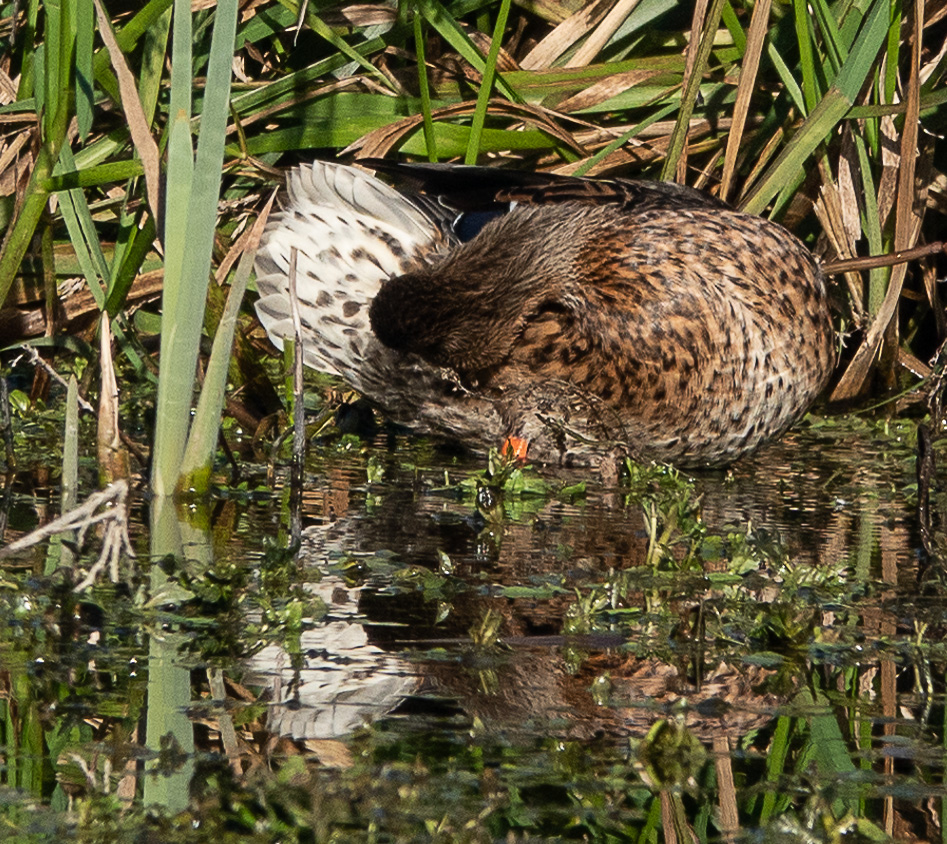
Still in England, this female mallard, Anas platyrhynchos,* was having a very thorough preen. Even very common birds like this are worth watching. First, an ecstatic head scratch:

DSC08138

Then, a good underwing going over, resulting in a rare chance to see the underside of a duck’s wing and indeed a duck’s bill. Not to mention a neck flexibility I can only envy:

DSC08156

And finally a sexy flash of blue as she does the other side:

DSC08160

Preening is not done (entirely) out of vanity. Ducks have a special gland called the uropygial gland at the base of the tail that secretes an oily waxy substance. Here I think she is accessing the gland to collect some oil:

DSC08122

During preening this is distributed through her plumage, and helps keep her waterproof. The spatial micro-structure of her feathers also plays a major role, but without the preen- oil the waterproofing deteriorates significantly over time. (Girardeau et al 2010).

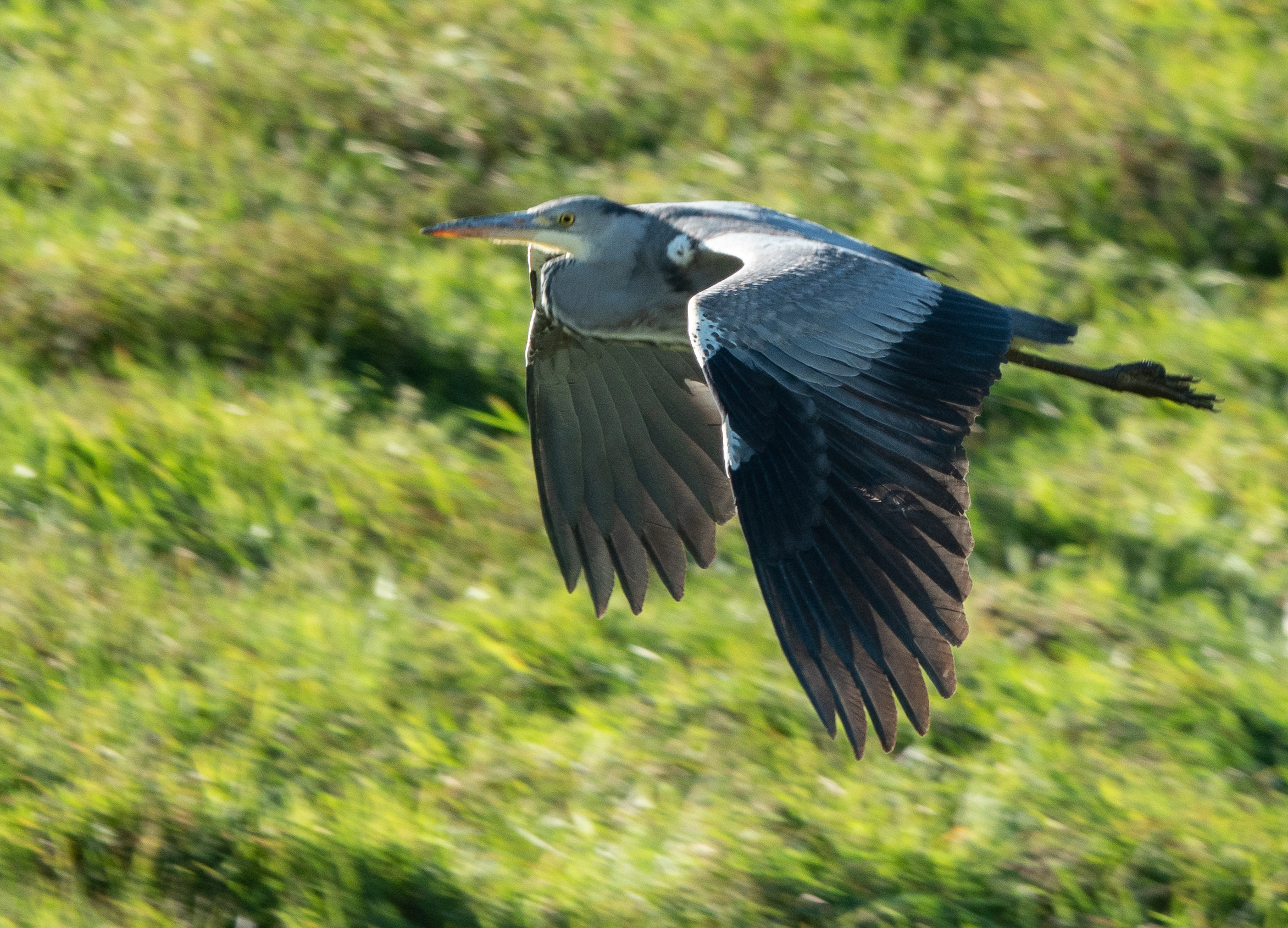
One hundred yards downstream, I was watching a Grey Heron, Ardea cinerea, on the wing;

DSC08098

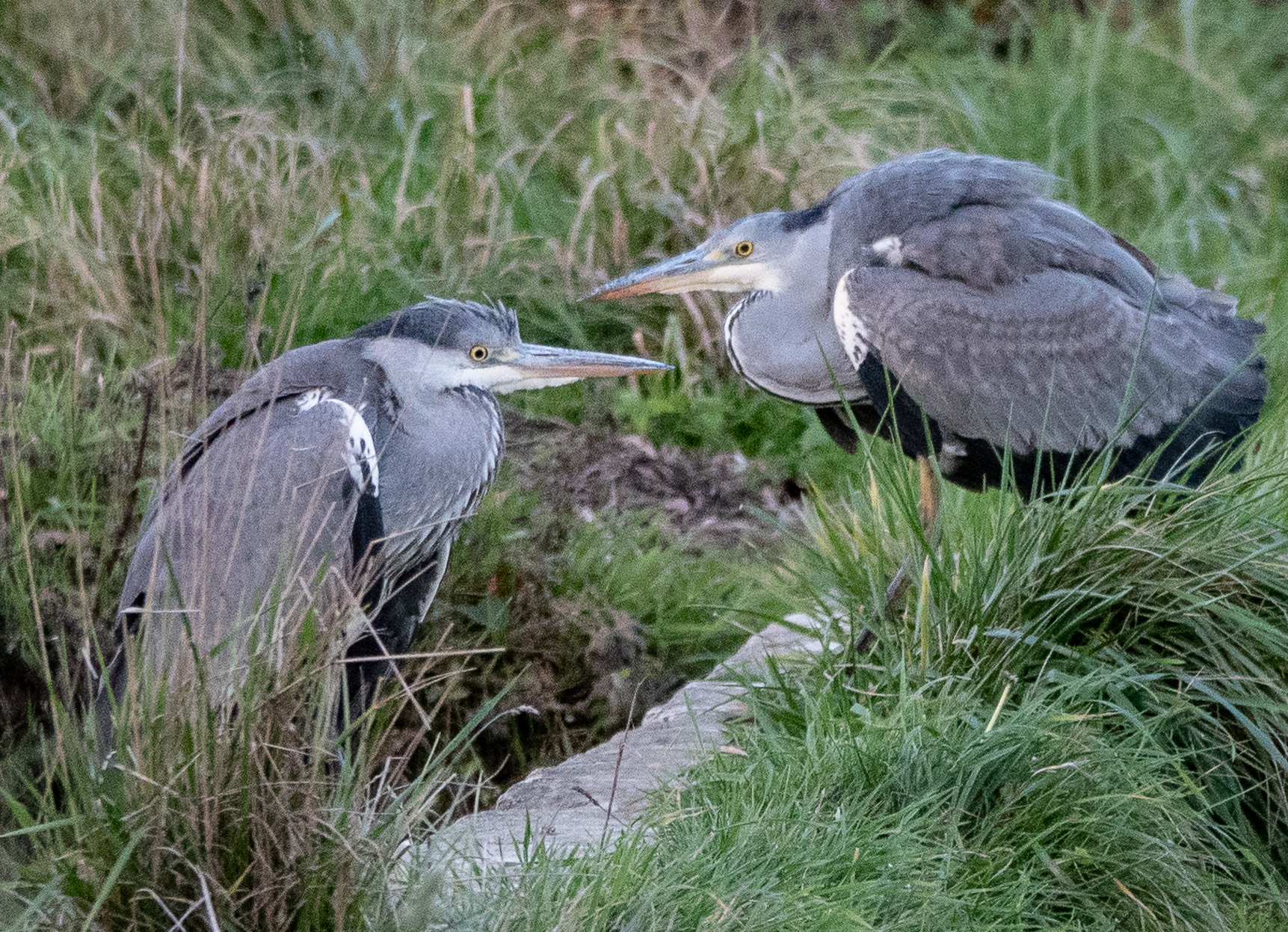
When it landed, I discovered it had come to meet a friend:

DSC08333

I am not sure if this is a pair (they mate for life), but the one on the left has a dark crown, whereas adults are nearly white on top, so I think it is a juvenile, and they may be a teenager and its mother. I have to say they look rather like a long-married elderly couple, hunched and companionable.

*My title was suggested to me by reading Autumn Birds, by John Clare, 1793-1864

The wild duck startles like a sudden thought,
And heron slow as if it might be caught.
The flopping crows on weary wings go by
And grey beard jackdaws noising as they fly.
The crowds of starnels whizz and hurry by,
And darken like a clod the evening sky.
The larks like thunder rise and suthy round,
Then drop and nestle in the stubble ground.
The wild swan hurries hight and noises loud
With white neck peering to the evening clowd.
The weary rooks to distant woods are gone.
With lengths of tail the magpie winnows on
To neighbouring tree, and leaves the distant crow
While small birds nestle in the edge below.

John Clare is for me the greatest English nature poet. He was born a thresher’s son, and spent the last twenty years of his life in a lunatic asylum, yet his poems summon up the natural world of his country childhood. If you haven’t read him, I urge you to do so.

*I Just came back from Robert Icke’s highly original version of Ibsen’s The Wild Duck, which actually includes the words Anas platyrhynchos in the text! But when the (live) duck was produced it was not a mallard at all, but a wigeon!