Back at the Ranch: Hanging out on the Ice

For some time I’ve been sending you blogs from Chile, but back at home, even though winter is fairly quiet, there are things to report, so here is a Maine update.

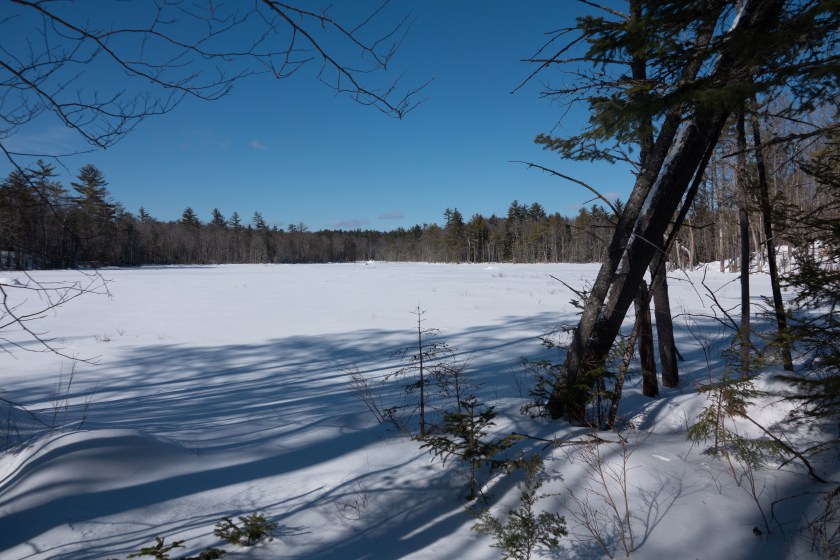
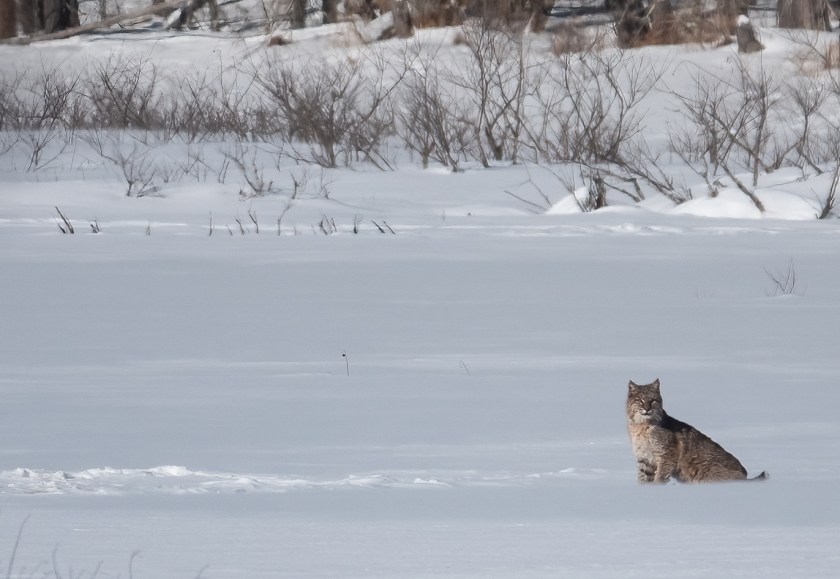
The beaver pond is frozen, and the beavers are supposed to be safely in their lodges, but mine hadn’t got the memo. New Year’s Eve was warmish, and and in the late afternoon I saw a small moving object in the distance on the ice, rear left:

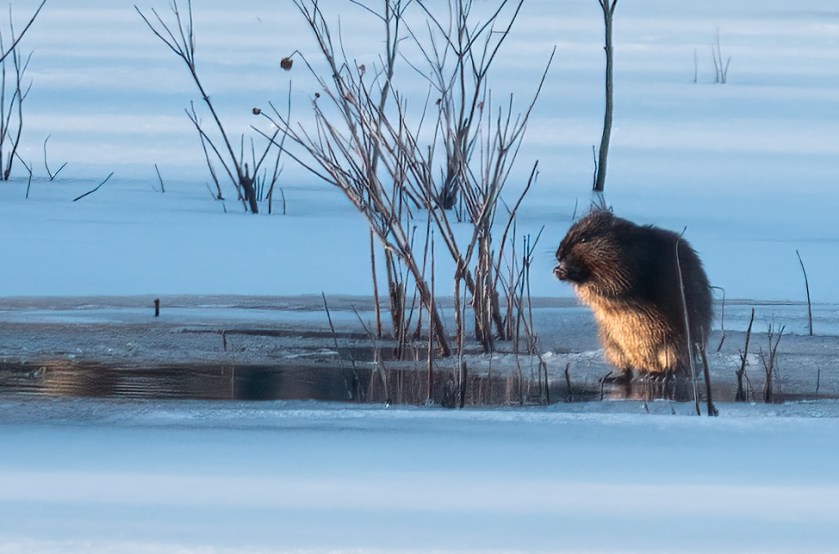
The beaver had decided to catch a few rays:

After half an hour the sun had sunk below the horizon, so he slid back into the water:

but remerged a little later chewing on a twig he had found under the ice, presumably in his stash. I’ve never seen one out in the open in the middle of winter before.

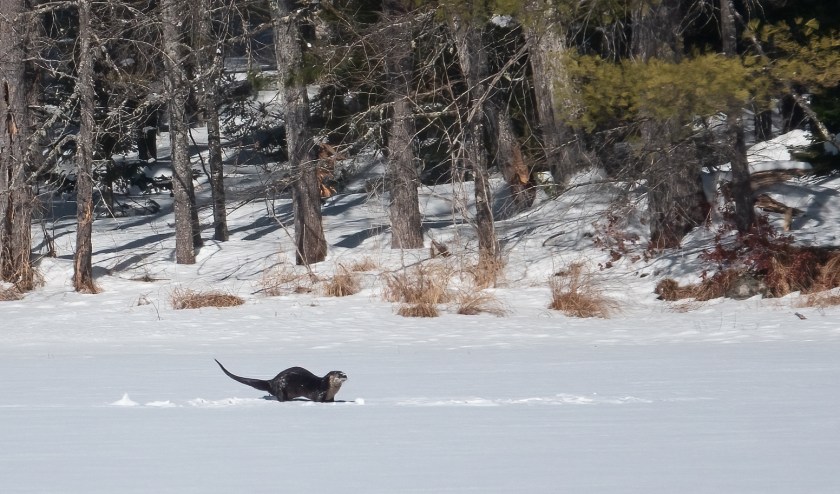
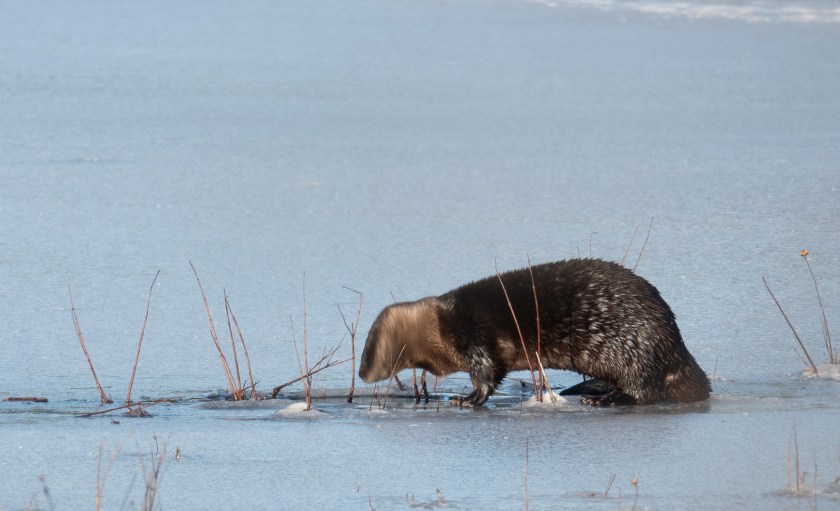
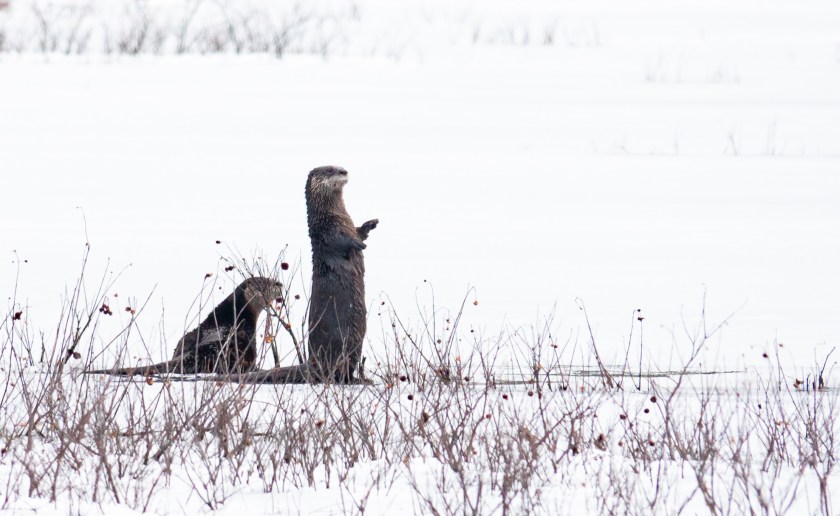
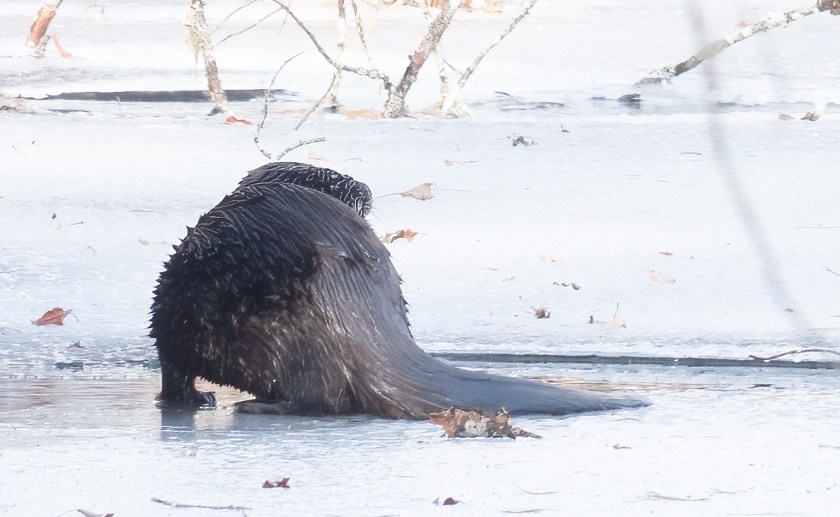
The otters, on the other hand, are regulars all winter long. I will see them three days in a row, then not at all for several days, and then they return. This one had just come out of the water. He is shaking just his head (blurry), while holding his body still (sharp):

They are vigilant out on the ice, but tolerate my presence so long as I am not too close:

This one is pretending to be a mongoose. Once in a while one emerges very close to me, and usually doesn’t stick around:

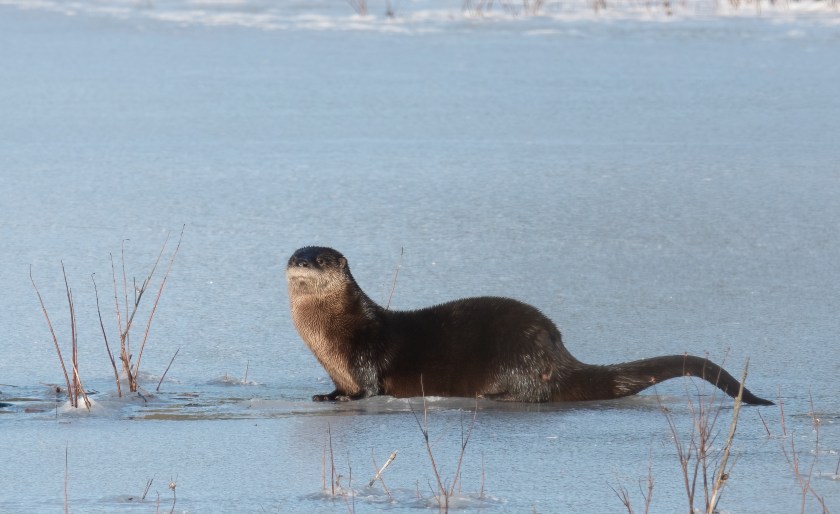
They pose too:

But best of all is when they play; I think this is probably a mother and two nearly fully-grown cubs. The video is about 2 minutes; they go in and out of the water, and near the end they briefly look straight at the camera.

Back to Chile next time.

“The gardener of the Patagonian wetlands”, Part I *

I first saw this animal not in Patagonia, but in the hills of Tuscany, on the edge of a hamlet, next to a tiny stream, or more precisely a ditch. There was a narrow path to the ditch through the long grass and we were discussing what had made it.

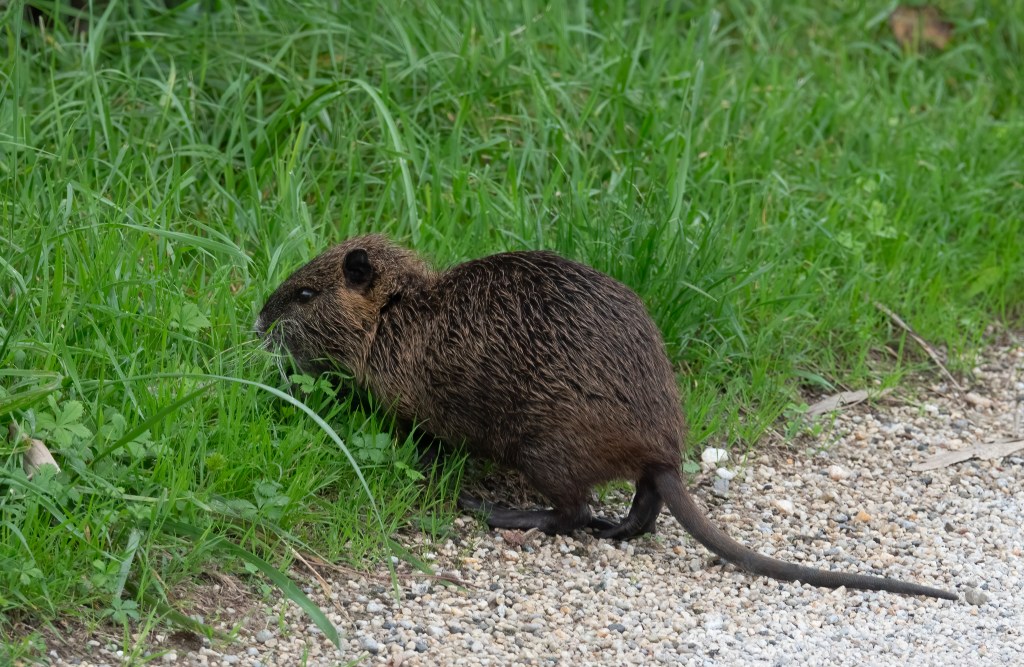
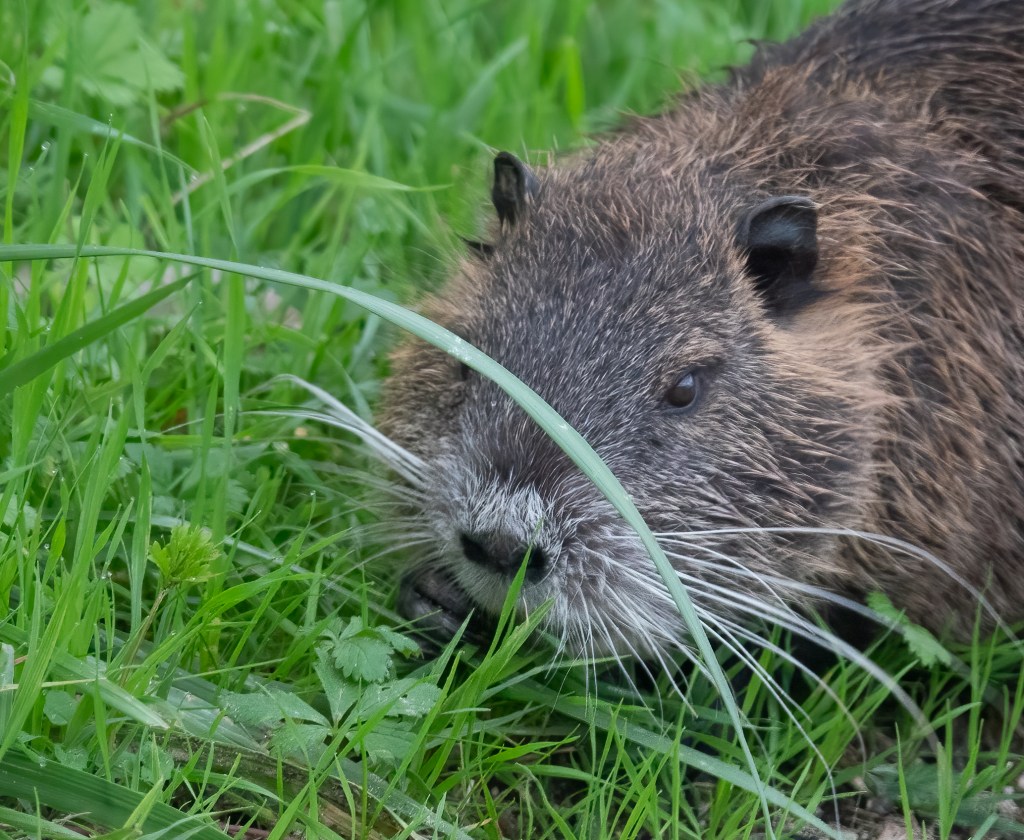
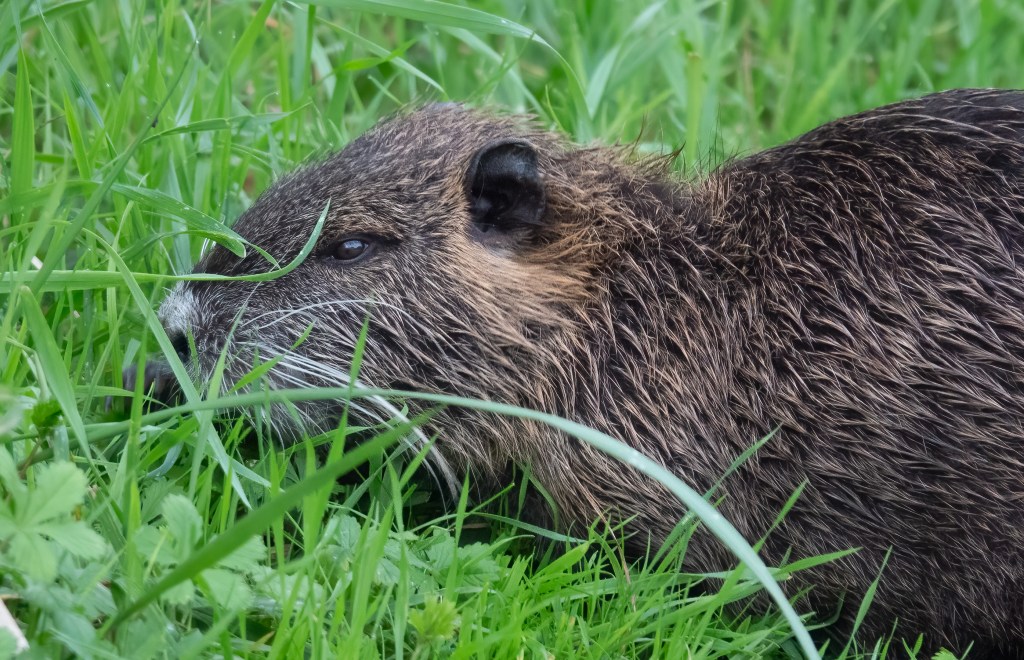
It was a nutria, or coypu. Native to South America, it was brought to Europe and the US for fur farming, and escaped (or was released when the fur farms closed). Its scientific name is Myocastor coypus, literally “mouse beaver”. Its many names are confusing. Coypu is preferred in South America, where nutria can also mean beaver or otter. In Italy it is sometimes called castorino, little beaver, and in Germany Sumpfbiber, or swamp-beaver. In much of Europe and the US it is considered an invasive species, damaging water banks and crops like rice as it burrows into them.

It weighs 10-20lbs:

and has webbed hind feet and a naked tail:

and a white muzzle with long whiskers:

If you rank some other aquatic rodents by size, starting with the smallest, you get muskrat, coypu, beaver, and then capybara. All are vegetarian, but their ranges differ. Coypu and capybara don’t like the cold, which limits their range to balmier latitudes. Nonetheless, once they get loose they can expand their territory amazingly fast. This map showing how they conquered France and beyond is from Schertler et al 2020:

How do they do this?? They live to about three years old in the wild. A litter averages four, but can be as large as thirteen, and they can mate again 2 days after giving birth, so a female can have six or seven litters in her lifetime, potentially adding up to a tally of 91 offspring!.

They were bred for the fur trade because of their remarkable coat. From the outside in, they have 3in long guard hairs, then beneath that a coarse dark brown mid-layer fur, and a thermal undercoat of soft dense grey under fur. This underfur is itself called nutria.

Like beavers, their teeth grow all their lives and are orange. Coypus are mainly nocturnal or crepuscular. They build subterranean burrows and also floating platforms.

I am off to Chile soon, and hope to see them there, where they belong.

PS Coypus get about. They have also surfaced in Japan. This 1996 poem by Ito Shinsuke is transliterated from Japanese; the word nutria has become Japanese nutoria..:

“Shirasagi mo Sugamo mo Koi mo kechirashite/ Sasagase gawa wo Nutoria yuku.”

The English translation:

“Pushing away white herons, ducks, and carp/ The nutria goes his way in the River Sasagase.”

PPS My title is the Argentinian nickname for coypu

Beavering away

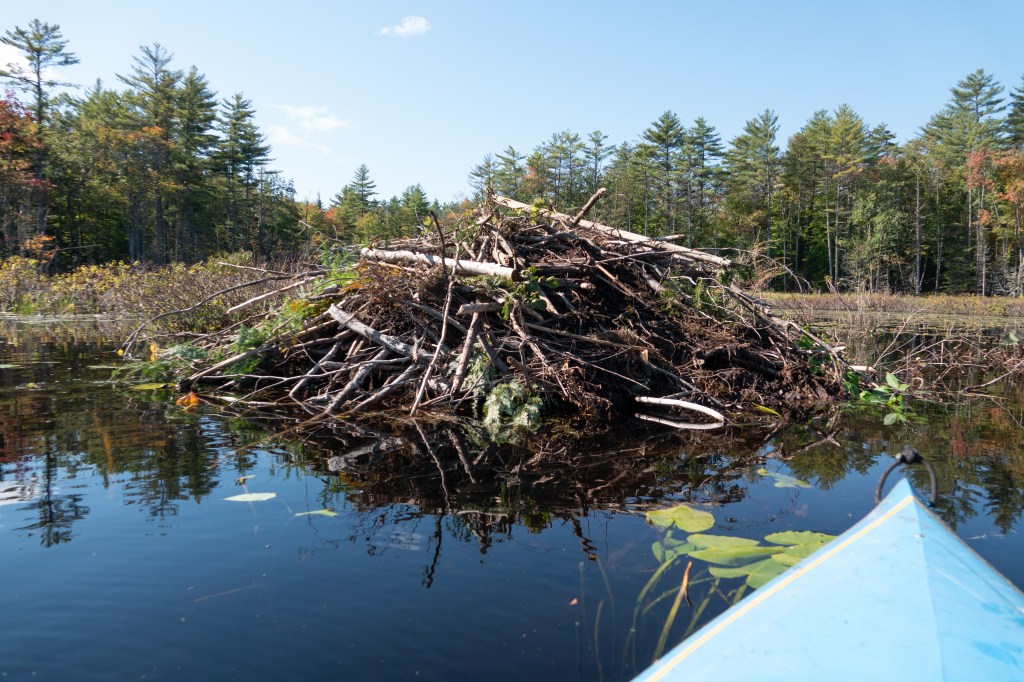
The beaver(s) have been very busy building a new lodge for the upcoming winter. My blue kayak is for scale:

The beavers are completely nocturnal, so each morning I take a photo from the shore, and compare it to the previous day for progress.

They build a heap of vegetation, pretty haphazard. As it grows they add mud, then more vegetation, including limbs up to maybe 3″ diameter, but also hemlock twigs and other leafy branches. I created a short stop-motion movie out of a series of shots, but you’ll need sharp eyes to spot the difference from day to day. A green branch gets added, but then wilts and turns brown or gets covered by woody debris:
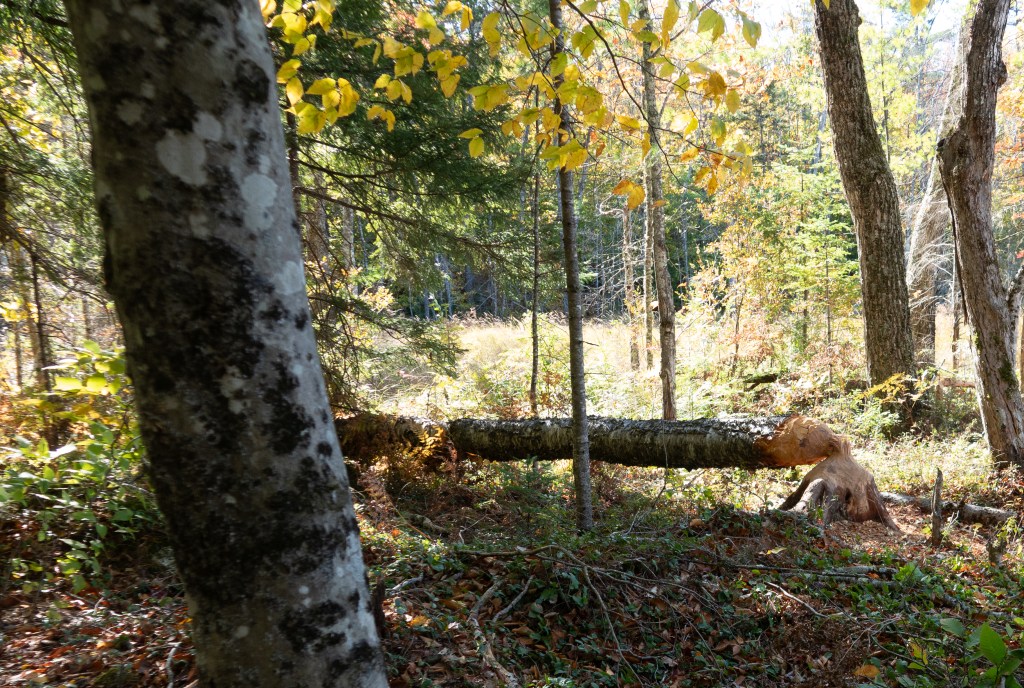
Their raw materials come from naturally fallen trees, or ones they have cut themselves:

And which finally fell in a windstorm some days later:

They felled the small hemlock below, and then returned and pruned off all the side limbs:

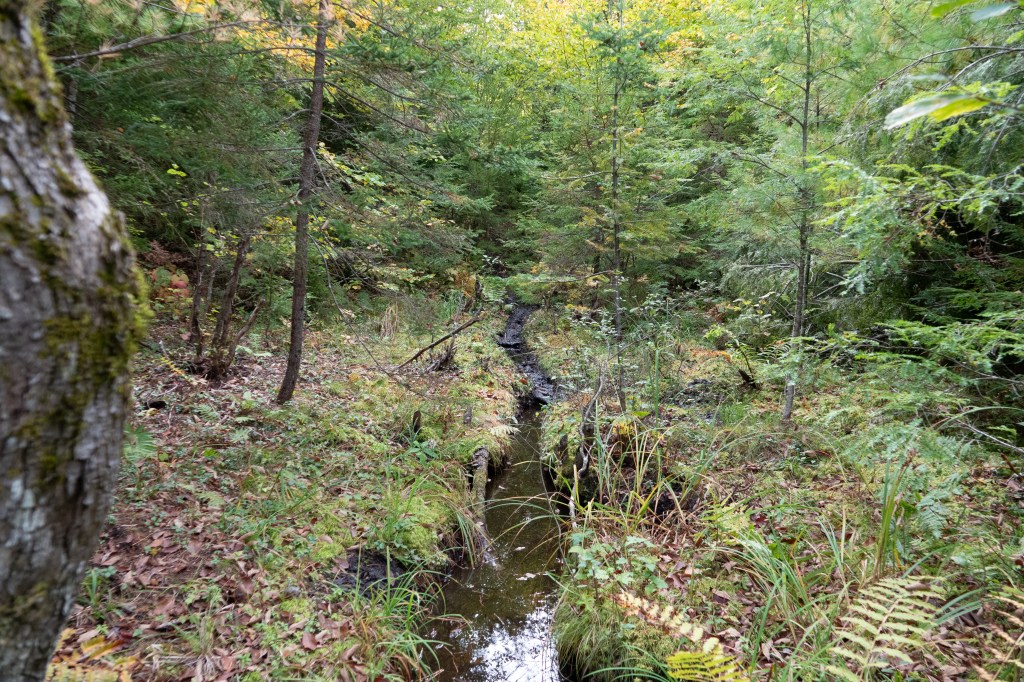
If there aren’t enough trees close to the water they sometimes build canals, which allow them to stay in the water for longer and also float trees down to the pond:

And in this case it looks as though they were used as a source for mud, which they scraped off the banks:

Mud also comes from shallow areas of the pond. In the photo below they scraped a mud bank next to the lodge of all its vegetation to get at the mud:

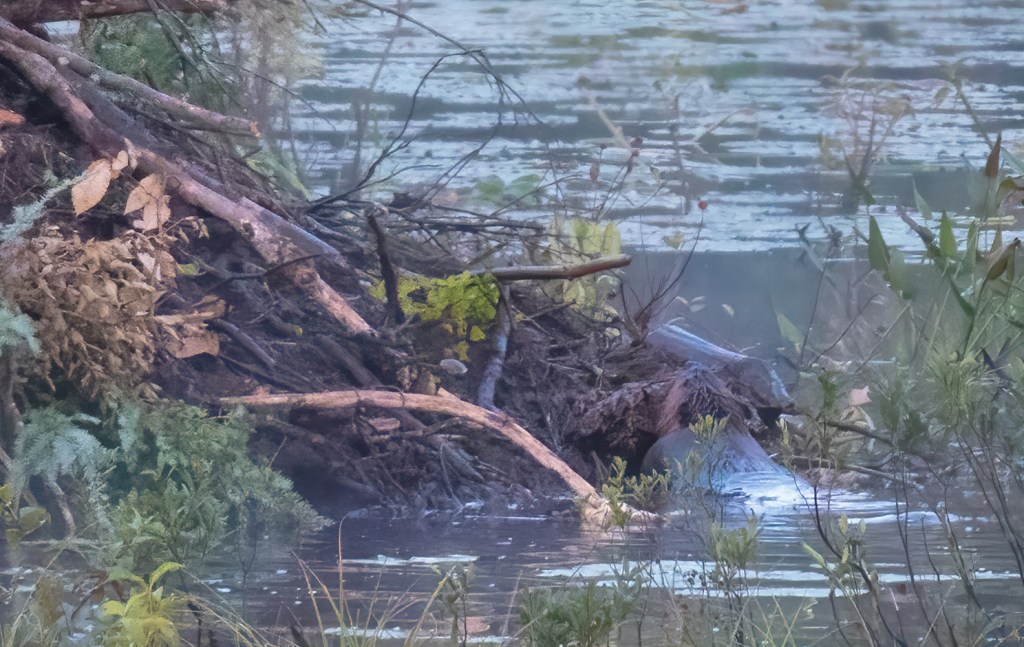
I tried very hard to catch them in the act of building, but it’s tricky when they are nocturnal, and 30 minutes walk deep in the woods behind my house. Eventually I got up at 5.45am, drove part of the way into the woods in the dark, and positioned myself just as it was getting light enough to see the lodge. I did this three mornings in a row, and finally saw a beaver pushing a big lump of mud up onto the lodge. By the time the light was good enough for a decent photo he had stopped work for the night, so this is the best I can show you. He’s in the bottom right-hand corner, sleek and wet from the pond, with his back to the viewer:

I also tried in the evenings, but no joy.

Here is what a mudded section of lodge looks like close-up.

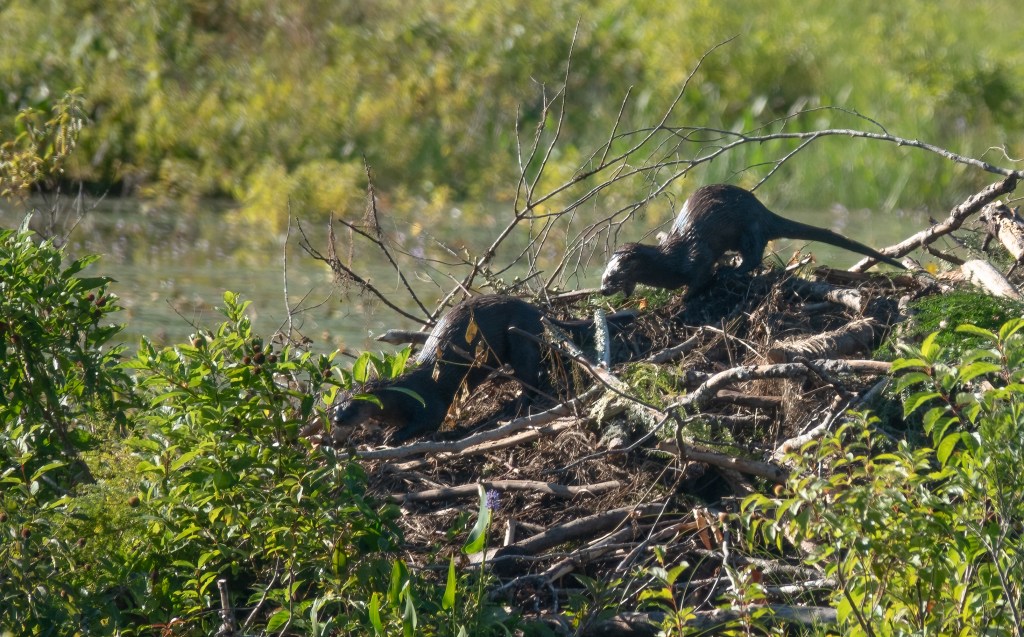
As the lodge grew, the local wildlife came to visit; a mother and teenage otter:

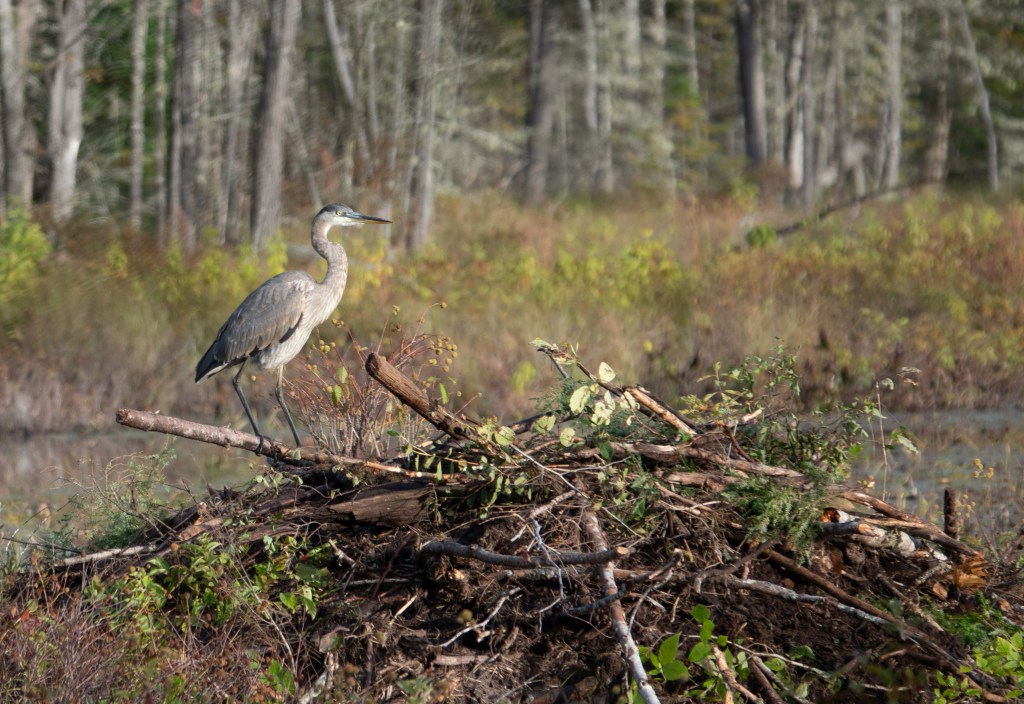
and Great Blue Heron.

The beavers are wise to prepare for winter. As fall shows its colors round the pond, here is an abandoned beaver lodge, apparently ablaze: