Wapiti, anyone?

[The other large mammal in Mongolia’s Hustai National Park is the wapiti. It took me some considerable time to understand what we were looking for, because our guide used the names wapiti, moose, elk, and red deer interchangeably. In Eurasia, “elk” is often used for what Americans call moose, but there are no moose in Hustai. We were, it turned out, looking for a close relative of the North American elk, Cervus canadensis, but the subspecies sibiricus. To avoid the confusion with moose, the park rangers call them by the Cree name “wapiti”. “Red deer” was in fact a red herring: it was once thought that red deer, Cervus elaphus, and elk were the same species, but that is now known to be incorrect. C. canadensis has a wider rump patch and paler-hued antlers. ]

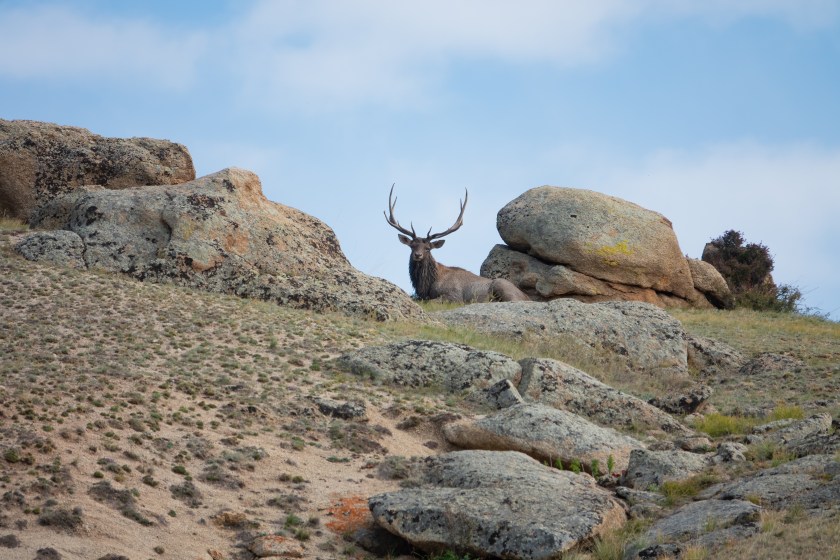
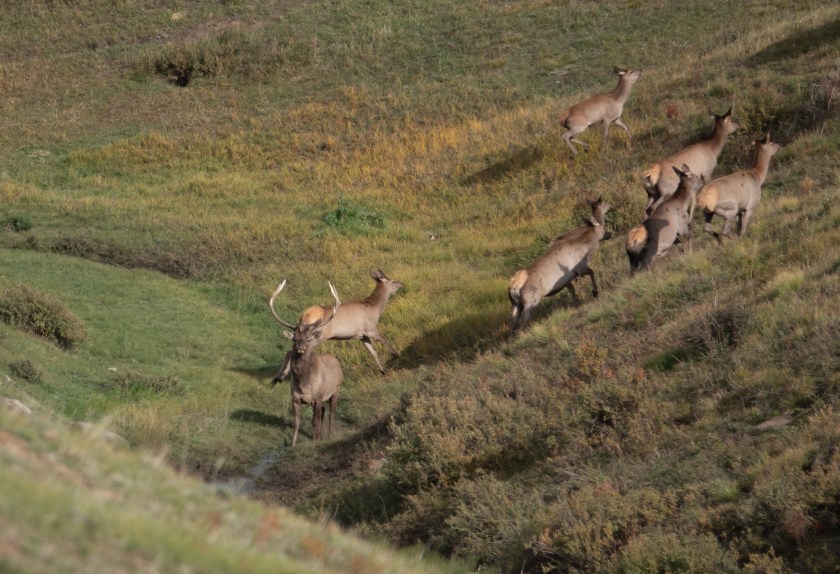
So, let’s stick with wapiti! Hustai has around 1300 of them, and they are not endangered. Here is a handsome bull wapiti, resting from his day’s exertions. It is the mating season, so he either has a herd of twenty or more females to keep under control, or he is trying to win a herd away from another male. Either way, an exhausting job.

This is a group of females:

Their lord and master rounds them up:

and moves them higher up the hill to a safer spot:

If he senses another male nearby, he may bellow, or rather “bugle”, an eerie sound. He stretches out his neck, and lowers his larynx to make his voice deeper and thus make himself seem bigger.

There was a larger male somewhere off to the left, but there was also a very young male right next to him, a so-called “spike” male (bottom left), whose antlers have not yet branched; eventually, the dominant male will throw him out of the herd.

The male bugled frequently, but best of all was one morning at dawn when we had gone to look for wolves, and we heard wapiti bugling intermingled with wolves howling. Magical.

The herd moved down towards us to drink from a tiny stream.

The male kept a very close eye on both them and us:

When some of them headed across the stream his displeasure was clear:

and they thought better of it:

After all this effort, his reward is near: the tongue licking the air is scenting an enticing female:

A man’s job is never done.

Saiga and other ungulates

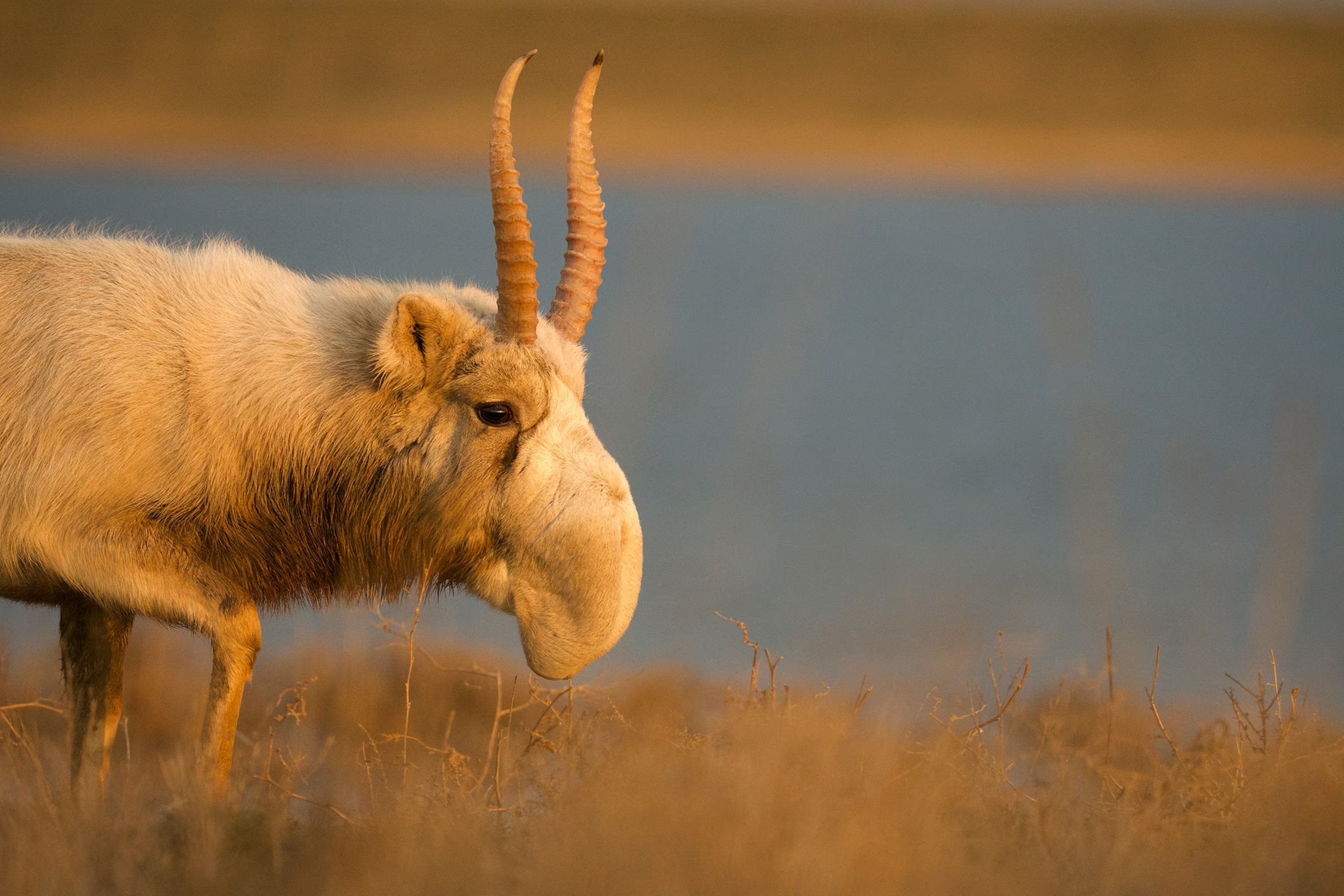
There are several different species of antelope and gazelle in the parts of Mongolia we visited. Of these, the Saiga antelope was top of our list, for three reasons. First, this antelope has grazed the steppes since the last Ice Age, alongside the Woolly Mammoth and the Siberian Tiger. Second, it is a bizarre-looking creature, with the older ones developing an extraordinary proboscis-like nose. Third, it almost disappeared from the steppes of Central Asia in the early 2000’s, being classified as Critically Endangered. It has since recovered remarkably, and is now classified as Near Threatened.

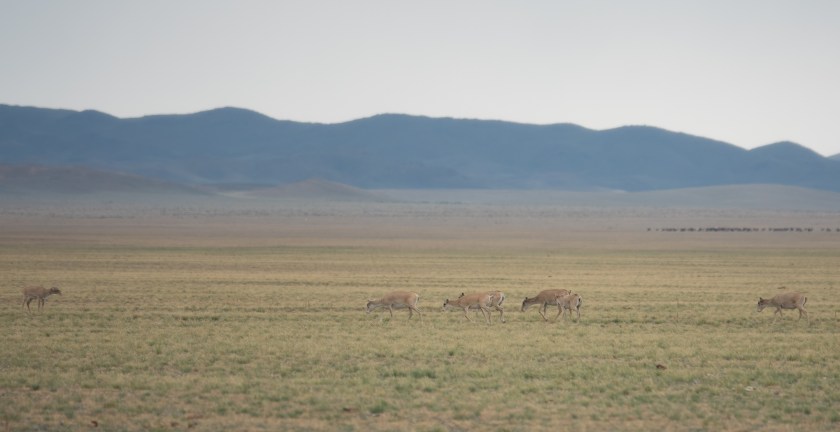
The rugged mountains where the snow leopards live are separated by wide valleys of steppe grasslands. This is Saiga territory. They are skittish, so we never got very close, but we saw a herd of around 30 animals sharing the vast flats with sheep and goats (right in background):

and cattle:

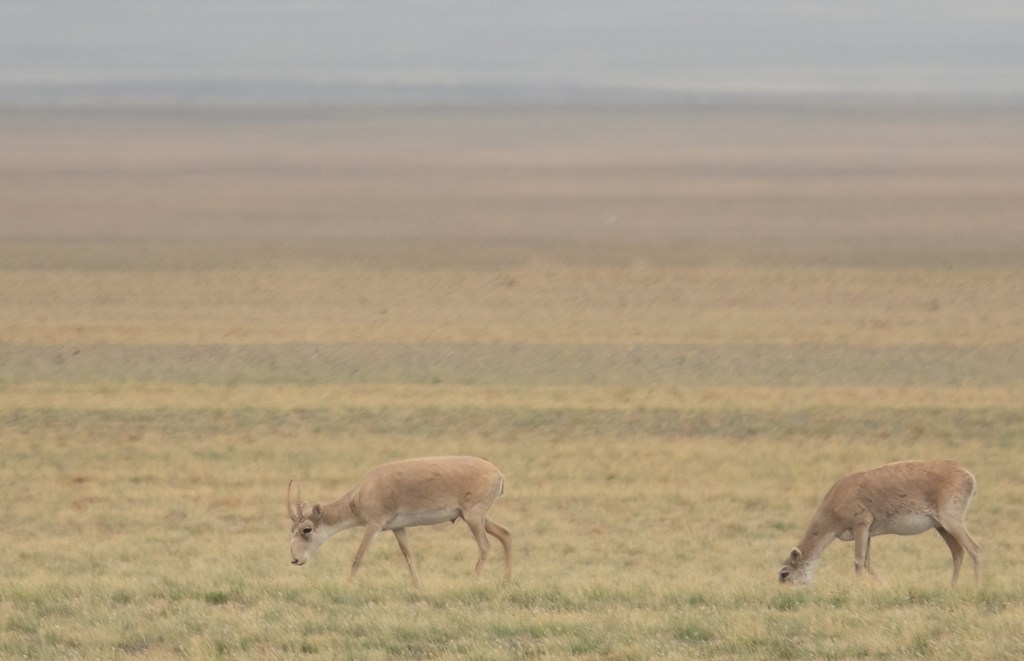
They hold their heads low, even when running:

They have Roman noses and a lugubrious face:

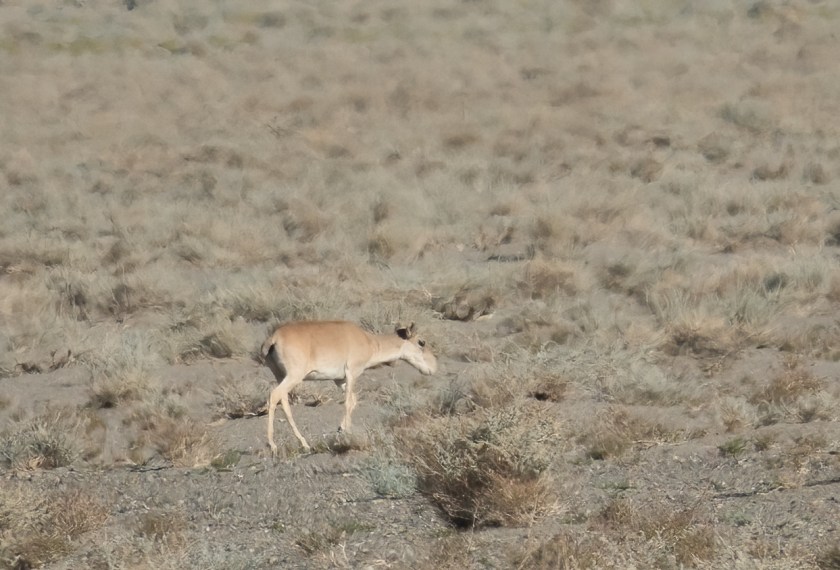
Another day we saw a single doe:

walking all alone and solitary across the plains :

What we didn’t see, sadly, was a mature male with a fully developed proboscis, so here is a photo from National Geographic:

The reasons for the saiga’s precipitous decline were many. After the Soviet Union broke up illegal hunting increased dramatically, driven mainly by demand from China for the horns for traditional medicine. The Pasteurella multocida bacterium caused mass deaths in 2015, and the Peste des Petits Ruminants Virus (PPRV) spread from livestock in 2017 and killed nearly 80%. It gets worse. A 2021 study showed that Foot-and-Mouth Disease has also spread into the saiga herds, with a mortality rate of 34%.

The rebound in population is extremely encouraging, but they are not out of danger yet.

PS We also saw Goitred Gazelle in the Altai, and Mongolian Gazelle in the west of the country, but too far away to photograph usefully. Here are some Mongolian Gazelle, grazing alongside a herd of horses:

They’re not endangered at all, I am delighted to say, despite being hunted for centuries: “a passage in the 13th-century Secret History of the Mongols tells how a young Shigi Qutuqu managed to round up a herd of gazelles in a winter blizzard.” (Wikipedia)

Snow Leopard Quest: the nuts and bolts

[In pale imitation of the BBC’s documentaries which always include a section on “Making Planet Earth”, this post is more about ‘how we saw it’ than about the nature itself, so it may not interest you. Back to proper nature next time.]

To penetrate the mountain fastness where the elusive snow leopard lives takes planning, time, and the skill of a lot of wonderful people.

This is what we went to see, up to 59″long plus 41″ tail, 120lbs of predatory grace (photo from the World Wildlife Fund website):

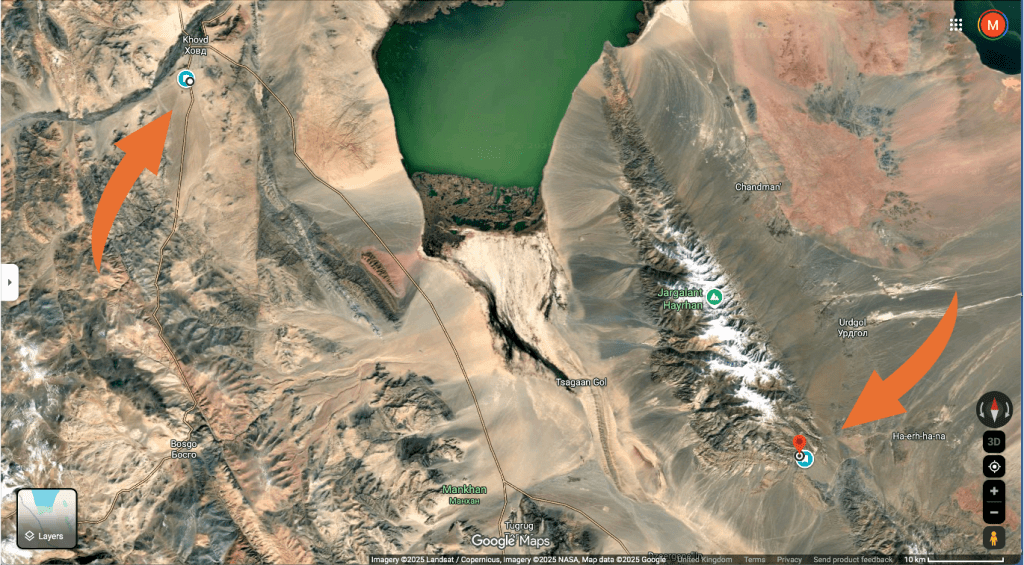
They live in Central Asia and the Himalayas, and we saw them in the Altai area of Mongolia. We flew to Khovd, 2 hours west of the capital Ulaanbaatar

then drove from Khovd, top left, another 2 hours or so to our base camp at 1500m high, bottom right.

The leopards live in the Jargalant mountains, snow-topped on the map.

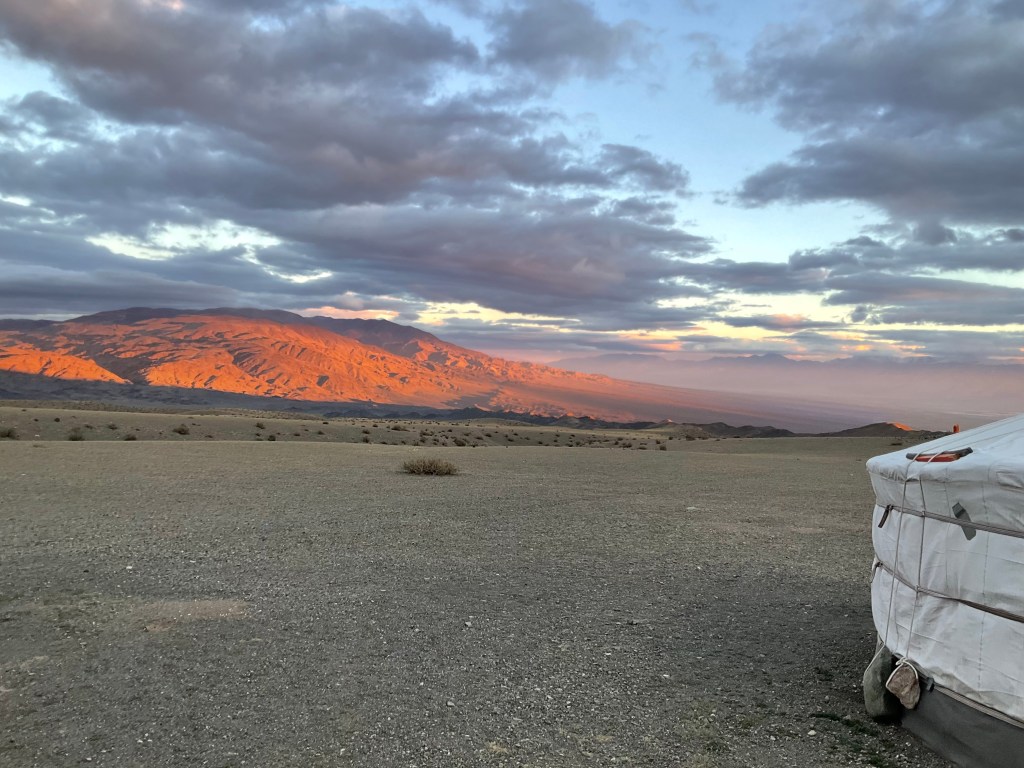
Our base camp had eight gers, each with painted doors, wooden beds and a pot-bellied stove. :

The camp was owned and run by a family. The pater familias was Soronzon, (who we nicknamed Big Daddy):

plus his wife and daughter (our excellent cooks, not just dinner at camp but a hot lunch in the field every day):

And then his two sons, who were a driver and a scout respectively, as well as being of necessity resourceful mechanics:

even if they eventually needed reinforcements:

The scouts live in an isolated ger, scanning for snow leopards; theirs was on top of the mountain, and I’ve lost my photo, but the different one shown by the arrow below shows you how they are dwarfed by this landscape:

The grand-daughter came along one day too:

And of course the excellent Istvan, our Hungarian guide, whose photo you saw in the last post, and a translator called Eta, the daughter of herders.

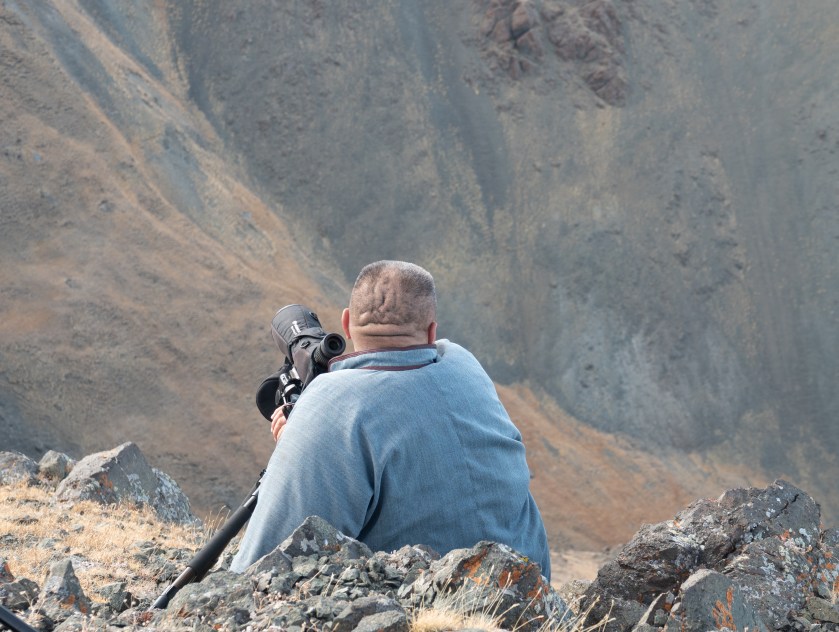
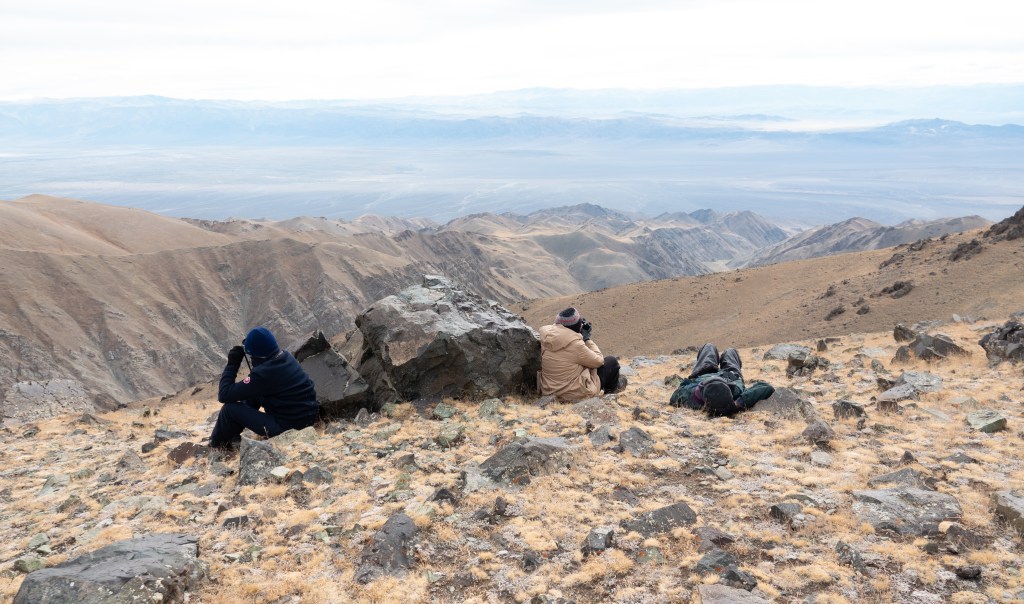
All these photos were taken on our first full day of searching, us sitting on the rocky ground with our binoculars, the guides using their scopes. We were at about 3300m, nearly 11,000 feet (5000 feet higher than Mt Washington, the highest peak east of the Mississippi).

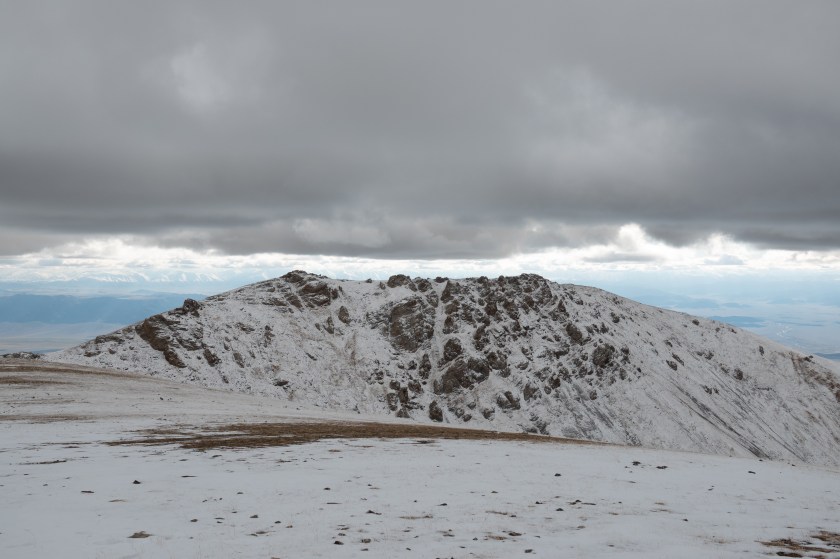
The vistas are wild and open and stark:

But no amount of scanning rustled up a leopard that day.

The next day it rained, and we were also told the leopards had probably descended to lower altitudes, following their prey, so we too stayed low down and looked for other animals.

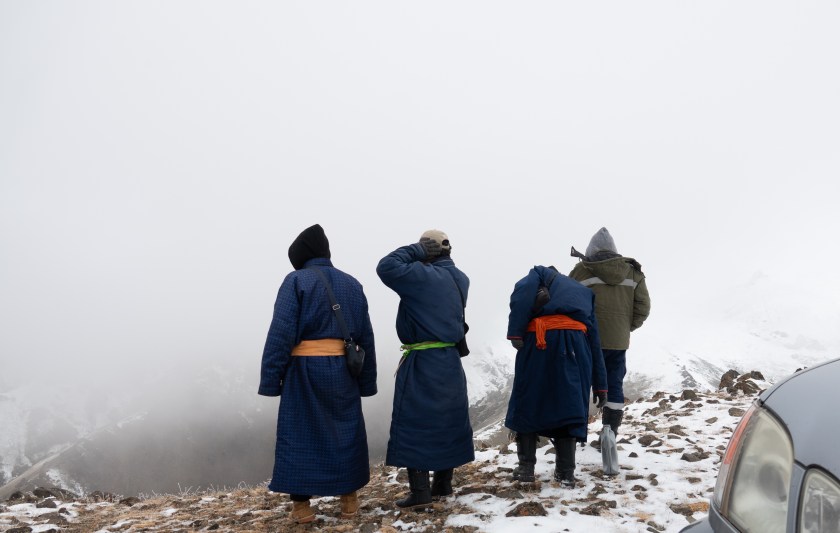
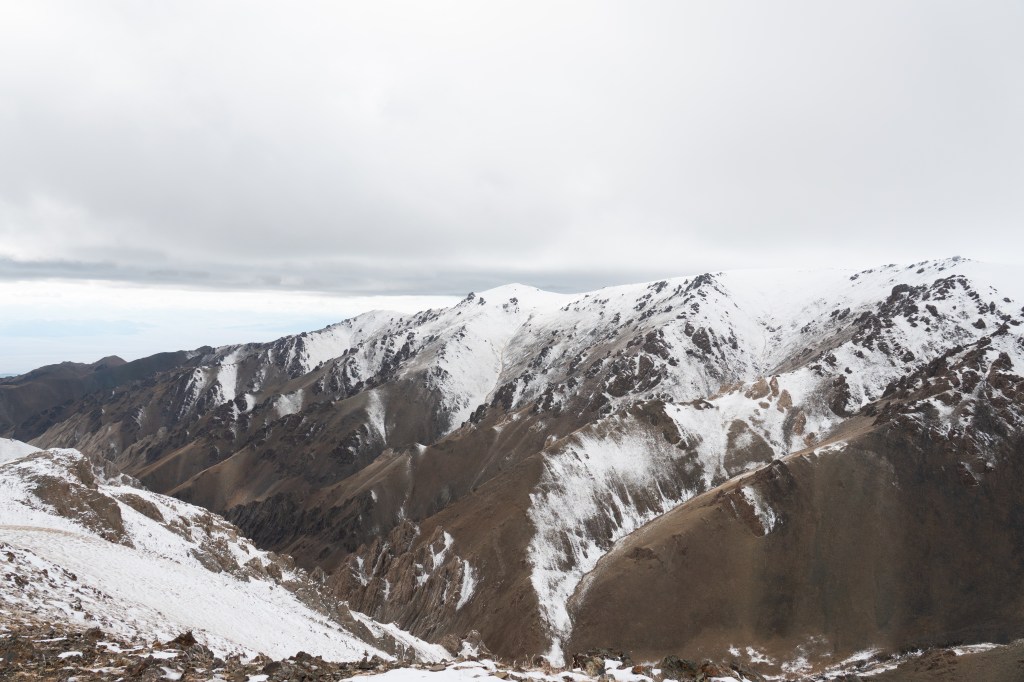
The following day the mountains were covered in cloud, and the rain of the lower altitudes had been snow up there, so we stayed lower during the morning, but after lunch we were told the clouds were starting to lift, so we set off, into a whiteout. The intrepid scouts, who live high in the mountains all summer, emerged from the mist:

and scanned the hillsides whenever there was a break in the clouds.

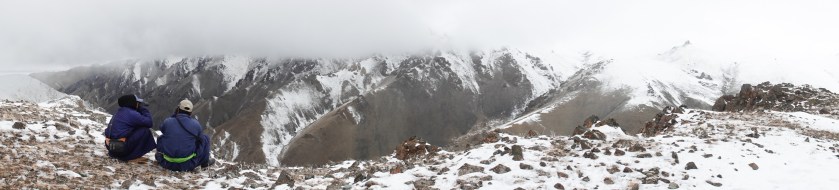
As predicted, the clouds lifted, slowly, and for hours we scanned in the cold, retreating to the vehicles when we couldn’t take it any more.

But Istvan and the scouts stayed there throughout.

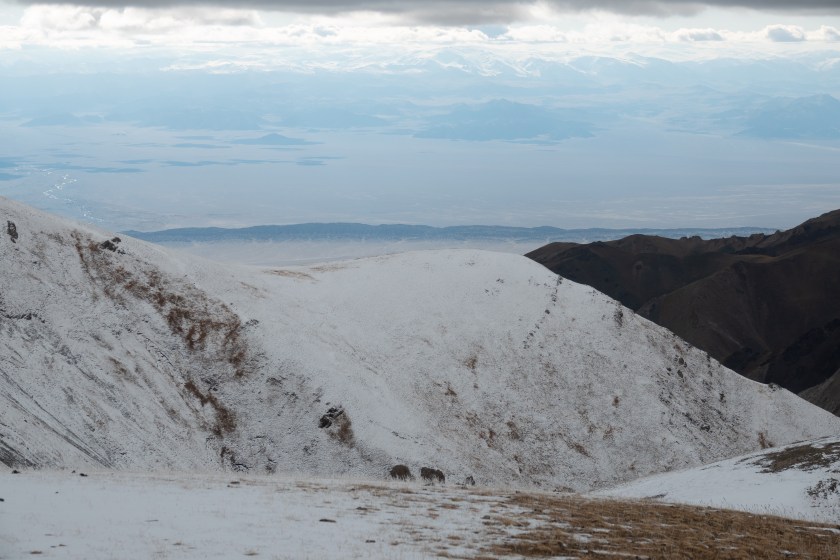
Unsurprisingly we saw nothing, but the views were extraordinary:

The next day was our last day, and the skies cleared. The team decided to search lower down on the other side of the mountain range, and you know what happened next… (from my last post).

A former producer for one of the BBC’s nature shows said that snow leopards were for her “a bit too hard core for the reward”. For me, it was worth it. She also said that it “needs the most expensive cameras on the planet”!  True, and sadly, I didn’t have one.

PS On our last evening in camp, two musicians from the local village of Chandman played for us. One was a throat singer, listen and watch here. The last portion is the Q&A in which he demonstrates his techniques. (Thanks to Stephen and Kerstin for the videos).

Ghost of the Mountains

I have just got back from Mongolia, and this will be the first of several posts. But the biggest hope was to see a Snow Leopard, Panthera uncia, and we did, and so I’m going to start with the day it happened. In later posts if you are interested you can read more about the prior four days of searching, and many other Mongolian delights.

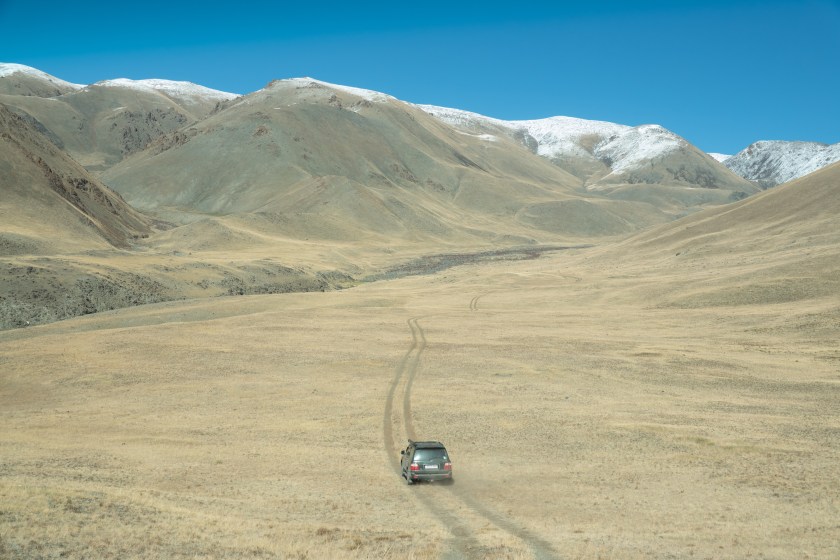
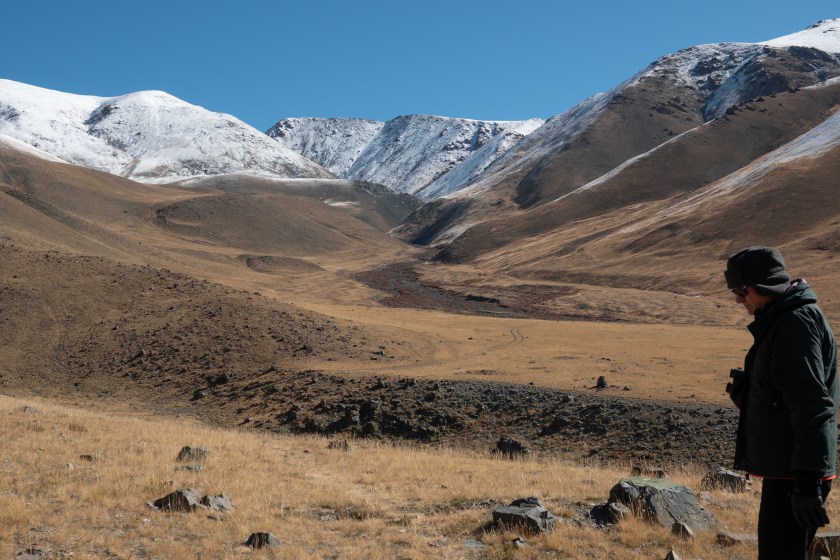
We were in the Altai, in the west of Mongolia. Snow leopards live in these mountains, which rise to nearly 4000m. But it was cold, and our hosts told us the leopard’s prey had moved lower and so had the leopards, and they doubted we would see one. Discouraging. On day four, we went round to a new side of the Jargalant Mt range, and drove up the valley. Here is the ‘road’, and a shot of the glorious scenery:

We paused for a rest, looking out across the distant valley at some tiny dots that were Argali sheep. In front of us was an oboo, a stone cairn surrounded by a stone circle that marks the ancestors and their bonds with nature, lined up precisely with a gap in the hillside.

We drove higher:

and stopped for lunch, at about 2600m. The snowline was around 3300m. The scouts on their dirt bikes arrived to join us.

At the bottom of the valley in the photo below is a tiny dot, in the centre of the photo. That is a dirt bike, so you can absorb the scale of this landscape. .

We settled down,

Istvan our guide scanning the hillsides:

No sign of a leopard, just some distant yaks and an ibex.

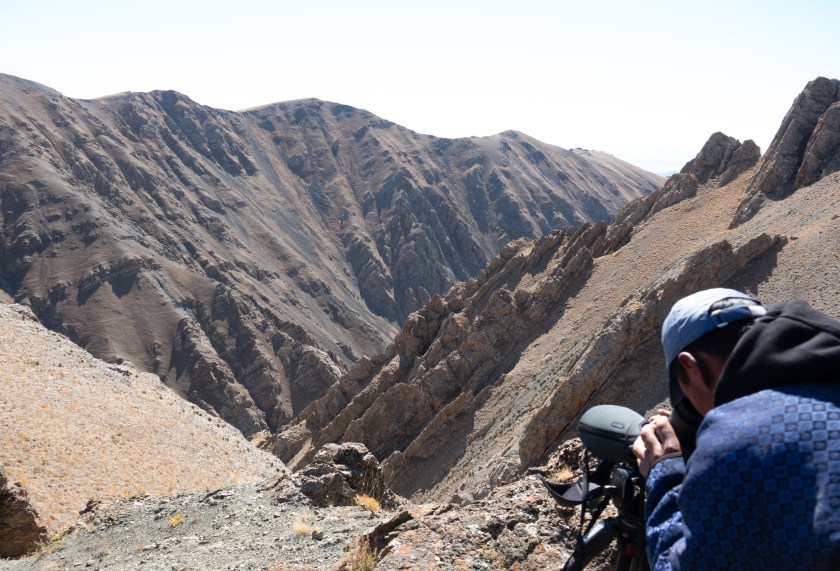
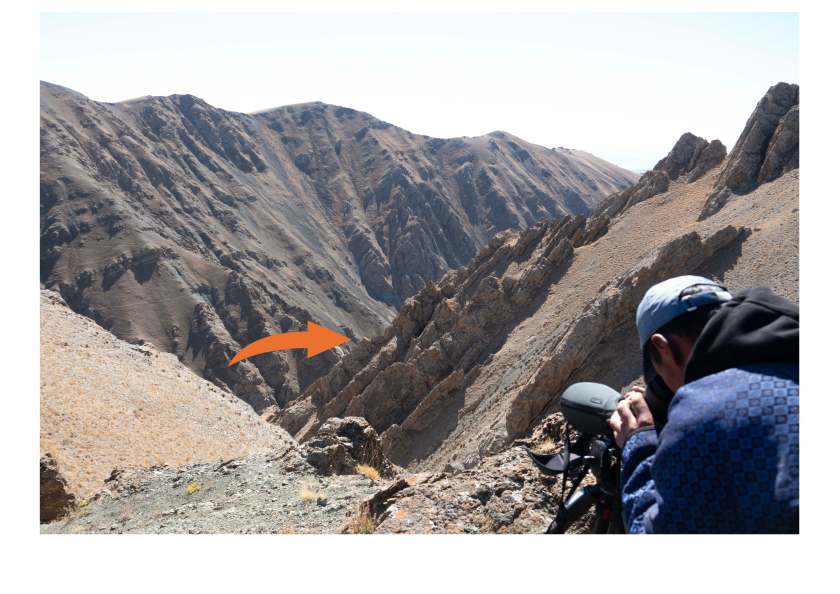
This was our last day in the mountains, and at 1.30pm we started to get into the vehicles, when there was radio crackle, and excited chatter in Mongolian from our guides. Unbelievably the scouts (who had finished lunch and gone back to search) had seen a leopard. We hiked across a steep hillside for about 10 minutes, and looked down into another valley. One scout materialized, and looked through the scope.

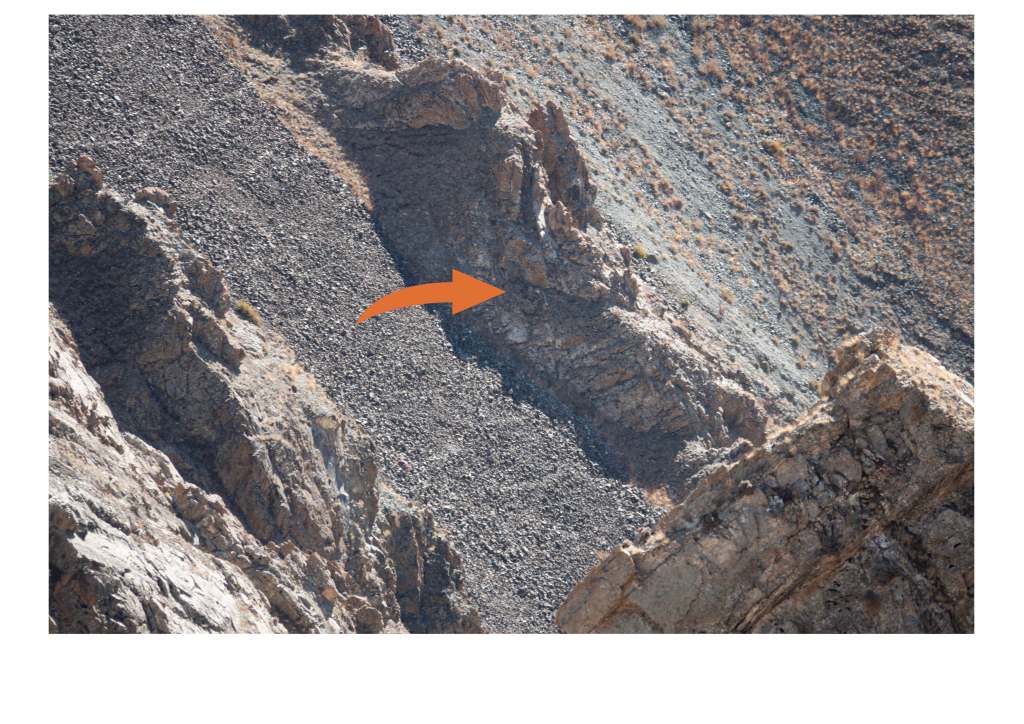
The leopard is here, 800m or 1/2 a mile away across the valley:

Look closer:

My camera is not up to BBC David Attenborough standards, so my photo is unimpressive, but it is indeed a snow leopard, asleep on a ledge, 1/2 mile away:

Only the tail gives it away. There was a dead ibex nearby, so it had eaten and was now guarding its prey and taking a nap. It may stay with its prey for a week, and kill every 10-15 days. How the scout had seen it was beyond us. He said it had slightly shifted to get more comfortable, and the movement had given it away. What skill, and what eyesight.

Had we left 30 minutes earlier we would never have seen a snow leopard. There is something about knowing that you have brushed up against the world of such a mythical beast that fills your heart with joy. Sometimes the stars align.

PS Mongolia probably has a population of around 1000 snow leopards spread across around 100,000 square kilometers. Each solitary animal can range over around 500Km2.

https://globalsnowleopard.org/paws-preliminary-estimates-of-mongolias-snow-leopard-population-released

There are around 4000-6500 worldwide. The IUCN classifies them as Vulnerable, and no longer as Endangered (which indicates less than 2500 left worldwide), but this is controversial. Much of their isolated habitat is not explored. If you are interested, a very good summary of their behavior and status can be found here:

Miracles do happen

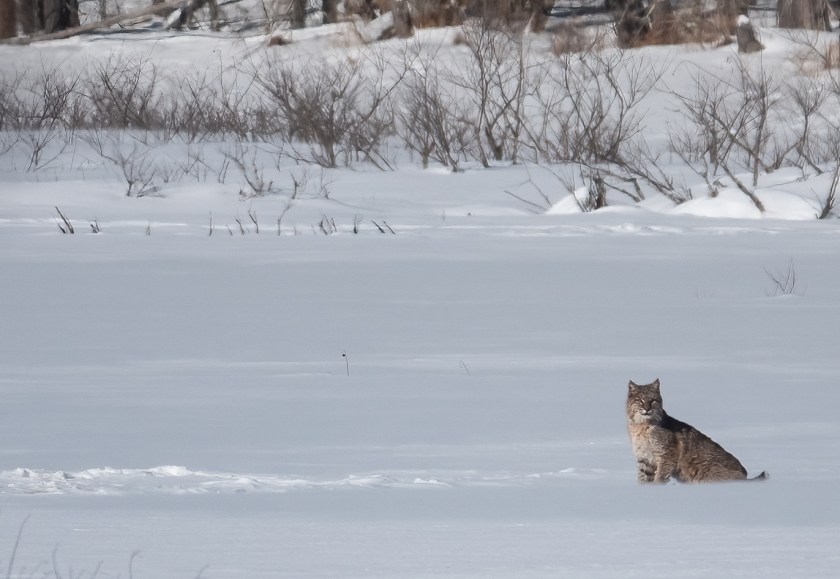
I have lived in Maine on and off for 43 years, and never seen a bobcat. I have caught them on camera traps, and seen tracks, but that’s it. Until now.

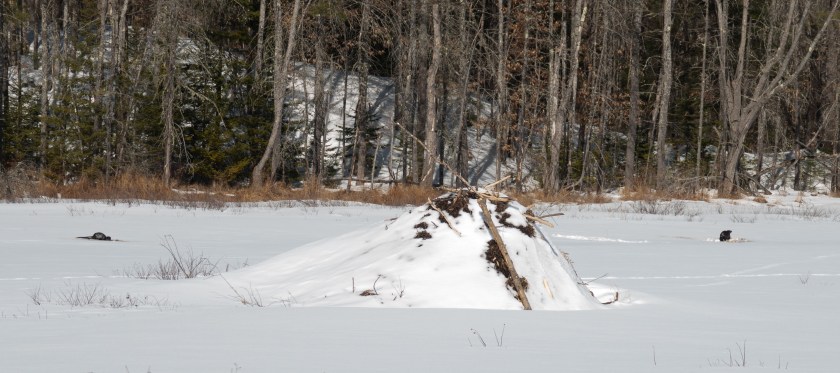
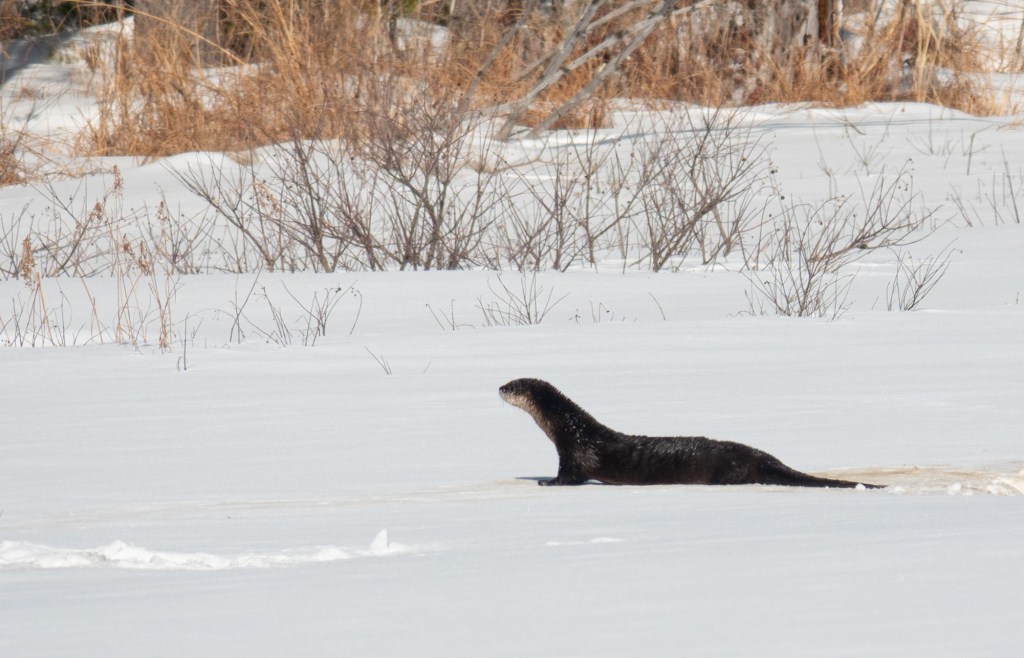
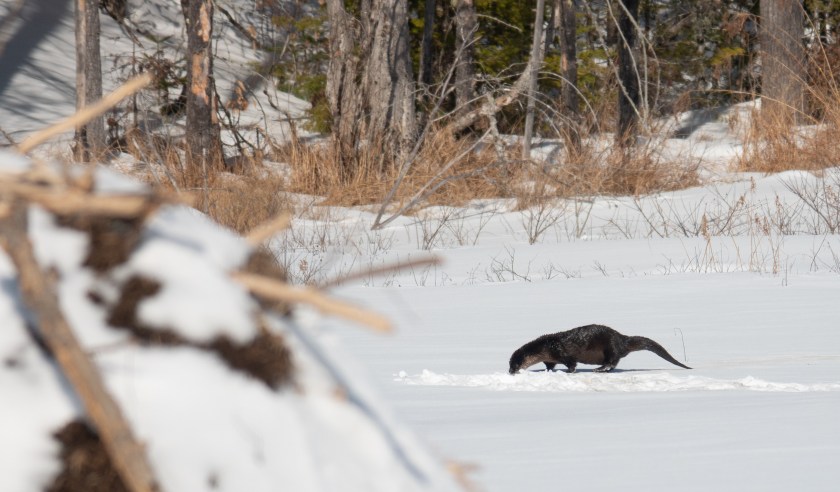
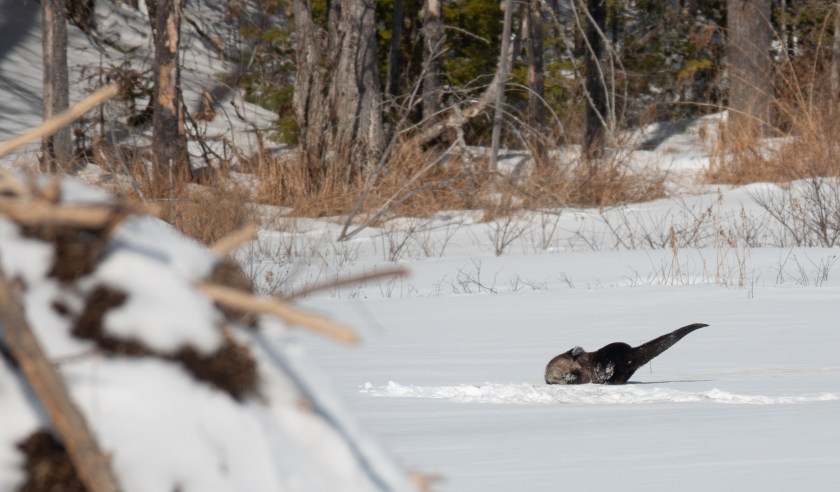
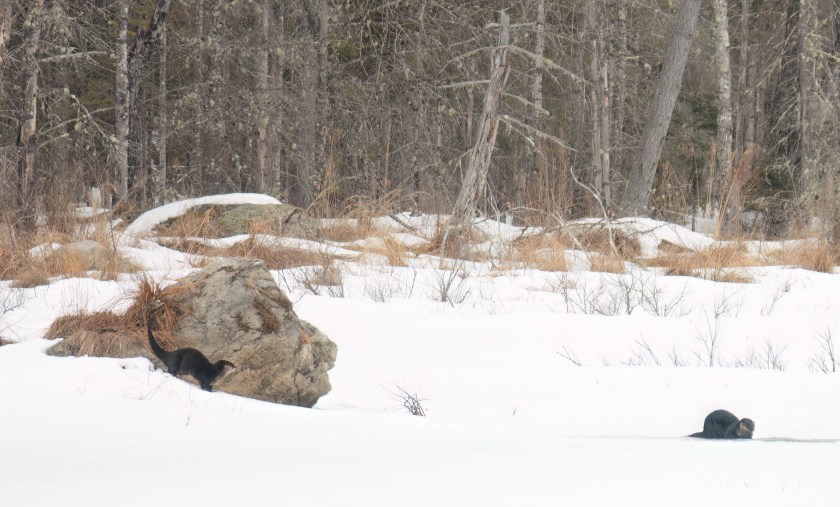
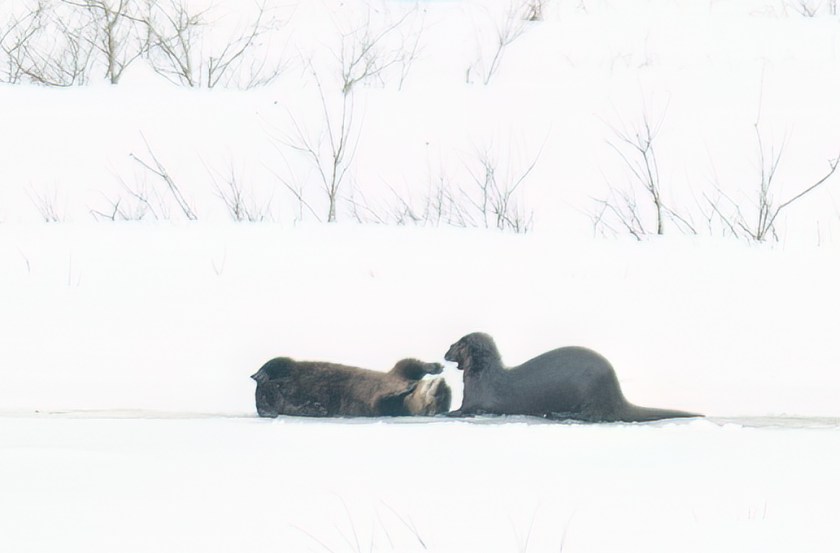
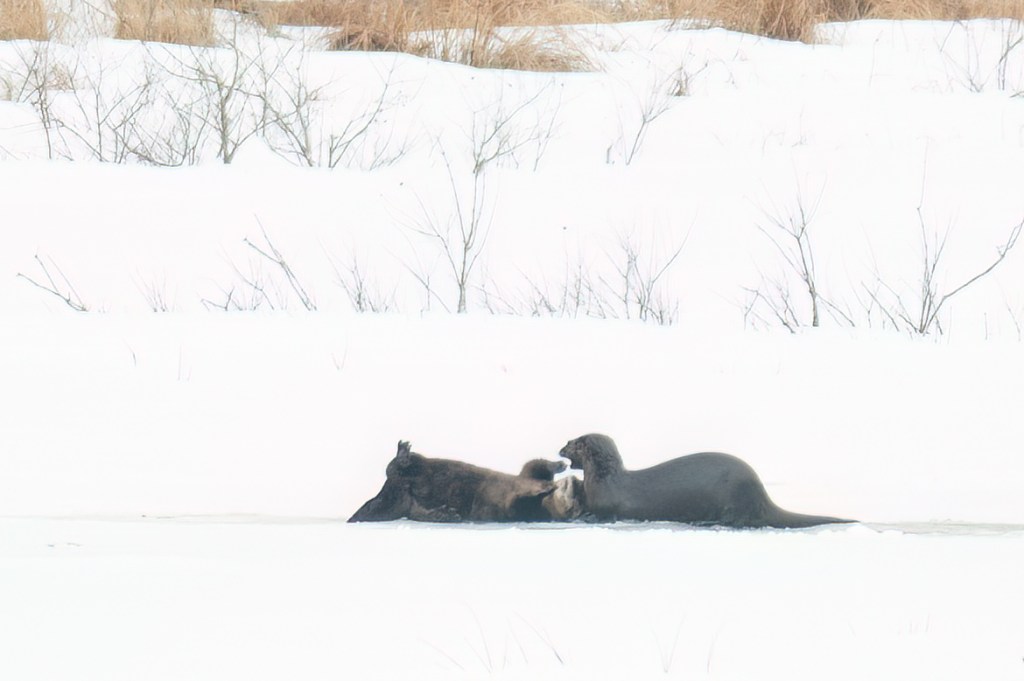
I was out for the second time that day snowshoeing and hoping to see otters. None. I had turned for home, and as always I looked over my shoulder one last time in case they had appeared as I left.

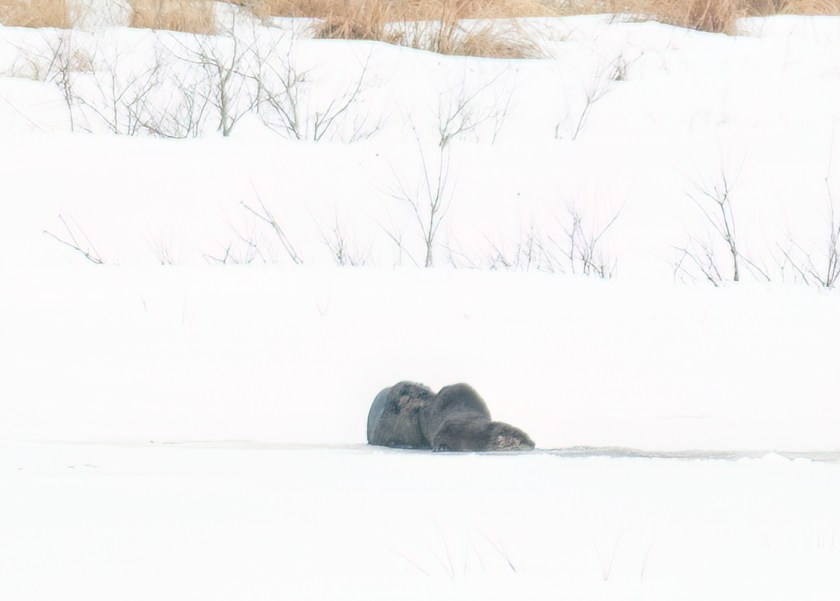
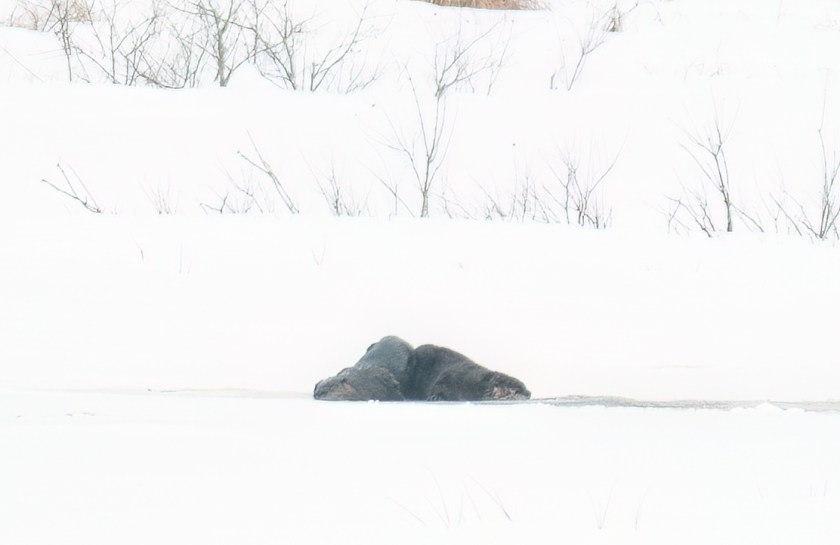
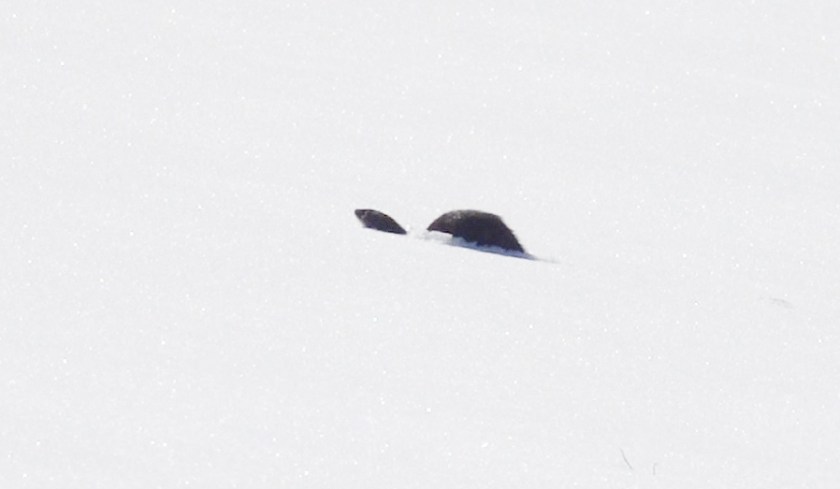
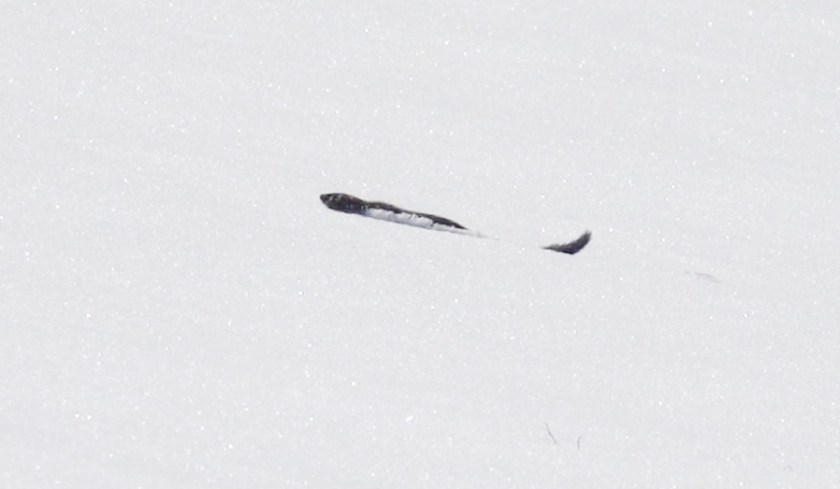
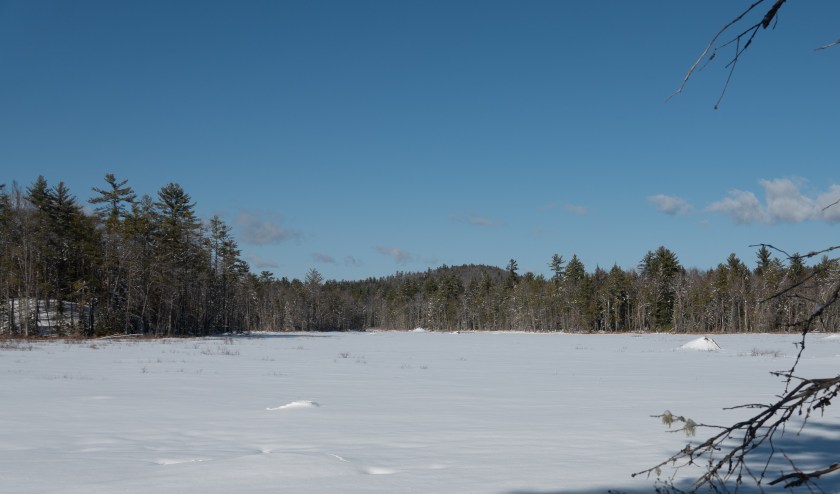
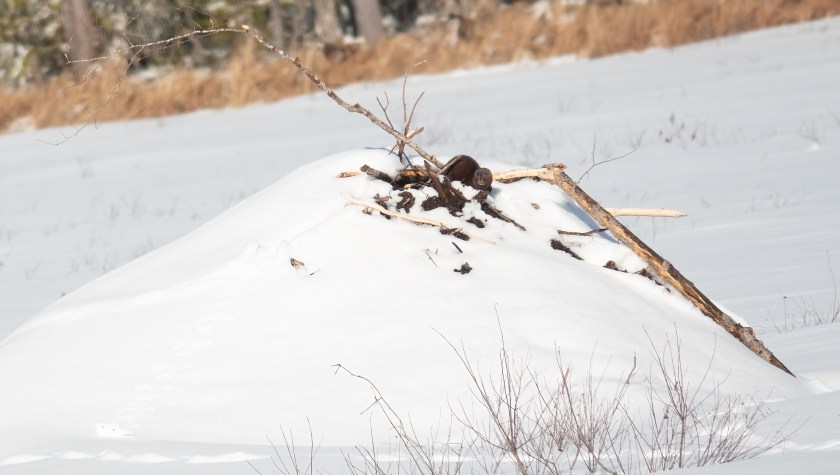
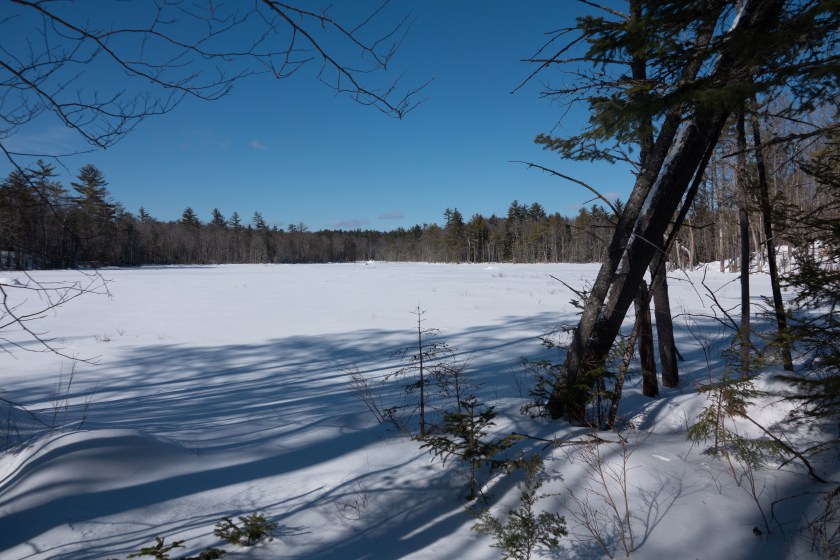
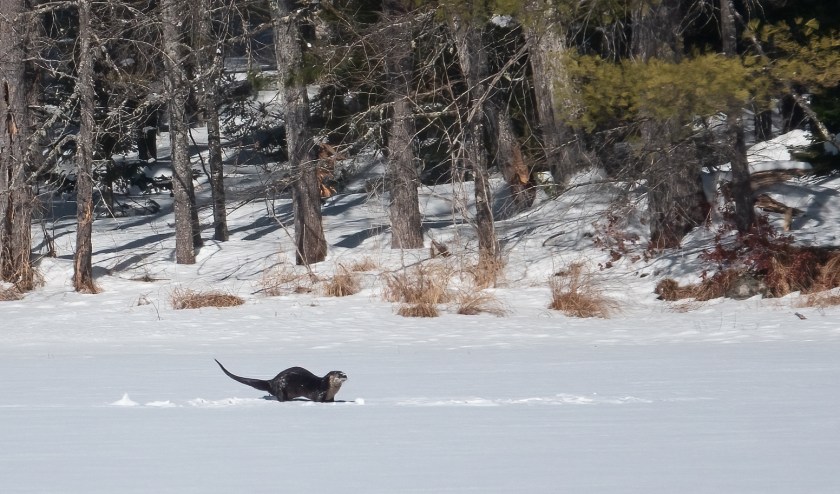
And there one was, on the far side of the pond. So, I headed back out for a closer look:

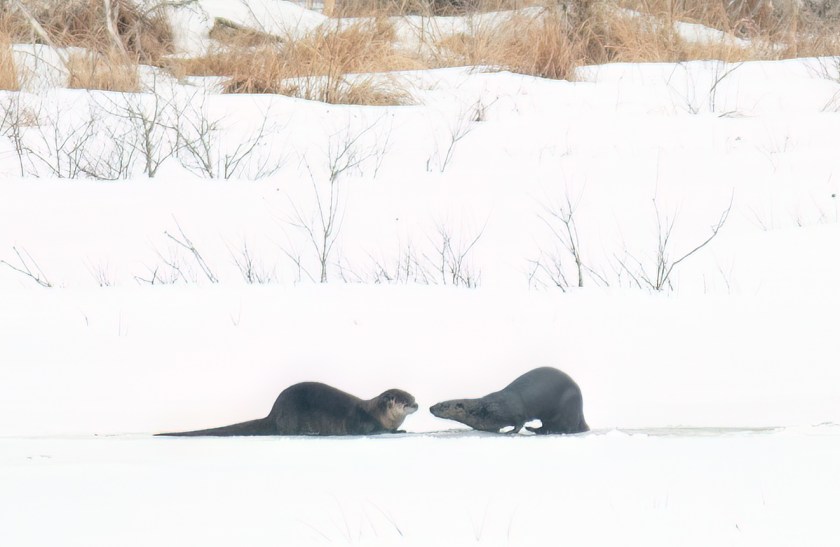
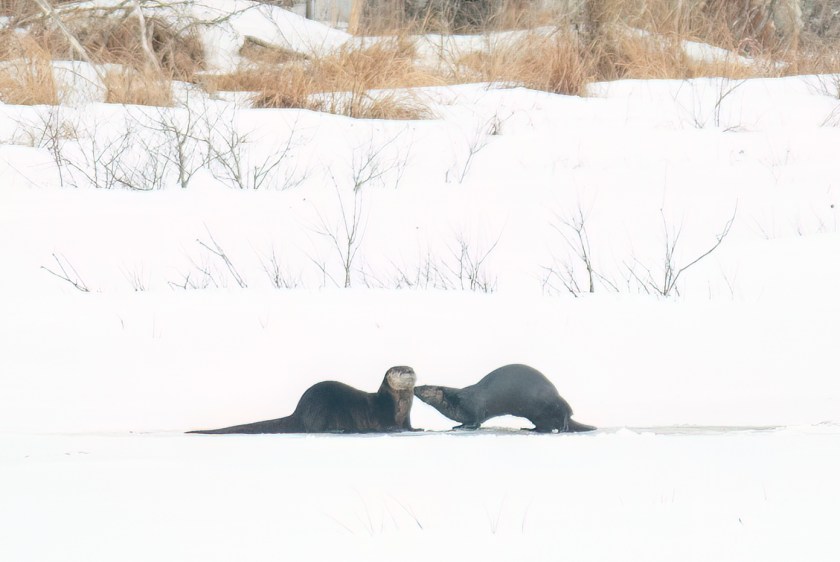
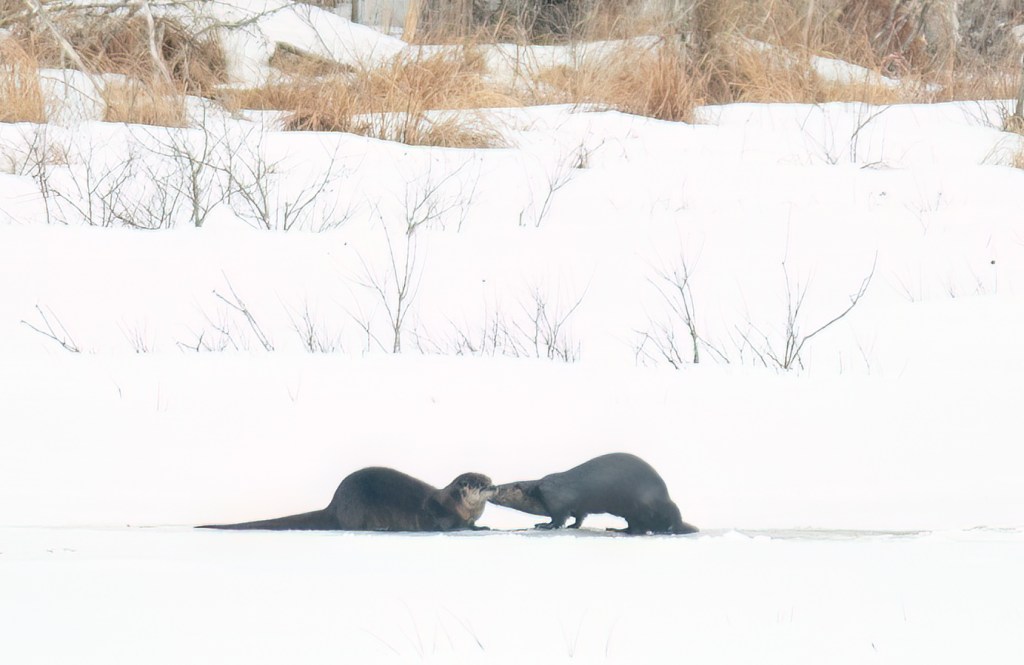
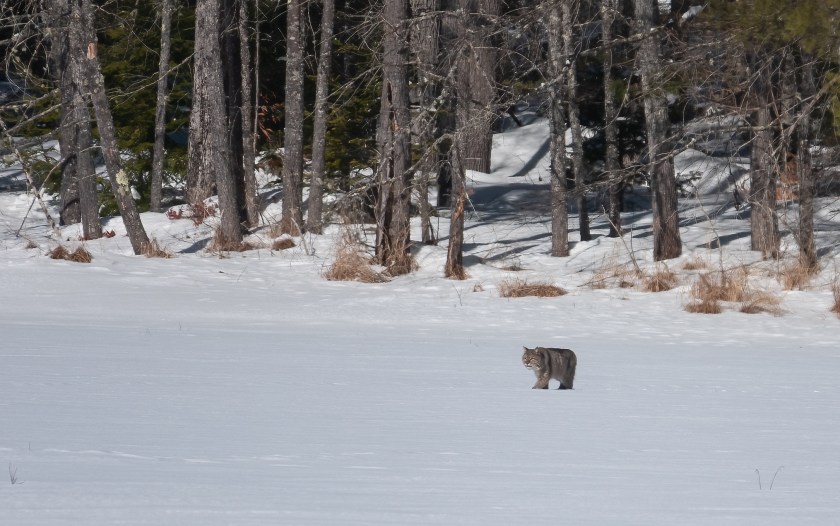
The otter dived under the ice, but there was another shape on the snow, rounder and fluffier:

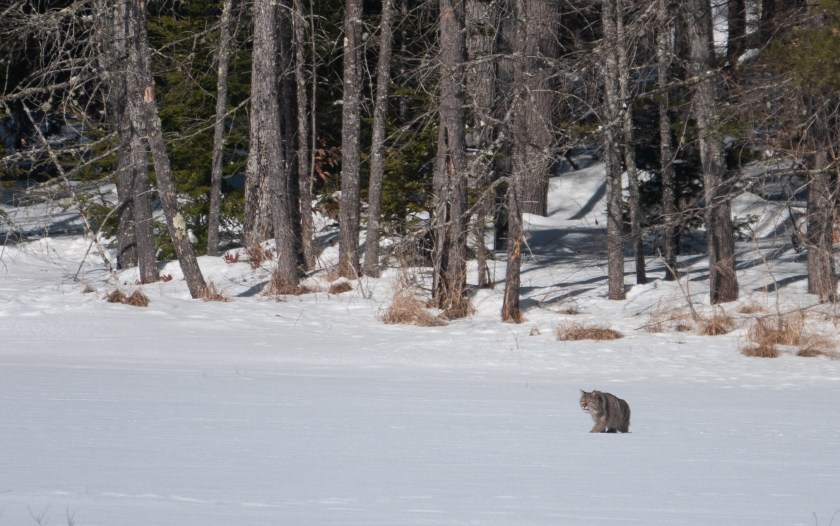
My first ever bobcat, Lynx rufus. I took a few shots from very far away. It was barely moving, carefully placing one silent rear paw in front of the other:

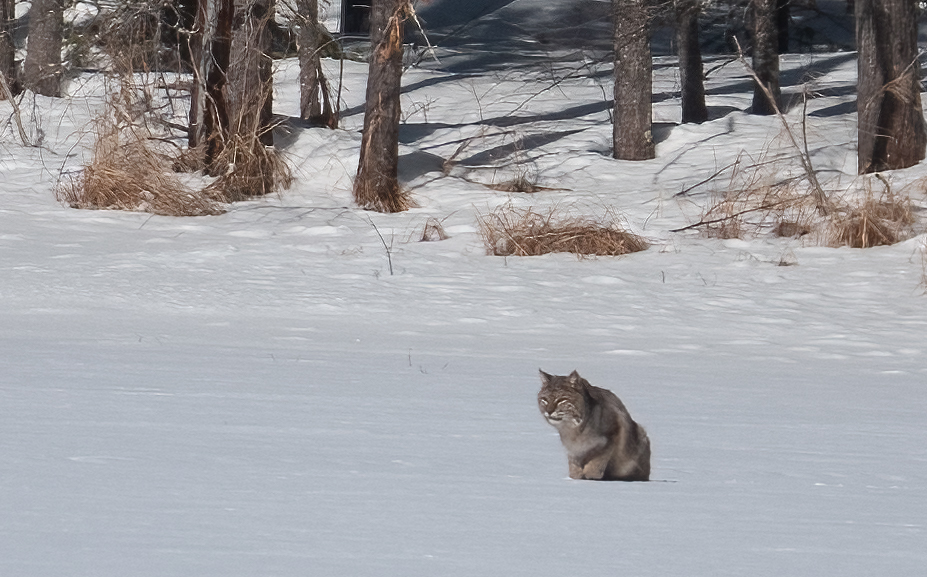
then settling into a crouch:

I wasn’t sure, but I wondered if it was preparing to stake out the otter hole. I was a very long way away, so I moved a little closer. From my new angle, I could see that it was now right next to the otter hole (the disturbed snow to its left):

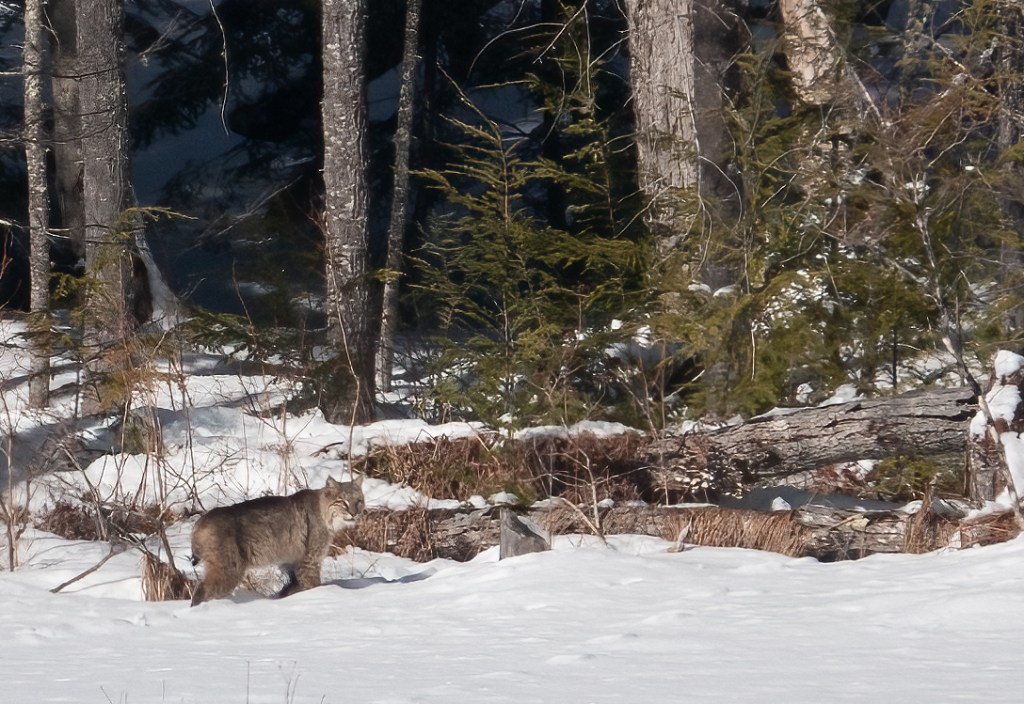
But it smelled me or heard me or saw me,

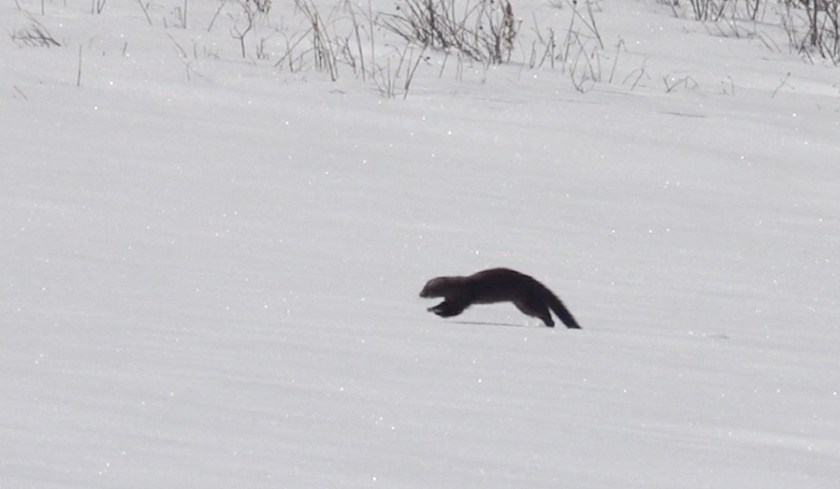
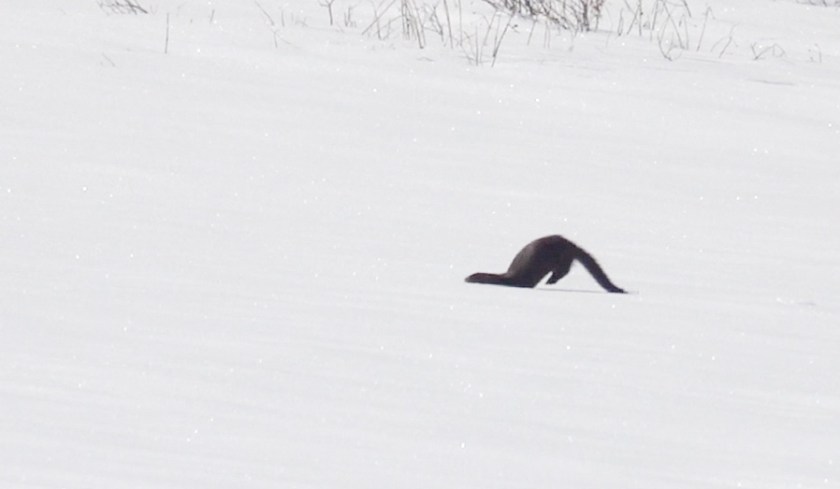
and took off, just letting me snatch a short video:

It stopped on the edge of the woods, and looked back reproachfully:

Three minutes of a privileged glimpse into its world.

I have since tried to discover if bobcats hunt otters. There is the occasional reference to otter remains being found in the stomach contents of bobcats, but that’s about it, and these could easily have been either carrion, or very young otters. An adult otter would be a formidable prey, being much the same weight as a bobcat. Look at this video of a bobcat recoiling from an angry otter: https://www.youtube.com/shorts/TJZlFwmdo64

Their main food is snowshoe hares, but they do very occasionally eat fish, so they may have been trying to steal the otter’s catch. See Newbury and Hodges 2018 for more on their diet. Bobcats’ feet don’t cope well with deep snow (unlike Canada Lynx), and we have had plenty of snow this winter, at the northern edge of their range, so my bobcat may be very hungry indeed.

Scott Lindsay, Regional Wildlife Biologist at the Maine Dept. of Inland Fisheries & Wildlife, agrees that it was unlikely to be hunting otters, and he tells me that bobcats are curious, and it was probably just checking things out.

PS Maine has a total bobcat population of around 1500, and a female’s home range is about 23 square kilometers. So it is not surprising that they are hard to see! There’s some useful,information here, including how you tell the difference between a bobcat and a Canadian Lynx.

https://www.maine.gov/ifw/fish-wildlife/wildlife/species-information/mammals/bobcat.html