I had not planned on any more “wet fur” posts, but this was irresistible.
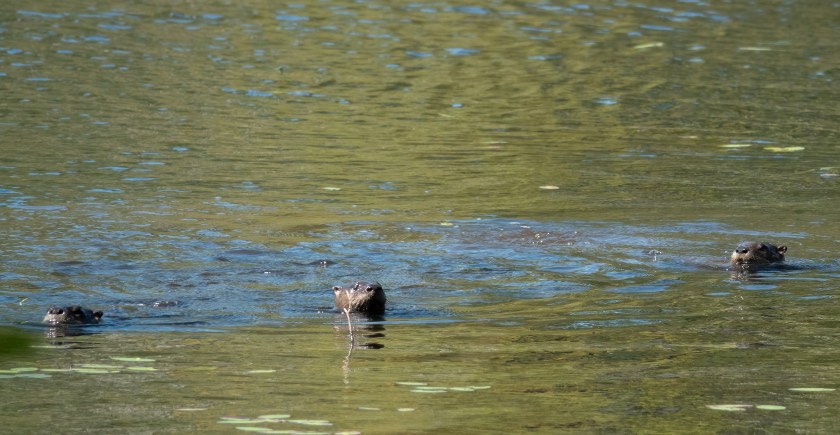
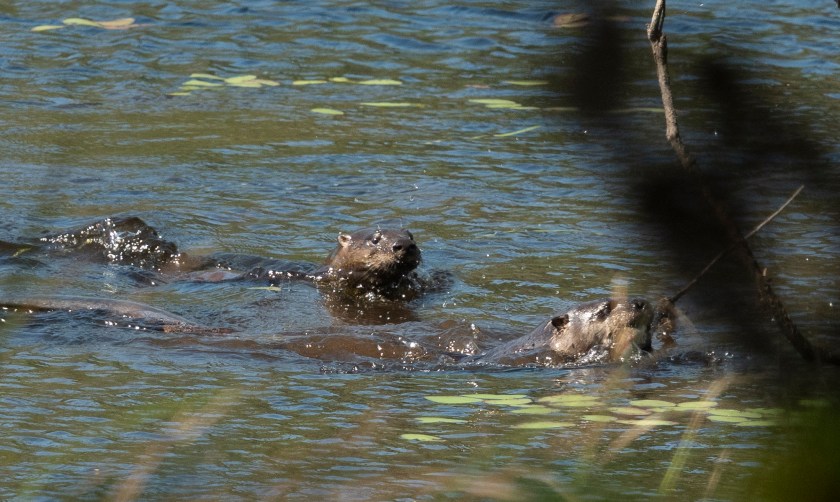
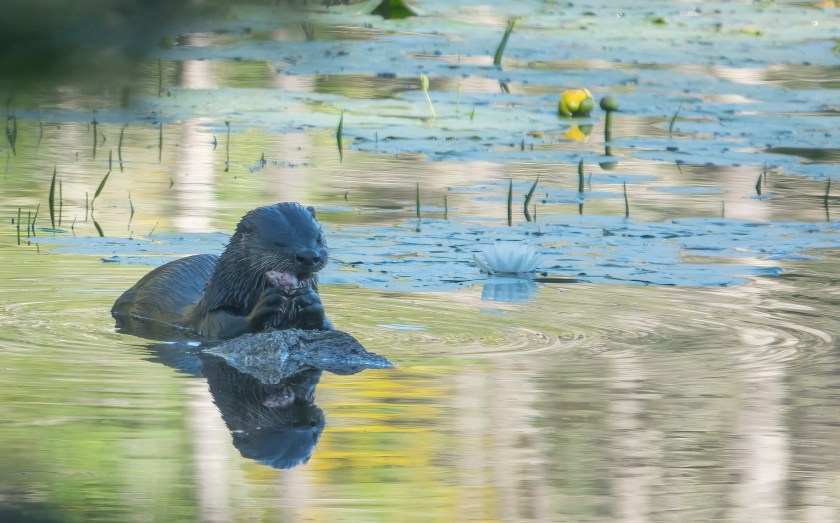
Ten days after the fish-eating otter in my recent post, a group of three appeared.
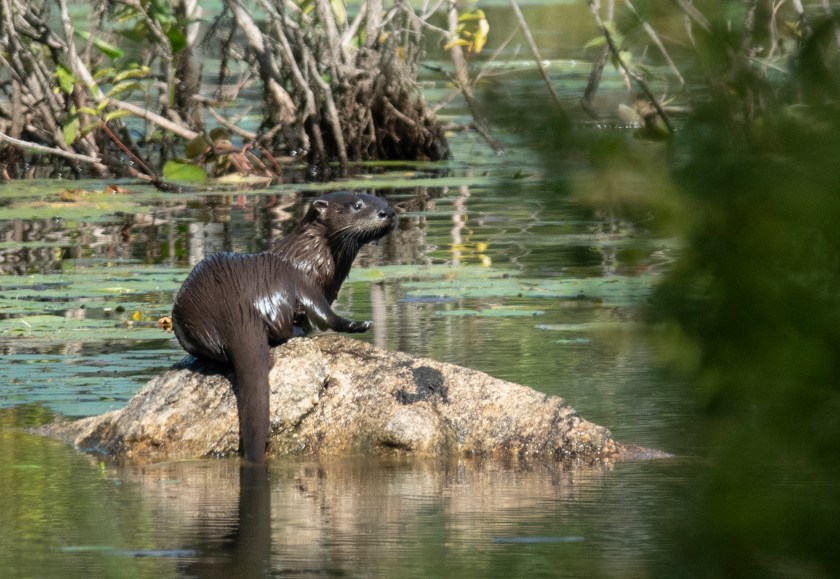
One sunbathed on a small rock.
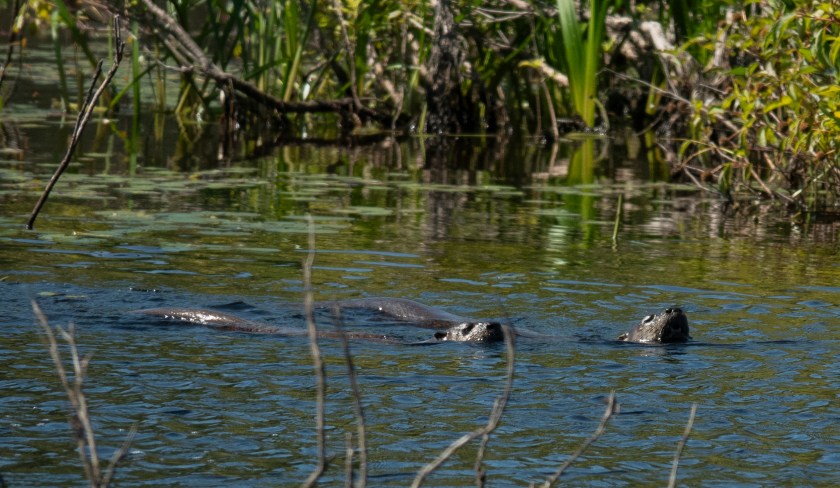
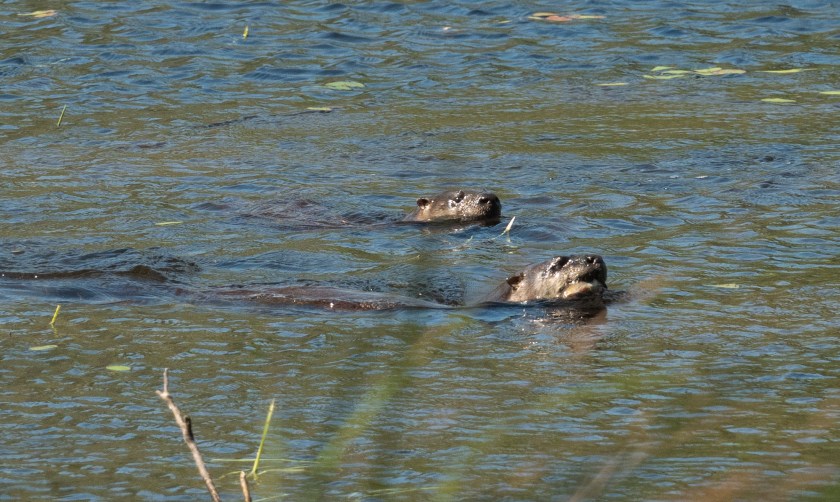
Two swam around in formation for a bit, catching the occasional fish, and moving northwards up the pond as I followed quietly in the bushes.
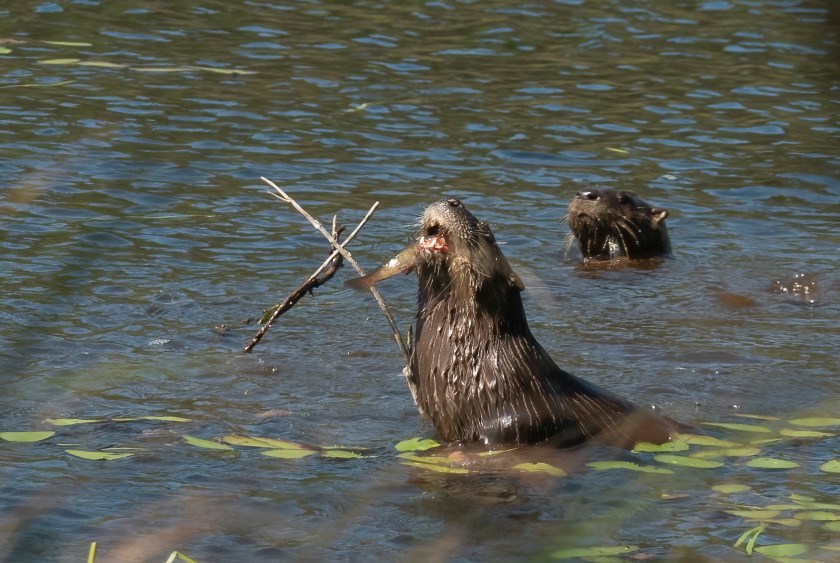
Some diving and splashing, and then they suddenly turned towards the shore, and me. The one in front had a fish, and the other was shadowing him in the hope of a mishap:
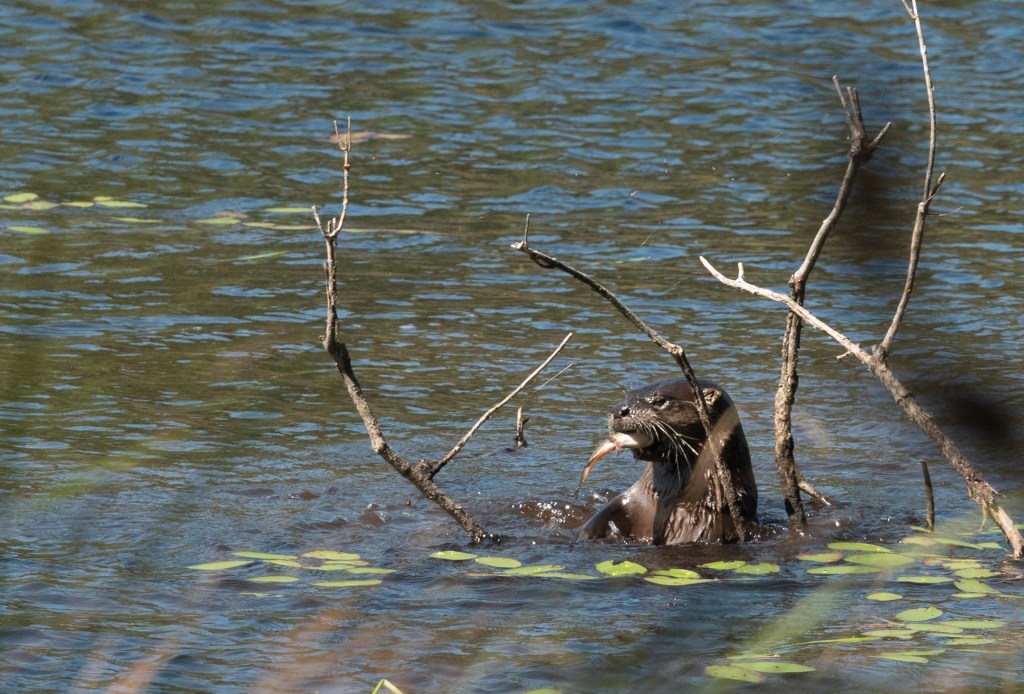
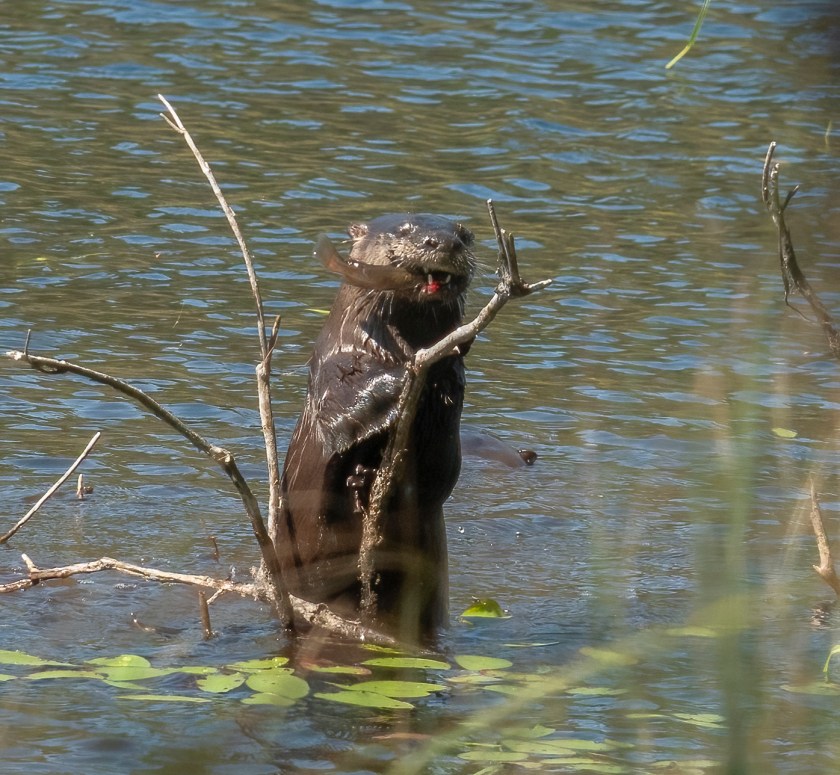
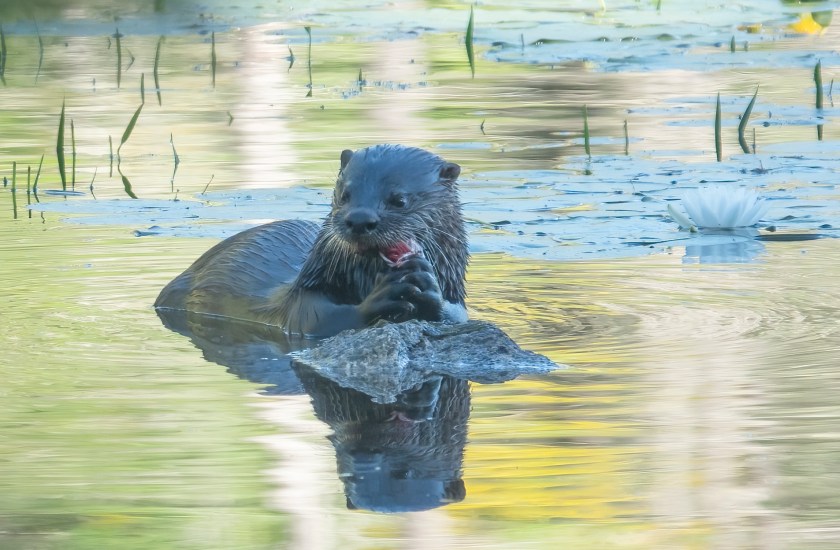
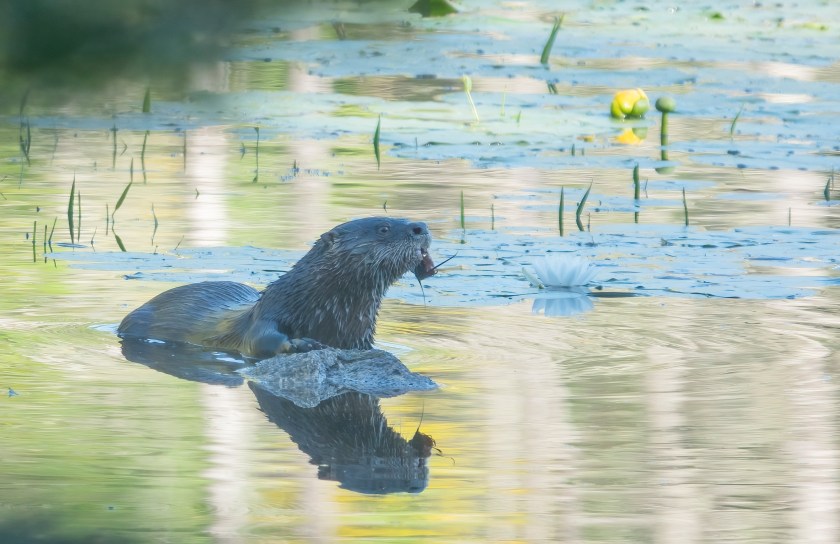
The owner of the fish needed to get out of the water to eat it, and to protect it from its marauding sibling, so it headed for the closest option, a fallen branch sticking partly out of the water.
Still a bit low down:
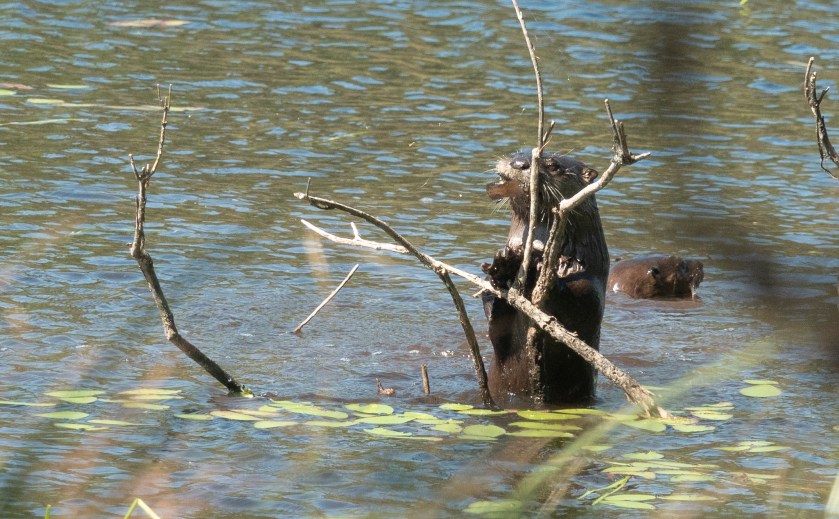
With some difficulty, it hauled itself high enough for safe eating:
Teetering slightly precariously on its inadequate perch:
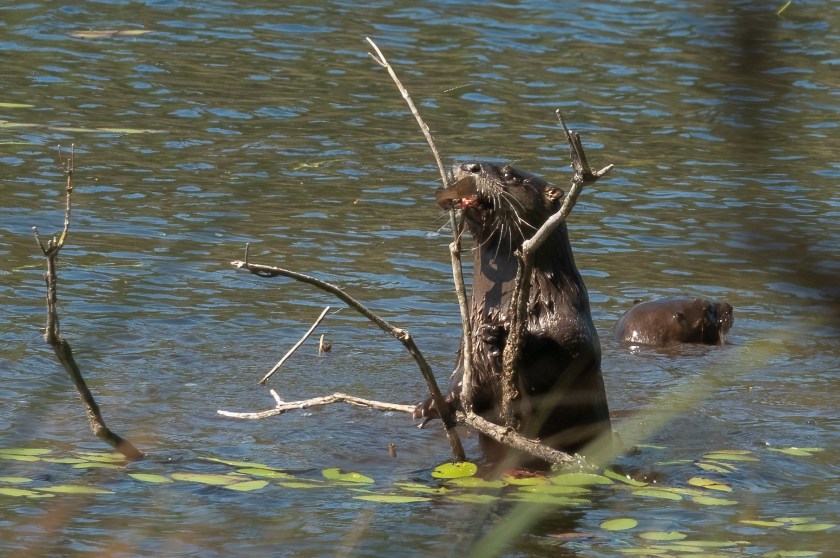
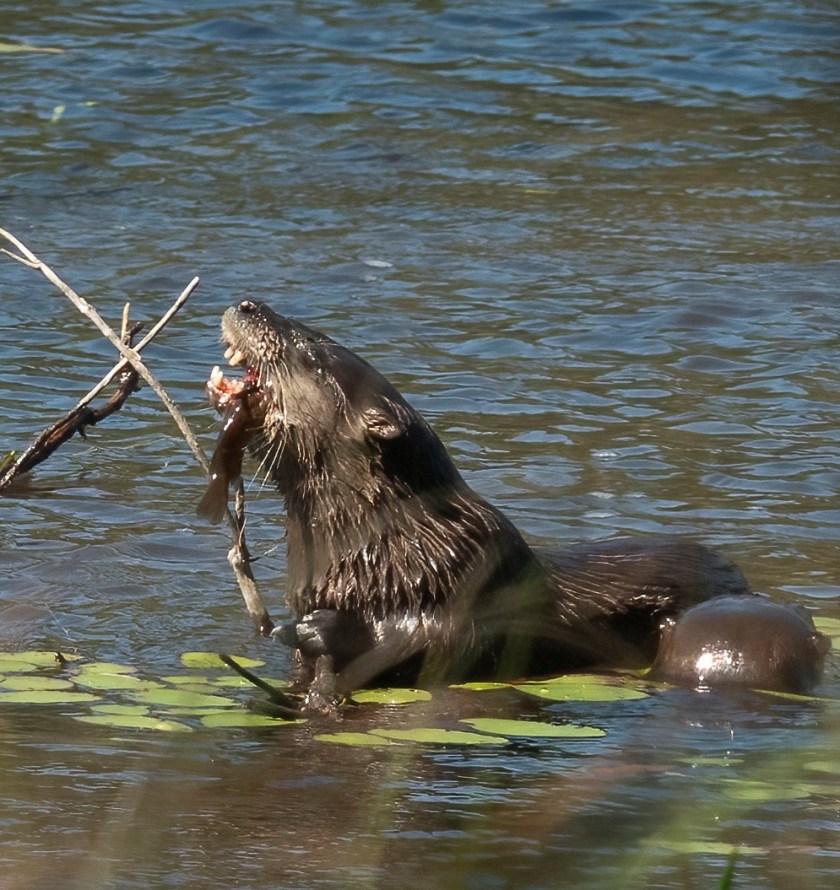
it set to work:
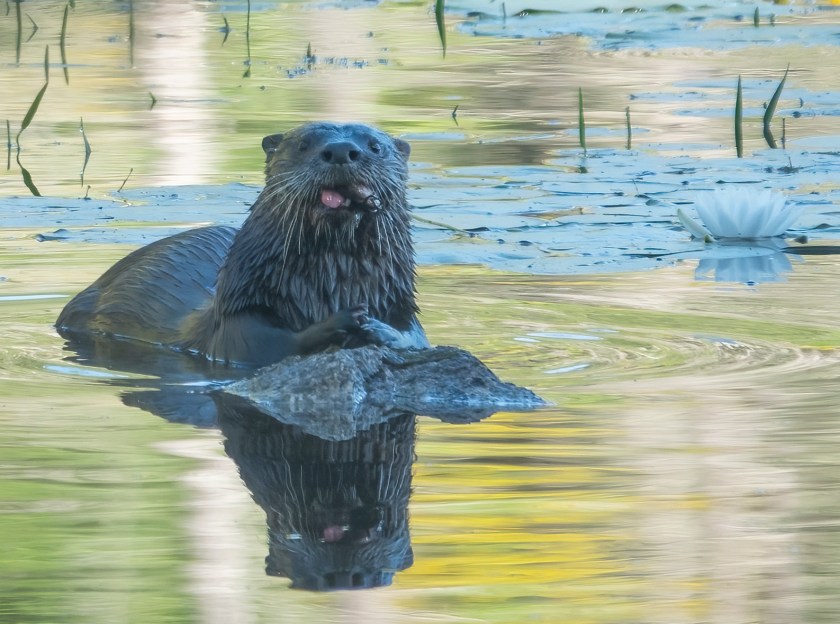
As the branch slowly sank, the second otter lurked close by, just in case:
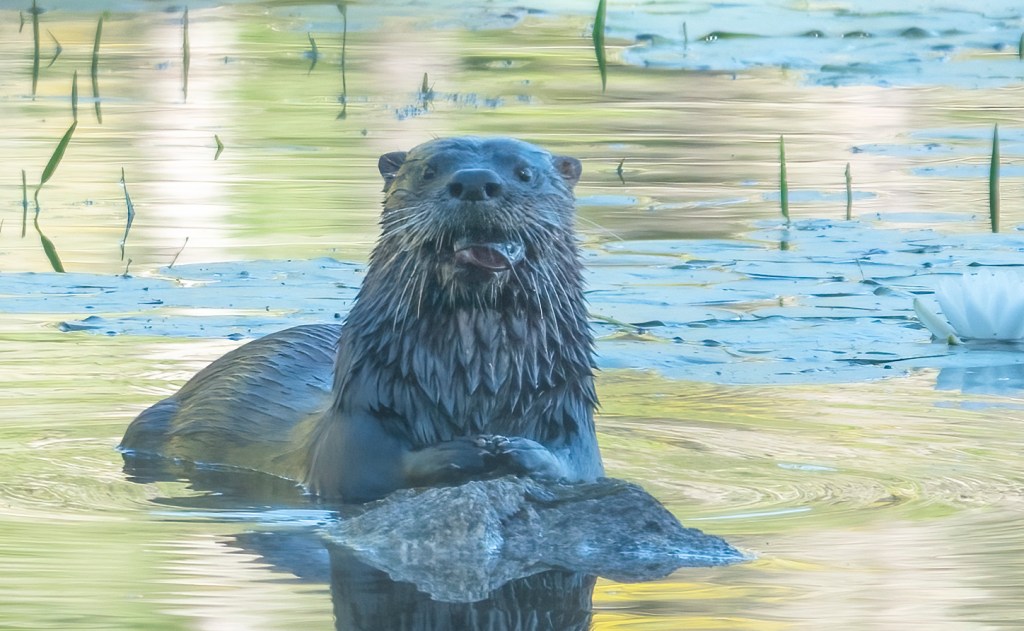
Their teeth are impressive:
There were no slips, and the second otter, crestfallen, swam away hungry.
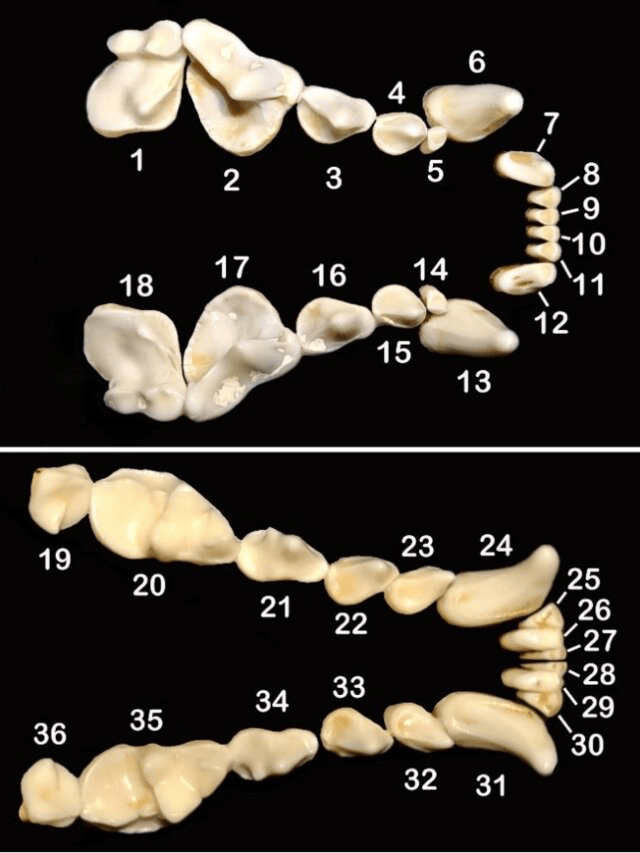
PS Here is a picture of the otter’s teeth, showing its four huge canines, from Tumlinson et al (2022)
The day after I saw the beaver, a even more special encounter..
I saw two otters at a distance, swimming, diving, and apparently fishing. I swiftly headed in their direction, towards a spot which they often use in the wintertime, and just before I reached it I glimpsed one, through the trees, hauled up on a rock devouring a fish. There was a space between two branches at knee height, so I crouched down, slowly, and took these pictures.
It was in deep shade, with the sunlit water at its back, but the photos I hope still give a sense of its pleasure in the meal, and the power of its jaws.
I think it sensed my presence, but it was hungry, so it finished its meal:
The fish, I am told, is a hornpout, another name for the Brown Bullhead, a type of catfish.
In maybe six years of watching otters on this pond, I have never before seen one out of the water eating a fish close by. St. Cuthbert, the patron saint of otters, was watching over me. *
PS St. Cuthbert was a 7th century Northumbrian monk. The historian Bede tells that Cuthbert used to pray standing waist-deep in the freezing North Sea, and the otters used to come and lie on his feet to warm them, then dry them with their soft fur.
Mammals are the hardest things to see in our northern woods. But it’s been a good month for furry creatures, so I thought I’d show you a few.
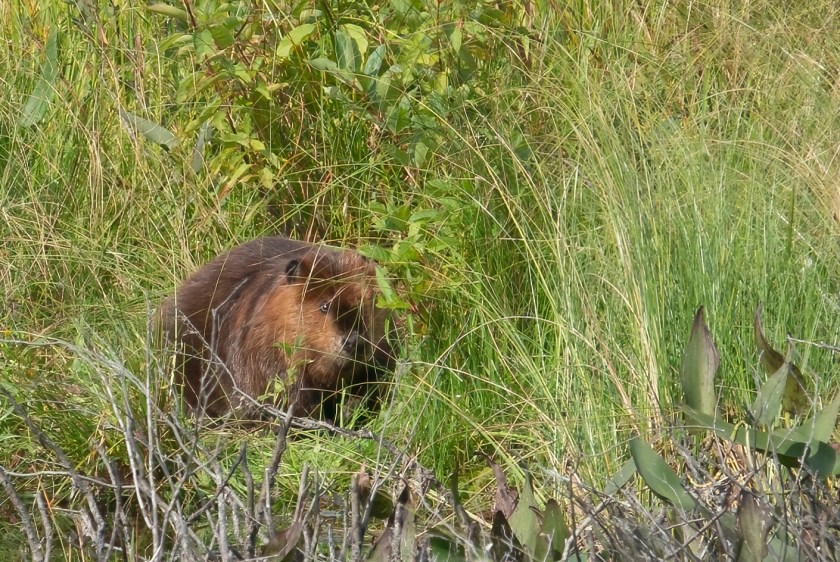
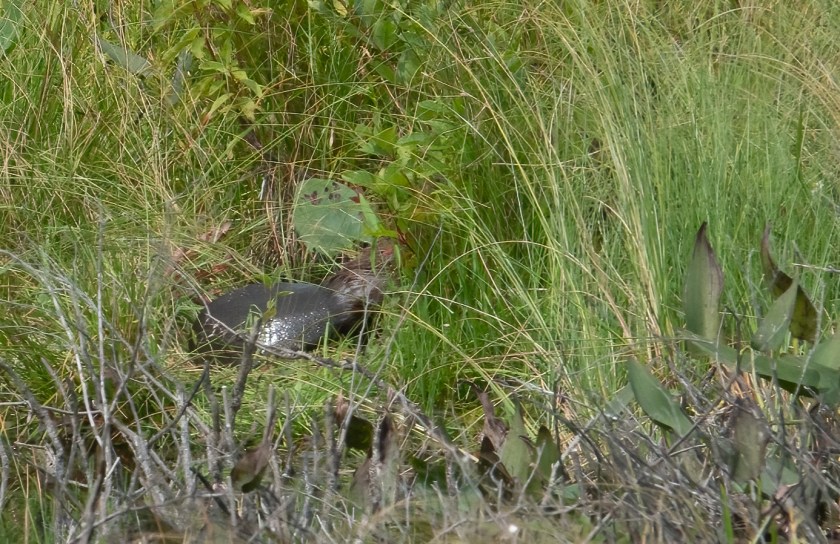
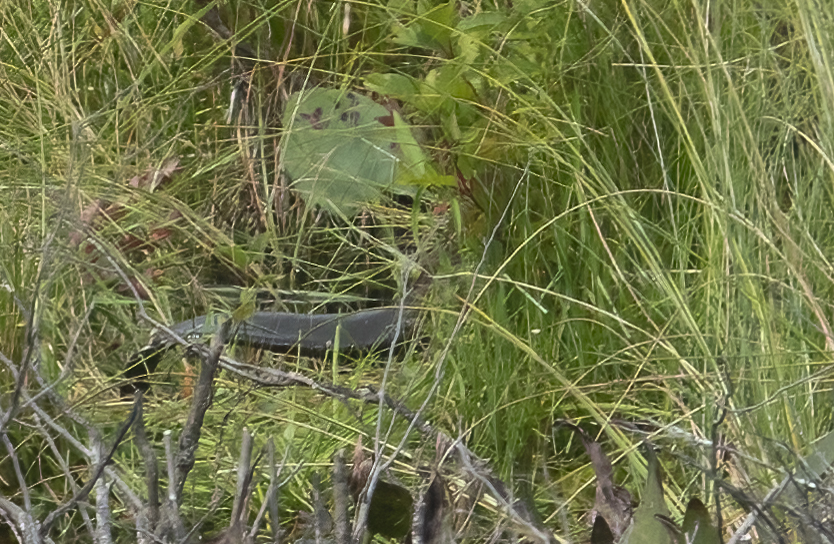
I have been very worried about our beaver pond, because the water levels are extremely low, and it’s not clear that the dam is being maintained. But this week I saw a beaver, out of the water (rare), sunbathing on dry land in broad daylight, with glossy healthy-looking fur. It was there two days in a row in the same spot at 9am. It must have heard me, but it was far out in the pond on a mound, and felt safe enough to ignore me.
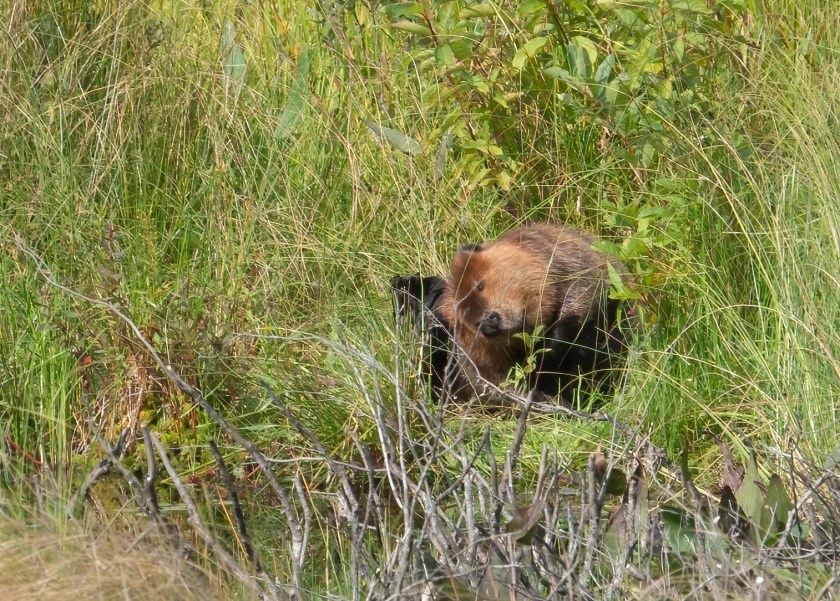
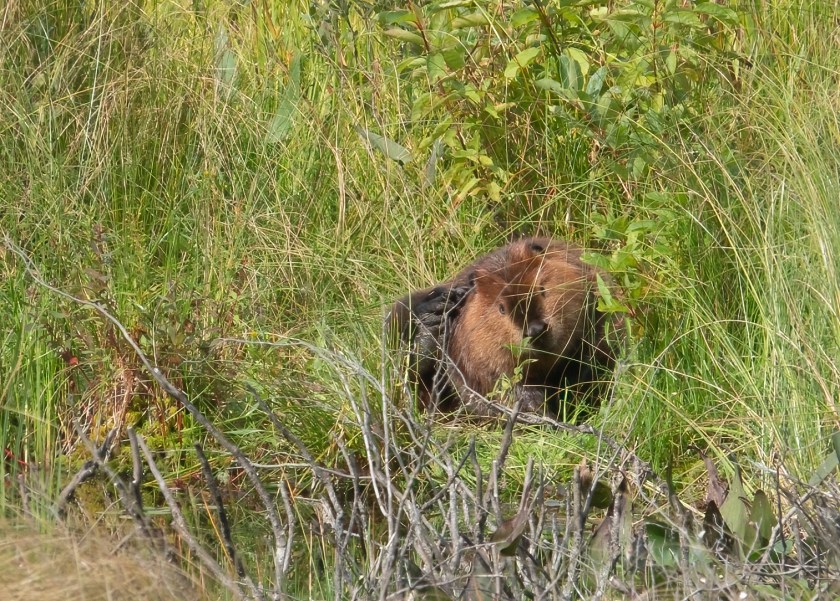
It was grooming too, using its webbed hind feet for a good scratch:
When it eventually moved on, the tail was the last evidence of its presence as it headed off to the right into the grasses:
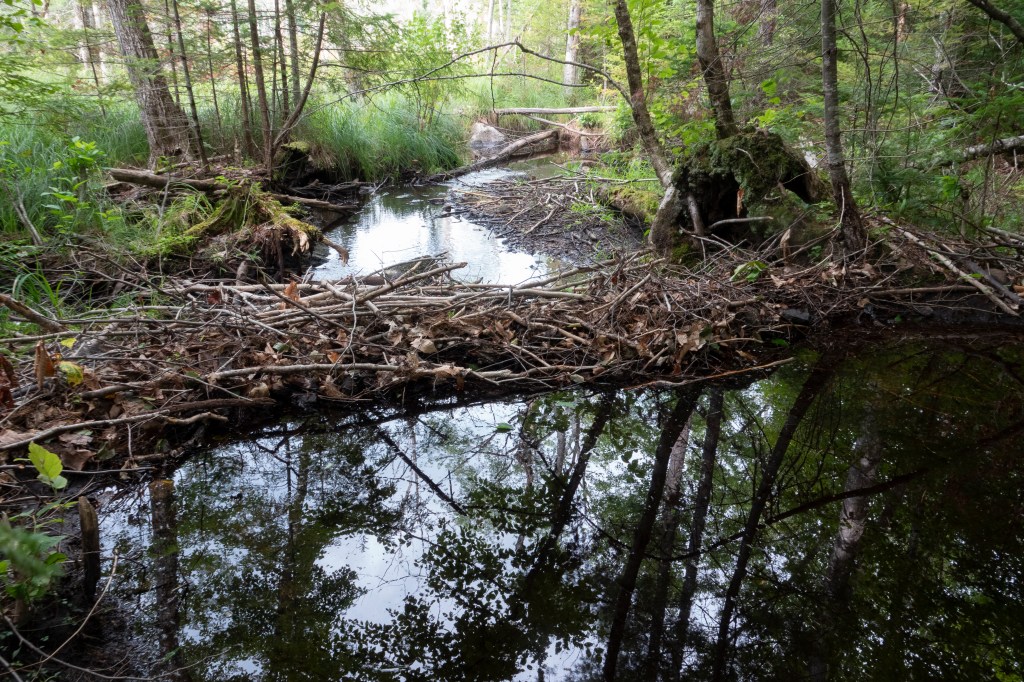
As I walked on, I crossed a tiny stream that flows into the pond, and to my delight there was a small dam, freshly constructed.
If you look carefully, past the dam, on the righthand shore, there is a sort of landing, where the beaver has been bringing sticks and stripping the bark for a snack.
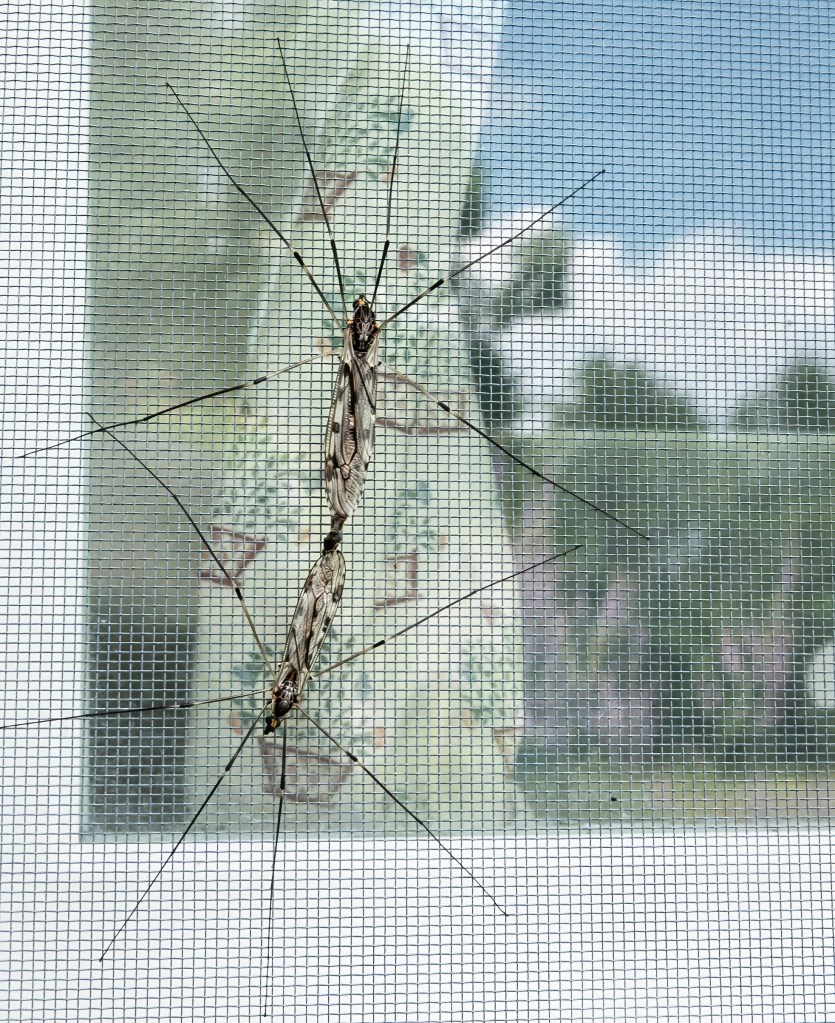
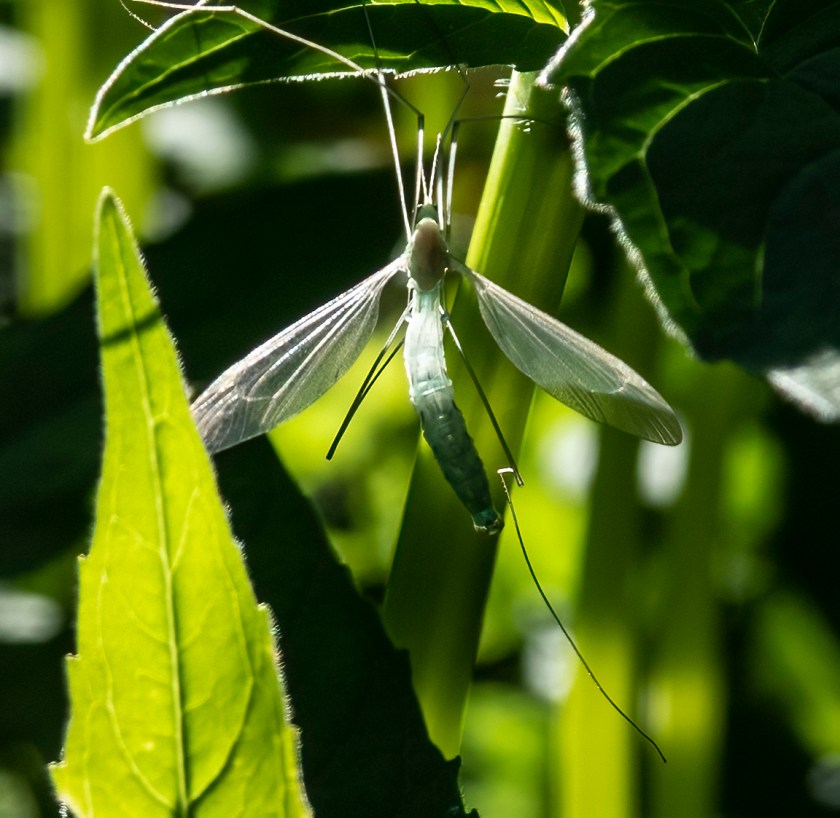
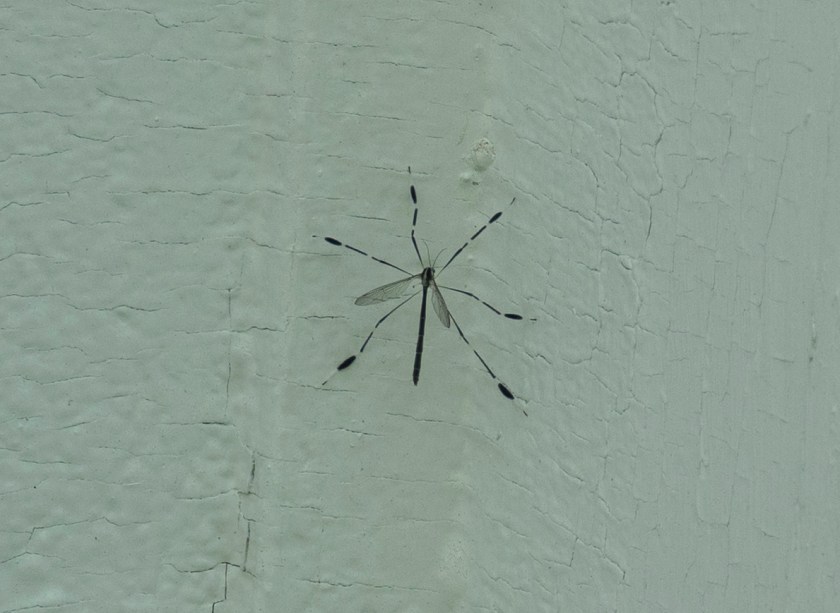
Crane Flies are harmless, elegant insects that I sometimes find on my porch screens in the mornings.
The product of this encounter will be first an egg, then a larva (called a leatherjacket), then a pupa. They emerge from their pupa, and gradually dry out into their adult form:
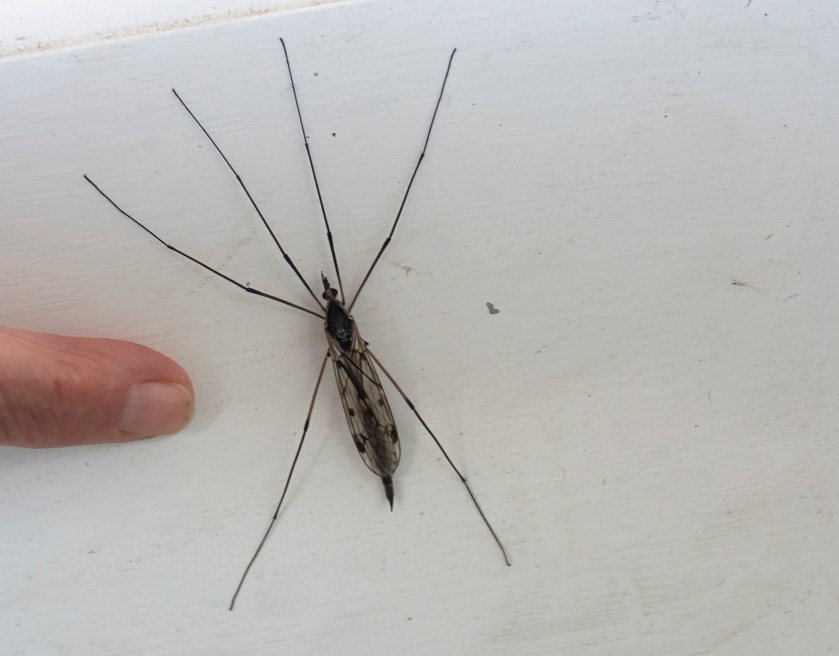
Most of them have no functioning mouthparts and are unable to eat as adults, living only a few days, and focussing entirely on sex. They come in a range of shapes and sizes, this is a Giant Cranefly, Pedicia albivitta, whose body is 1.5 inches long::
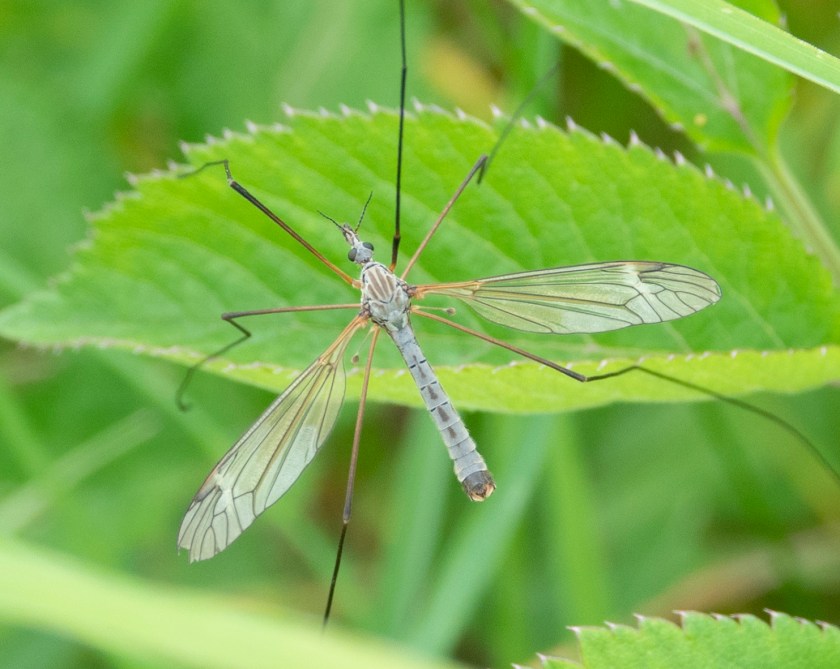
Most Crane flies have elaborately veined wings like this Tipula dorsimacula:
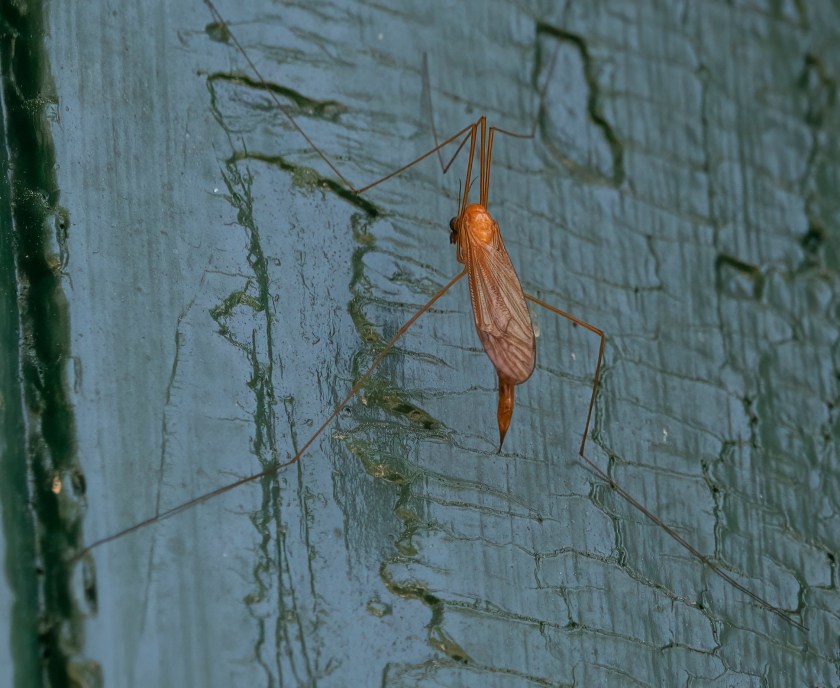
Most have subdued coloring, but not all. This is a Ferruginous Tiger Crane Fly, Nephrotoma ferruginea:
Some are smallish, this Eastern Phantom Crane Fly, Bittacomorpha clavipes, has a 0.5 inch long body:
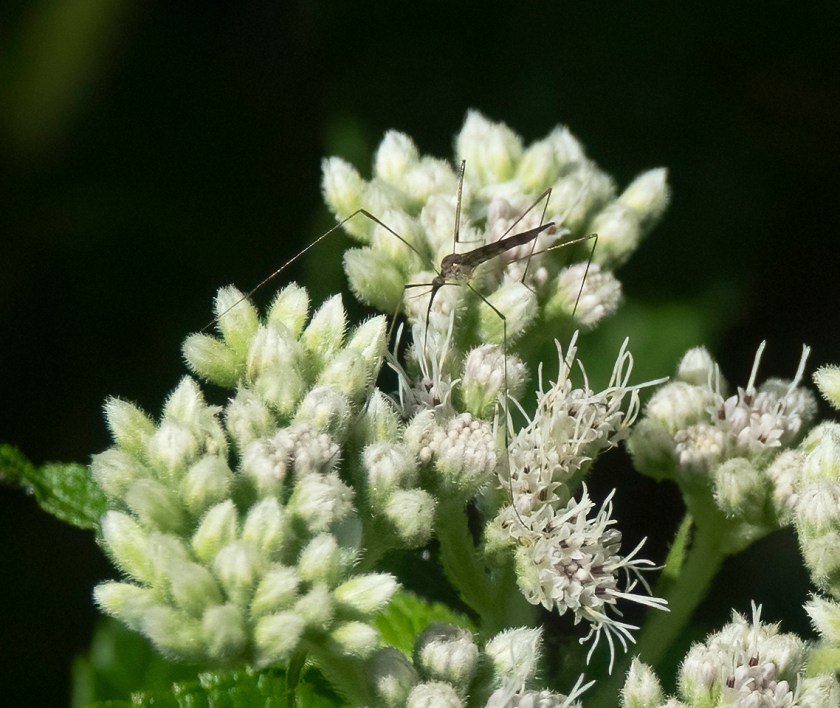
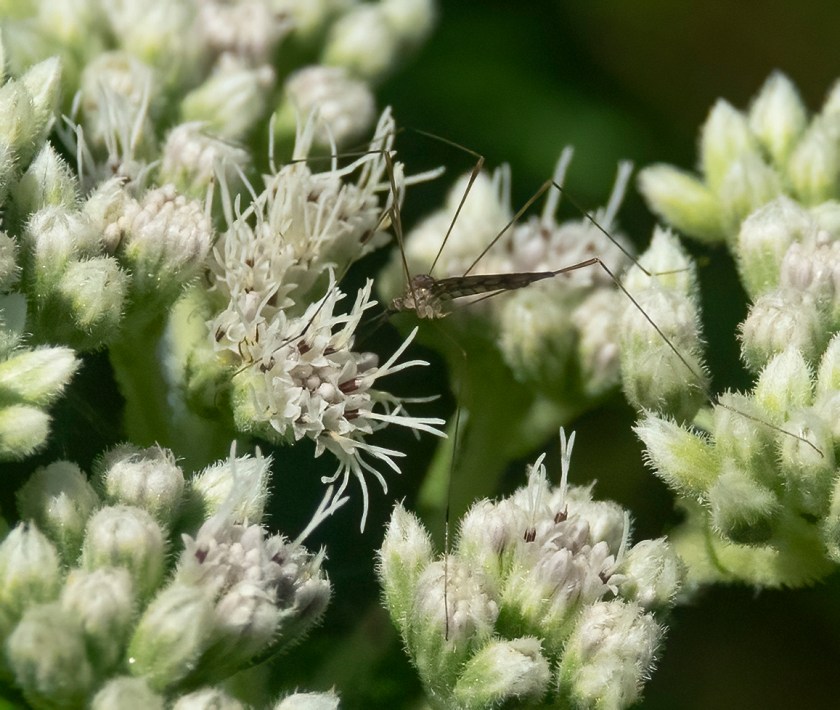
Geranomyia rostrata is an even smaller crane fly with a body length of about 0.16 inches. Its claim to fame is that it actually has functional mouthparts, and feeds on nectar as an adult. It does this with its unusually long, black, proboscis that can be more than half as long as its body.
It is usually near water, and this one was feeding on a Common Boneset flower.
While it feeds it bounces or bobs up and down, doing squats as it repeatedly jabs its proboscis into the florets.
Those extraordinarily long delicate legs are what is called “deciduous”. Just like the leaves on a tree, they can be easily detached from the body if a predator pounces, and like a lizard’s tail they can go on twitching to distract the predator. Unlike a lizard’s tail, they do not re-grow. Luckily, this one still has all six legs.
[I recently posted about slugs eating mushrooms. This is episode two, so to speak, of a series about a mushroom benefiting other species.]
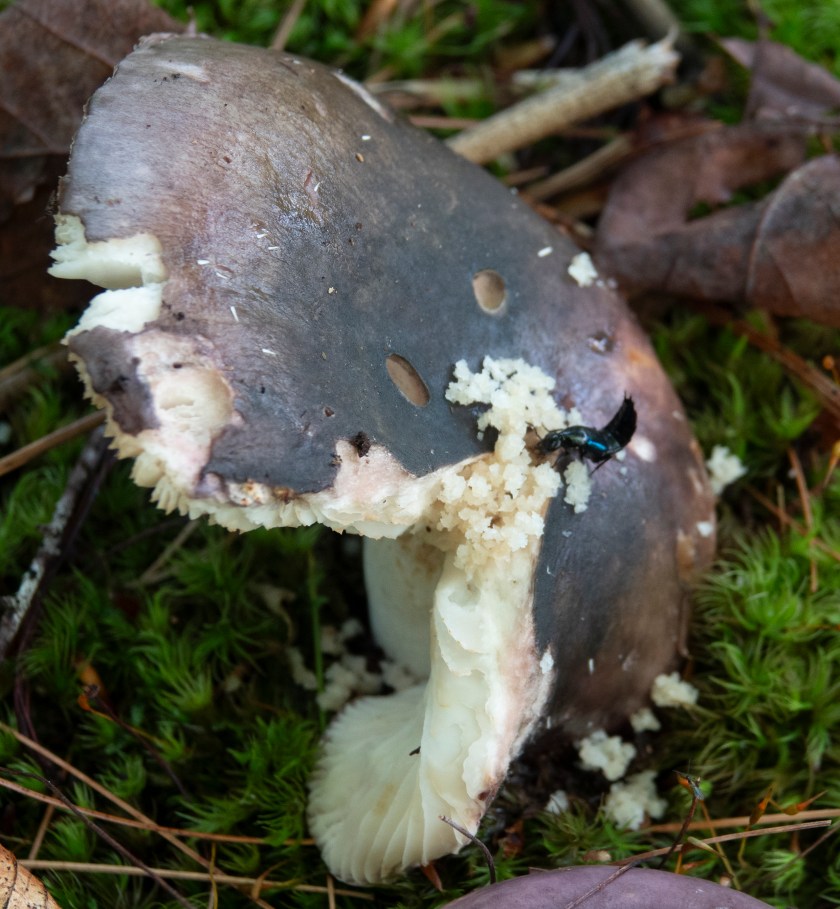
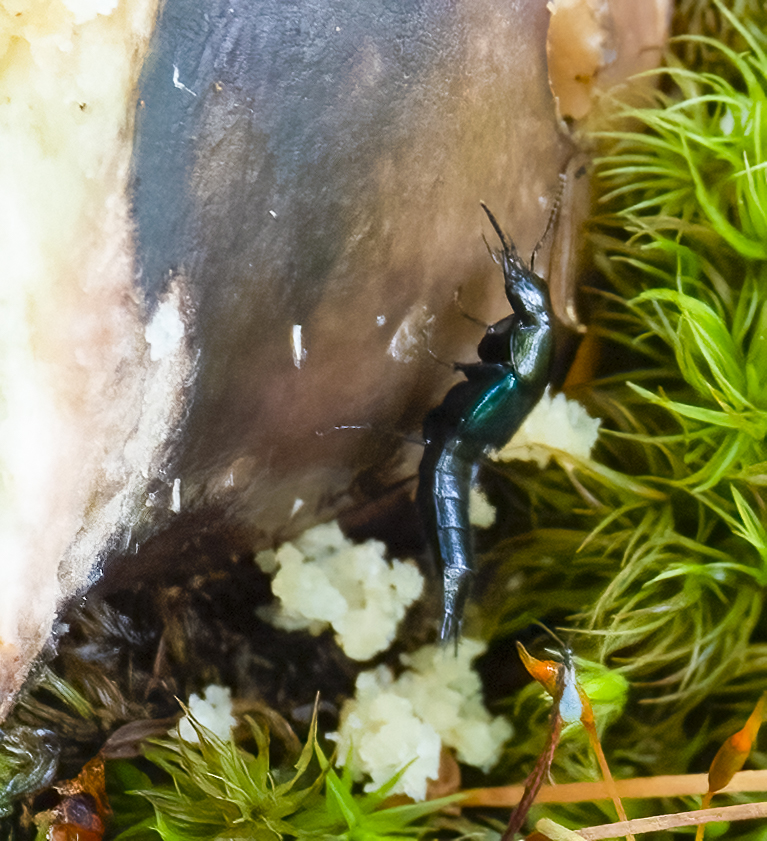
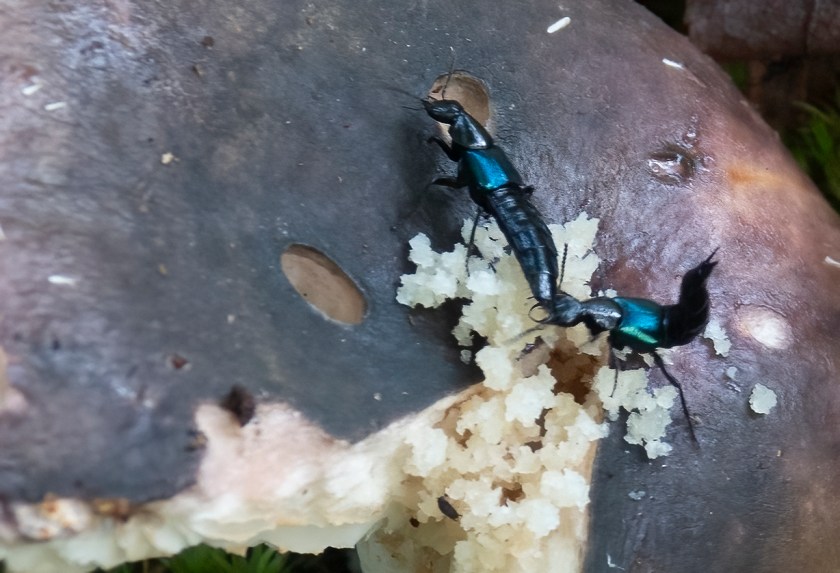
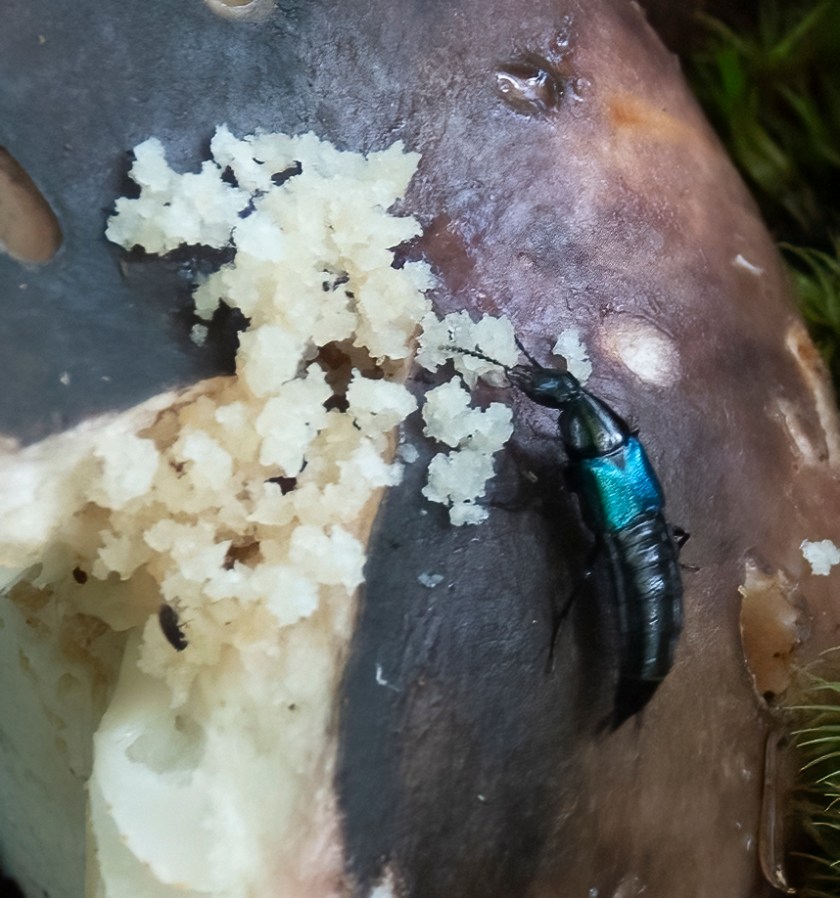
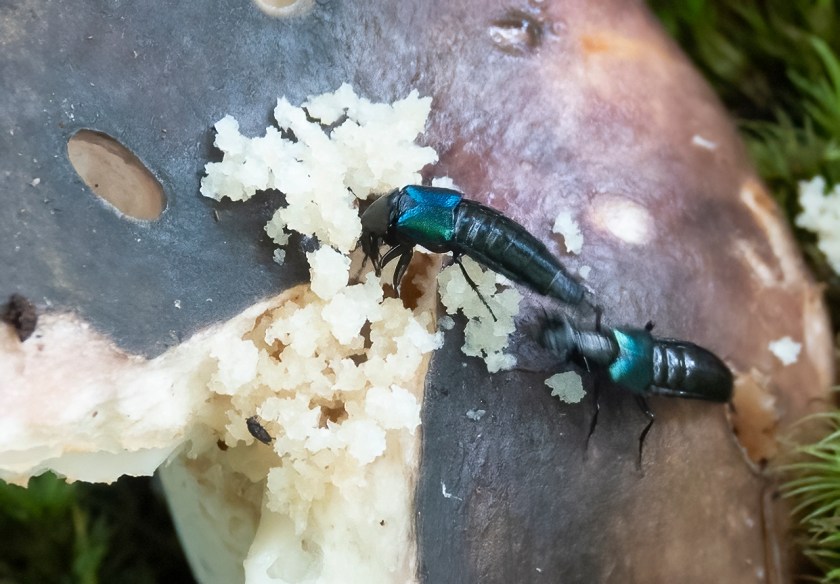
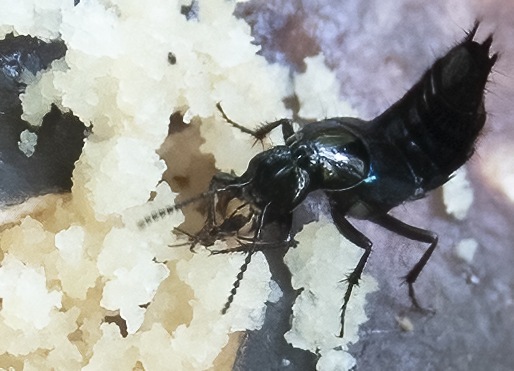
Two Blue-winged Rove Beetles, Philonthus caeruleipennis, were crawling around on the cap of a wine-dark russula mushroom.
Like all 68,000 species of Rove Beetles, their electric-blue wing covers are tiny, leaving most of their body exposed.
The body is jointed and was often curled up like the one on the right::
It looked as though they were eating the mushroom:
except that the chewed up flesh was left lying there, apparently not swallowed. They disappeared periodically into a hole they had excavated in the mushroom.
I took lots of photos, then came home and did some reading. Most Rove Beetles are predators, not mushroom-fanciers. Some do create brood dens by digging out a cavity for their young, but not this species. It seemed they must be hunting, but the beetles are only 0.5″ long, and their prey will perforce be smaller still, and hard to see. Finally, though, I realized that one of my photos contained proof: the beetle below has caught a tiny insect in its jaws.
Apparently being only 1/2″ long does not preclude being a hunter, so long as your prey is even smaller. As Shakespeare said, “Though she be but little, she is fierce. “
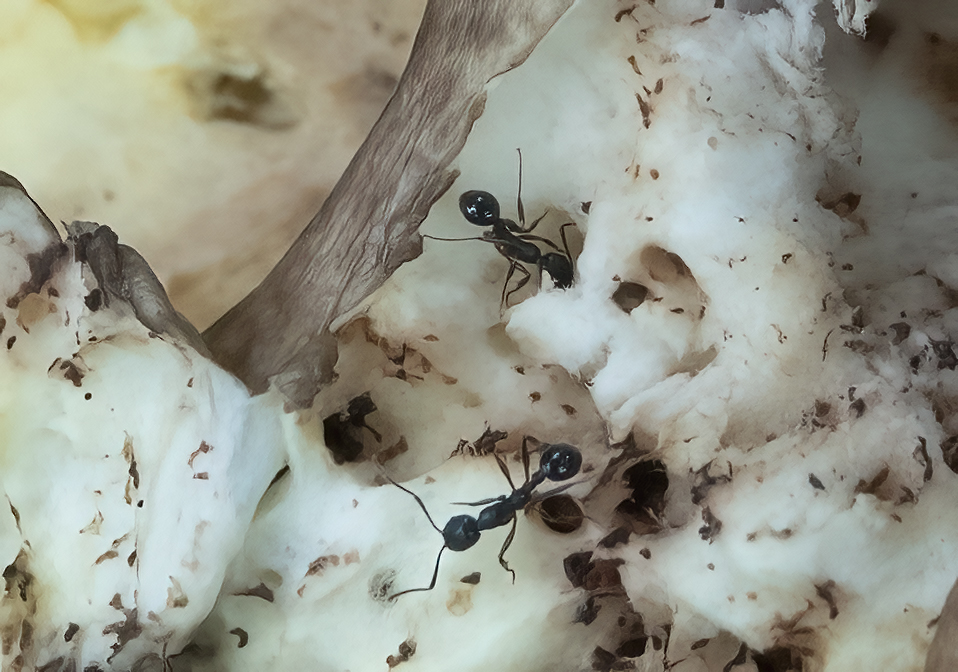
PS I do not know what insect had been caught by this Rove Beetle, but a variety of small insects feed on mushrooms as they age. Here are two 0.2″ Pitch-black Collared Ants, Aphaenogaster picea, feeding on a different decaying mushroom:
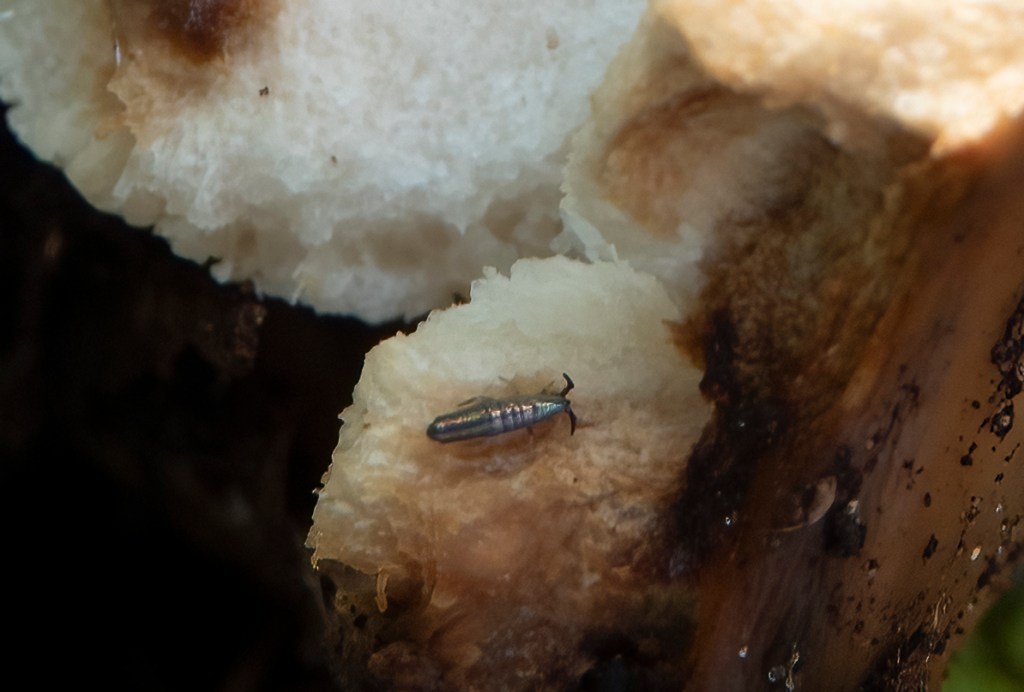
and a Slender Springtail, Lepidocyrtus paradoxus, 0.06″ long, which was sharing a Russula mushroom with a slug:
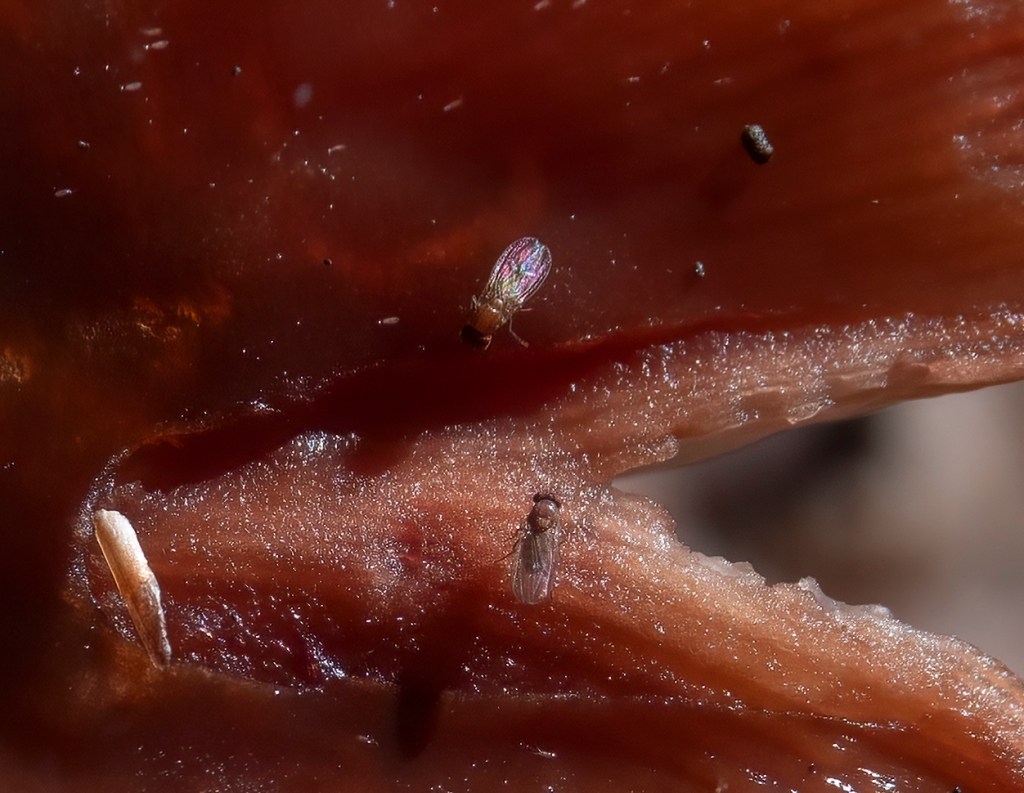
And smallest of all, these tiny flies, about .04″ long, fruit-fly sized, on a decaying red mushroom.
The iNaturalist app (iNat) has transformed how I and many others interact with nature. BiN (Before iNat) I would see something, and spend hours with one of a shelf-full of books trying to work out what I had seen. Now, I photograph it, enter a location, and show iNat the picture. And it knows! Or at least it gives me a shortlist of possibilities. It also shows me a map of where else it has been seen. Occasionally, mainly for small insects, it turns out it has hardly ever been seen in Maine, and I think, proudly, that I have documented a rarity. But have I??
Numbers can be low for many reasons other than real rarity; here are some of those reasons:
a thinly populated area, with few observers, true of my corner of Maine
it is only just starting to colonize an area, for a variety of reasons, so it may be locally rare but globally common
it lives in inaccessible environments such as marshes, or high in trees
it is drab and commonplace, so no-one thinks to submit an observation (house spider, ant)
it is hard to see and photograph, because it is very tiny, or well-camouflaged, or never stops moving
its numbers are indeed dropping, for environmental reasons such as climate change or habitat loss
I’ll show you a “rarity” or two, but hang onto that scepticism. One encouraging (but not at all conclusive) indication of rarity is that most of them don’t even have a common name! They have all been recorded 5 or fewer times in Maine. I’ve ranked them by the total number of observations, starting with the ones MOST often recorded, and ending with what might be the rarest:
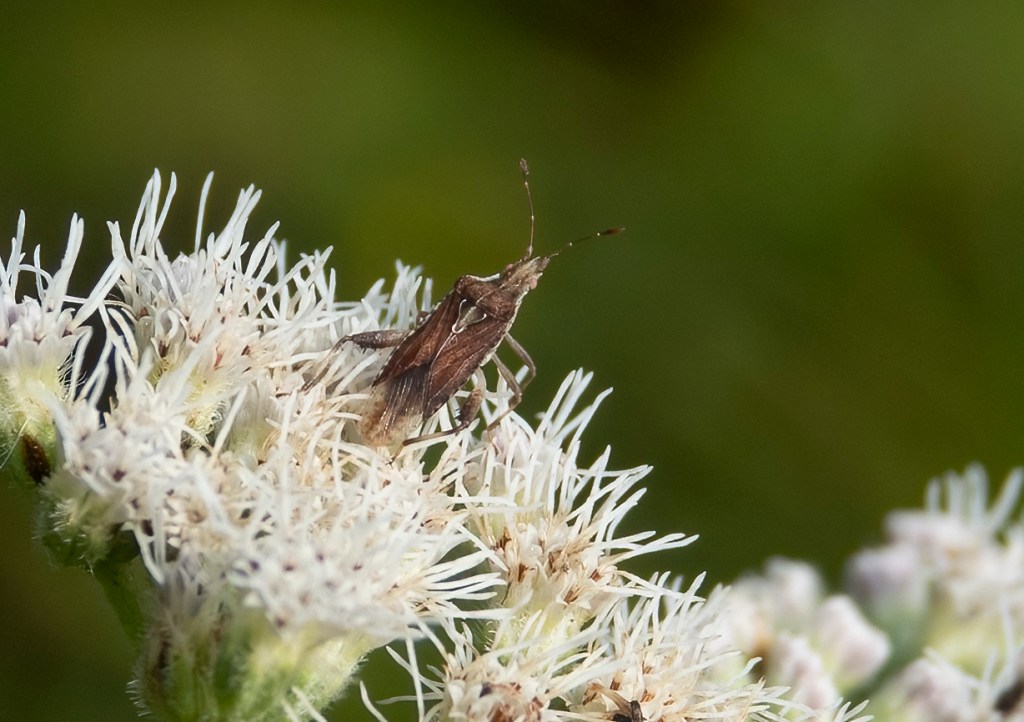
Harmostes fraterculus has 1161 total observations, 5 in Maine. It is on a Common Boneset flower.
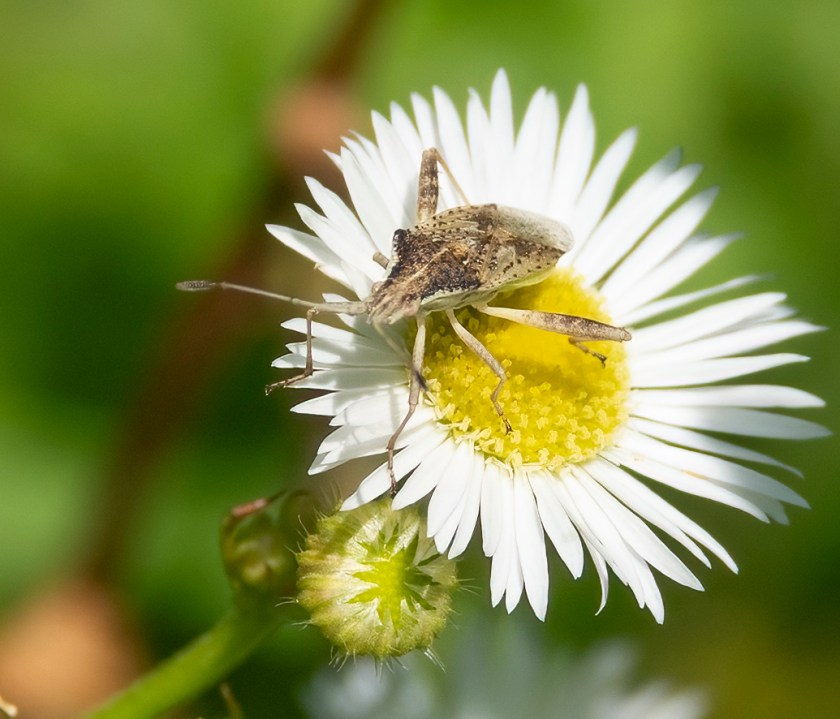
This is compared to 5800 for the closely related Harmostes reflexulus, including dozens in Maine:
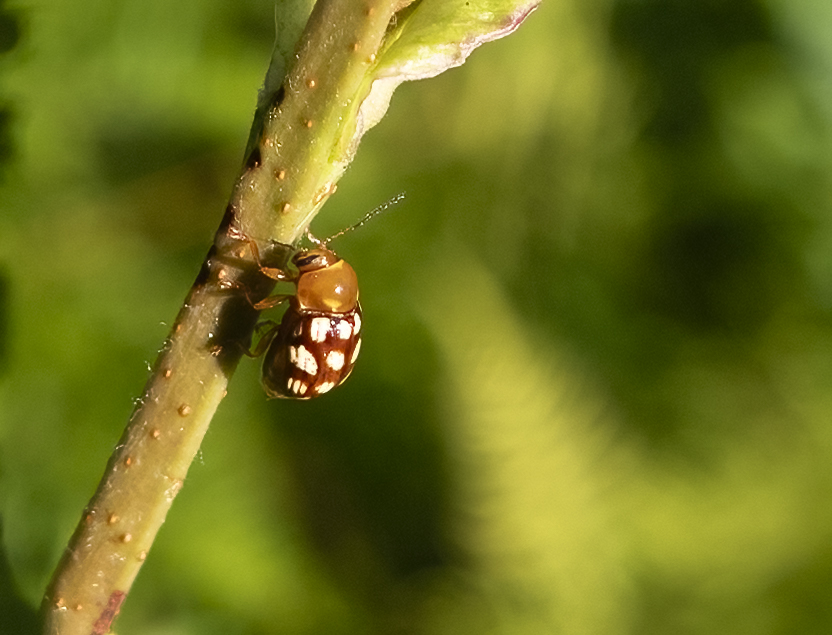
Fourteen-spotted Leaf Beetle, Cryptocephalus guttulatus, has 667 total, only 1 other in Maine. This seems to be the extreme northern edge of its range. A result of climate change?
Stictopleurus punctiventris has 198 total observations, mainly in Canada. Only 5 others in Maine, 4 of them this year.
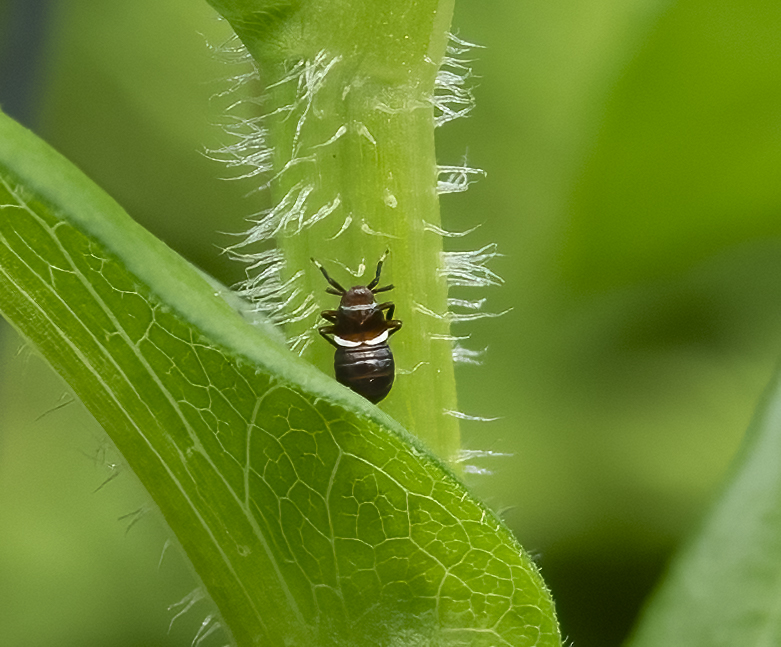
Pissonotus basalis has a mere 29 total observations, from Tennessee to Nova Scotia. None in Maine, except for me. This seems to be the best candidate for a real rarity, but it is very, very tiny, 3mm or o.1″and it also moved fast, so who knows.
To put all this in context, Maine has 370,421 observations of 6114 species of insects, and the most common observation, the Monarch Butterfly, has 4,523 observations. I suspect it would have far more but everyone knows what they are looking at, so they do not think to ask iNaturalist.
Do try it, it is a wonderful app, and you are contributing to citizen science when you upload an observation.
I spent the last three weeks in England, and my first day back in Maine is always special. I settle down into this magical place with a sigh of delight and comfort. Here’s what I saw and heard that first June day: nothing dramatic, but the fabric of my world.
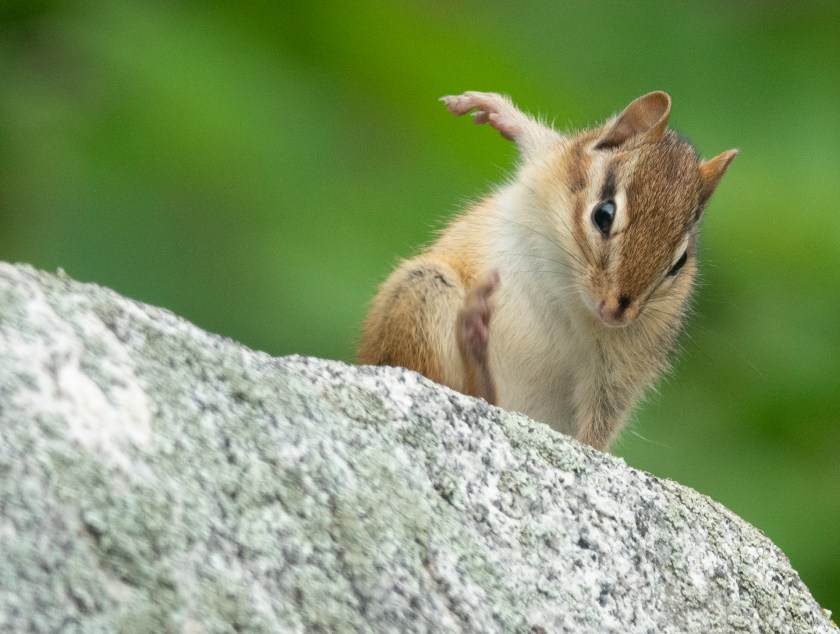
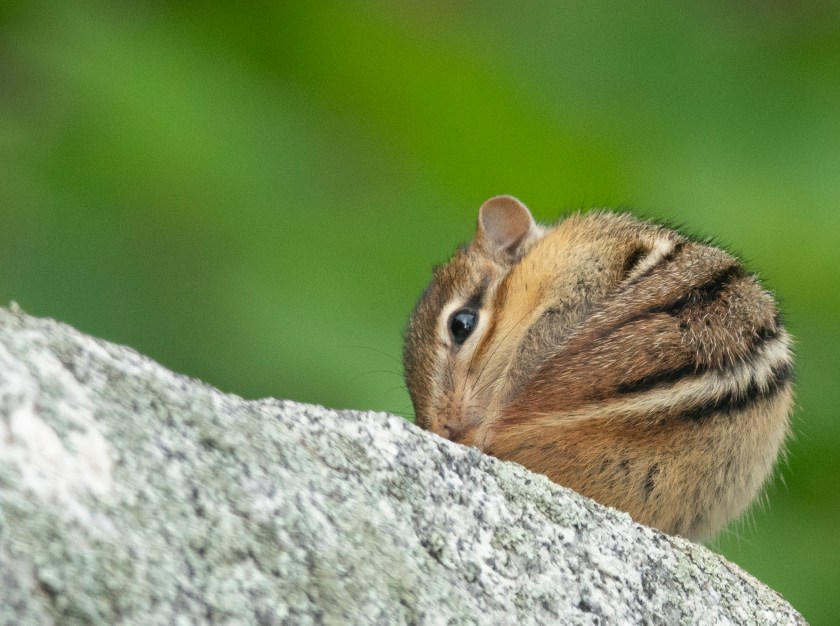
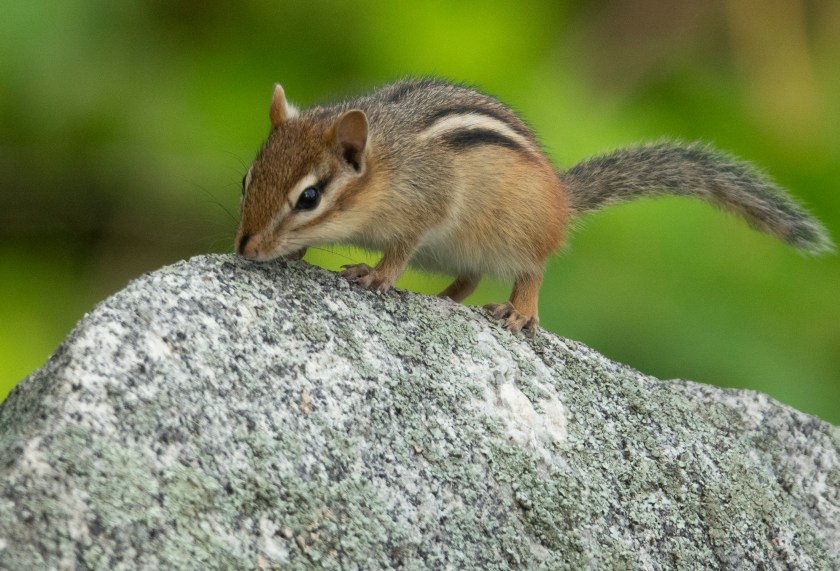
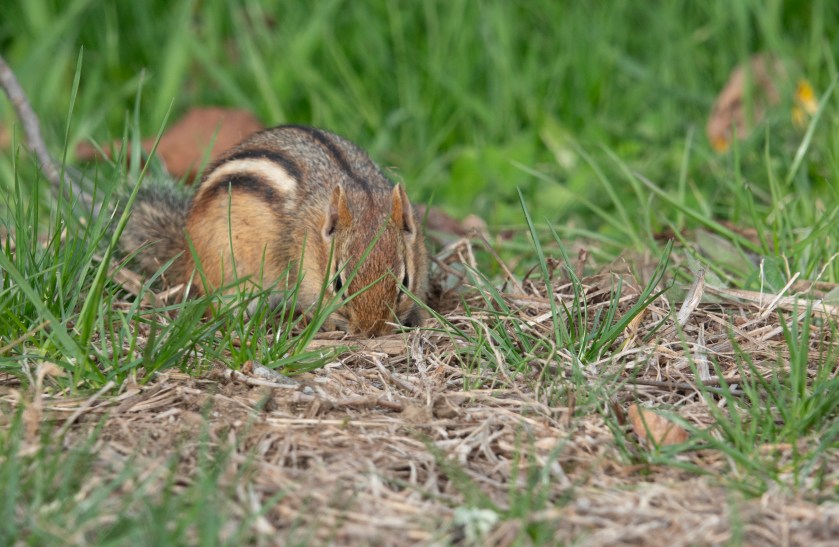
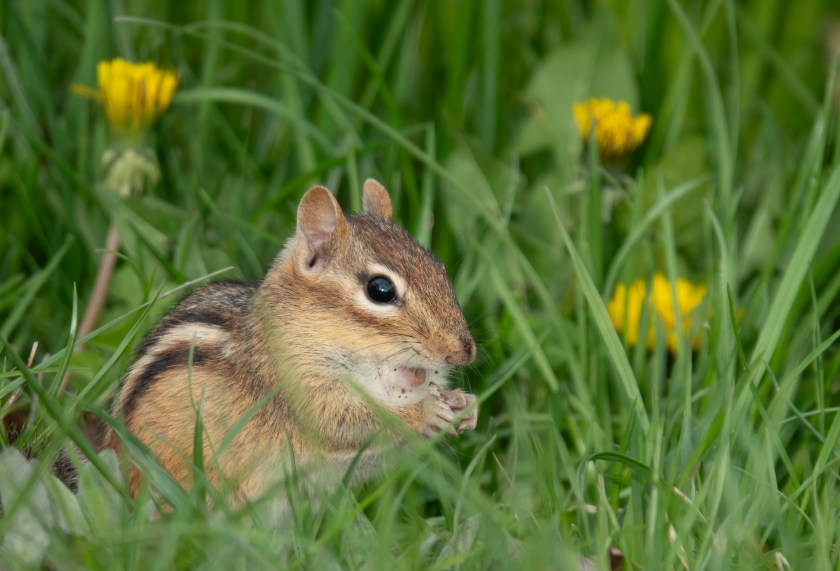
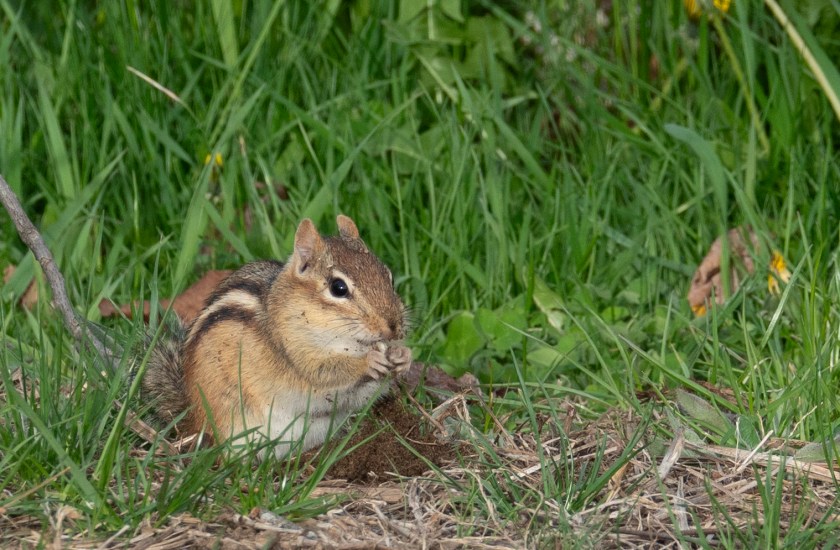
A chipmunk, grooming, not bothered by me so, long as I stayed in my chair and sipped my wine:
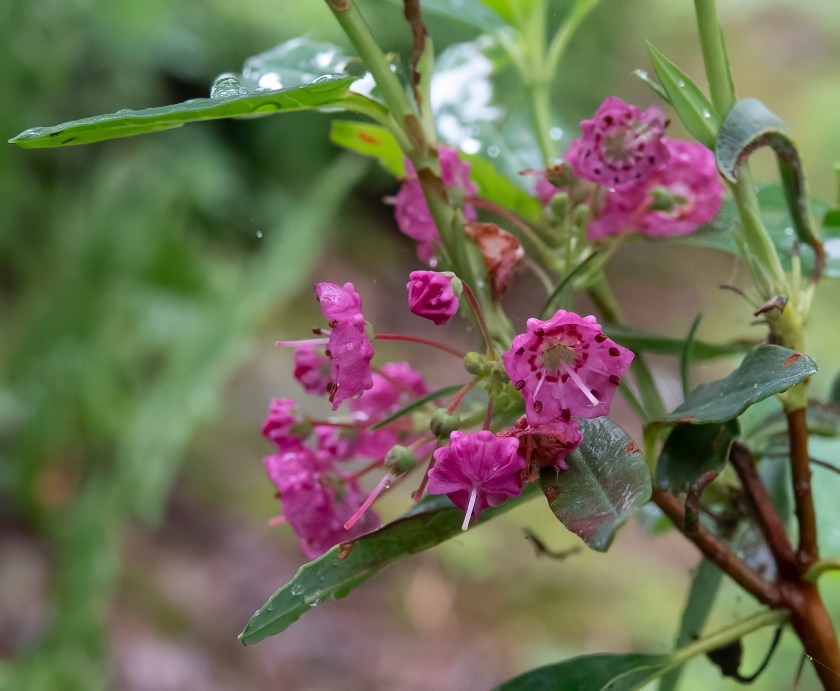
Sheep Laurel, Kalmia angustifolia, in flower by the beaver pond:
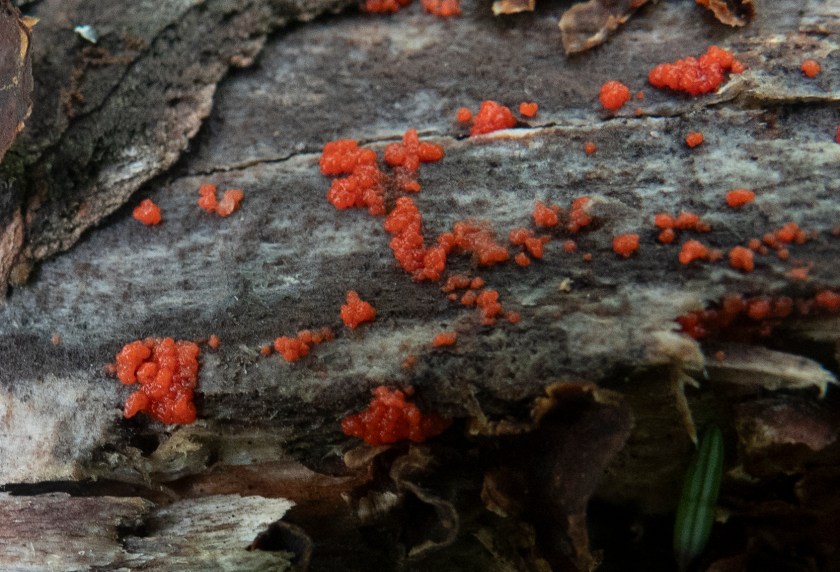
A minute scarlet jelly fungus, Tulasnella aurantiaca, on a rotting log:
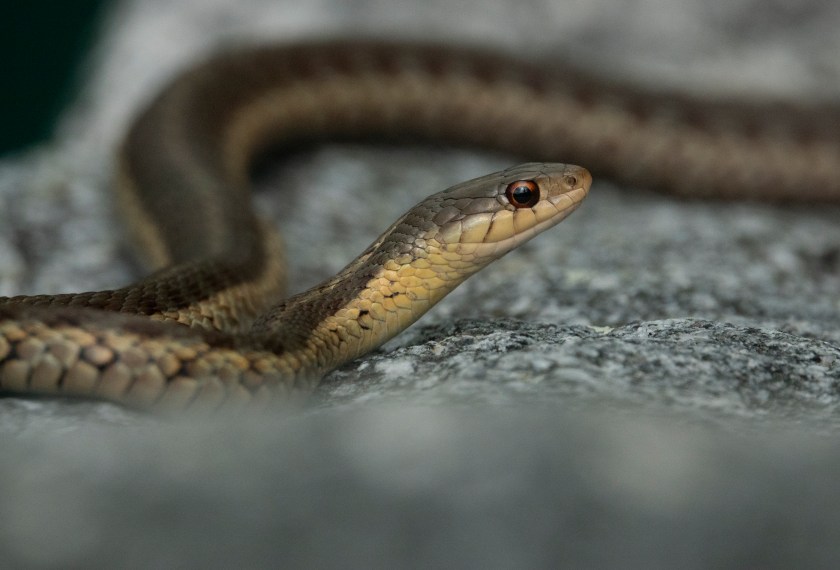
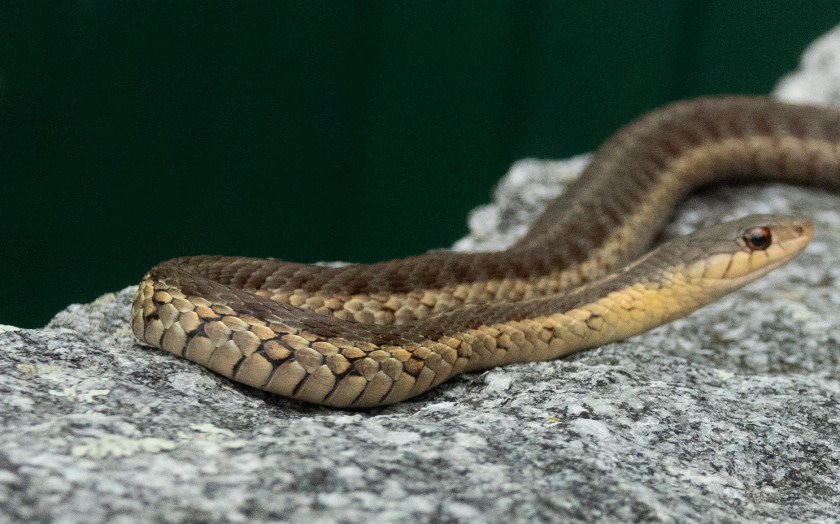
Two garter snakes on my garden wall, a favorite place when the granite has been warmed by a day of sun. Only one was willing to pose:
with sleek bronzed scales:
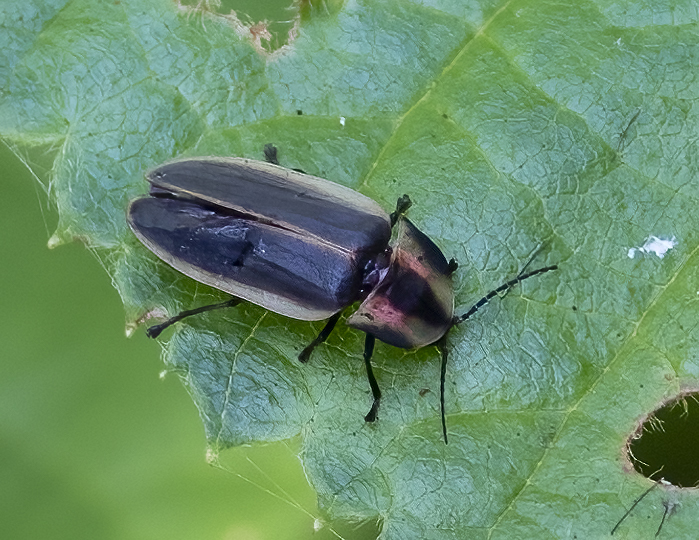
As evening fell, there were fireflies by the small vernal pool in the field, impossible to photograph, but like having fairies in the garden. The flashes are made by this Say’s Firefly, Pyractomena angulata.
After dark an Eastern Whip-poor-will, Antrostomus vociferus, called from right outside my window. A sort of nightjar, their scientific name reflects the fact that they are very, very loud, but I was delighted to hear it because they have become quite rare, classified as Near Threatened.
It is in the same place every evening, and one dusk it started up while it was still light, so I went out to try and see it. It flew up, and away, and I was sorry I had disturbed it, but it was back the next night. They nest on the ground, and I have looked, to no avail.
And then, at about 4am, a fox barked, sharp and rasping, very close to the house.
A wild and savage sound to welcome me home.
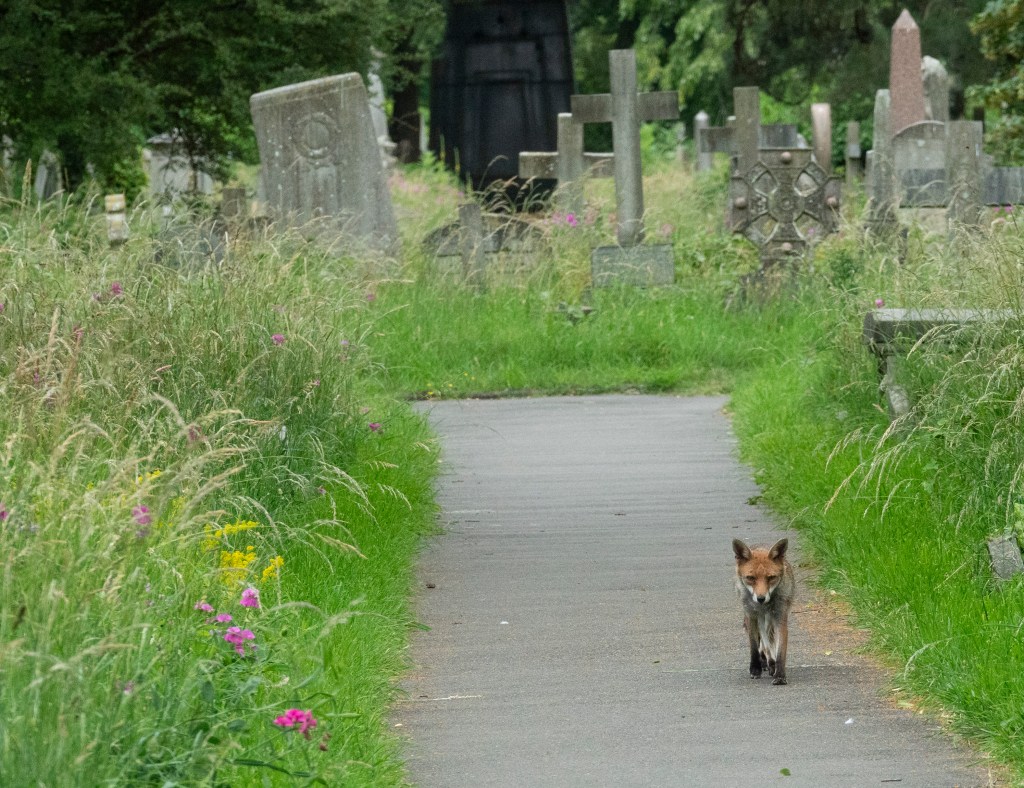
PS In London, foxes wander round Brompton Cemetery in broad daylight:
But here in Maine they are usually wary and I have never heard one bark by the house before.
PPS Google AI produced this excellent summary of how the firefly’s light flash is made:
“Fireflies produce their signature glow through a chemical process called bioluminescence, which operates in a specialized organ called a lantern in their abdomen. This reaction is highly efficient, converting nearly 100% of its chemical energy into light without producing heat. [1, 2, 3]
The mechanism involves four key components mixing in the insect’s light cells (photocytes): [1, 2]
Luciferin: A light-emitting compound.
Luciferase: An enzyme that acts as a catalyst to speed up the reaction.
ATP (Adenosine Triphosphate): The fuel for cellular work.
When the firefly takes in oxygen, the luciferase enzyme facilitates the binding of luciferin and ATP. This oxidation process creates an unstable, high-energy molecule. As this molecule quickly drops back to a lower energy state, it releases the excess energy as a visible flash of light. [1, 2]”
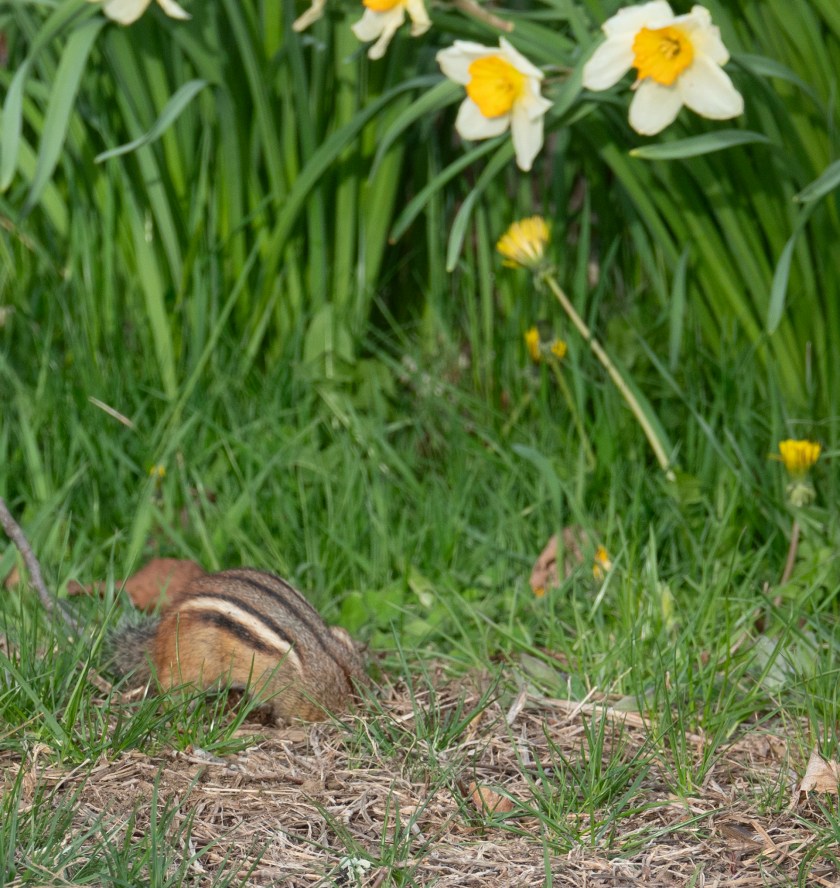
I tend to think of chipmunks as seed eaters, whether from my bird feeder, or straight off the plant. I’ve also posted in the past about them eating my flower buds (grrr..), and adult beetles. The other day (spring here in Maine, after a long hard winter), I saw one sniffing the lawn at the edge of my flower bed:
Then it began to dig, enthusiastically, until its head was underground:
Success. It came up with a grub, which it seemed to find tasty:
The earth on its whiskers, and the hole at its feet, are evidence of the excavation:
In early spring, they’re desperate for protein after a diet of nothing but seeds and nuts all winter. The beetle grubs are beginning to move, and the chipmunks use smell, hearing, and tactile cues via their sensitive noses, to find these grubs. Just so long as it chooses to remove the kind of grub that gardeners dislike, it’s a win-win situation.
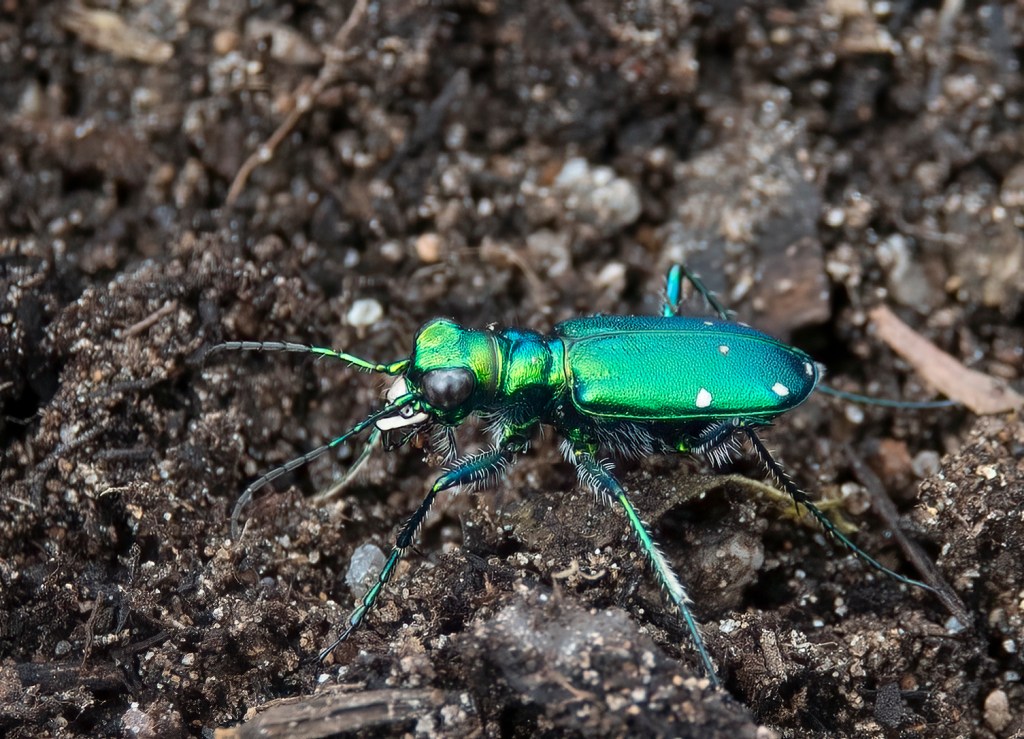
So one poor grub didn’t get the chance to grow into a beetle of some kind, but the same day, getting my vegetable beds ready for planting, I disturbed this emerald Six-spotted Green Tiger Beetle, Cicindela sexguttata:
It has large white mandibles, visible here, and hunts for tinier insects and spiders. You’d think that dazzling coloring would be dysfunctional for a carnivorous predator like this, but apparently not. It is quite common, about 1/2″ long, and is easy to see because it likes sunny patches, but it moves fast and rarely stays still, so it’s hard to photograph.
[The earlier version of this failed to show the video; I am hoping I’ve fixed the problem).
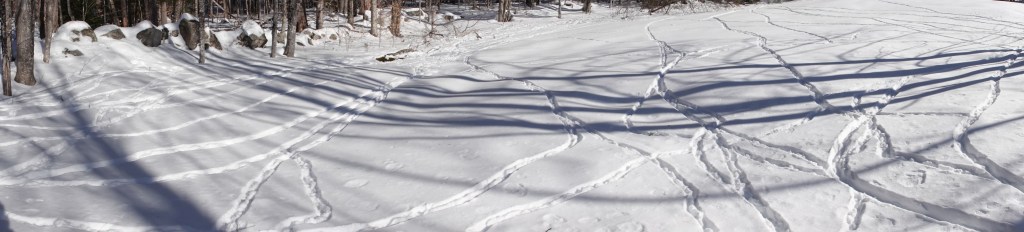
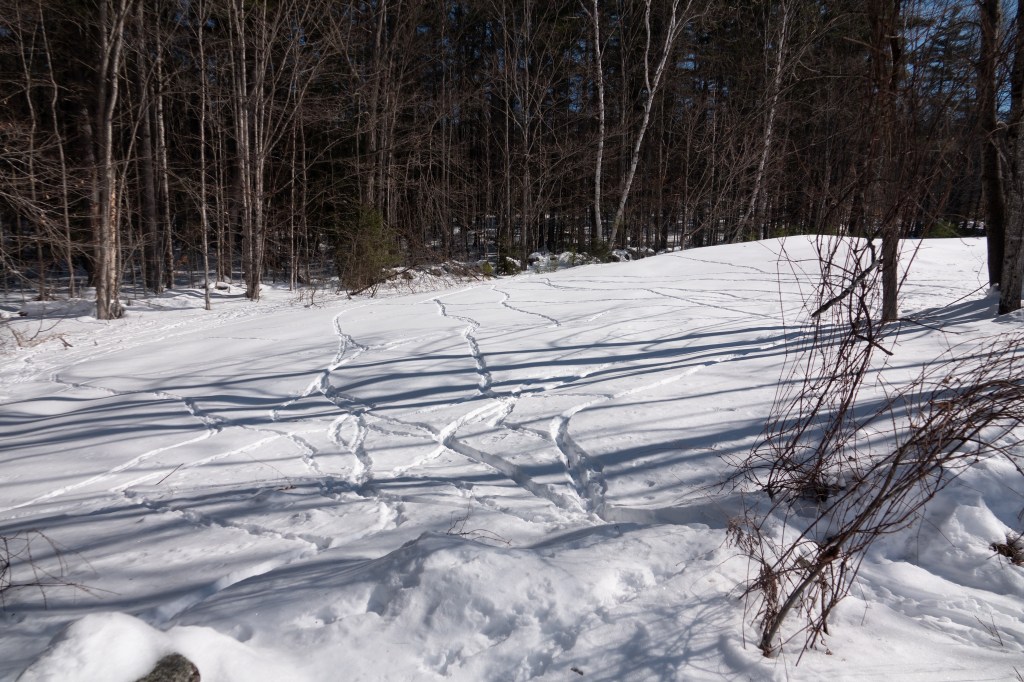
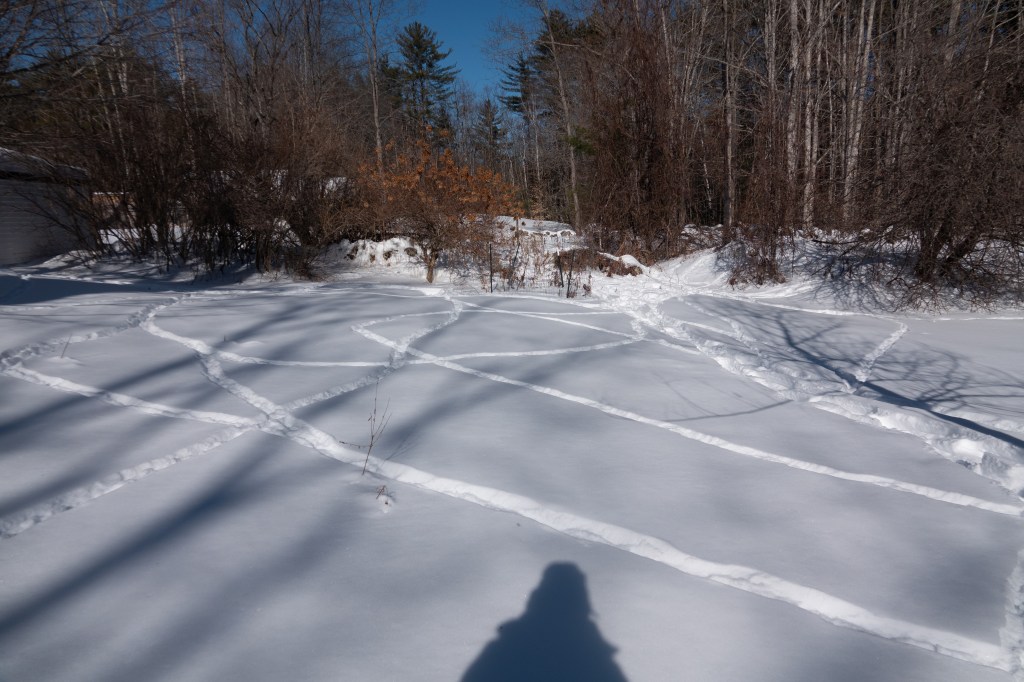
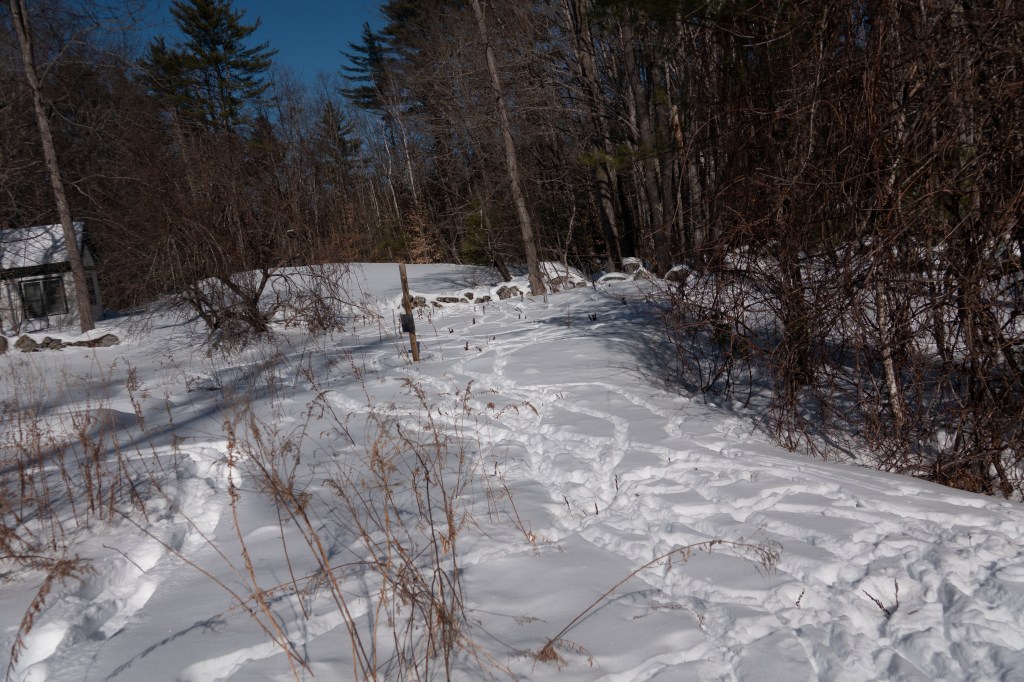
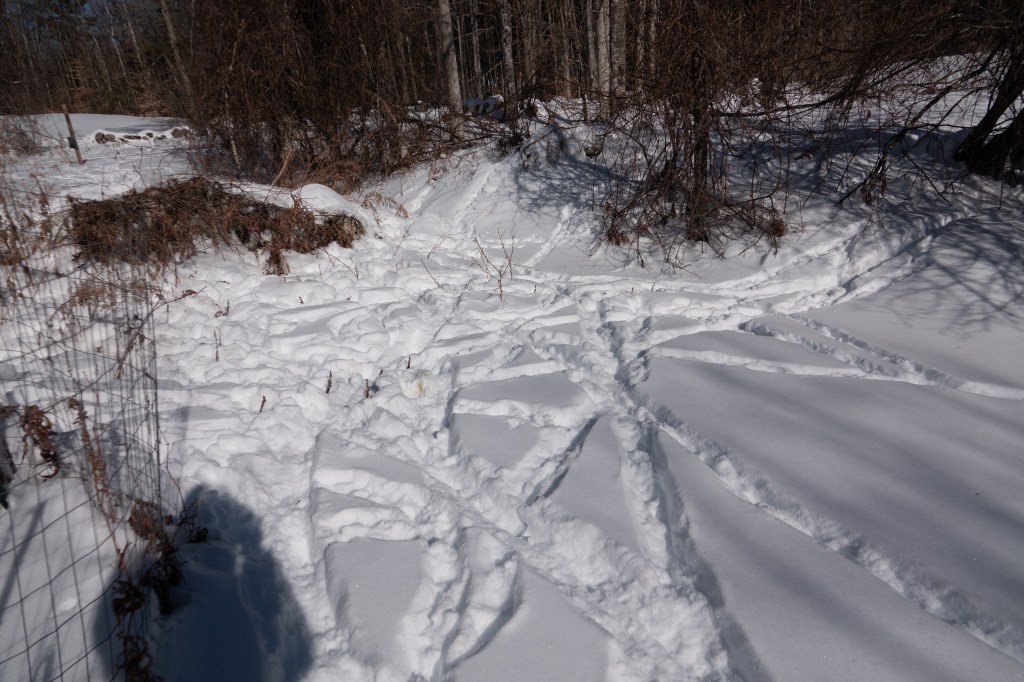
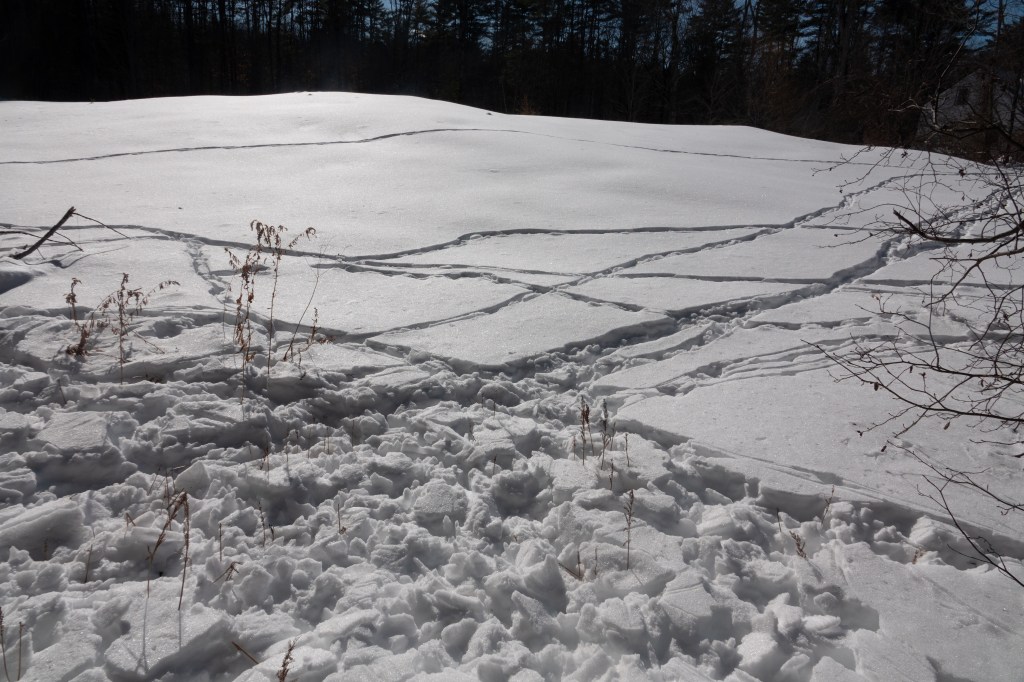
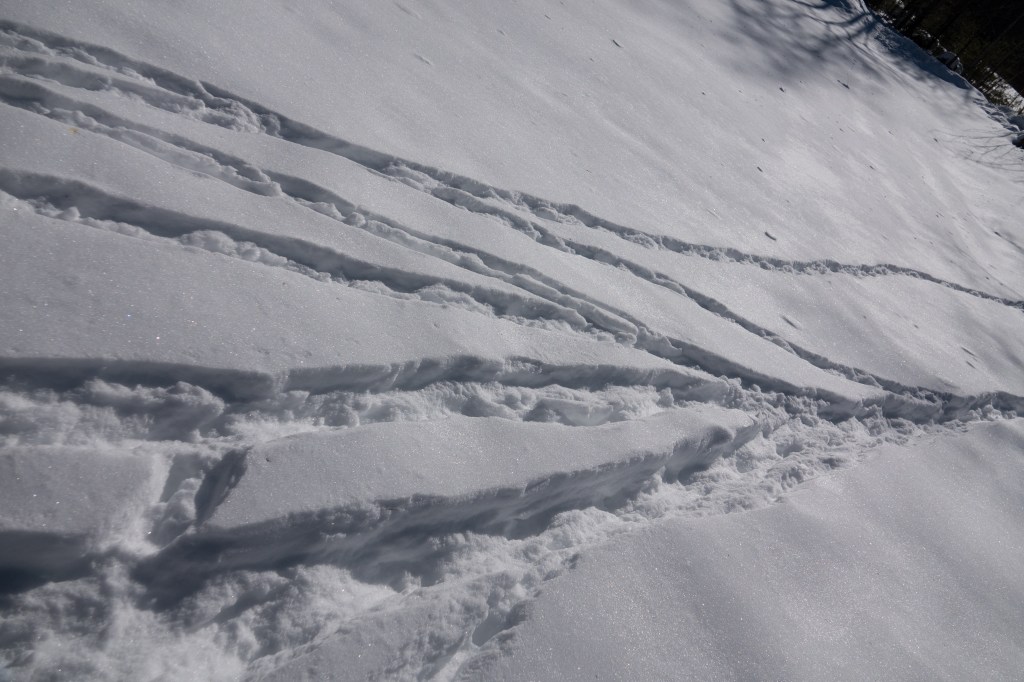
February is when coyotes mate, and two nights ago they held a party next to my driveway. Neither me nor our beagle saw or even heard a thing, but they didn’t clear up when they left, and so the signs were clear to see.
They came out of the woods, six or eight of them:
Some of them came towards the old stone wall by the driveway:
Others headed towards the vegetable garden at the top of the photo:
where they ran around in excitement:
Then they moved a little closer to the house and seem to have stopped for a while in a group hug:
Nearer the woods there was another gathering spot:
And then they left, some went back the way they came, and some loped off across the driveway and down the hill.
I have no idea what was going on. Usually a group is an adult pair and their young, aged one or two years, for a total of at most six coyotes, but this looked like more to me. Each gathering ‘hub’ had one urine mark, which suggests territorial marking. No scat anywhere, no kills, no signs of a female in oestrus. Mating does take place at this time of year, but it usually involves just the loving couple, not a rave.
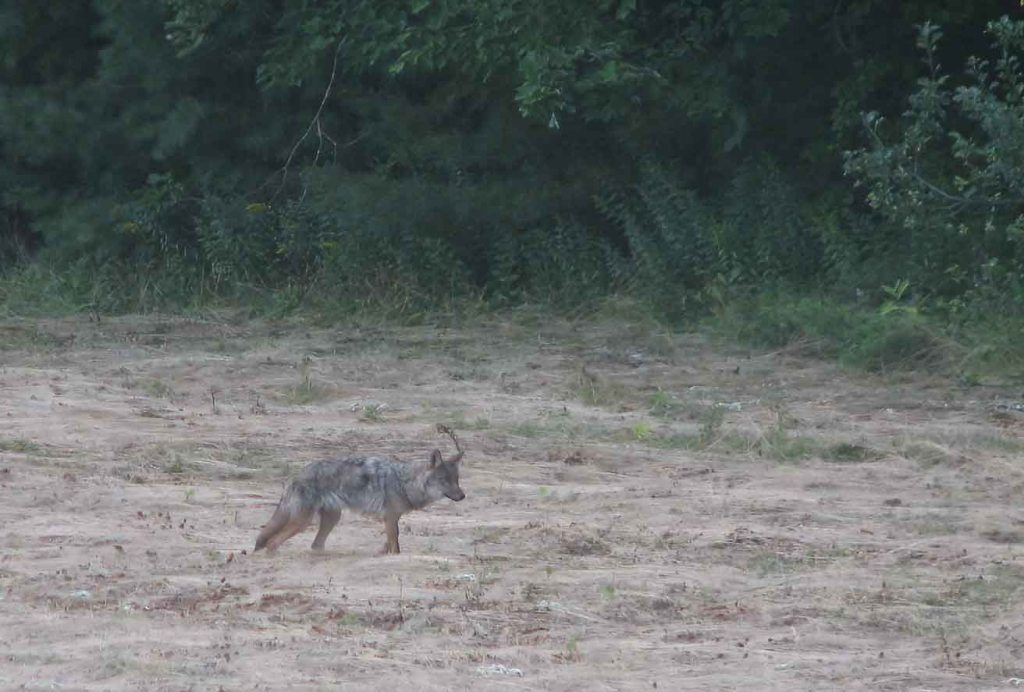
Come spring, they will be taking solitary walks through the woods, fording the streams , and looking for prey:
Very occasionally one emerges from the woods at dusk in full view when I have my camera handy. This was in August, after the field had been mowed, perhaps stirring up small prey animals.
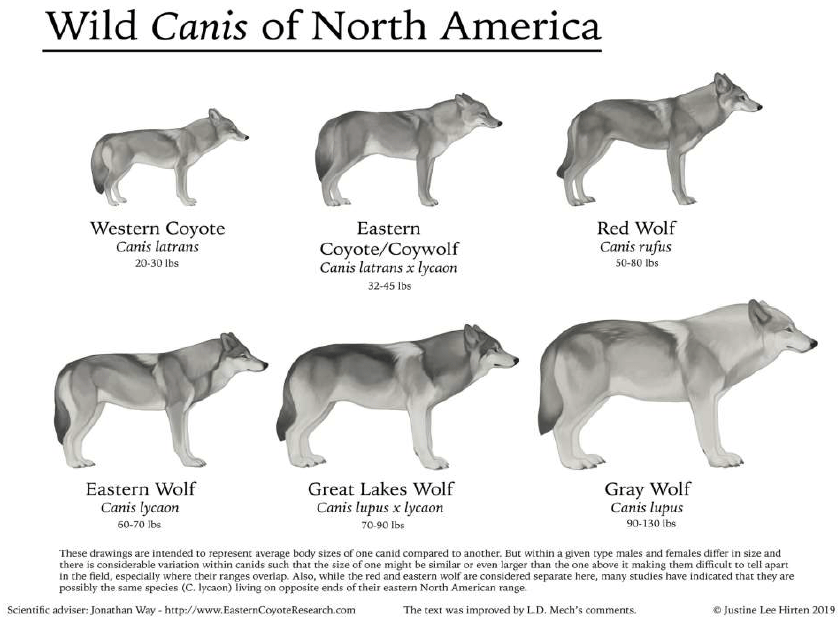
PS Coyotes in the northeastern USA are sometimes called coywolves. They’re a hybrid of a coyote and a wolf, and much larger than the coyotes of the western USA.
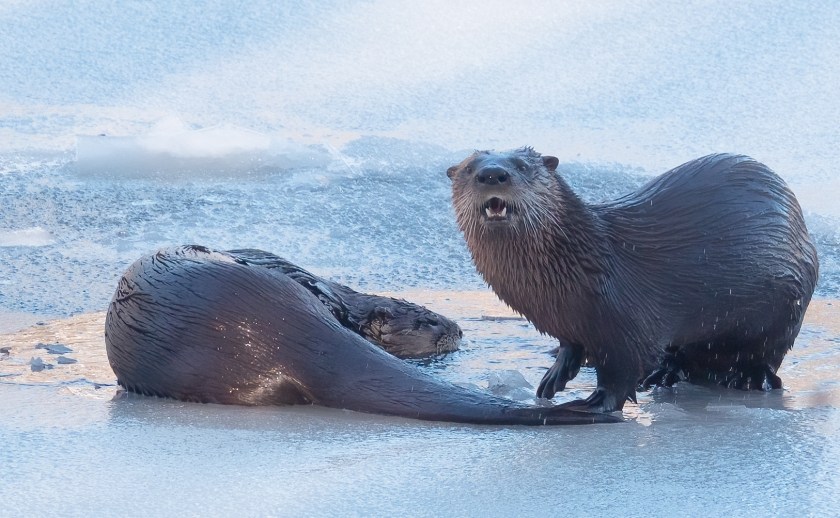
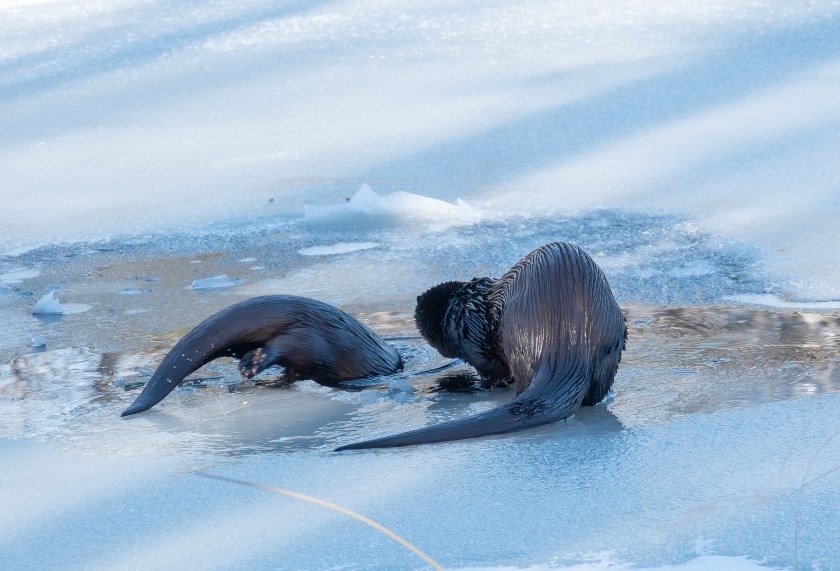
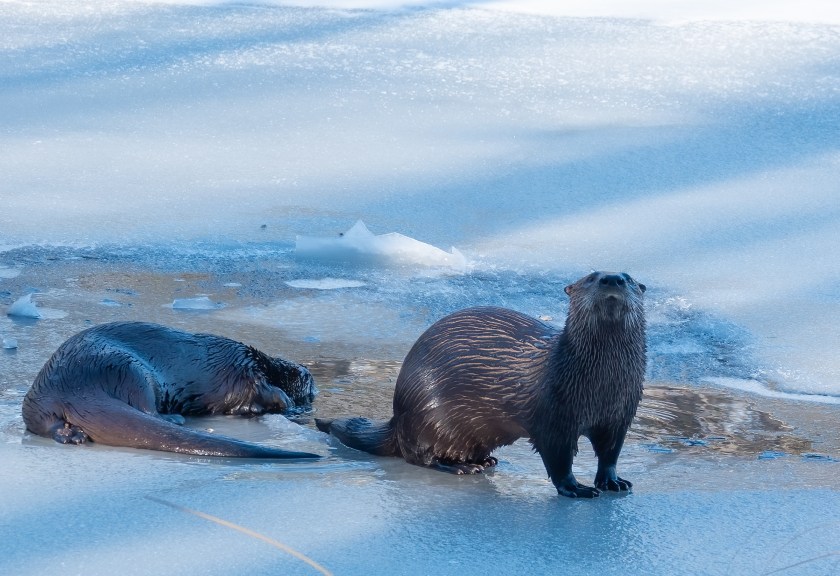
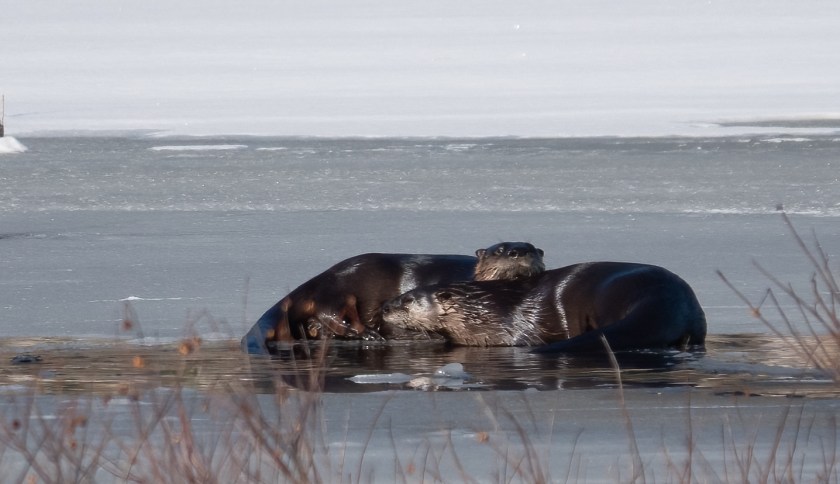
We had had the first proper snowfall of the winter on December 2nd, six inches of lovely fluffy stuff, so on the morning of December 3rd I snowshoed in to our beaver pond. Joy of joys, as I stood on the shoreline two young otters popped out of the ice just a few feet in front of me.
We were all a little startled, but I took a few quick photos:
and after one minute twenty seconds they slid back in:
I stayed put, and ten minutes later they returned, this time checking immediately to see if I was still there:
Since I clearly was, they didn’t hang around, only twenty seconds total this time, but then I saw a third one, on the left, further out on the ice near the beaver lodge.
This one was larger, perhaps the mother, and she was fishing successfully, three different fish over the course of fifteen minutes:
Eating one took a while:
Later, another otter joined her, but she didn’t share her fish. Watch the video here:
After a bit the youngsters appeared, sunbathing:
Looking for the others:
and sliding on the ice:
A communal slide, followed by a dip:
A perfect morning, for me and apparently for them too..