Minks and otters are both Mustelids, a family of long slender mammals whose name comes from the Latin for weasel, mustela, which in turn by some accounts originates from the Latin mūs + tela for “mouse-javelin”, named after their long elegant shape. They are fierce predators, and will eat anything smaller than themselves.
I watched an otter poking around near a large rock, pouncing on something invisible under a small bush, checking out the mess left by some earlier visitor, and then performing the usual bowel evacuation dance.
Usually they fish under the ice, emerge to eat their catch, perhaps defecate, and go straight back under.
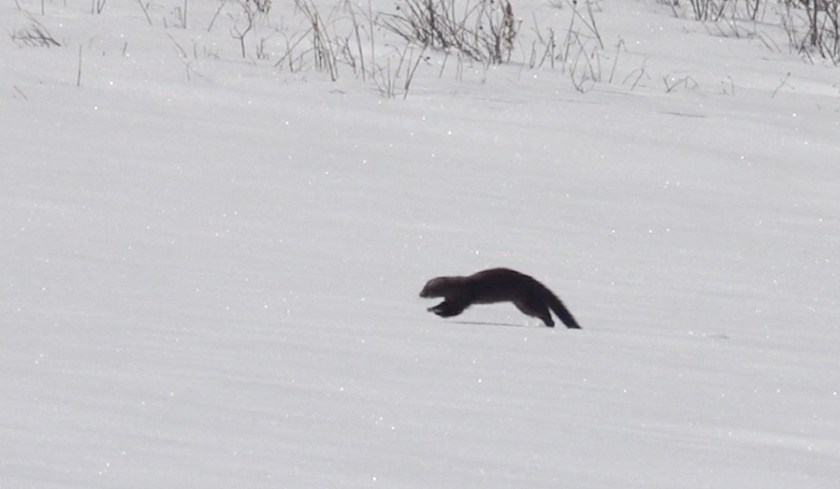
I kept watching, and then a dark shape appeared in the corner of my left eye moving fast away from the rock area. I assumed the otter had surfaced at a new spot, and so I started videoing. But it was small to be the otter, and all dry, whereas the otter had been fishing, and was wet. I wondered if it was a mink?
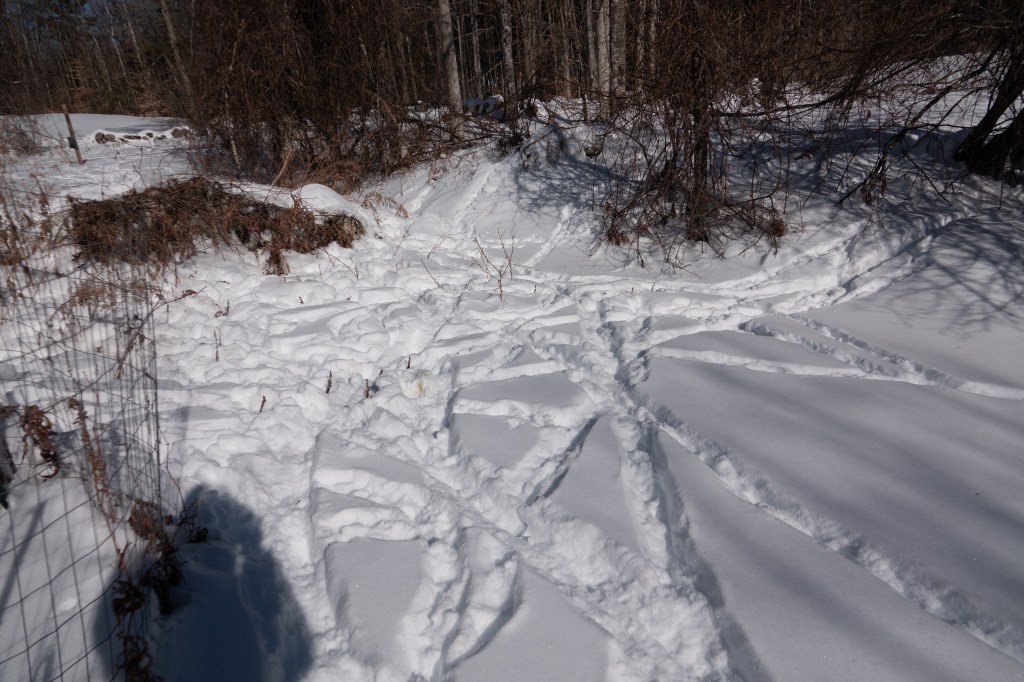
From time to time it paused and looked backwards, but mostly it was bounding at a fair clip. There was 5″ of fresh snow on top of a much deeper base layer, so it was heavy going at times:
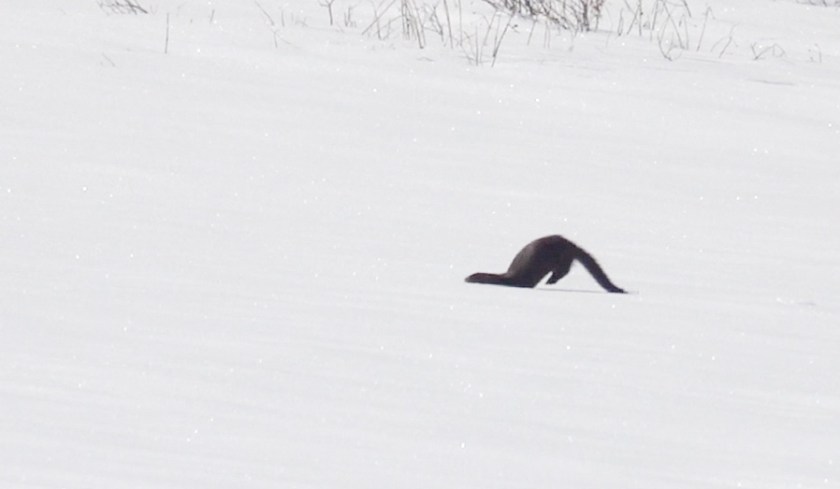
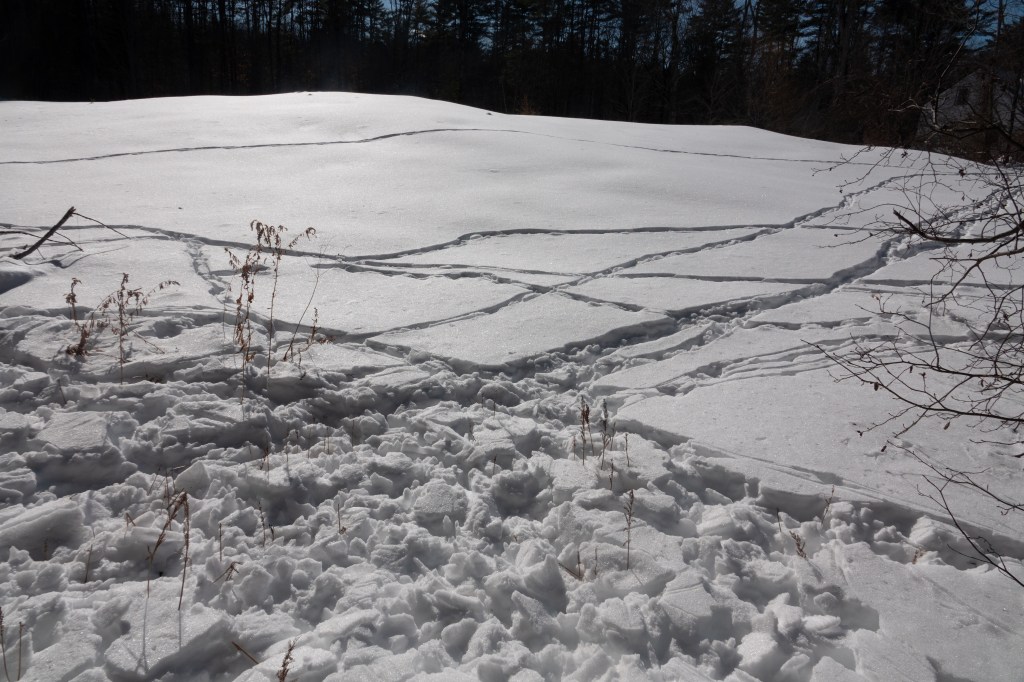
especially when it hits drifts near the lodge:
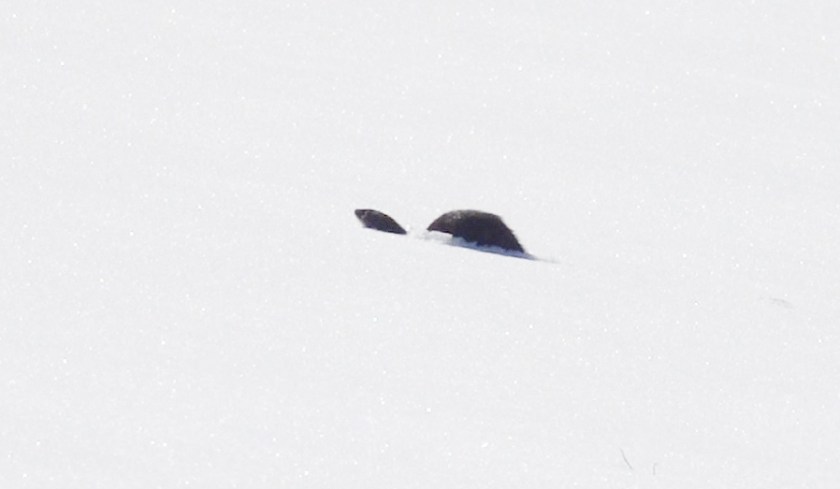
Seven minutes later it had run nearly 1/4 mile down the pond, stopping occasionally, and disappeared at the base of a beaver lodge. (It had started close to the lodge in the distance in the photo below, and ended up at the much closer lodge on the right.)
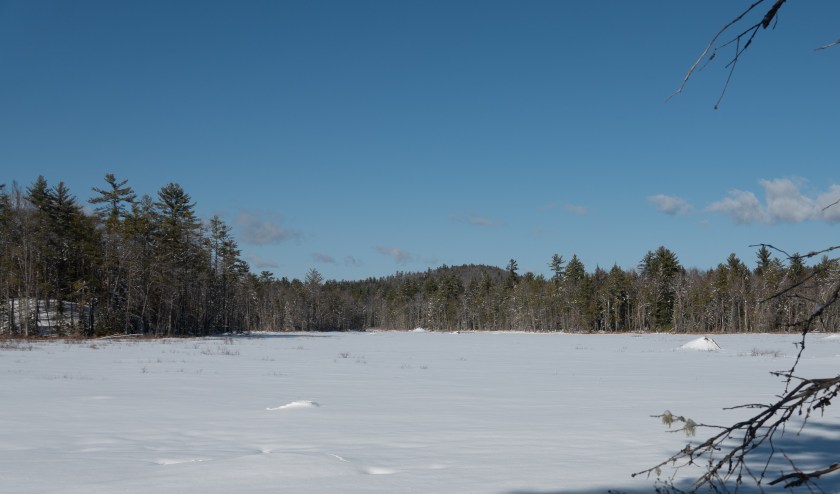
So I moved as close to the lodge as I could and watched. Something moved at the top:
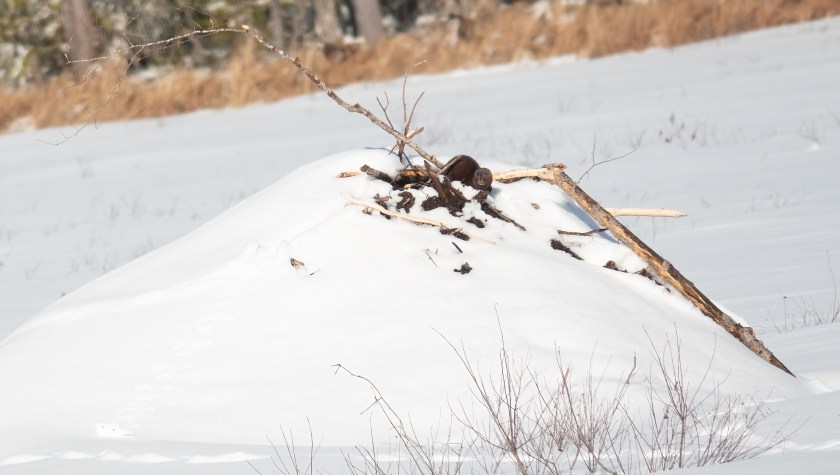
I zoomed in, and realized I was being watched by a mink, all glossy brown and fluffy, with a white patch just visible under its chin:
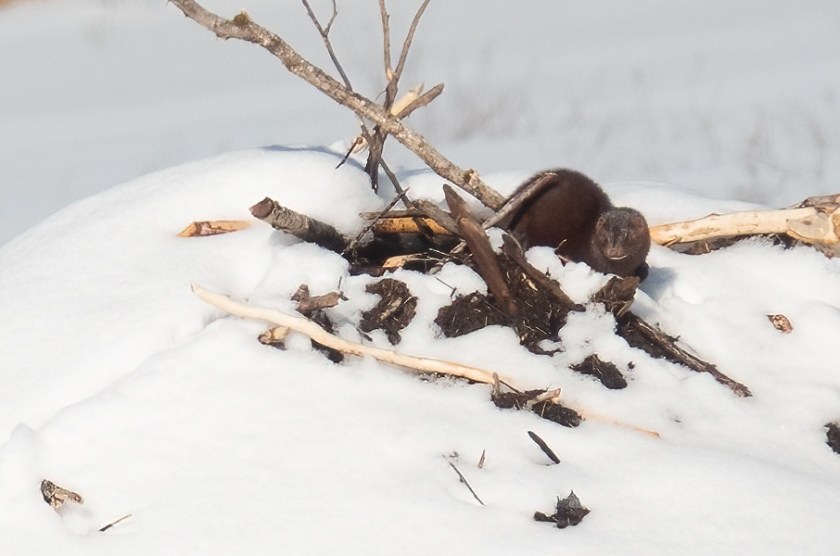
So what was going on? I think the meter-long otter had scented and disturbed the half-meter long mink, which had run for its life. Otters are known to occasionally eat mink, especially if their territories overlap.
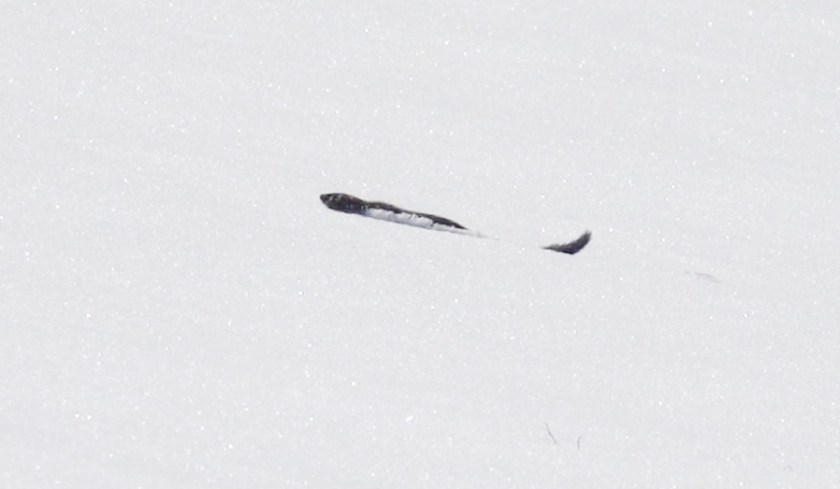
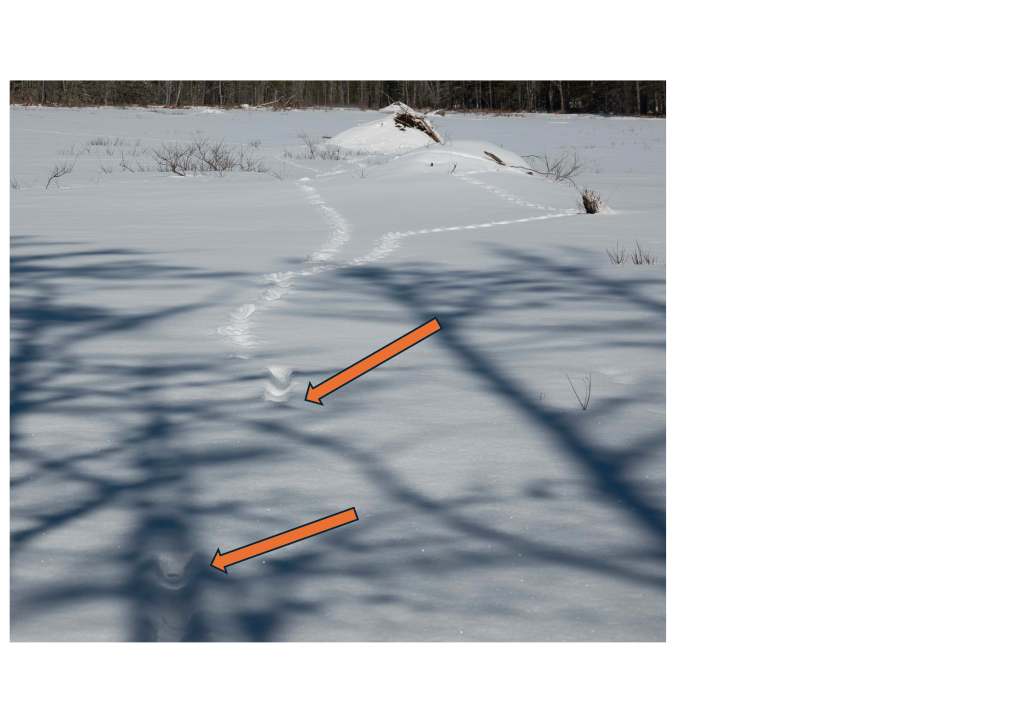
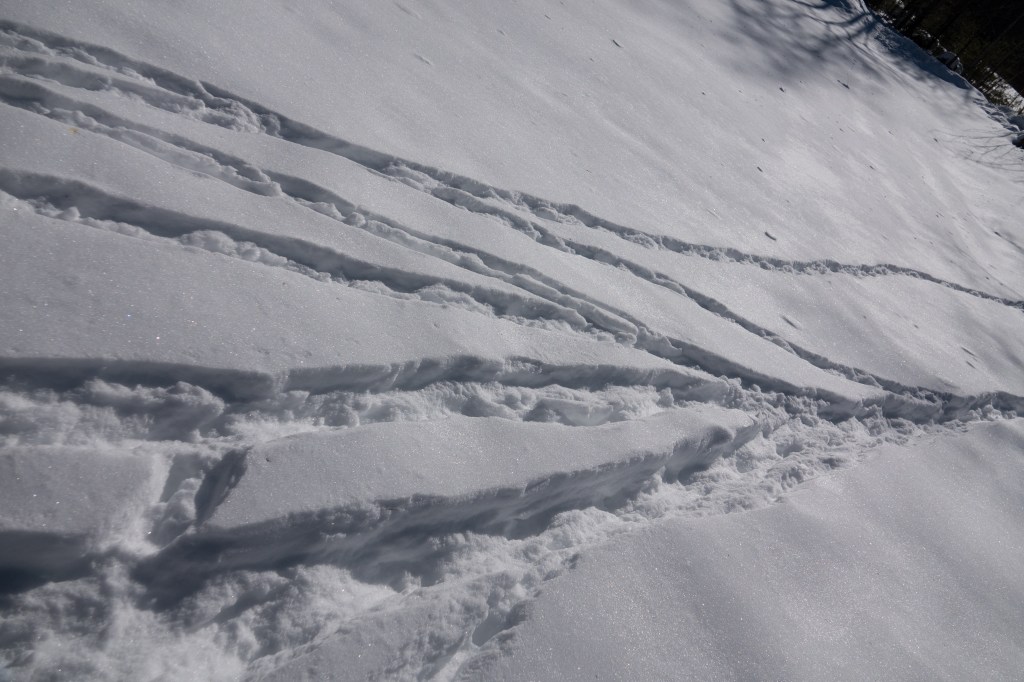
This one had found a safe vantage point, and lived to fight another day. By the next morning, it had left the beaver lodge, occasionally giving up and simply tunneling through the deep snow (my snowshoes sank in a full foot); the tunnel between the two arrows below was ten feet long.
PS Mouse-javelin may well be “folk etymology”, and the real source of the word may be more pedestrian. The suffix -ella is diminutive and familiar, as in Cinderella (or indeed Nutella!) so the ending may be a version of that. If you’re curious, there’s lots of ideas out there on the interweb!
 Eyes on the Wild