[We have just returned from a trip to Peru. This was not primarily a nature trip, the central goal was Macchu Picchu, and it lived up to expectations. But this is a nature blog, not a travel/history blog, so I am only going to show you the natural side of this fascinating country. You’ll have to look elsewhere to learn about Macchu Picchu as a historical site.]
Macchu Picchu’s splendid isolation in the Andes at 8000 feet (2500 metres) is set among steep mountains and wild, lush cloud forest, home to spectacled bears, but the site itself was abandoned nearly 500 years ago, and is now inhabited mainly by tourists.
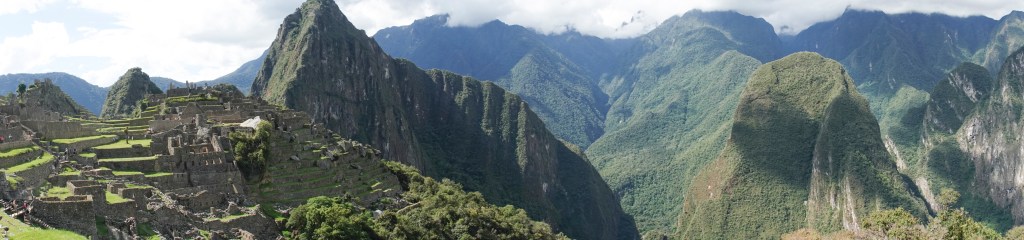
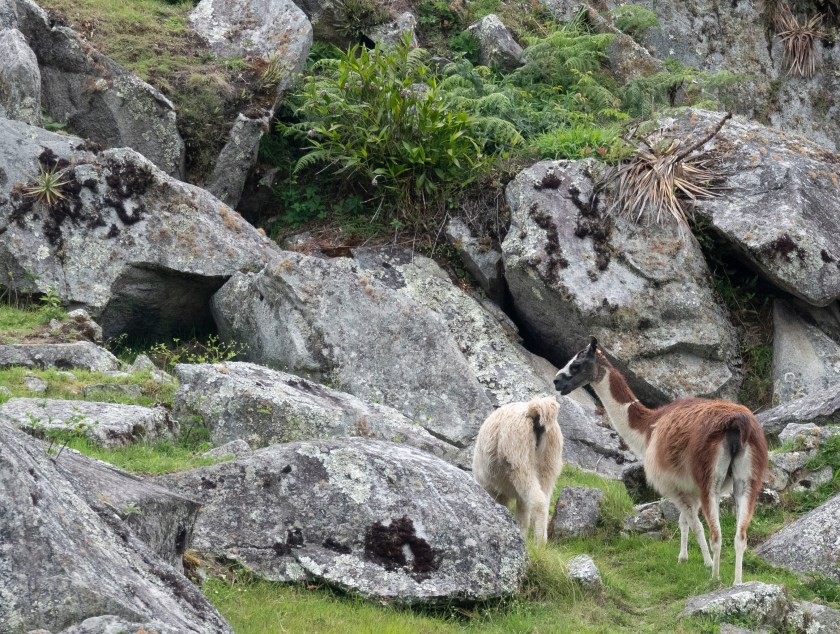
Nonetheless, there is nature to be seen. Macchu Picchu is in the tropics, only 13 degrees south of the equator, so although it is high it is not too cold. There are alpaca (a domesticated animal) wandering around, some hobbled and some free, grazing in places a lawnmower can’t reach:
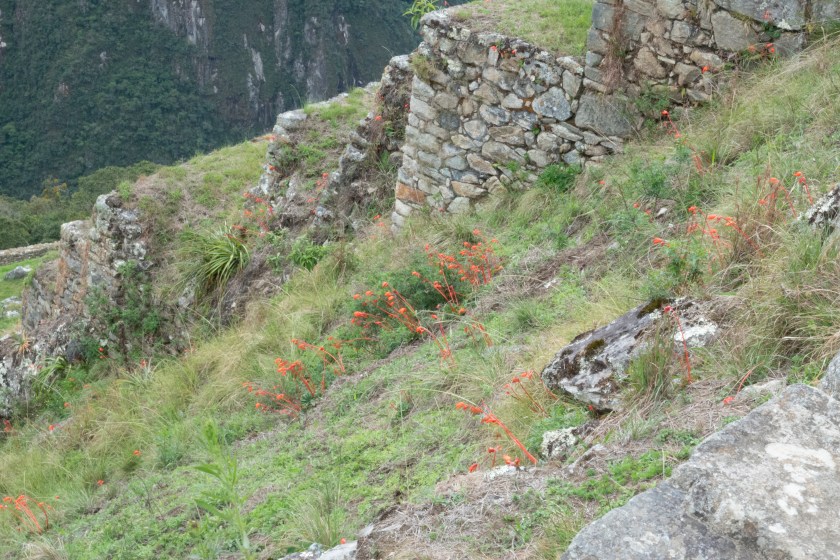
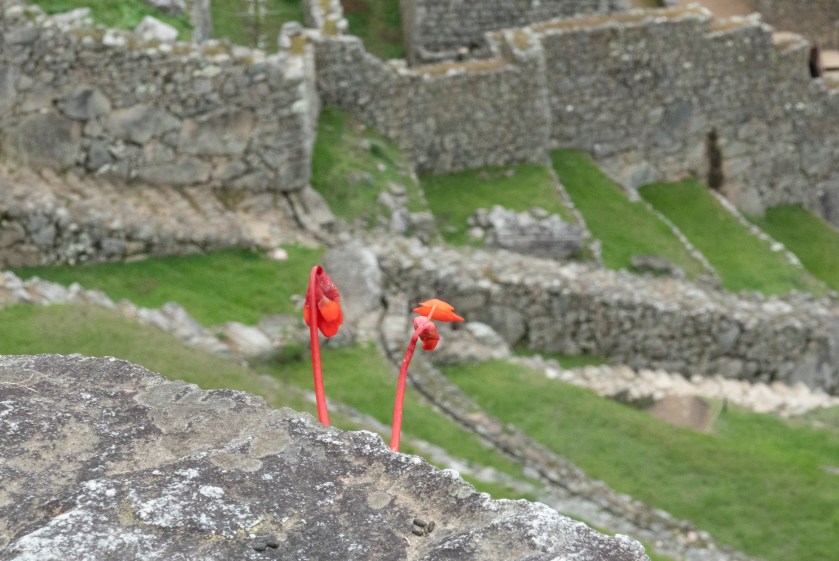
There are wildflowers, most interestingly this brilliant scarlet wild begonia, Begonia veitchii, from which our modern garden plants are descended:
At dusk, we saw two Northern Vizcacha, Lagidium peruanum, resting and grazing, not bothered by nearby tourists:
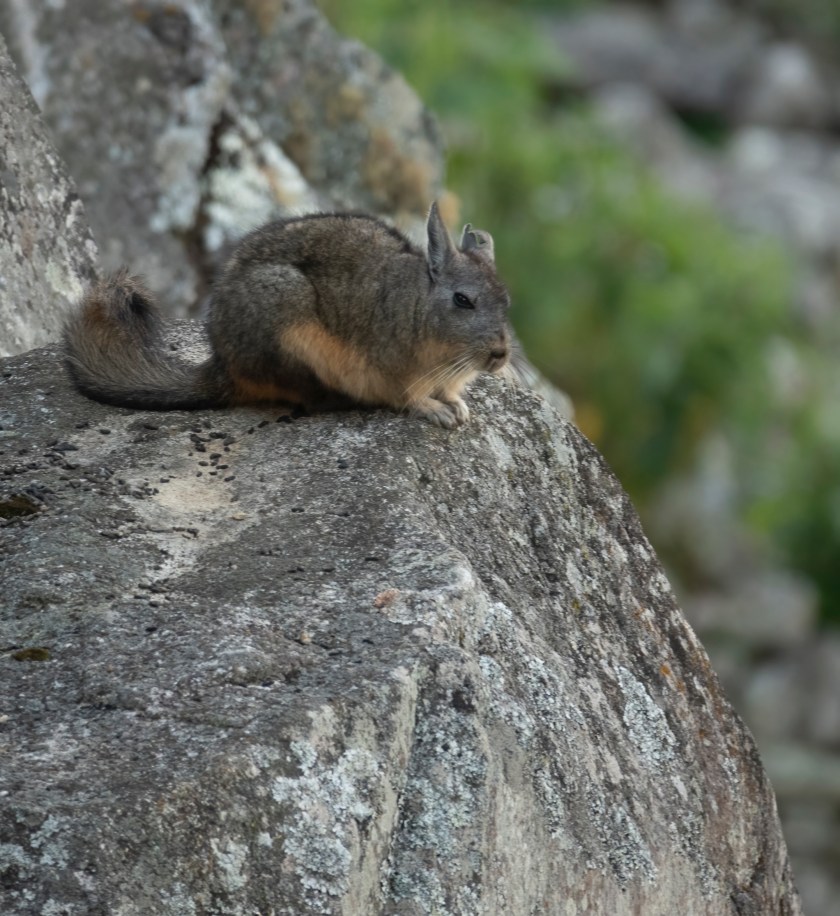
They look as if someone had crossed a rabbit with a squirrel, but they are actually related to chinchillas:
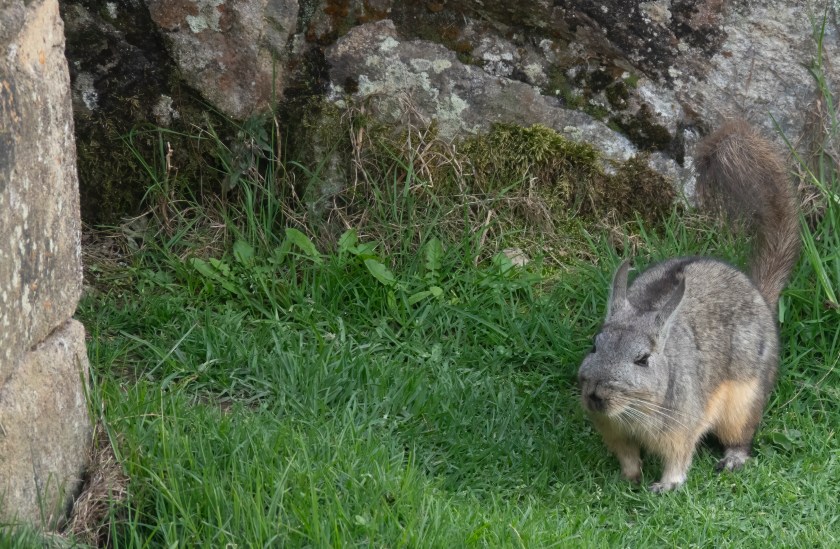
They live in rocky areas, at elevations above 3000m, and they hide in rocky crevices, and eat grass. This pair could be part of a much larger colony of up to 75 individuals.
Basking on a warm Incan rock, silhouetted against the distant mountains, was a Spiny Whorltailed Iguana, Stenocercus crassicaudatus.
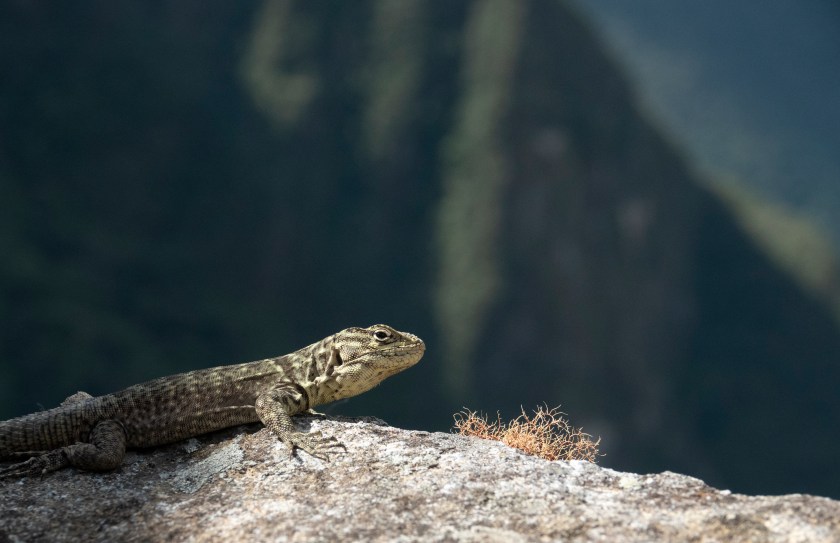
Its name comes from the unusual arrangement of scales on its tail, an overlapping series of concentric rings:
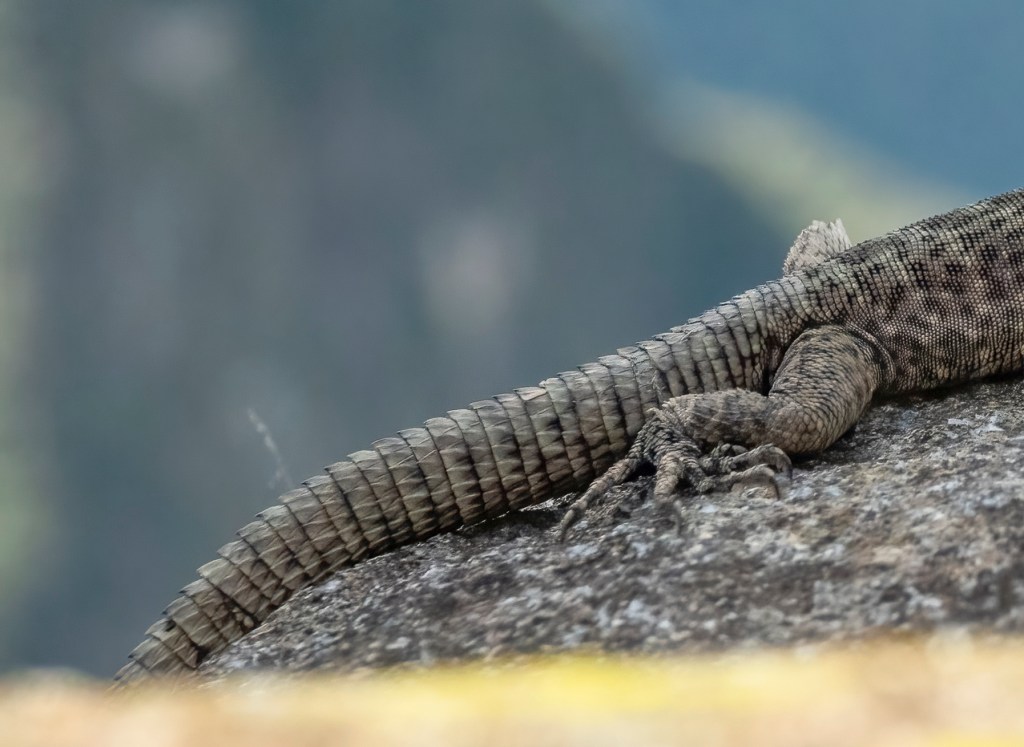
Unlike most iguanas, it is a carnivore. Almost all the iNaturalist observations of this lizard come from Macchu Picchu, presumably because the rest of its remote high mountain range its almost totally inaccessible to amateur naturalists.
Next time, birds and orchids of the cloud forest.


Fascinating nature up high there in the tropics. Thank you for this introduction to these interesting species.
LikeLike