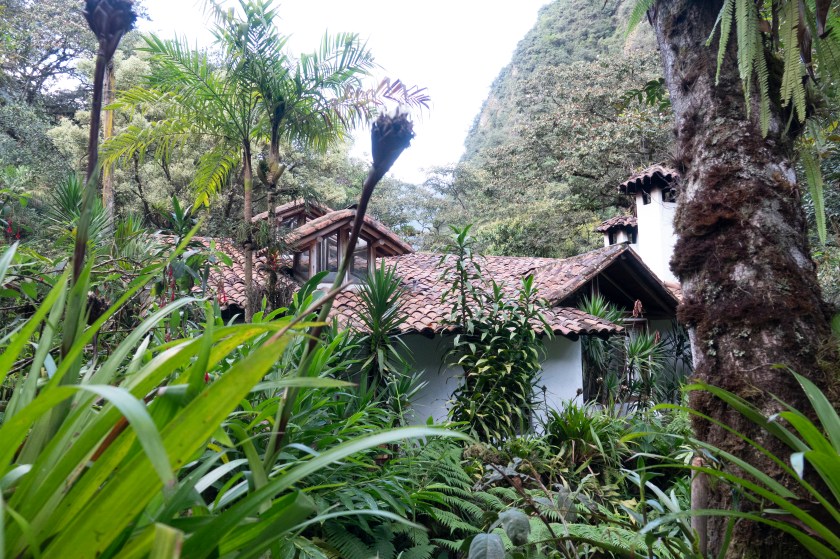
We stayed in the Inkaterra Macchu Picchu Pueblo Hotel, in the cloud forest, next to the station where the trains arrive from Cusco (or Cuzco). It is a thirty minute bus ride from there to the archaeological ruins. The hotel was once a tea plantation, and is surrounded by lush grounds, including an orchid collection, and lots of birds. I thought you’d like to see some orchids. I have identified them when I can, with the help of iNaturalist of course.
Many of these orchids are epiphytes, using another plant as their home base, and getting nutrition and water from the air, rain, and any debris on which they grow. They are not parasites on their host plant.The humidity of the cloud forest is ideal habitat for them. Some were hard to miss, flamboyant in the way we expect orchids to be:
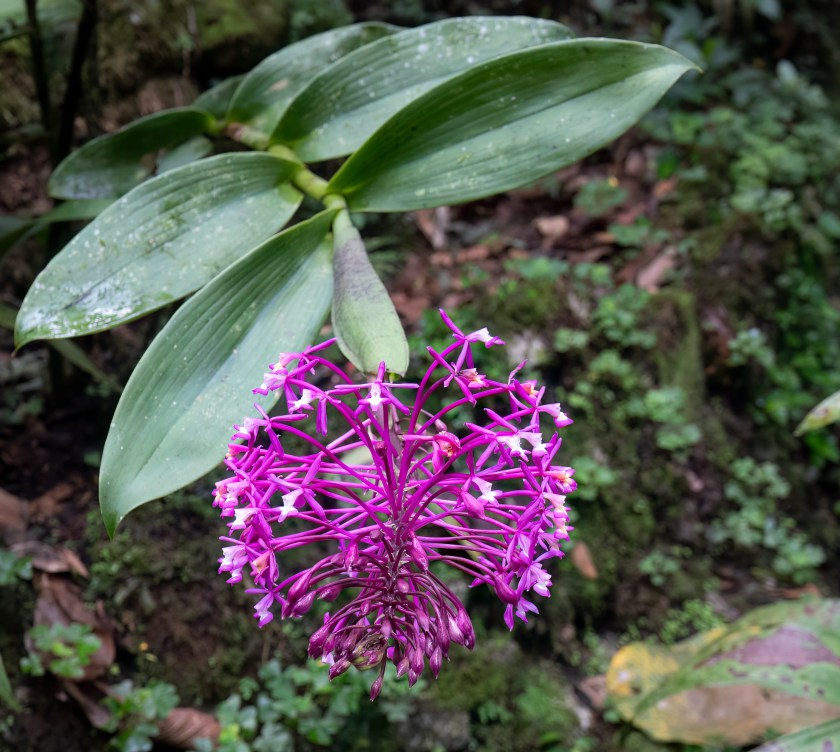
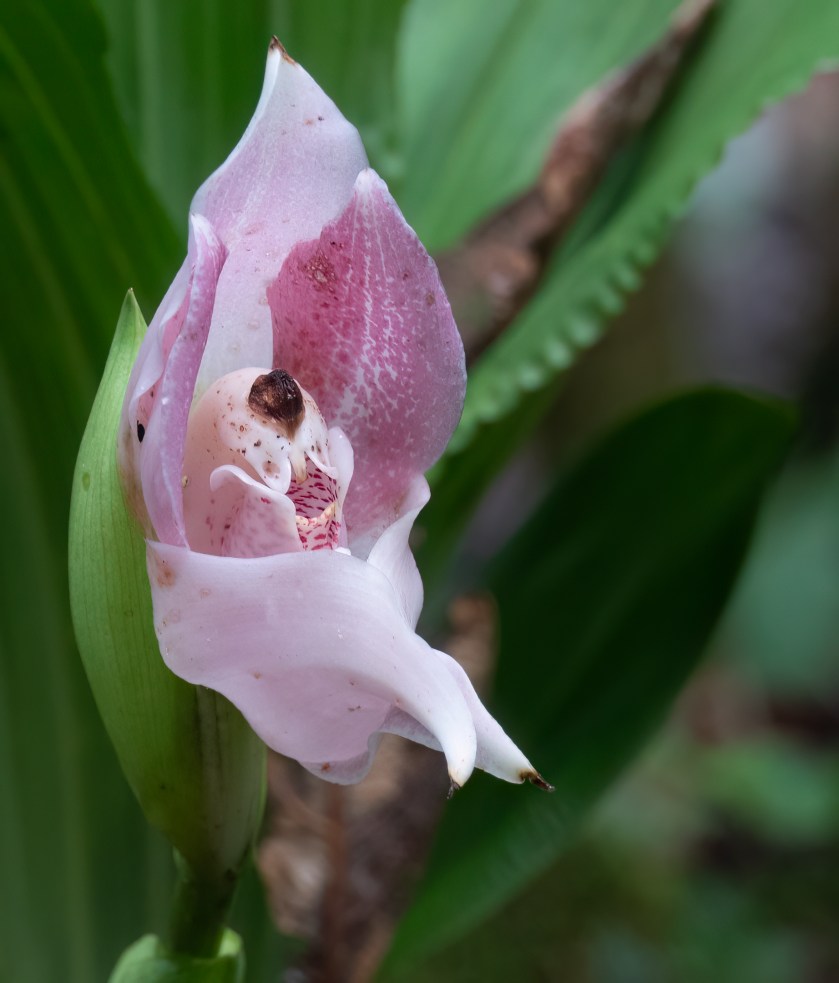
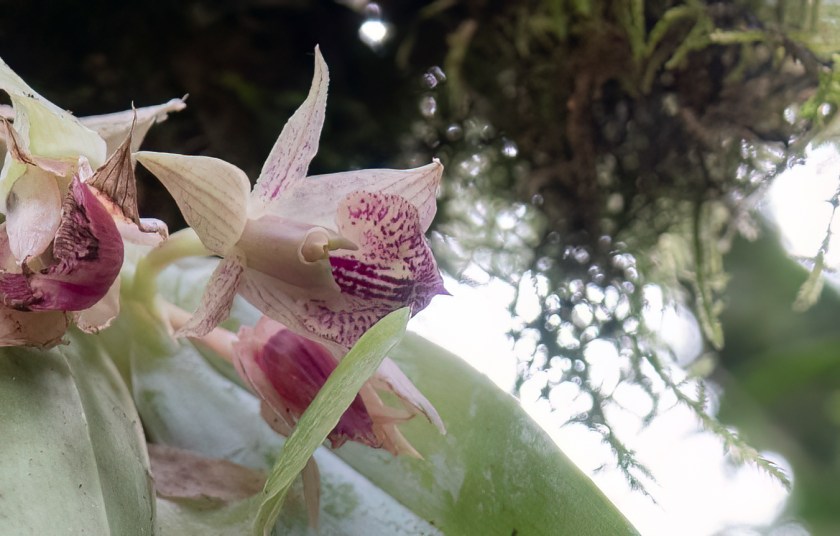
Some hid shyly under their foliage and were easy to miss:
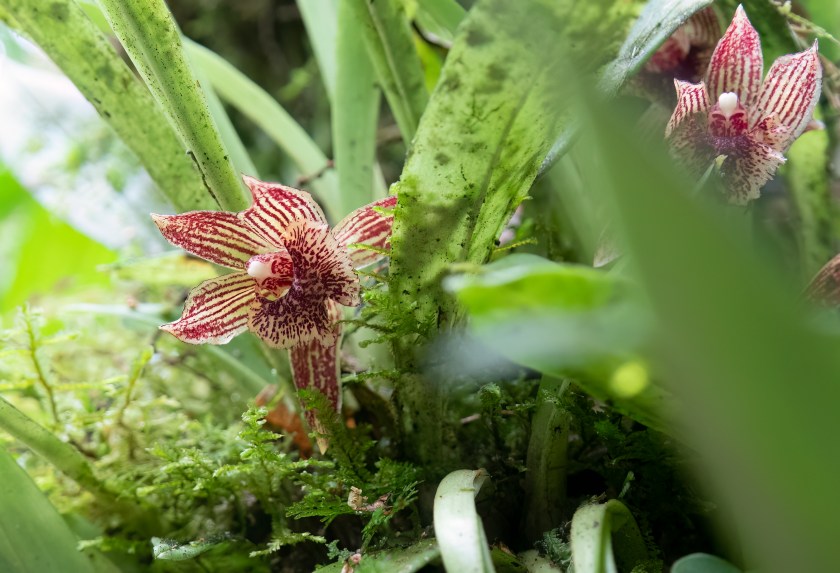
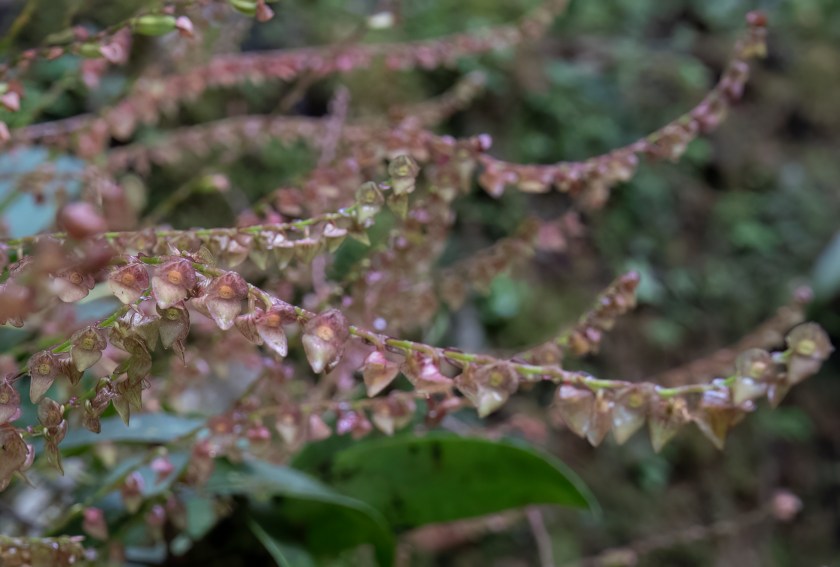
Others were smaller and more discreet, grouped many on a stalk.
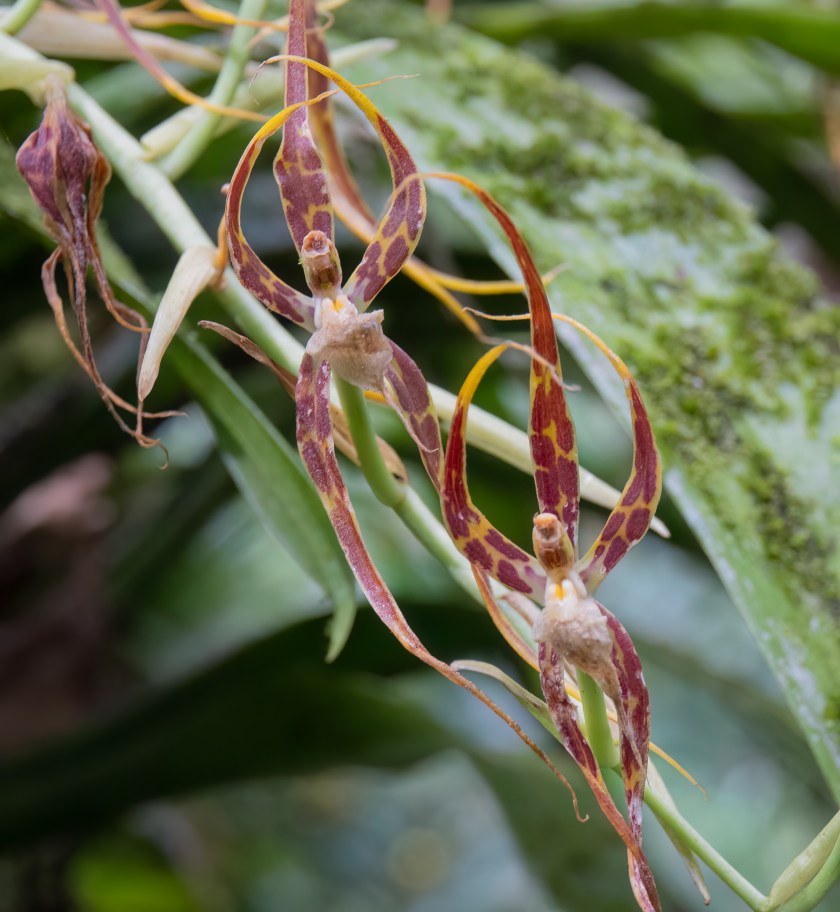
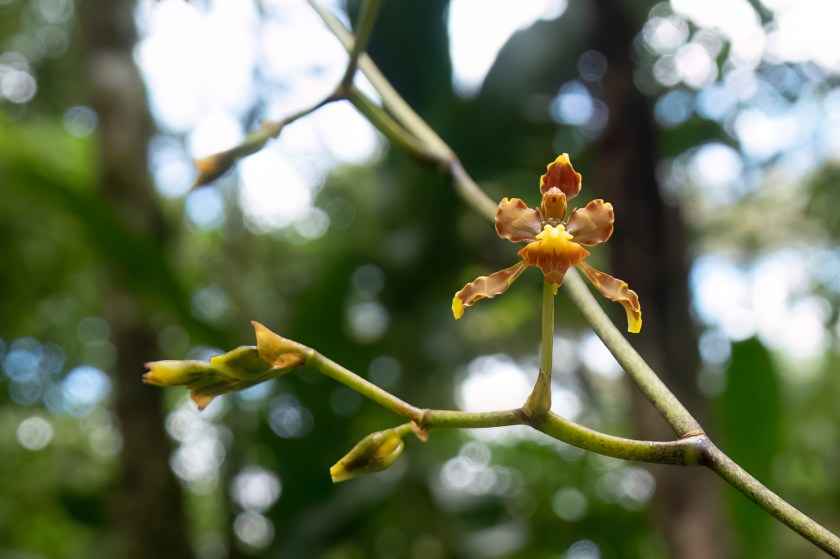
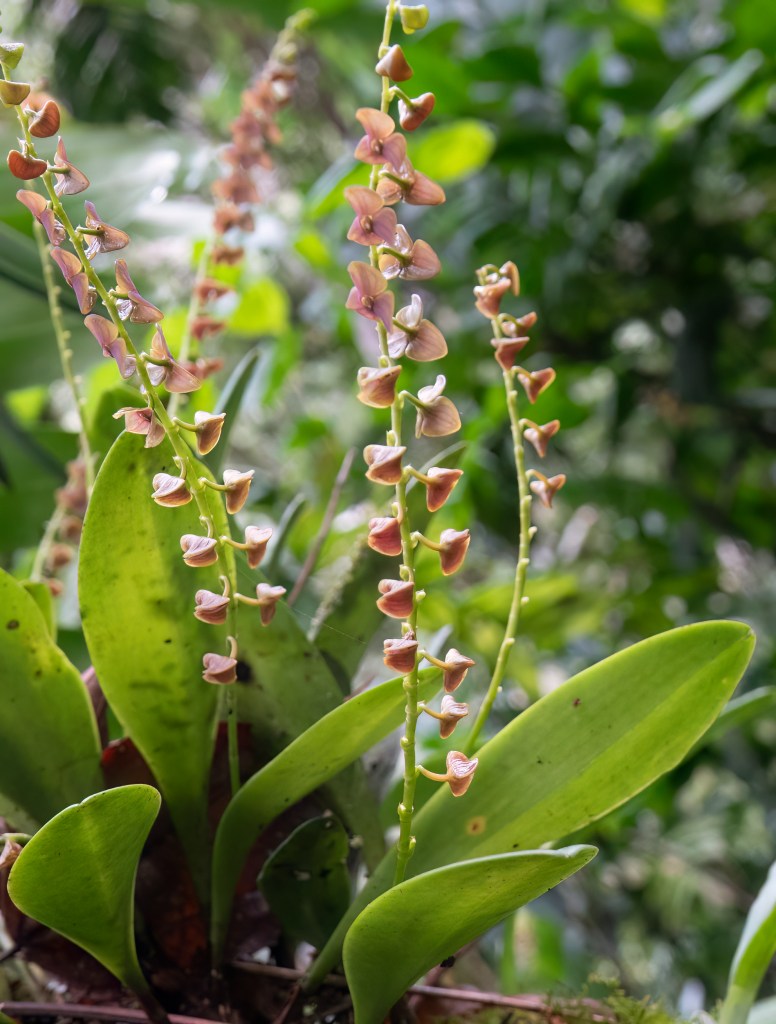
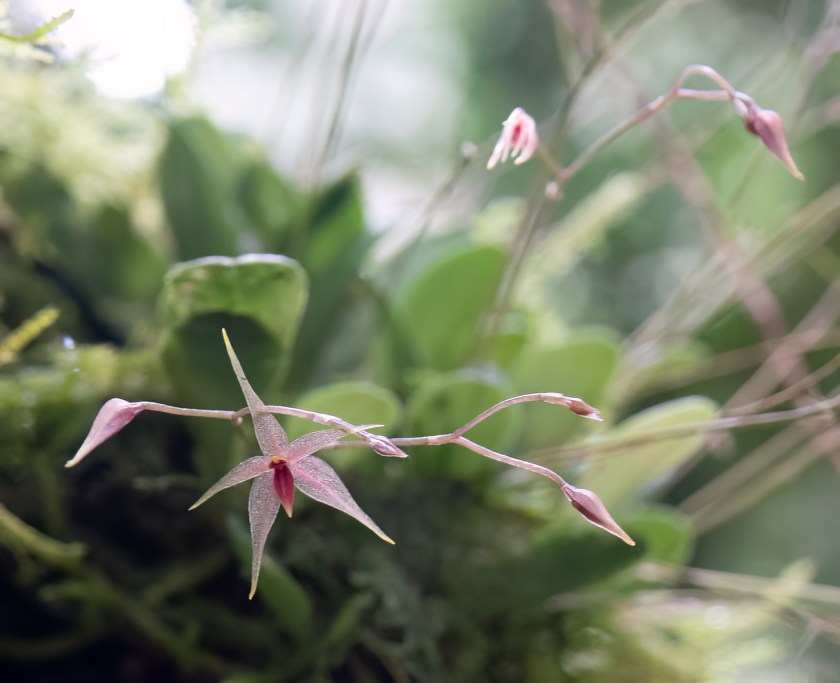
Many were very tiny, but exquisite once you found them.
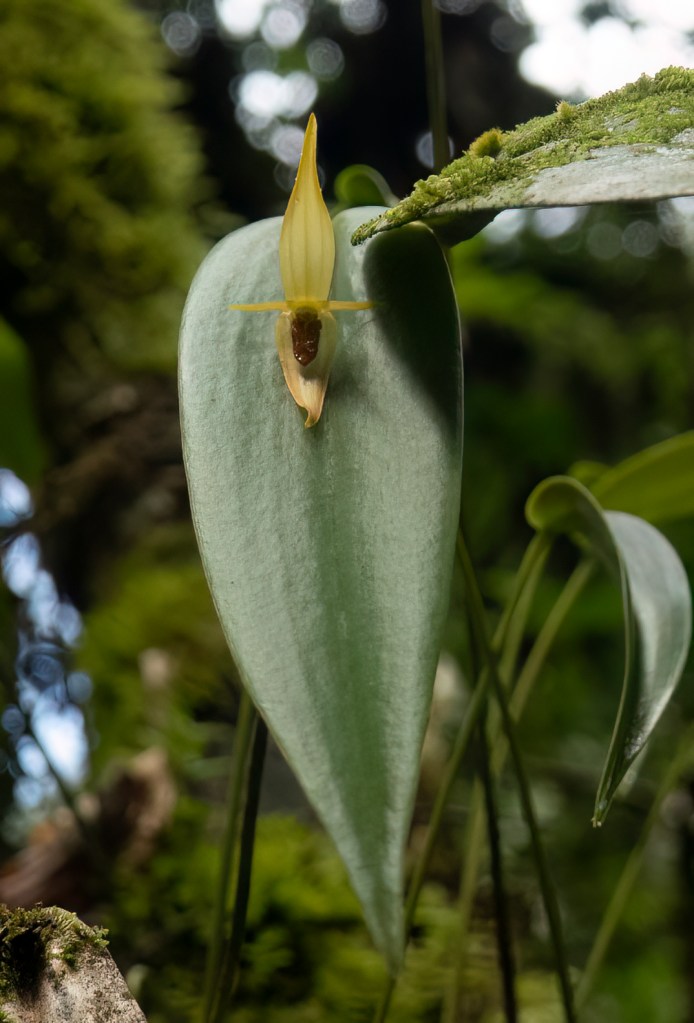
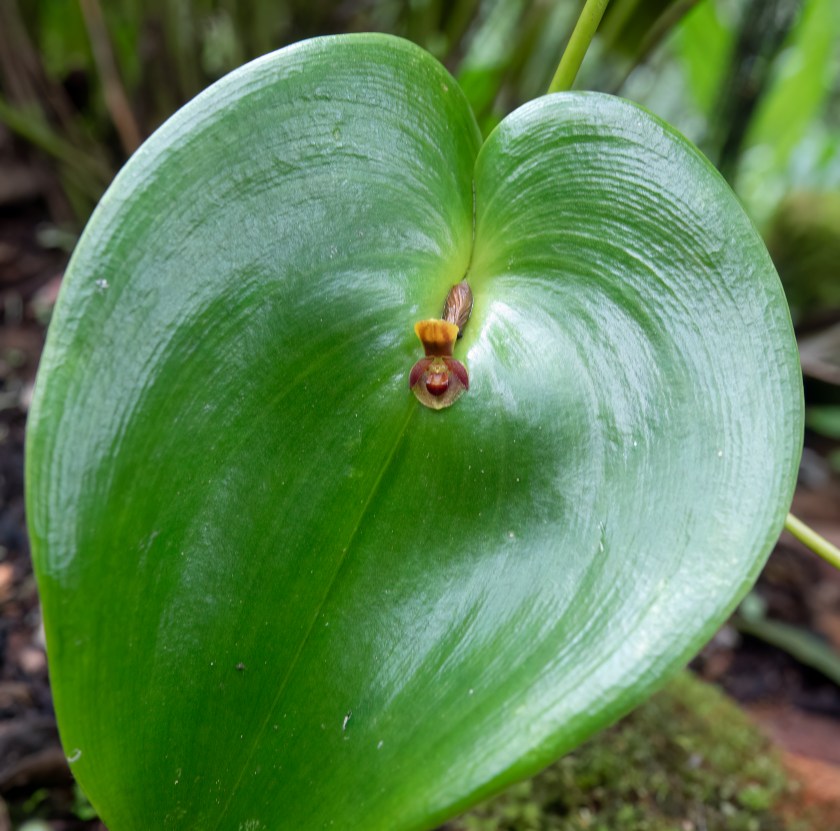
The last two grew right out of the centre of the leaf
I am starting to browse the orchid catalogues….
* In 1906, the Peruvian poet José Santos Chocano, known as El Cantor de América, wrote this poem entitled The Orchids (translated by Alice Stone Blackwell):
Freaks of bright crystal, airy beauties fair,
Whose enigmatic forms amaze the eye—
Crowns fit to deck Apollo’s brows on high,
Adornments meet for halls of splendor rare!
They spring from knots in tree-trunks, rising there
In sweet gradation; winding wondrously,
They twist their serpent stems, and far and nigh
Hang overhead like wingless birds in air.
Lonely, like pensive heads, all fetterless.
Lofty and free they bloom; by no dull chain
Their flowers to any tyrant root are bound;
Because they too, at war with pettiness,
Desire to live, like souls that know no stain,
Without one touch of contact with the ground.
The Spanish original goes like this:
Caprichos de cristal, airosas galas
de enigmáticas formas sorprendentes,
diademas propias de apolíneas frentes,
adornos dignos de fastuosas salas.
En los nudos de un tronco hacen escalas;
y ensortijan sus tallos de serpientes,
hasta quedar en la altitud pendientes,
á manera de pájaros sin alas.
Tristes como cabezas pensativas,
brotan ellas, sin torpes ligaduras
de tirana raíz, libres y altivas;
porque también, con lo mezquino en guerra,
quieren vivir, como las almas puras,
sin un solo contacto con la tierra . . .

