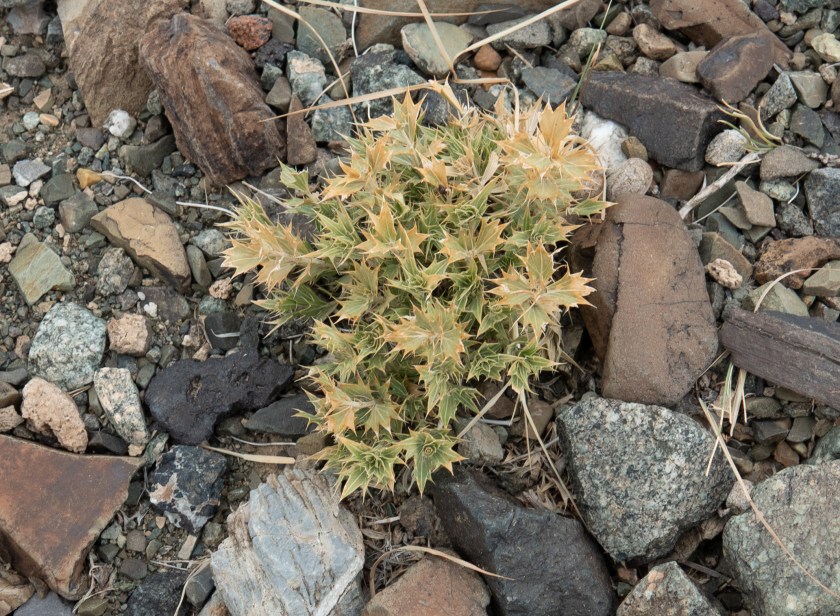
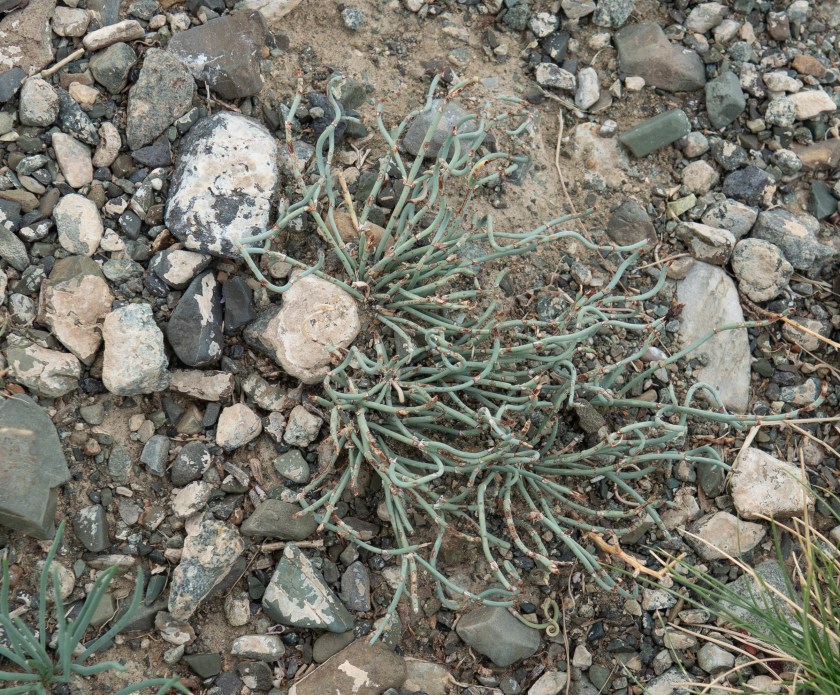
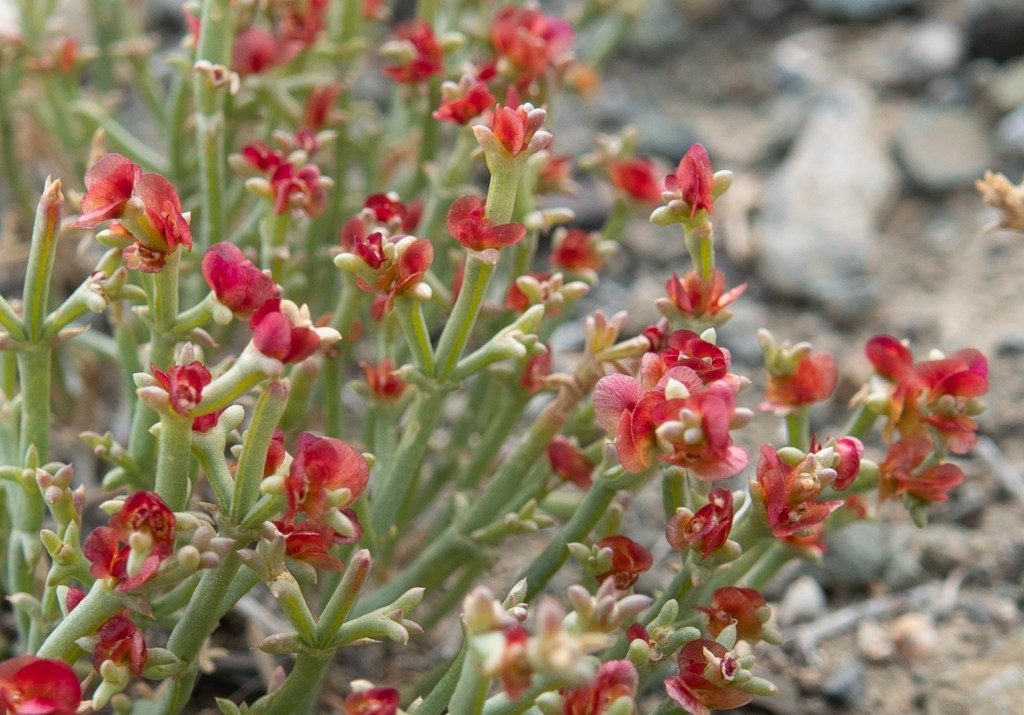
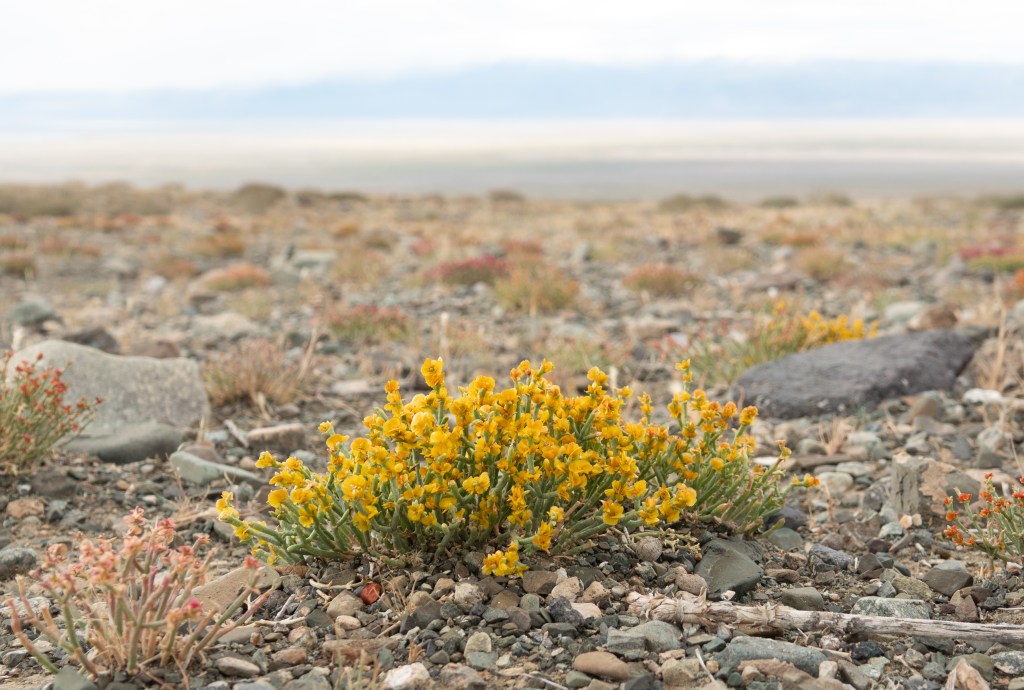
When we were not looking for snow leopards, we explored the lower altitudes of the Altai. As we drove down from our camp towards the valleys, the dry inhospitable stony slopes seemed barren of life, but they actually host a few low growing plants, most of which I’d never seen before. iNaturalist helped me ID them on my return, and all these ID’s were confirmed on iNaturalist by expert Mongolian botanists.
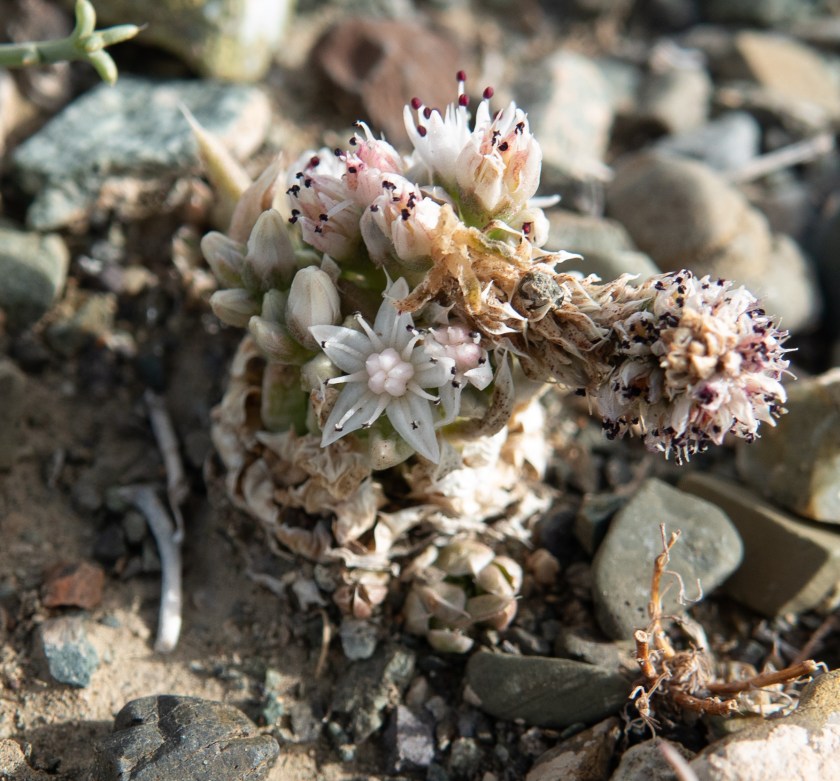
The landscape was Biblical, and many of the plants that survive here are succulents. Annual rainfall is about 6″ (15cm), and winter lows can plummet to -20F, though summers can rise above 80F. In September, not surprisingly, many plants had no remaining vestiges of flowers (but keep reading!):
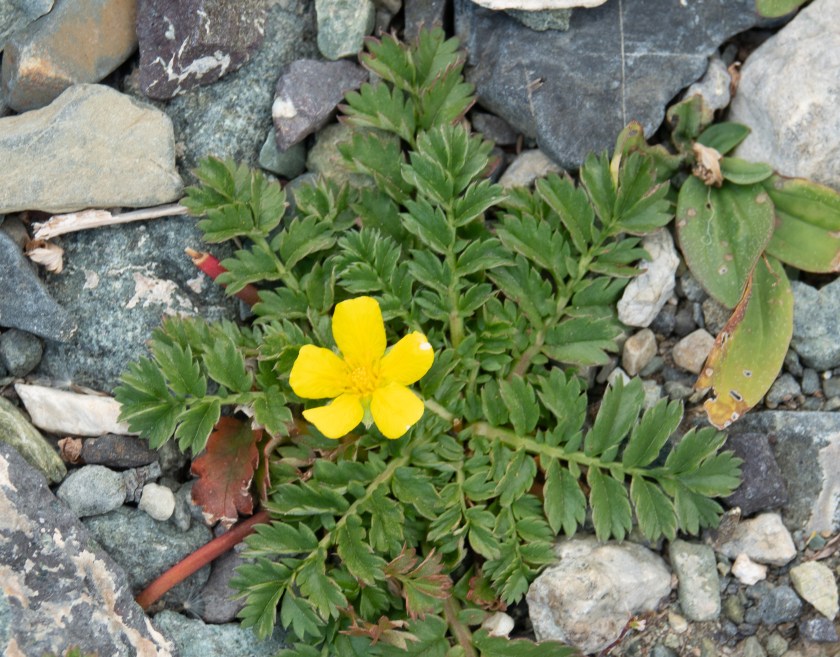
In the spring, the wildflowers must be spectacular, like the deserts in California after spring rains. But even in mid-September a few hardy plants were in flower.
Life has a way of triumphing over adversity, or as that great poetic work the King James Bible, Isaiah 35: 1-2 says: “The wilderness and the solitary place shall be glad for them; and the desert shall rejoice, and blossom as the rose.”
Another time, I’ll show you some of the birds of these high altitudes.
PS This species of Anabasis is used as forage, but a different species is toxic, and was used as an insecticide in the former Soviet Union.
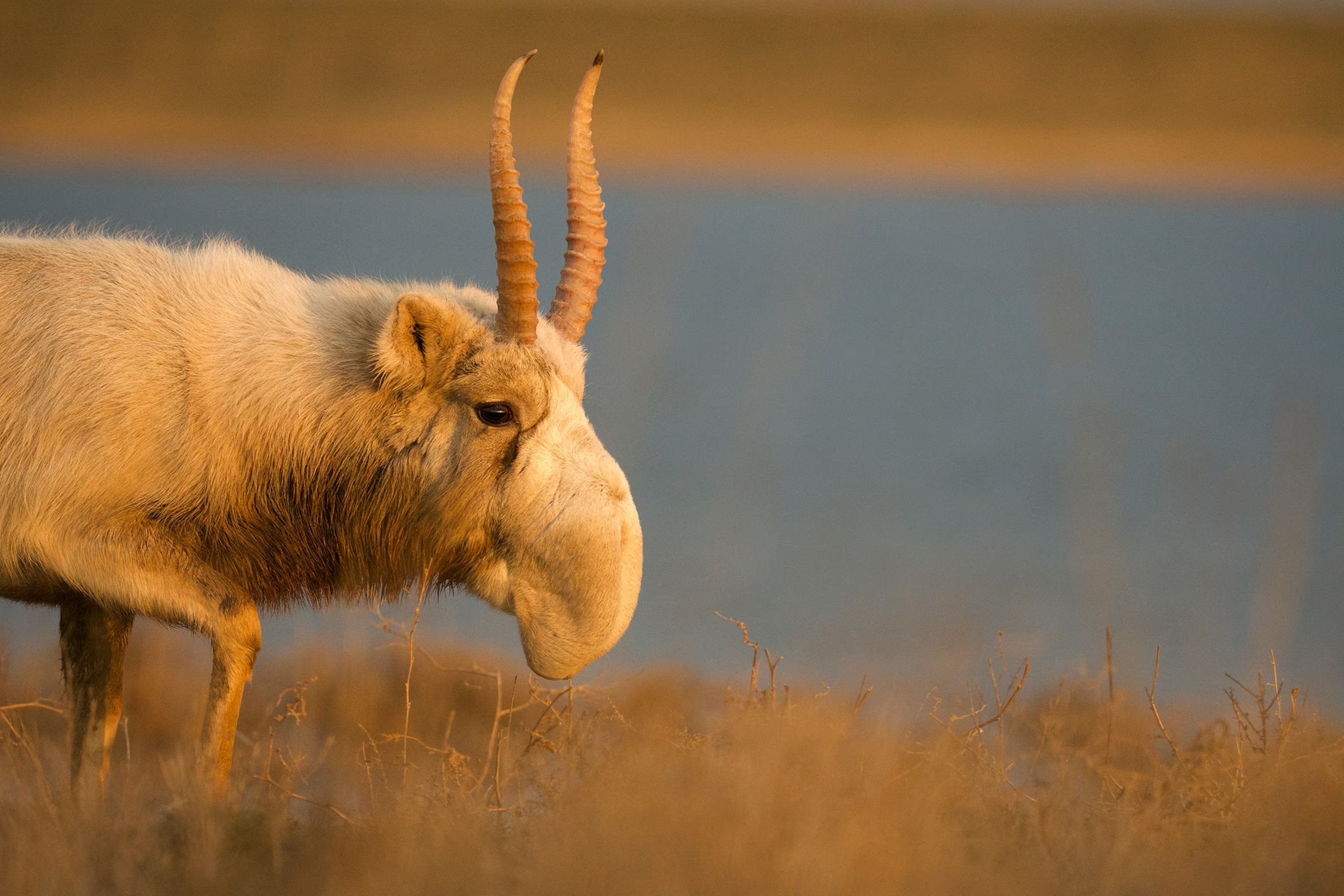
There are several different species of antelope and gazelle in the parts of Mongolia we visited. Of these, the Saiga antelope was top of our list, for three reasons. First, this antelope has grazed the steppes since the last Ice Age, alongside the Woolly Mammoth and the Siberian Tiger. Second, it is a bizarre-looking creature, with the older ones developing an extraordinary proboscis-like nose. Third, it almost disappeared from the steppes of Central Asia in the early 2000’s, being classified as Critically Endangered. It has since recovered remarkably, and is now classified as Near Threatened.
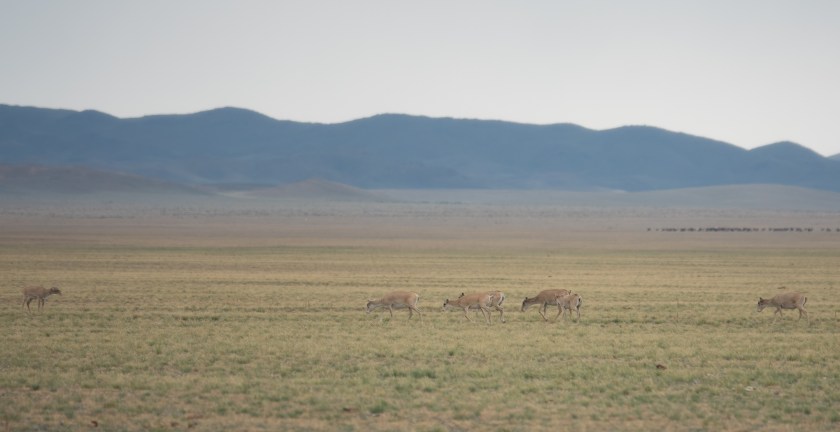
The rugged mountains where the snow leopards live are separated by wide valleys of steppe grasslands. This is Saiga territory. They are skittish, so we never got very close, but we saw a herd of around 30 animals sharing the vast flats with sheep and goats (right in background):
and cattle:
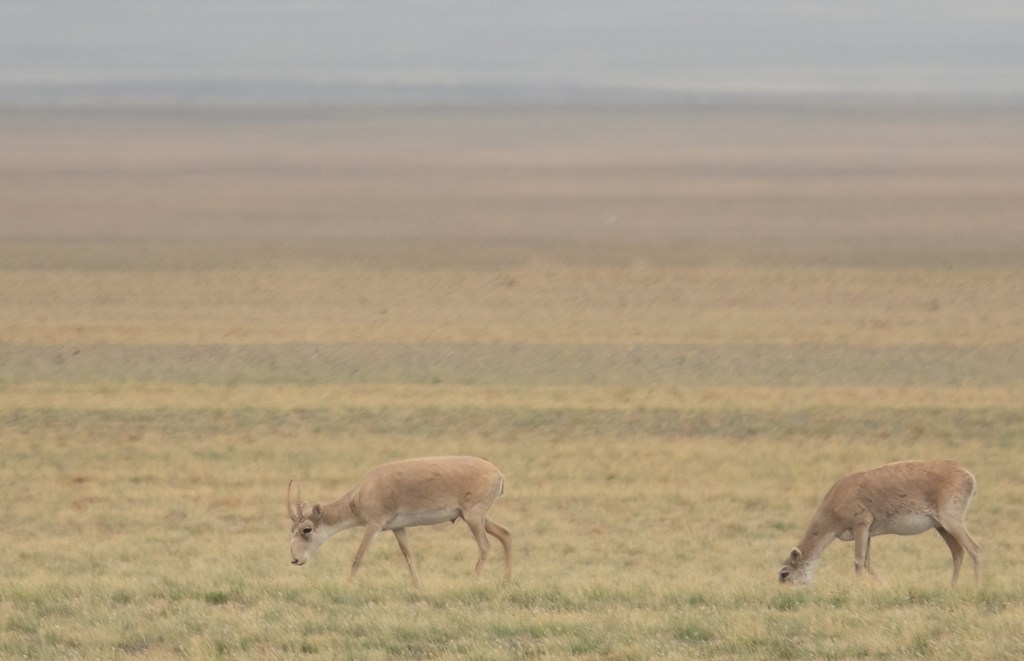
They hold their heads low, even when running:
They have Roman noses and a lugubrious face:
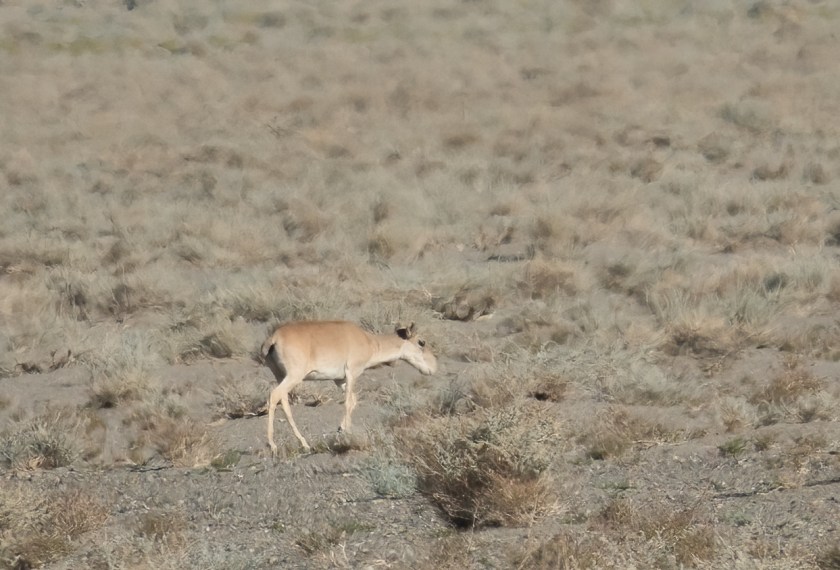
Another day we saw a single doe:
walking all alone and solitary across the plains :
What we didn’t see, sadly, was a mature male with a fully developed proboscis, so here is a photo from National Geographic:
The reasons for the saiga’s precipitous decline were many. After the Soviet Union broke up illegal hunting increased dramatically, driven mainly by demand from China for the horns for traditional medicine. The Pasteurella multocida bacterium caused mass deaths in 2015, and the Peste des Petits Ruminants Virus (PPRV) spread from livestock in 2017 and killed nearly 80%. It gets worse. A 2021 study showed that Foot-and-Mouth Disease has also spread into the saiga herds, with a mortality rate of 34%.
The rebound in population is extremely encouraging, but they are not out of danger yet.
PS We also saw Goitred Gazelle in the Altai, and Mongolian Gazelle in the west of the country, but too far away to photograph usefully. Here are some Mongolian Gazelle, grazing alongside a herd of horses:
They’re not endangered at all, I am delighted to say, despite being hunted for centuries: “a passage in the 13th-century Secret History of the Mongols tells how a young Shigi Qutuqu managed to round up a herd of gazelles in a winter blizzard.” (Wikipedia)
[In pale imitation of the BBC’s documentaries which always include a section on “Making Planet Earth”, this post is more about ‘how we saw it’ than about the nature itself, so it may not interest you. Back to proper nature next time.]
To penetrate the mountain fastness where the elusive snow leopard lives takes planning, time, and the skill of a lot of wonderful people.
This is what we went to see, up to 59″long plus 41″ tail, 120lbs of predatory grace (photo from the World Wildlife Fund website):
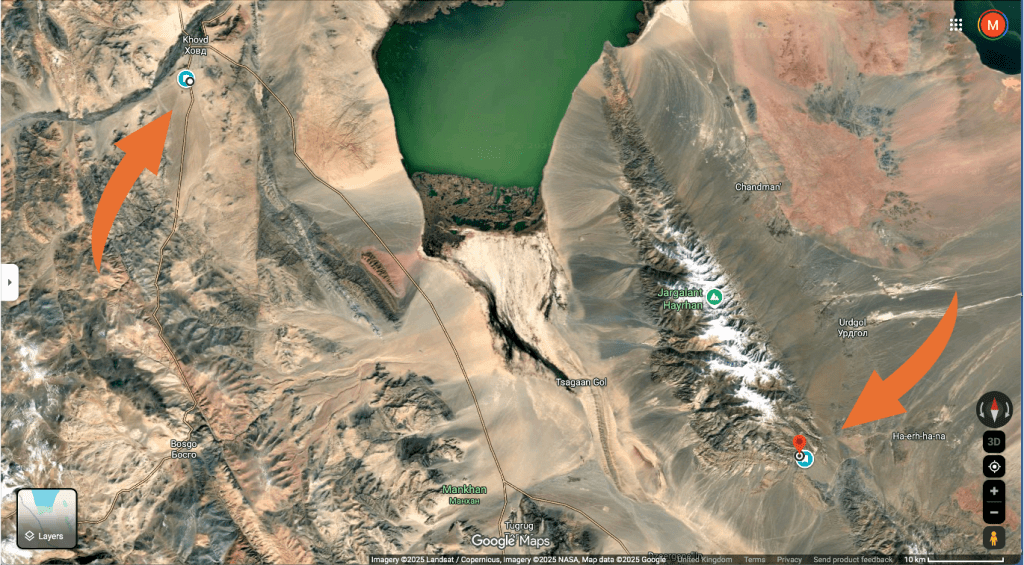
They live in Central Asia and the Himalayas, and we saw them in the Altai area of Mongolia. We flew to Khovd, 2 hours west of the capital Ulaanbaatar
then drove from Khovd, top left, another 2 hours or so to our base camp at 1500m high, bottom right.
The leopards live in the Jargalant mountains, snow-topped on the map.
Our base camp had eight gers, each with painted doors, wooden beds and a pot-bellied stove. :
The camp was owned and run by a family. The pater familias was Soronzon, (who we nicknamed Big Daddy):
plus his wife and daughter (our excellent cooks, not just dinner at camp but a hot lunch in the field every day):
And then his two sons, who were a driver and a scout respectively, as well as being of necessity resourceful mechanics:
even if they eventually needed reinforcements:
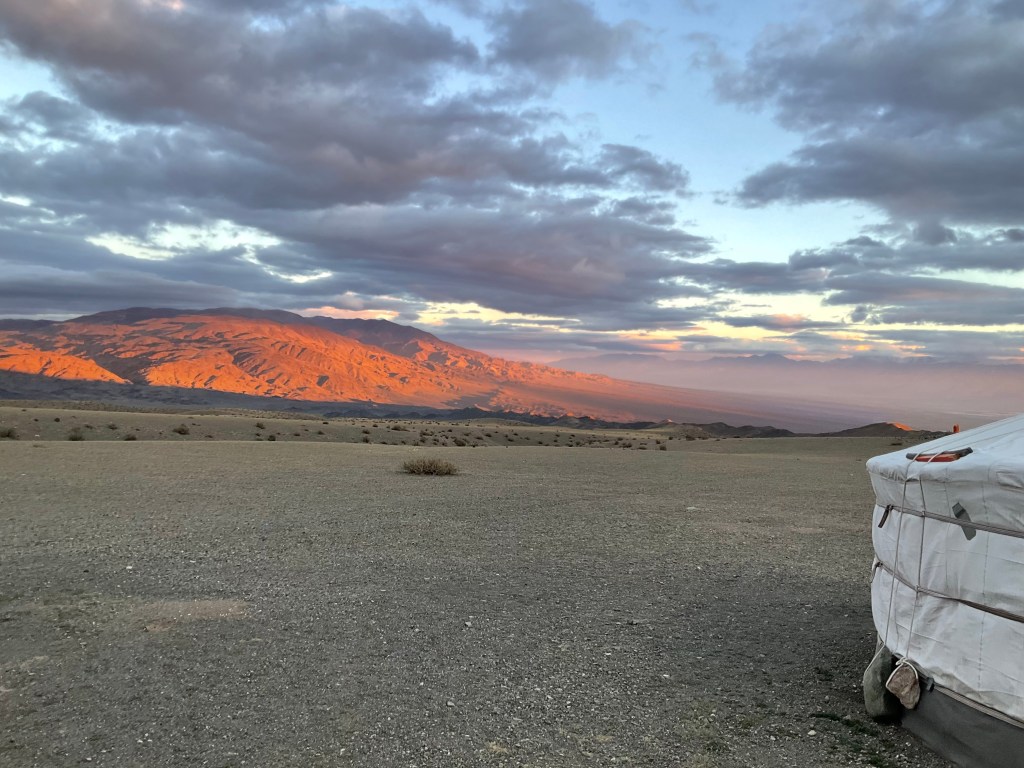
The scouts live in an isolated ger, scanning for snow leopards; theirs was on top of the mountain, and I’ve lost my photo, but the different one shown by the arrow below shows you how they are dwarfed by this landscape:
The grand-daughter came along one day too:
And of course the excellent Istvan, our Hungarian guide, whose photo you saw in the last post, and a translator called Eta, the daughter of herders.
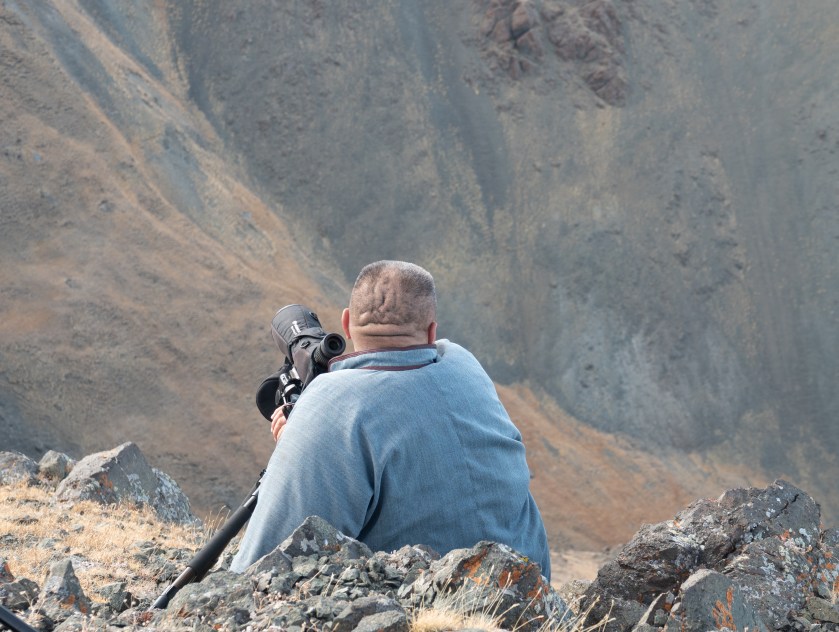
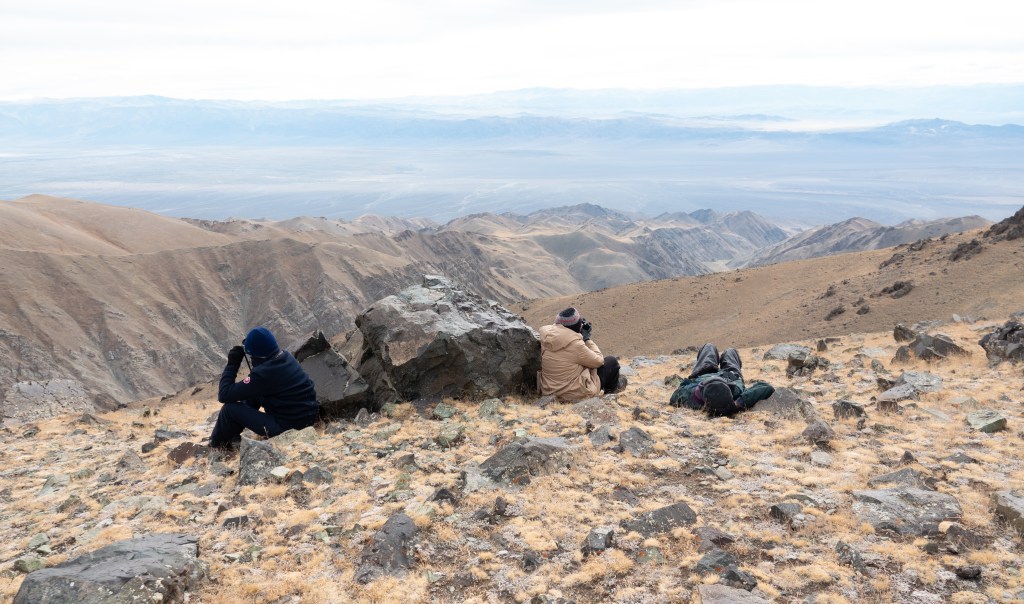
All these photos were taken on our first full day of searching, us sitting on the rocky ground with our binoculars, the guides using their scopes. We were at about 3300m, nearly 11,000 feet (5000 feet higher than Mt Washington, the highest peak east of the Mississippi).
The vistas are wild and open and stark:
But no amount of scanning rustled up a leopard that day.
The next day it rained, and we were also told the leopards had probably descended to lower altitudes, following their prey, so we too stayed low down and looked for other animals.
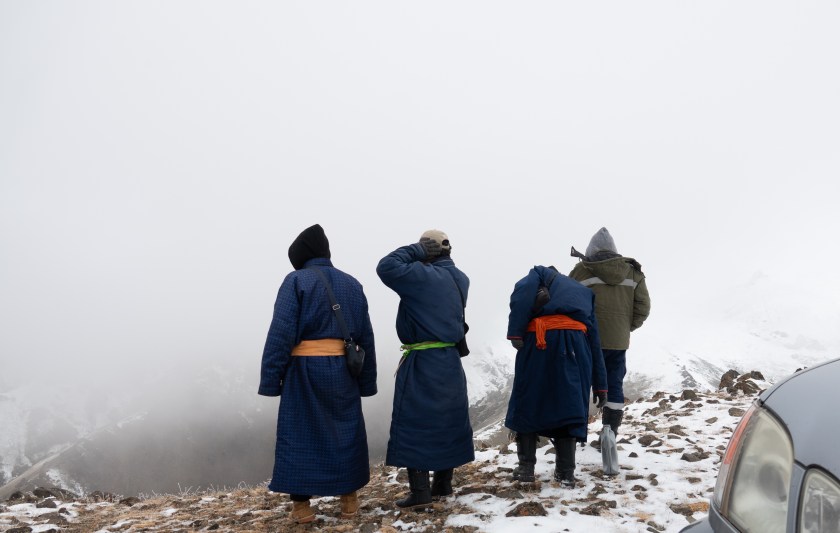
The following day the mountains were covered in cloud, and the rain of the lower altitudes had been snow up there, so we stayed lower during the morning, but after lunch we were told the clouds were starting to lift, so we set off, into a whiteout. The intrepid scouts, who live high in the mountains all summer, emerged from the mist:
and scanned the hillsides whenever there was a break in the clouds.
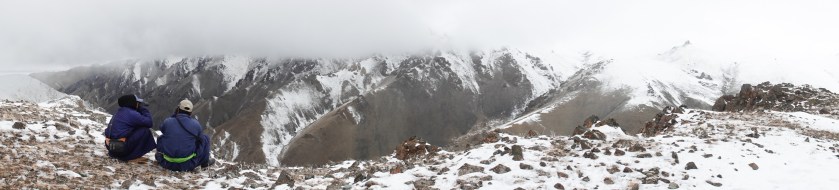
As predicted, the clouds lifted, slowly, and for hours we scanned in the cold, retreating to the vehicles when we couldn’t take it any more.
But Istvan and the scouts stayed there throughout.
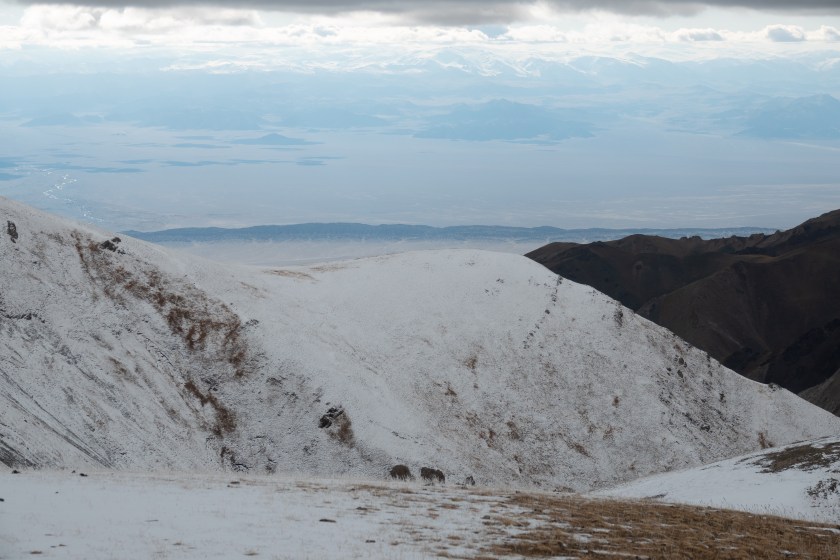
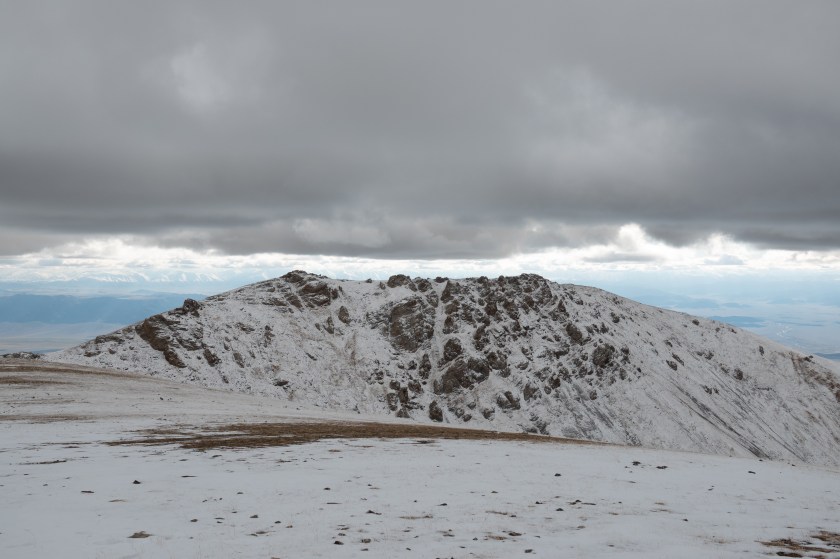
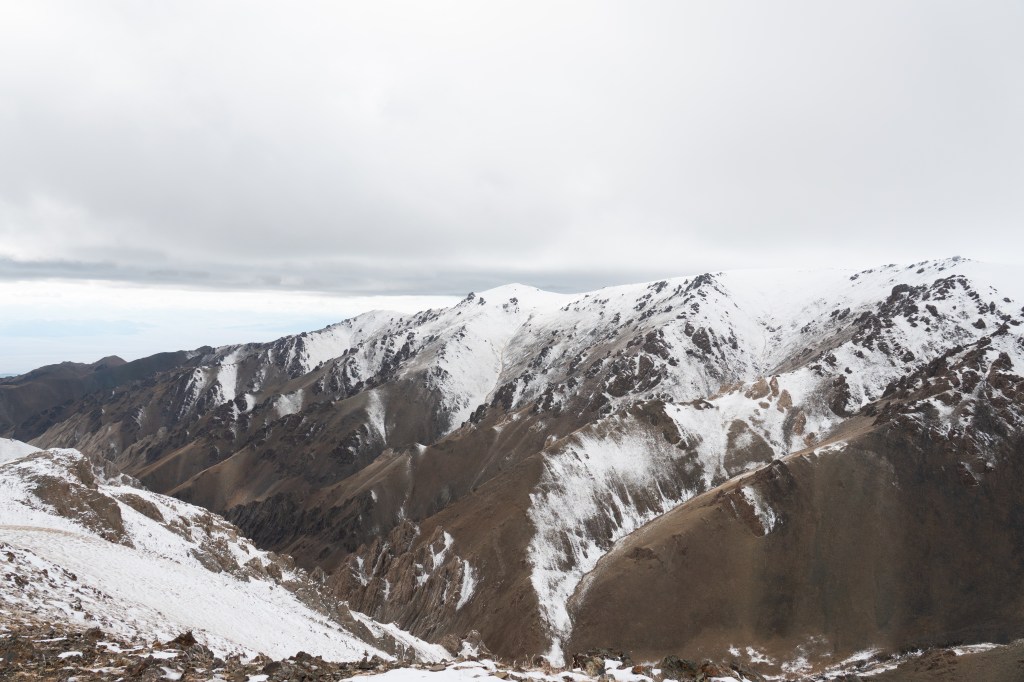
Unsurprisingly we saw nothing, but the views were extraordinary:
The next day was our last day, and the skies cleared. The team decided to search lower down on the other side of the mountain range, and you know what happened next… (from my last post).
A former producer for one of the BBC’s nature shows said that snow leopards were for her “a bit too hard core for the reward”. For me, it was worth it. She also said that it “needs the most expensive cameras on the planet”! True, and sadly, I didn’t have one.
PS On our last evening in camp, two musicians from the local village of Chandman played for us. One was a throat singer, listen and watch here. The last portion is the Q&A in which he demonstrates his techniques. (Thanks to Stephen and Kerstin for the videos).
I have just got back from Mongolia, and this will be the first of several posts. But the biggest hope was to see a Snow Leopard, Panthera uncia, and we did, and so I’m going to start with the day it happened. In later posts if you are interested you can read more about the prior four days of searching, and many other Mongolian delights.
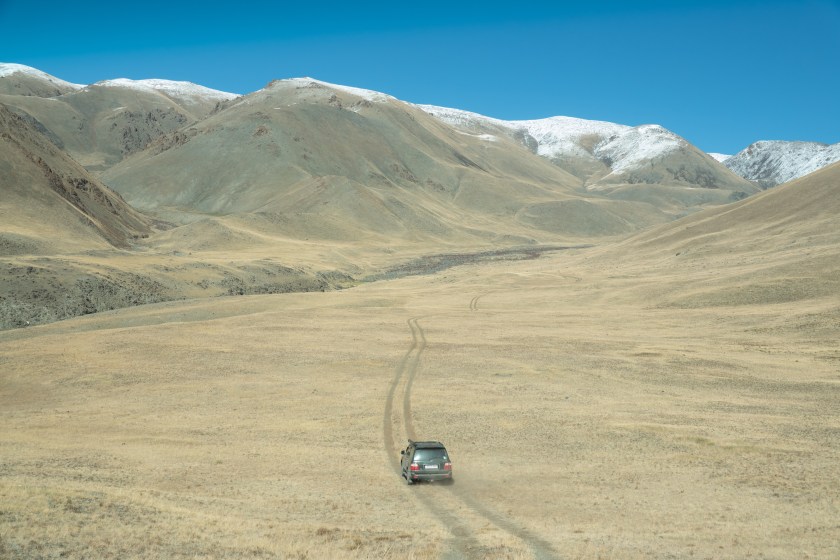
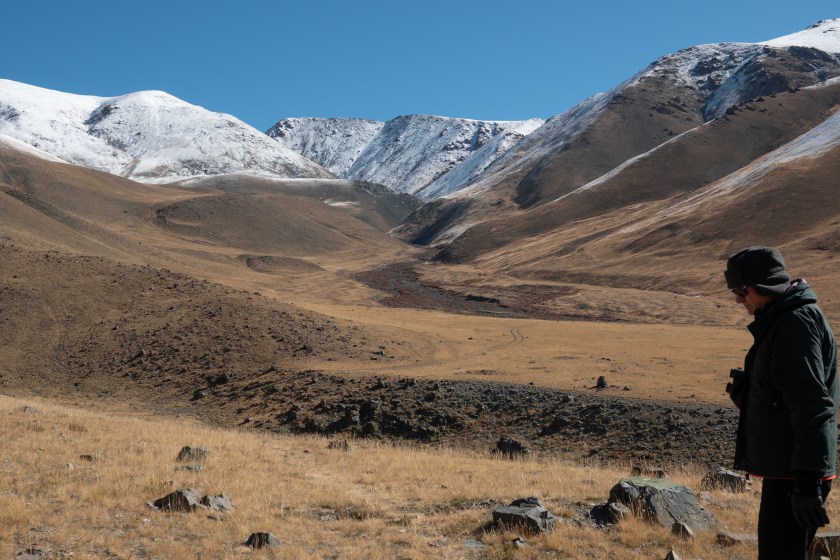
We were in the Altai, in the west of Mongolia. Snow leopards live in these mountains, which rise to nearly 4000m. But it was cold, and our hosts told us the leopard’s prey had moved lower and so had the leopards, and they doubted we would see one. Discouraging. On day four, we went round to a new side of the Jargalant Mt range, and drove up the valley. Here is the ‘road’, and a shot of the glorious scenery:
We paused for a rest, looking out across the distant valley at some tiny dots that were Argali sheep. In front of us was an oboo, a stone cairn surrounded by a stone circle that marks the ancestors and their bonds with nature, lined up precisely with a gap in the hillside.
We drove higher:
and stopped for lunch, at about 2600m. The snowline was around 3300m. The scouts on their dirt bikes arrived to join us.
At the bottom of the valley in the photo below is a tiny dot, in the centre of the photo. That is a dirt bike, so you can absorb the scale of this landscape. .
We settled down,
Istvan our guide scanning the hillsides:
No sign of a leopard, just some distant yaks and an ibex.
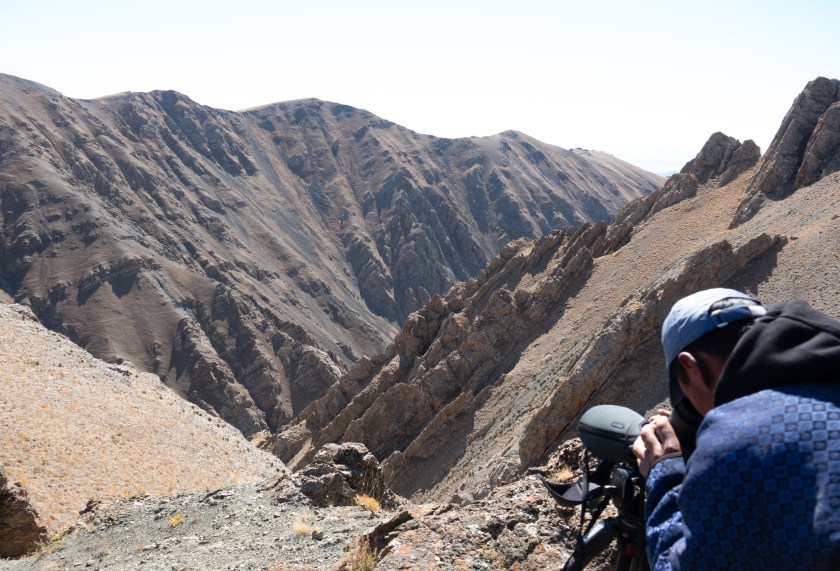
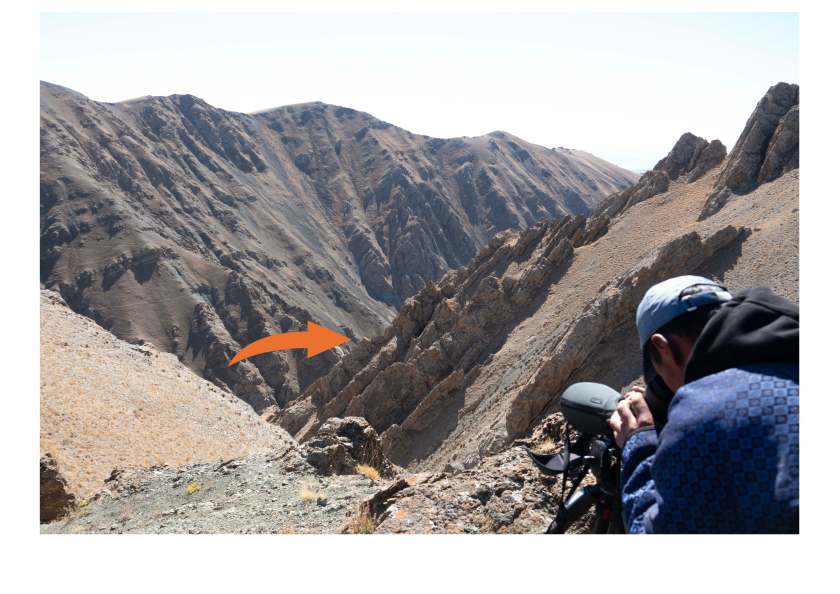
This was our last day in the mountains, and at 1.30pm we started to get into the vehicles, when there was radio crackle, and excited chatter in Mongolian from our guides. Unbelievably the scouts (who had finished lunch and gone back to search) had seen a leopard. We hiked across a steep hillside for about 10 minutes, and looked down into another valley. One scout materialized, and looked through the scope.
The leopard is here, 800m or 1/2 a mile away across the valley:
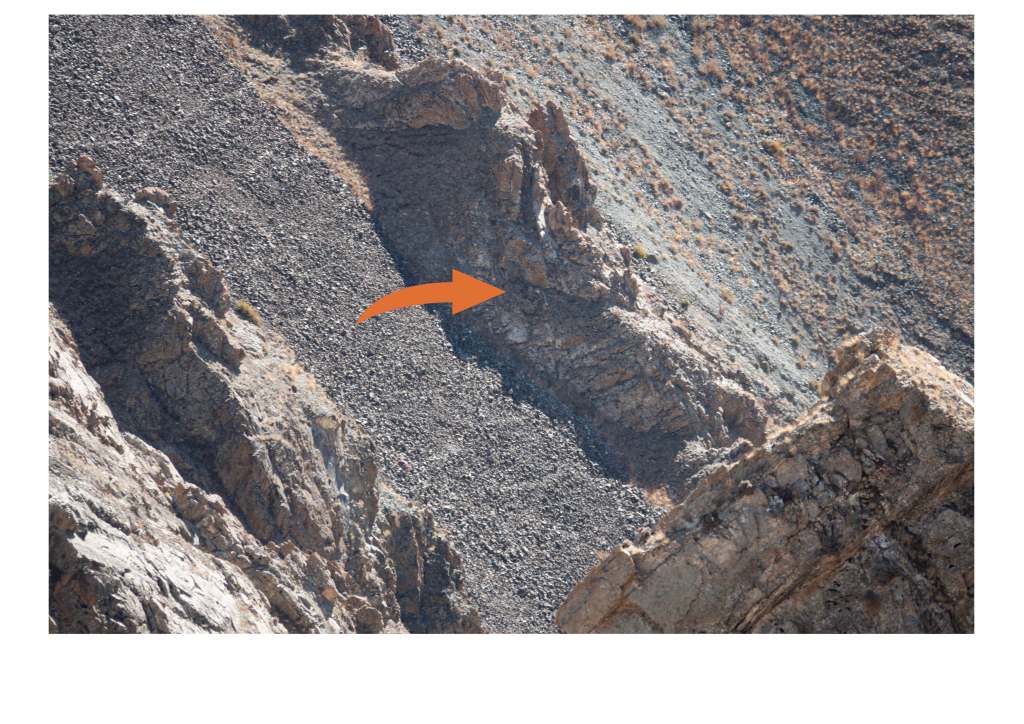
Look closer:
My camera is not up to BBC David Attenborough standards, so my photo is unimpressive, but it is indeed a snow leopard, asleep on a ledge, 1/2 mile away:
Only the tail gives it away. There was a dead ibex nearby, so it had eaten and was now guarding its prey and taking a nap. It may stay with its prey for a week, and kill every 10-15 days. How the scout had seen it was beyond us. He said it had slightly shifted to get more comfortable, and the movement had given it away. What skill, and what eyesight.
Had we left 30 minutes earlier we would never have seen a snow leopard. There is something about knowing that you have brushed up against the world of such a mythical beast that fills your heart with joy. Sometimes the stars align.
PS Mongolia probably has a population of around 1000 snow leopards spread across around 100,000 square kilometers. Each solitary animal can range over around 500Km2.
There are around 4000-6500 worldwide. The IUCN classifies them as Vulnerable, and no longer as Endangered (which indicates less than 2500 left worldwide), but this is controversial. Much of their isolated habitat is not explored. If you are interested, a very good summary of their behavior and status can be found here:
While many flies feed peacefully on pollen or leaves, some are killers. This is a male Northeastern Hammertail, Efferia aestuans, a species of robber fly.
That odd upturned tail structure is the male genitalia. Like dragonflies, they have huge eyes to detect their prey, small insects which they ambush in mid-air:
The unrelated Forked Scorpionfly doesn’t need huge eyes, it feasts on the already-dead, like this moth:
It has an elongated nose and sucking mouthparts.
Like the robber fly, this is also a male, as evidenced by the “genital bulb” at the end of its abdomen.
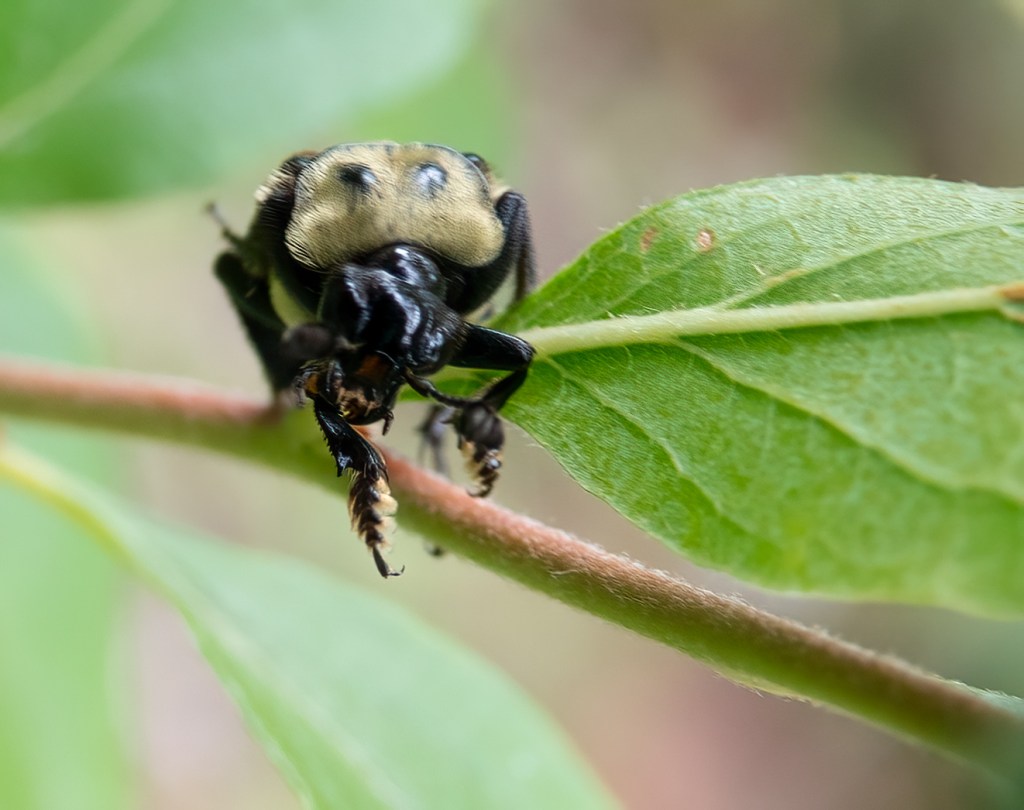
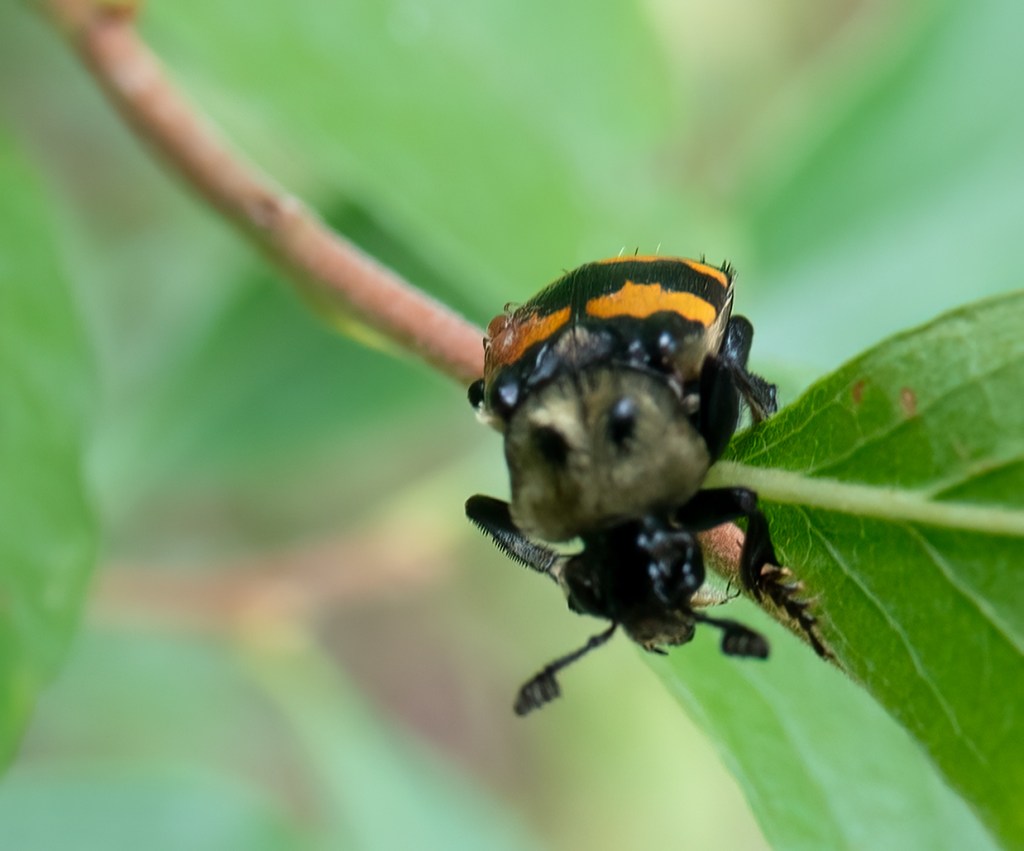
The final undertaker’s job is completed by this striking Tomentose Burying Beetle, Nicrophorus tomentosus:
Its large forelegs enable it to dig a shallow grave for a dead insect, and cover it with leaf litter:
This one had two tiny orange mites on its back, on the left:
Given their role in the ecosystem, finding one in a bush is somewhat surprising. But apparently they can breed in the canopy.
As fall approaches, we are in the midst of a drought. The beaver pond is down about three feet. The ground is iron hard, the leaves are curling and browning, the woods are devoid of mushrooms, but despite this, the defiant plants are producing seeds and nuts. Some are ingenious, like these Yellow Avens, Geum aleppicum, seedheads, each seed a tiny hook that detaches from the plant and attaches to a passing animal (or human).
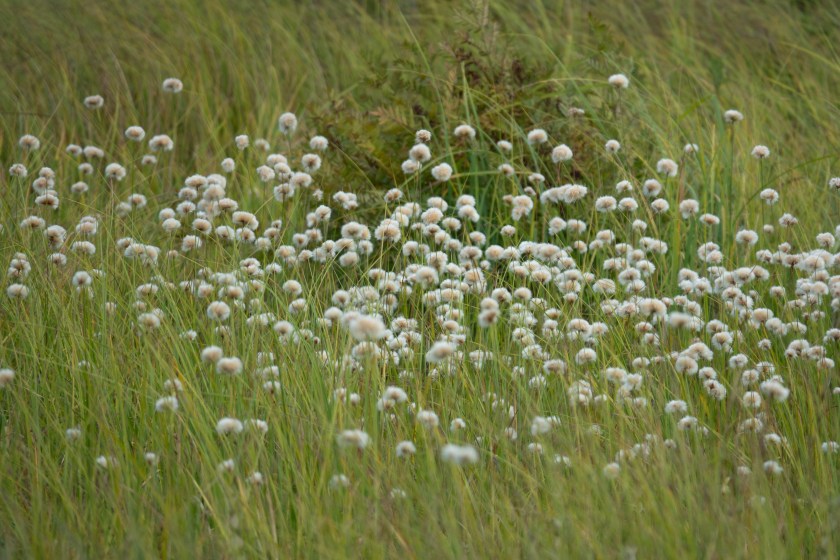
Some are hauntingly beautiful, like this ghostly Cottongrass, Eriophorum angustifolium, a sedge that likes open wetlands:
Many offer food to the birds and the animals. Some seeds have hard capsules, like these Witchhazel nuts, food for ruffed grouse, wild turkeys and squirrels:
Some are tucked into cones that attract seed-eating birds. These alder cones are hosting an American Alder Tongue Gall Fungus that creates that strange red tongue at lower left.
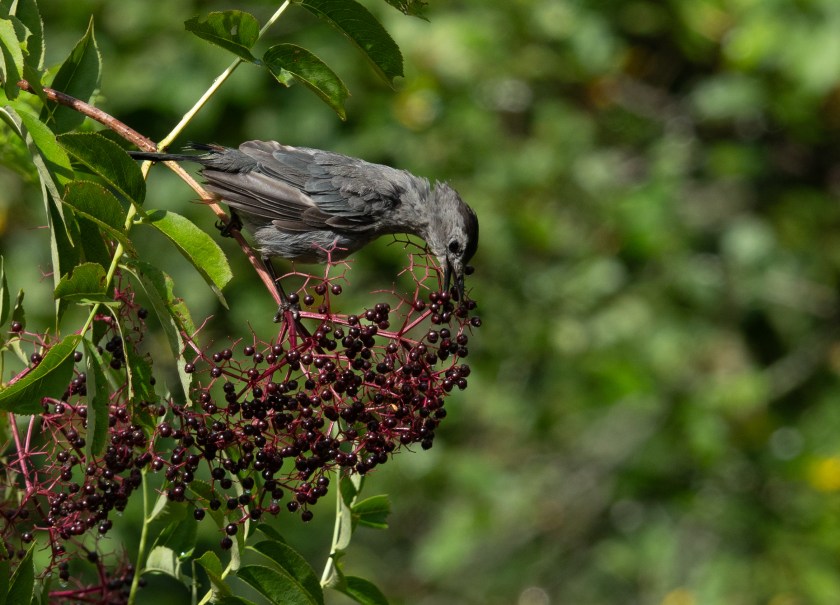
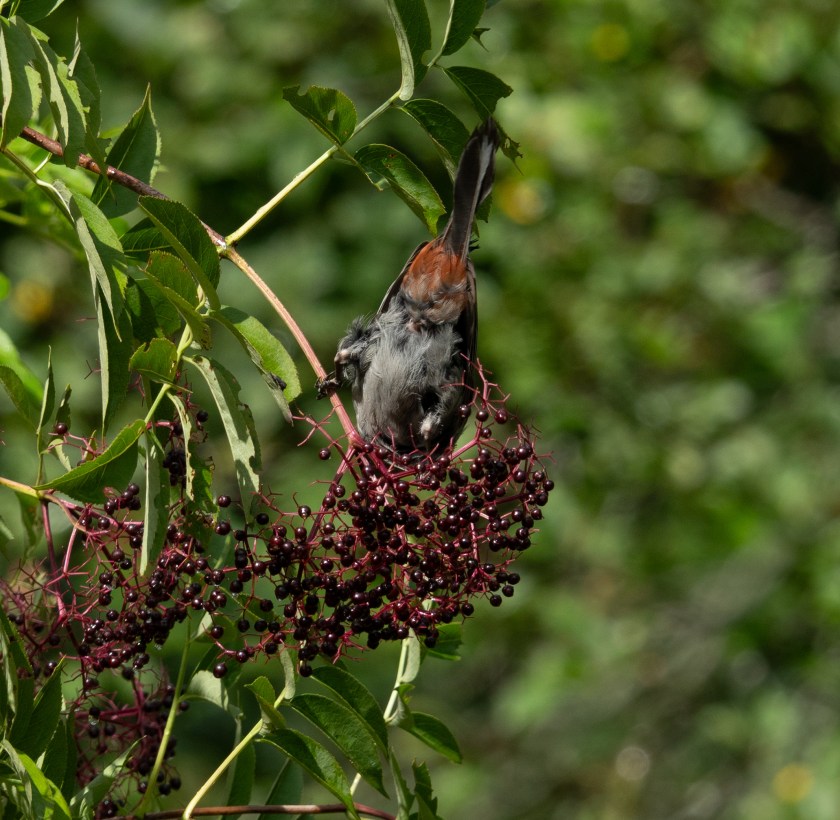
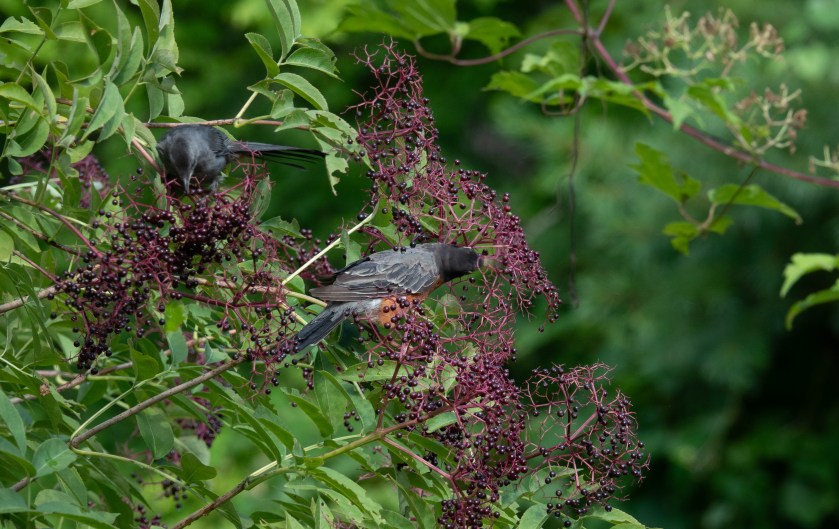
And of course some seeds are inside berries. The elderberries attract Gray Catbirds,
dull slate-grey birds
except for a brilliant chestnut under-tail:
They occasionally share with a passing American Robin:
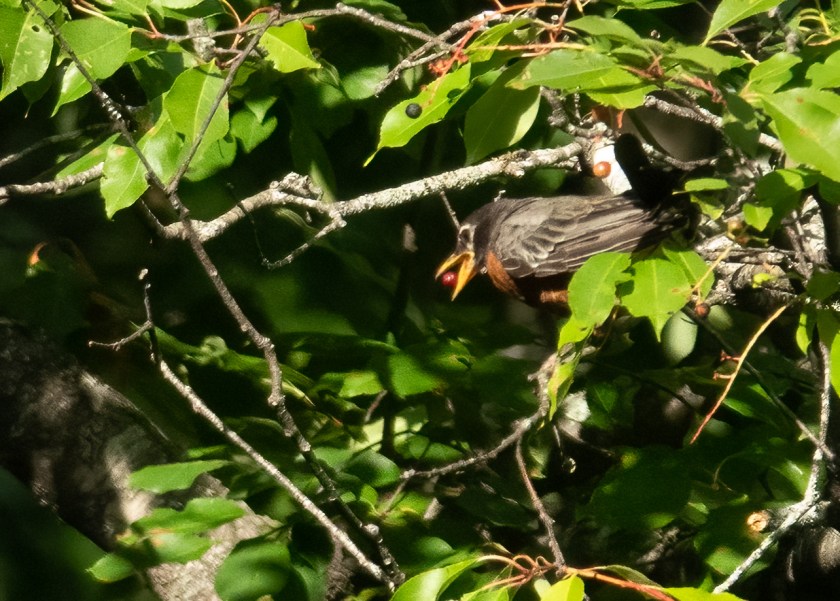
But the robins mostly seem to prefer the wild American Black Cherry, Prunus serotina, where they forage 40 feet up in the crown:
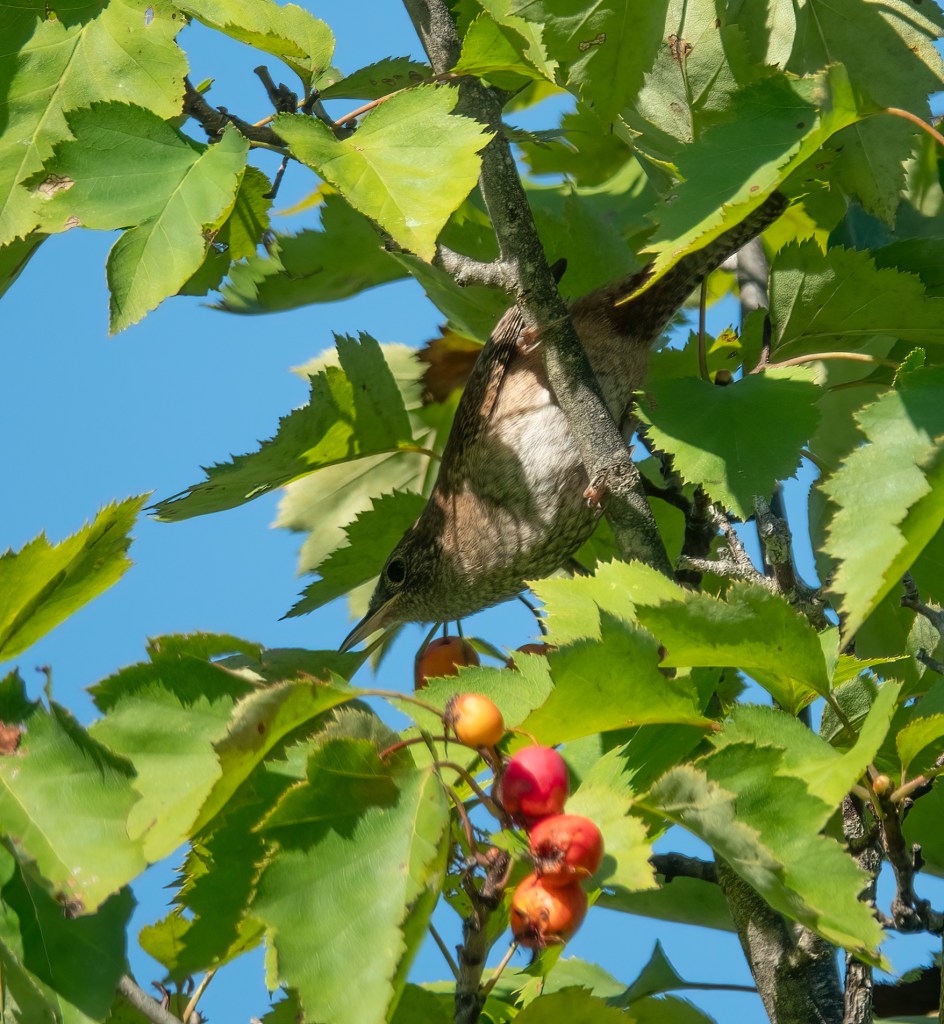
Finally, a wren on a hawthorn, feeding either on the fruit or, more likely, on tiny insects:
PS While I was writing this we had the first rain for over a month, sadly just a short shower, but that is why the catbird looks rather scruffy.
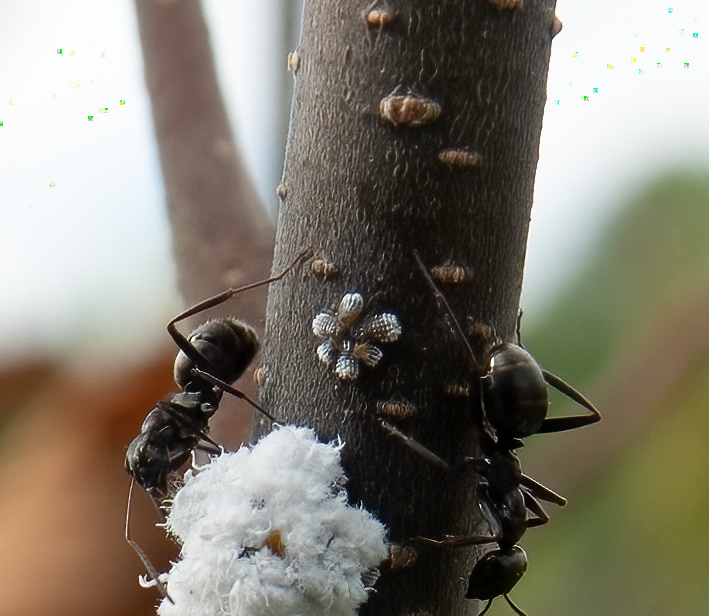
The Woolly Alder Aphid, Prociphilus tessellatus, gets its scientific name from the tessellated (tiled) pattern of wax-gland plates on its back . It is only 1/8″ long, and six of them are clustered in a little rosette in the centre of this photo:
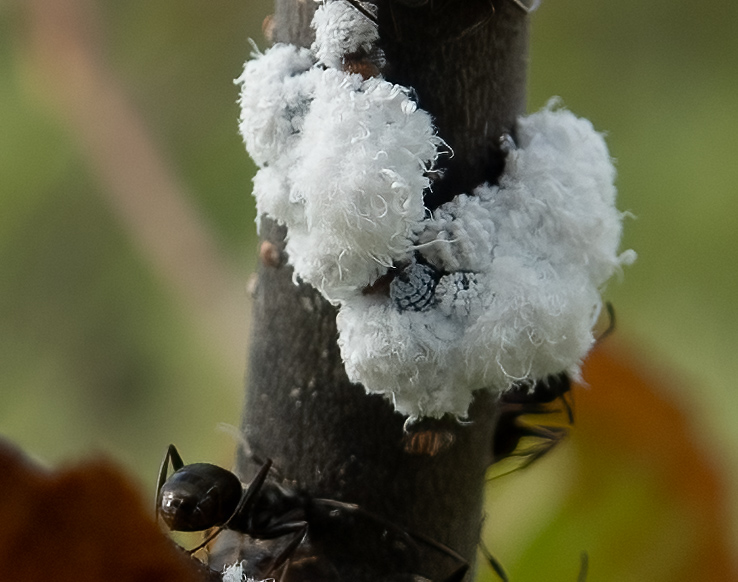
“The glands are composed of greatly enlarged epidermal cells underlying a modified cuticle that forms distinctive wax gland plates. Secreted wax in the form of threads passes out of the cuticle as filaments.. ” In the next photo you can see three aphids with differing amounts of white wax buildup, surrounded by many more entirely submerged beneath their shaggy coatings:
“It is suggested that the primary role of the secreted wax is to prevent the aphids becoming contaminated by their own secreted honeydew and that of other members of the colony.” (both quotes from Smith, R.G. 1999 doi.org/10.1080/002229399300227)
In these photos they are being ‘farmed’ by ants, evidence that, just like other aphids, they too produce honeydew :
Think of the aphids as minute sheep, and the aphids as sheepdogs.
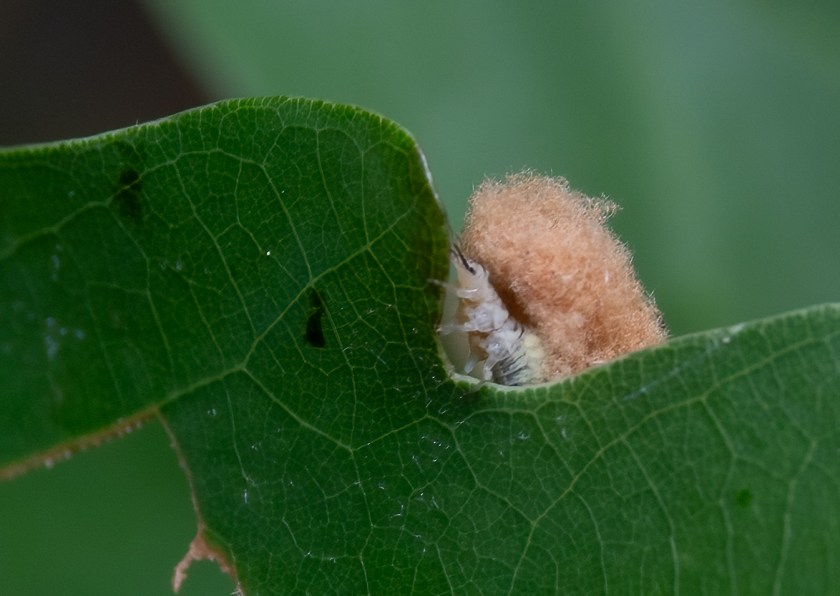
Yesterday morning I saw a small piece of fluff on an oak leaf.
In nature, anomalies catch the eye, so I looked more closely. It moved! So I picked it up. A minute tail and a couple of legs poked out.
The whole thing was about 1/3″long. I tried to turn it over to see the bug underneath, but it righted itself in a microsecond. But when I put it on my thumb it tried to escape, walking steadily along my thumb looking for an off-ramp:
And when I put it back on the leaf, it beat a retreat over the edge of the leaf to safety:
Here is a video:
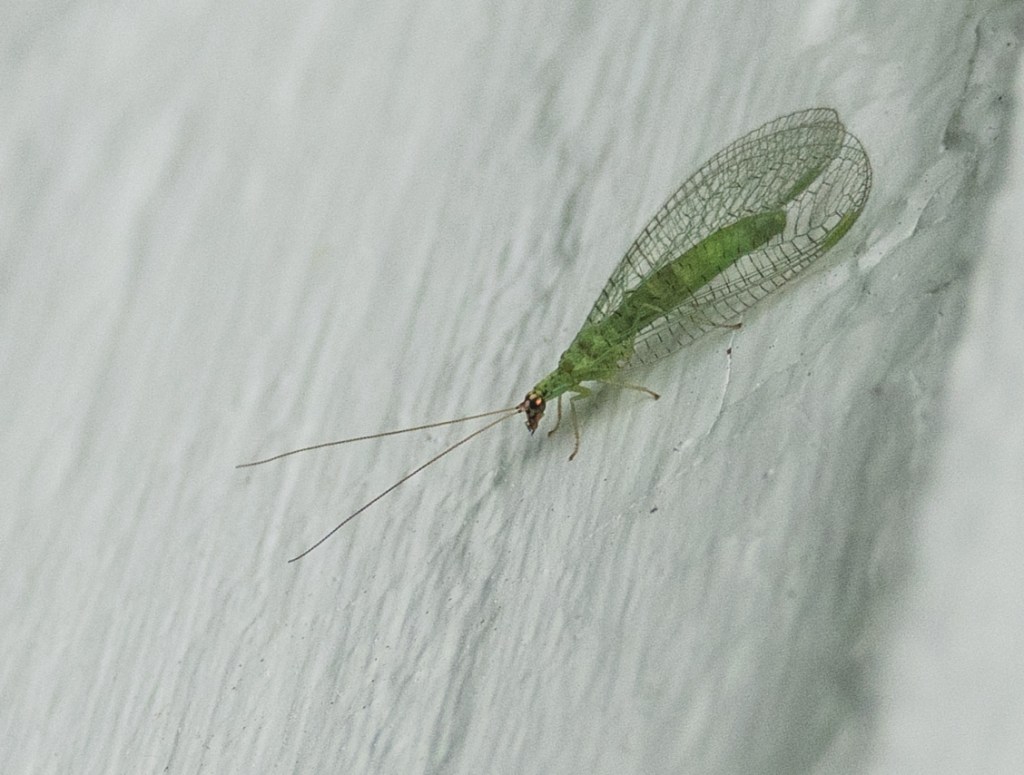
It is the larva of a Stripe-horned Lacewing. Here is a Golden-eyed Lacewing adult, a close relative:
Some species of lacewing larvae, like mine, load detritus on their backs as camouflage to fool birds, and very effective it probably is too, though it didn’t fool me for long.
They feed on aphids, and are sometimes described as alligator-like, both for their body shape and their bite: here is the larva of a Red-tipped Green Lacewing, showing those ferocious jaws:
The Missouri Department of Conservation has a graphic description: “The larvae, sometimes called ‘aphid lions’, are insatiable predators of other insects, especially aphids. A lacewing larva grasps the aphid with its grooved, caliper-shaped jaws, often lifts it up in the air, then drinks the fluids in the aphid’s body. A single lacewing larva can eat an aphid a minute, for hours, and not slow down. ” As a result they are sometimes sold as a natural form of aphid control.
Just shows you can be small but scary, more elegantly put by Shakespeare in Midsummer Night’s Dream “Though she be but little, she is fierce “
As summer reaches its peak, the nesting season is more or less over, but like teenagers the baby birds are not yet independent. They have mostly left their nests, and sit on branches cheeping urgently for food deliveries. Soon they will have to fend for themselves, and then migrate. Mortality is high in this interlude betwixt the parental home and true adulthood.
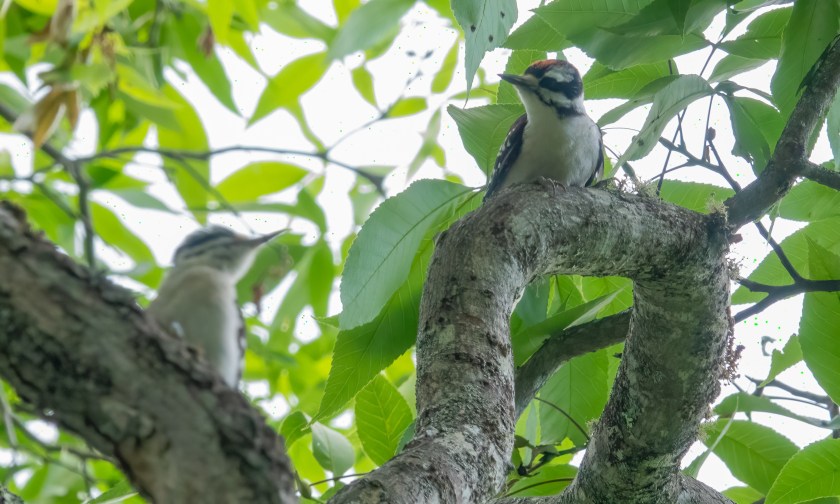
These are some I have seen in the last few weeks. In my big hickory tree, two Hairy Woodpecker chicks hopped around:
Two Hairy Woodpecker fledglings
The House Wren fledglings are still being fed, three days after leaving the nest, and several trees away:
Northern House Wren fledglings
A White-breasted Nuthatch seemed to have only a single chick:
White-breasted Nuthatch and fledgling.
A chickadee had ended up on the ground, but it clambered back up to a low branch shortly after I took the photo.
Black-capped Chickadee fledgling on ground by beaver pond.
The next shot is a food delivery by a Common Yellowthroat mother, right:
Common Yellowthroat fledgling, left, and mother, right
She then pokes it down the fledgling’s throat:
A hummingbird posing on my garden trellis:
Ruby-throated Hummingbird fledgling.
The scaly head feathers are distinctive for juveniles. At this age, you can’t reliably tell if it is male or female; the male’s ruby throat only develops later. However, male fledglings usually have streaks on the throat. so the pure white throat of this bird suggests it is female…
On the water, the ducklings are becoming more independent too. This Wood Duck duckling was nowhere near any adults, with just one sibling.
Wood Duck ducklings
This Hooded Merganser is further along:
Hooded Merganser duckling
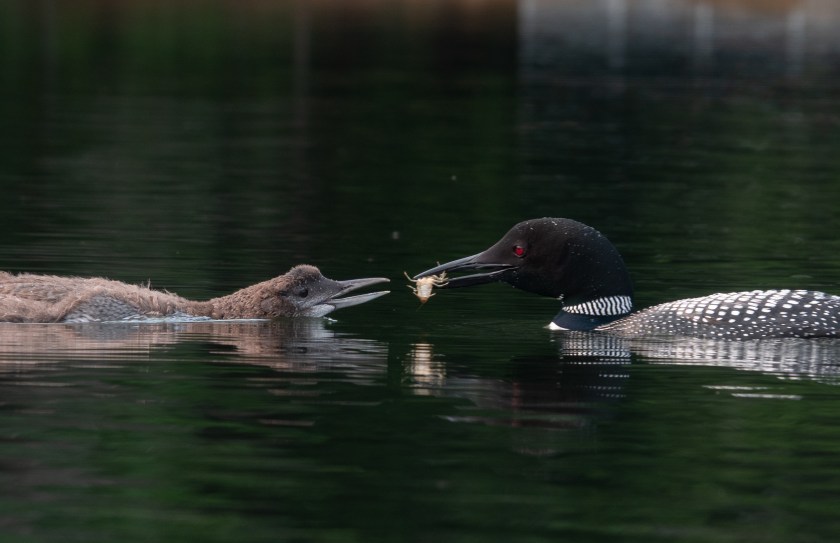
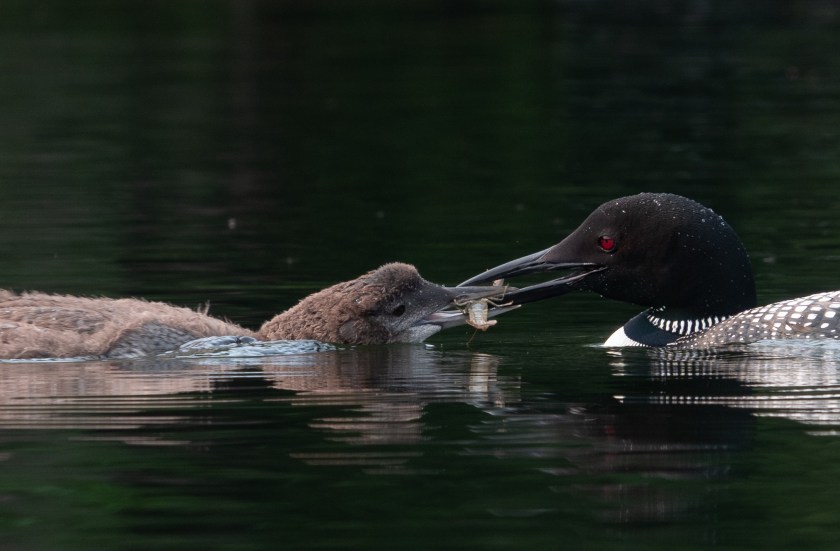
The loon chicks are still being fed, either with (quite large) fish:
Fish deliveryLunch
or crayfish:
Reaching for a crayfish appetizerHandoverComplete
You can see that their downy plumage is being shed as the serious feathers underneath take their place.
Watching a new generation flutter out into the world is a special privilege. Cross your fingers and hope for the best.
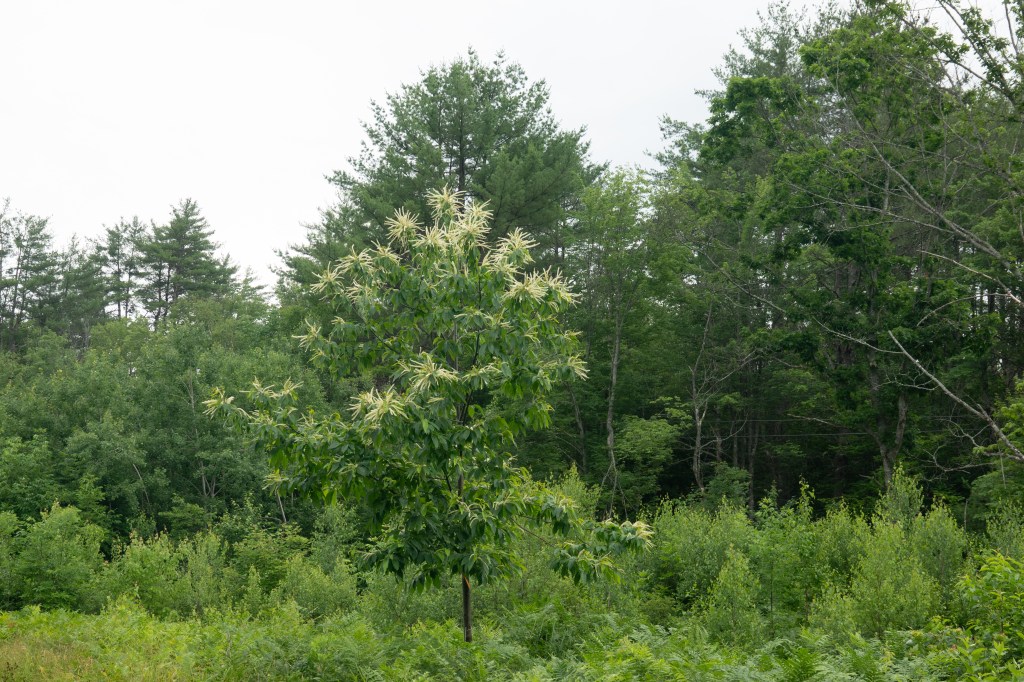
The American Chestnut disappeared in a few short years after the chestnut blight, imported from Asia, killed about 4 billion trees in the early 20th century.
But every now and again one decides to regrow, and lo and behold a few years ago I noticed a very healthy-looking sapling on the edge of my field. By last year it was maybe twenty feet tall, and in full flower:
I have read that very few trees reach the flowering stage before succumbing to the blight, but perhaps I had a winner?
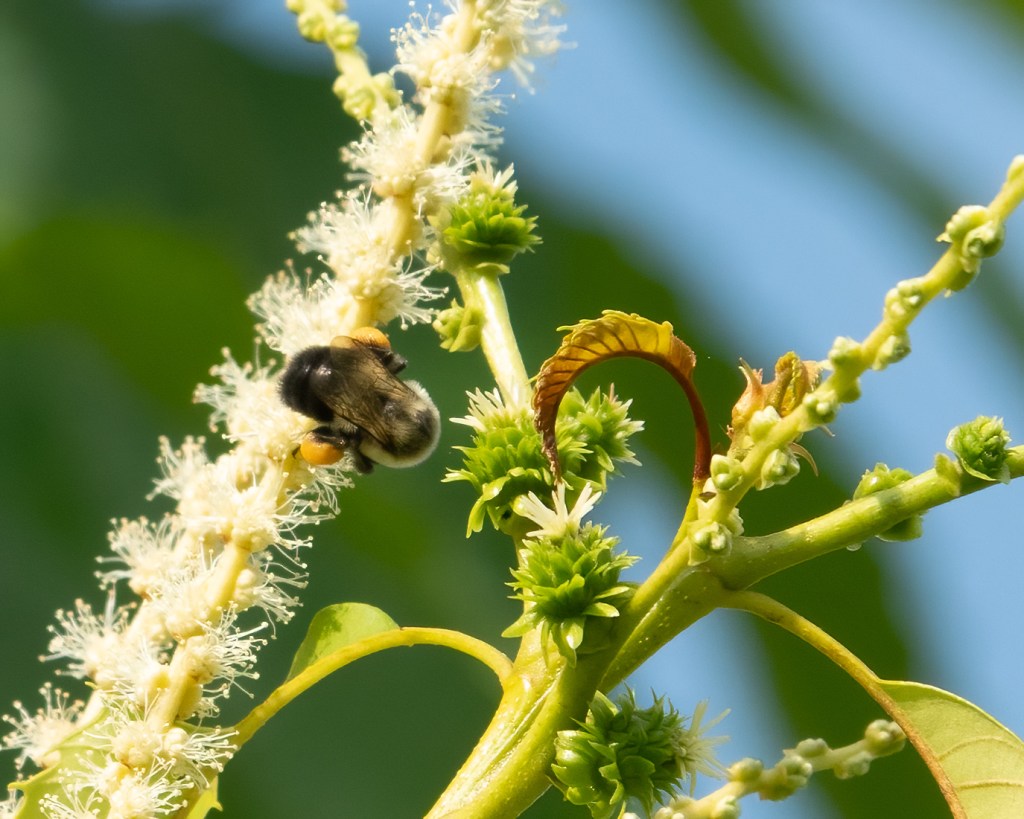
This year, it flowered again. The long creamy fronds are the male flowers, full of pollen that the Common Eastern Bumblebee gorges on. The smaller round prickly ones are the female flowers, which will eventually become the fruit.
July 6 Round female flowers. Long thin male flowers.July 6 American Chestnut close-up of female flowersJuly 6 Common Eastern Bumblebee gathering pollen from male flowers
These photos were all taken on July 6th.
Five days later, on July 11th, the entire tree drooped:
Two days later, on July 13, it was moribund:
and three days after that, on July 16, it was dead.
The speed with which this fungus kills is horrifying. Ten days from healthy-looking flowers, to death.
The blight is a fungus that enters the tree through a small wound of some kind, creates a canker. Once it girdles the tree, it is doomed:
The trees send up suckers from the roots and the base of the trunk, and all of those below the canker were entirely healthy, but everything above it was brown and dead; the arrow points to the canker, and you can see healthy shoots in the foreground and to the left.
Most of my posts are (I hope) joyous, but this is a dispiriting tale of loss.




































 Eyes on the Wild