Blue Monkeys en famille

The Kakamega Forest in northwest Kenya is the last patch of virgin rainforest in the country. It is not far from Eldoret, where the marathoners train at 9000 feet up, and it is of course wet, and sometimes very cold, so the local monkeys have luxuriant thick coats that my camera struggles to focus on.

Blue monkey, Cercopithecus mitis

Luckily they are fairly used to humans, and one troupe even comes into the grounds of my lodge, Rondo Retreat. These photos are of Stuhlmann’s Blue Monkey, Cercopithecus mitis stuhlmanii. 

They live high in the canopy, and 50% of their diet is fruit:

Blue monkey, Cercopithecus mitis

They live in social groups of one male, and lots of females and young:

DSC06674

They have incredibly long tails, but since they are old world monkeys these are not prehensile:

Blue monkey, Cercopithecus mitisThe young are carried under the mother’s’ bellies:

Blue monkey, Cercopithecus mitis

Like other species of Cercopithecus, they have a system of specialized alarm calls, and at one point while I was watching an African Crowned Eagle flew overhead.

African Crowned Eagle. Seen earlier harrassing blue monkeys.

The lookout gave the “eagle” alarm call, and every monkey came scurrying down at high speed from the canopy to the lowest branches, yelping in fear, where they kept their young very close for safety:
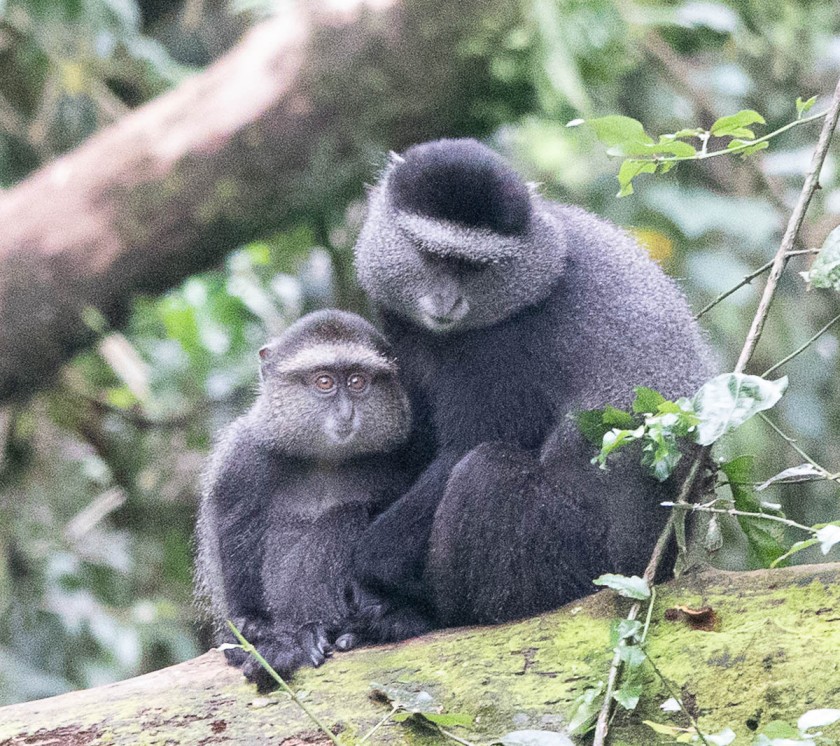
Blue monkey, Cercopithecus mitis

The baby looks remarkably like the 1990’s fad toy, the Furby, described as a cross between a hamster and an owl. Google images of Furbys and see if you agree.


A footnote: The terrible floods after a dam burst in Kenya this week are near Solai, very close to my grandfather’s farm (though downstream). When we were there two weeks ago, we had 4 inches of rain in about two hours, so the ground is completely sodden.

The bouncing Widowbirds

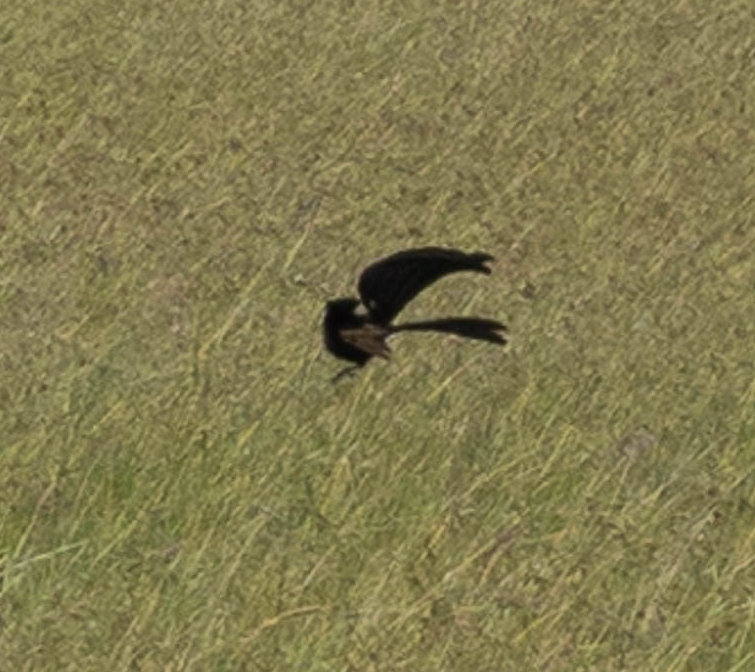
Not being a birder, I had never heard of widowbirds. One day, as we drove through long grass in the Maasai Mara, all around were smallish black birds with long streaming tail feathers, popping up out of the grass then flying low across the plains:

Yellow-mantled widowbird

It turns out these are Jackson’s Widowbirds, and they do a completely insane mating display.  The long tail feathers are grown only by males, and only for the mating season, as is the blue-grey bill. They create a small running track of their own:

DSC07231

Then they run round in a circle, and bounce up into the air, briefly appearing above the grass for all the world as if they had a trampoline underneath. They can jump up to one meter high, and apparently the females pick a male based on how long his tail is and how frequently he jumps.

Jackson's widowbird

He keeps this up until a female arrives, they mate, and then he starts again, such is the urge to spread his genes as far and wide as possible.

DSC07305

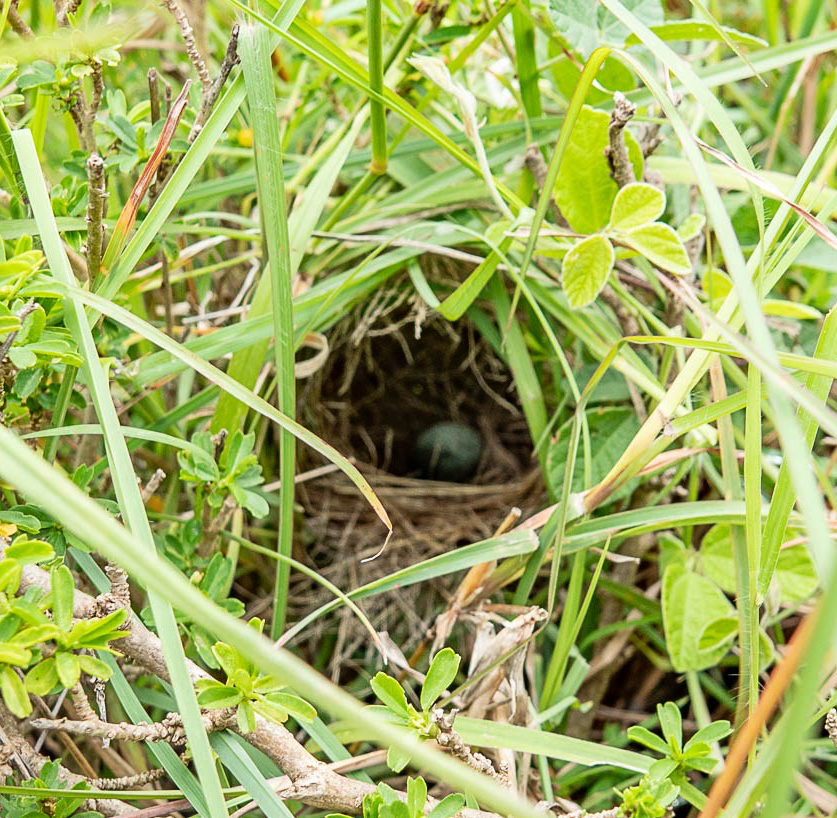
The drab brown female, meanwhile, goes off and makes a nest close to the ground in a tiny bush or big tuft of grass. My guide found this invisible nest, containing a single egg:

Jackson's widowbird. Nest with single egg.

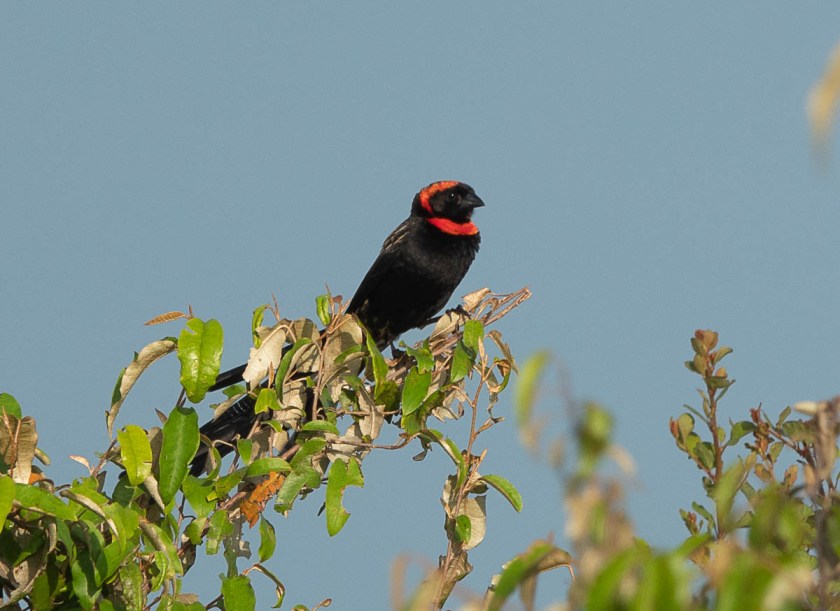
There are other widowbirds, but none of them seems to compare with Jackson’s when it comes to dancing prowess. This is a Red-collared Widowbird, also a male with a long breeding tail, up to 22cm in length. Again, females strongly prefer the males with the longest tails.
Red-collared widowbird

Planet Earth II managed to film the Jackson’s Widowbird dance, so you may be able to find it online.

An animal that begins with Aa..

After my last feel-good photos, these pictures are more nitty-gritty.

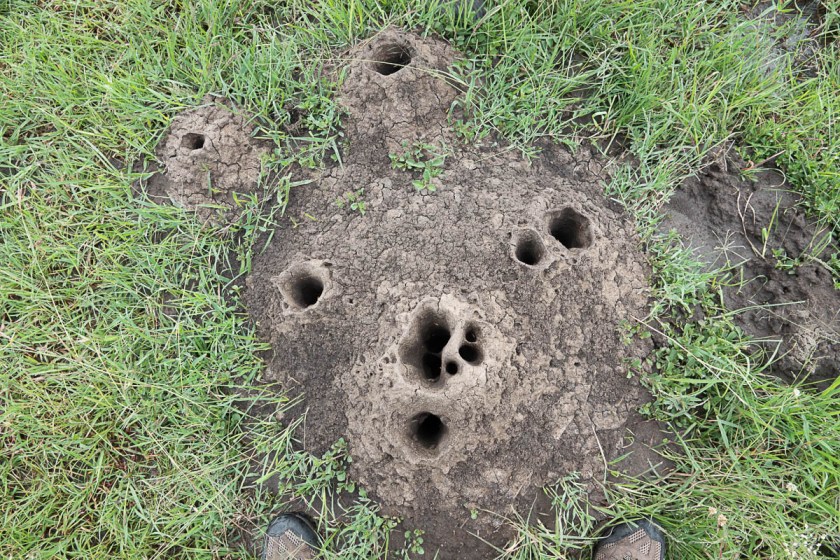
The things we typically like to photograph, like lions, are the apex predators of a food chain.  Near the bottom is the lowly termite, one species of which builds these mounds, with multiple chimneys.

Termite mound

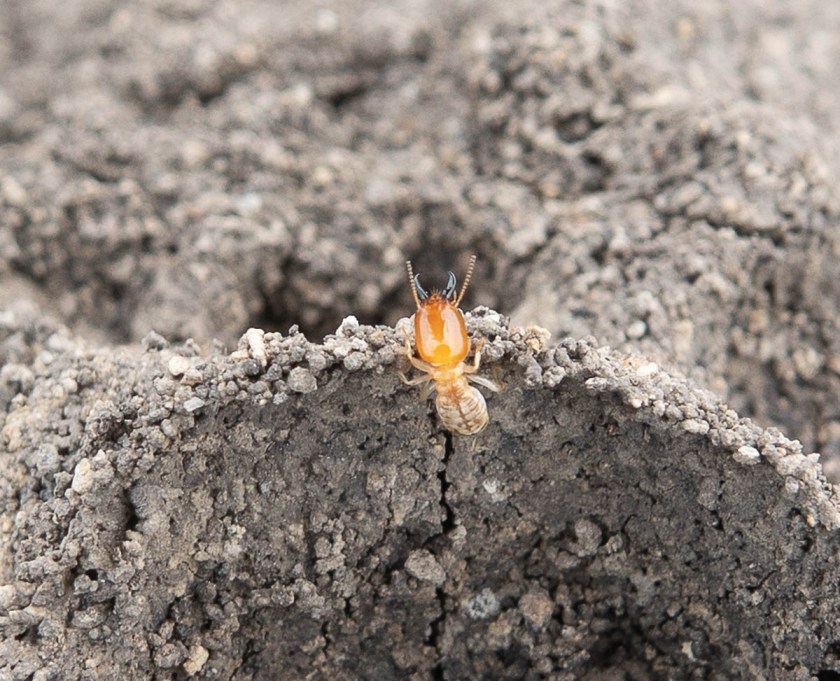
The workers are rather fearsome close-up:

Termite

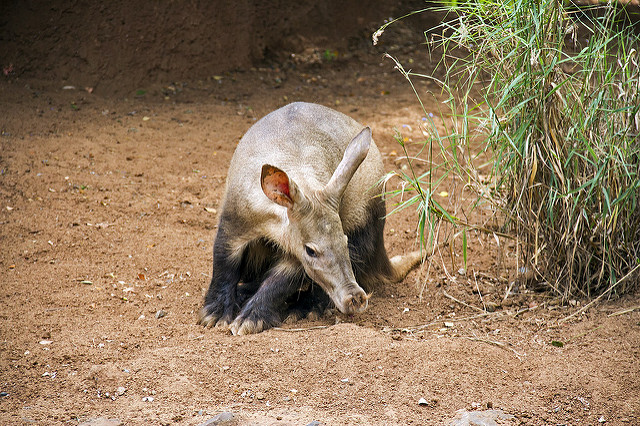
But they are no match for one of their main enemies, the aardvark, Orycteropus afer. I have never seen a live aardvark, since they are nocturnal and secretive, but here is a photo of one (from a Creative Commons website):

15416759246_ed3d480eb5_z

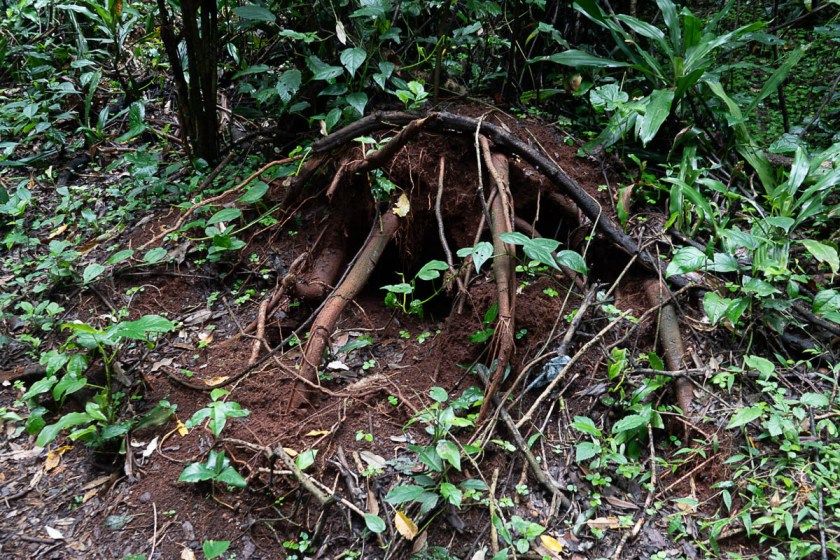
They excavate anthills and termite mounds with huge strong claws, and lick out the ants with a tongue that can extend up to 30cm ( a foot!). This is a fresh aardvark hole under some tree roots (taken in the Kakamega rain forest a few days earlier):

A fresh aardvark excavation under tree roots, looking for ants.

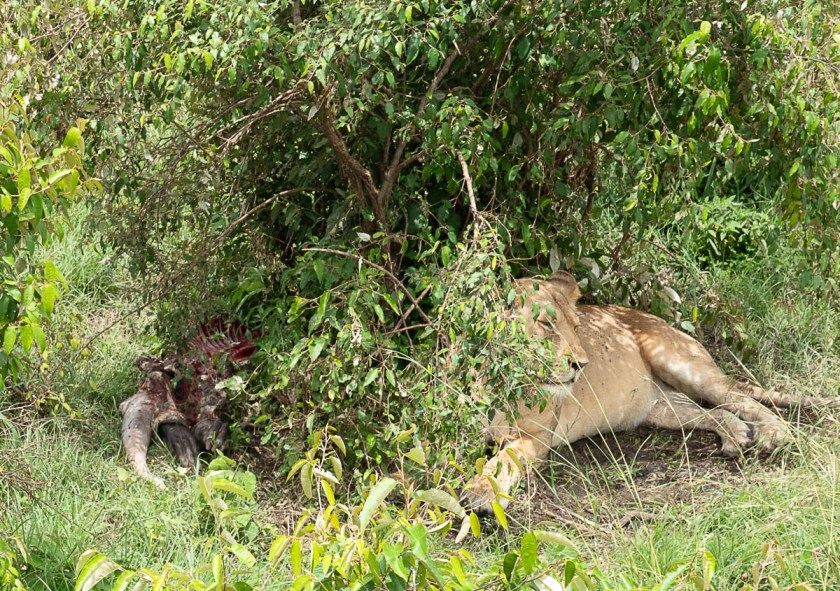
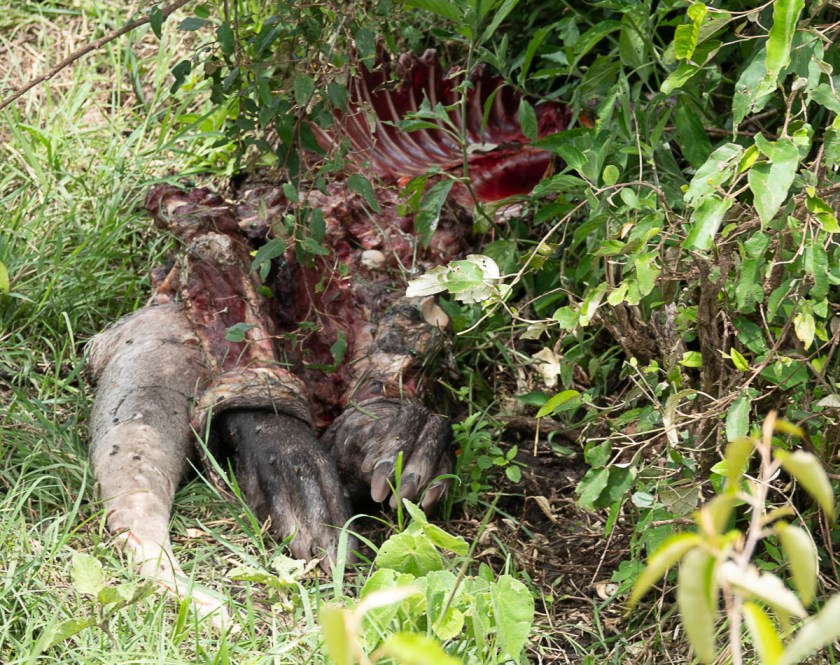
The aardvark, in turn, is food for the lion, and in the Maasai Mara a few days later we came across this sated lioness under a tree; look closely to the left of the photo, and you will see her dinner:

DSC07318

And on close inspection we saw the heavy muscular tail and huge claws of an aardvark:

DSC07319Nature really is “red in tooth and claw.”
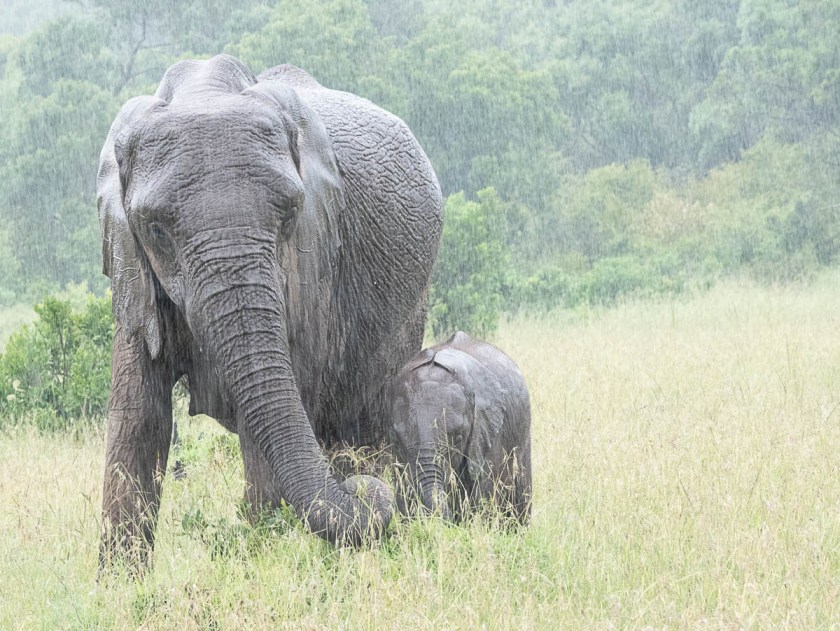
Babar in the rain

When it rains, we shelter in our houses, or least under our umbrellas, and some animals and birds hide under trees, overhangs or whatever they can find.  But it’s hard for a full-sized elephant to hide under anything, so they just get on with it. And in the rainy season it can be not only wet, but also cold: I wore a T-shirt, thick shirt, sweatshirt, down vest, down jacket, and raincoat, all at once.

For an elephant, that thick skin has to suffice:

Very wet elephantsBut at least the rains mean good long grass to eat:
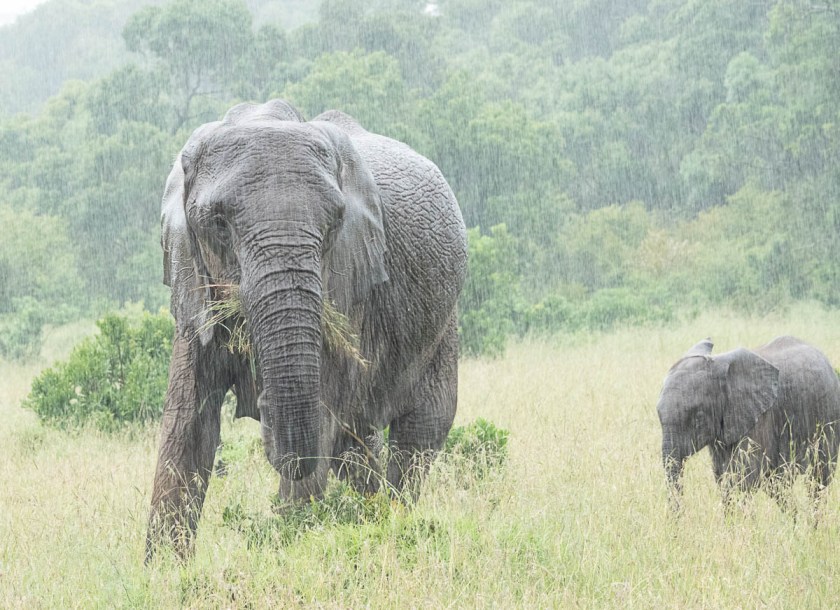
Very wet elephants

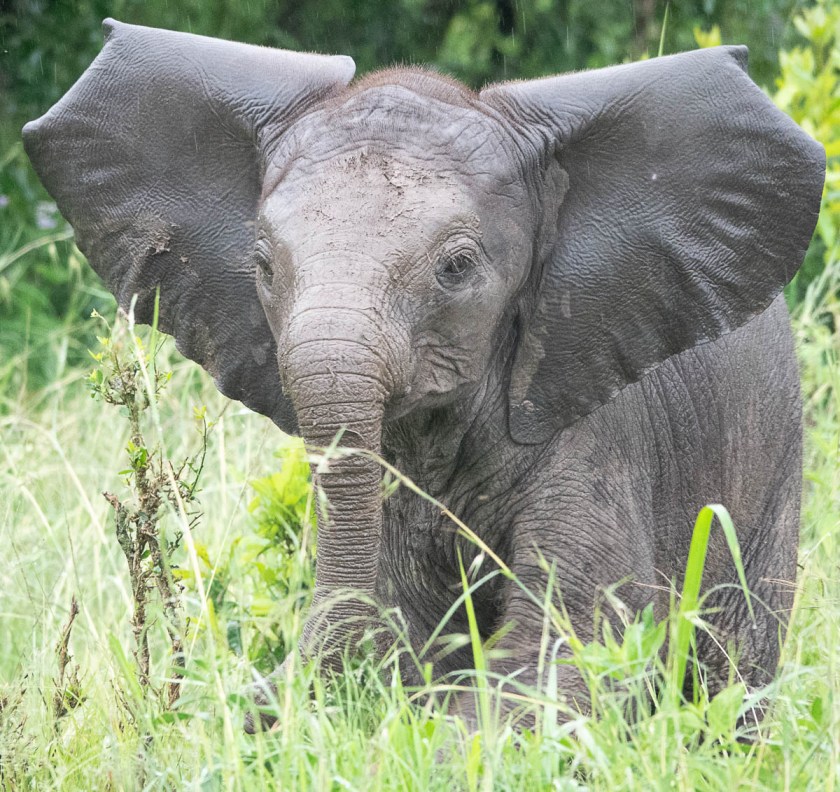
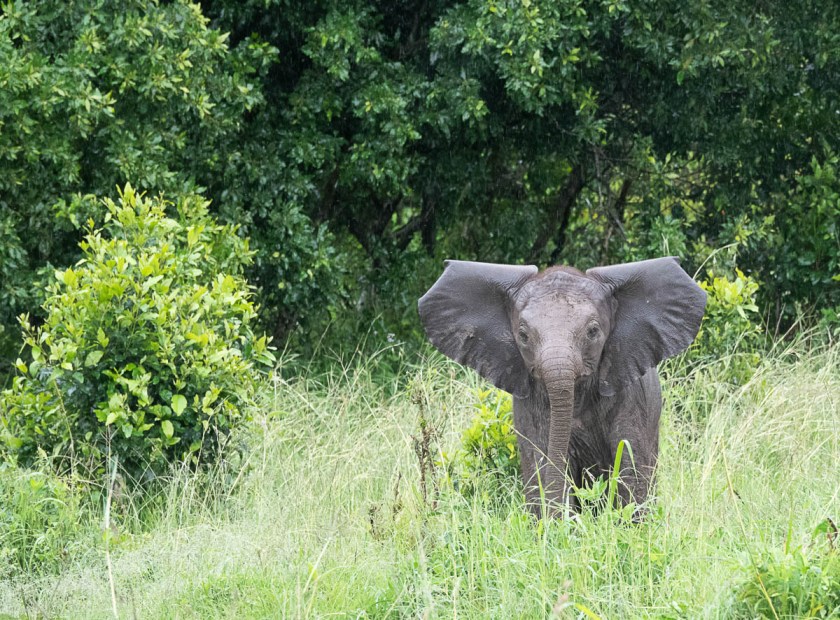
And when the sun comes out, even the baby perks up:

Very wet elephants

despite the fact that his ears are still a bit wet:

Very wet elephants

To leaven the extreme cuteness of this posting, I feel I should include at least one scientific fact:

In hot dry Namibia, where rain is rare and much to be desired, elephants have been shown to move towards rainstorms that are still 150 miles away. No-one knows quite how they detect them from such huge distances.

The Lofty Ostrich

The ostrich roams the great Sahara.
Its mouth is wide, its neck is narra.
It has such long and lofty legs,
I’m glad it sits to lay its eggs.   (by Ogden Nash)

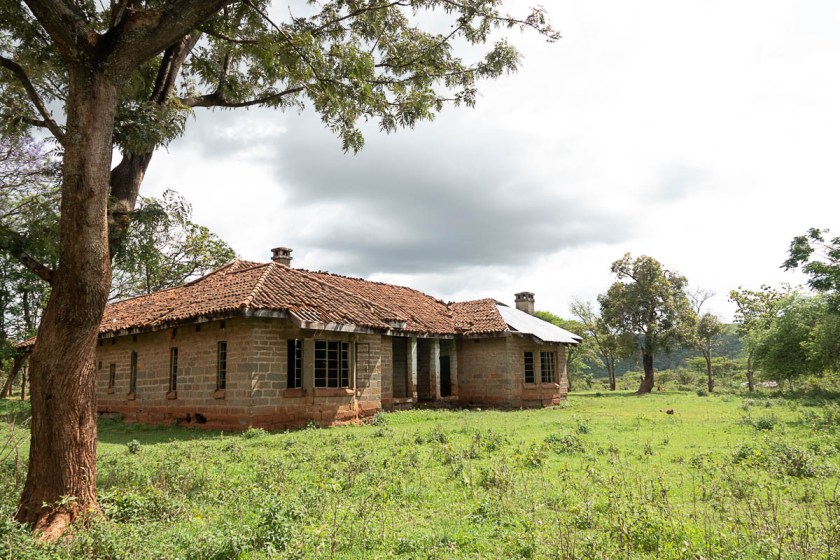
In the 1920’s in Kenya ostriches were farmed for their plumes, and my grandfather made a not-very-successful stab at this on his farm, hidden in the trees behind the small red roofed house,

DSC06193

and now derelict,

DSC06216

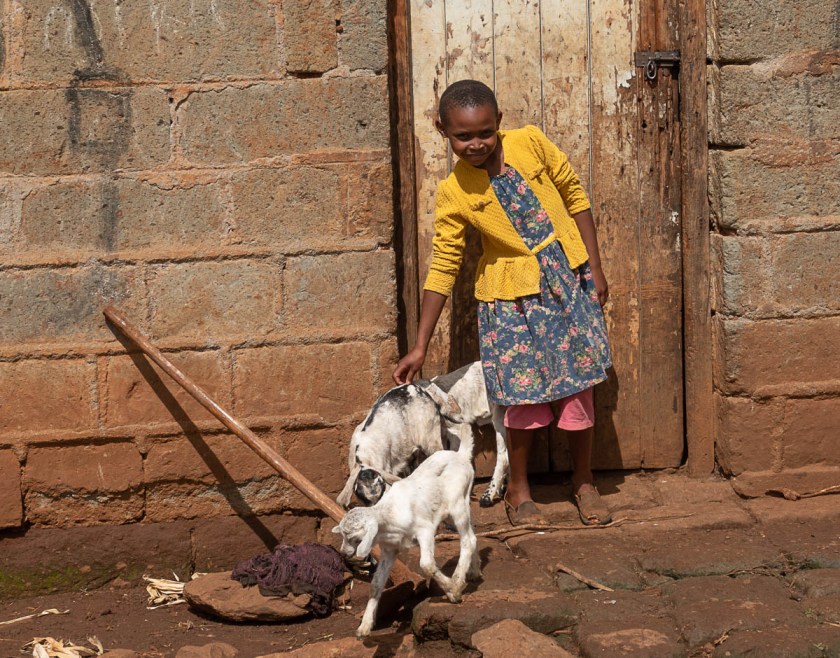
inhabited only by a family with goats:

DSC06227

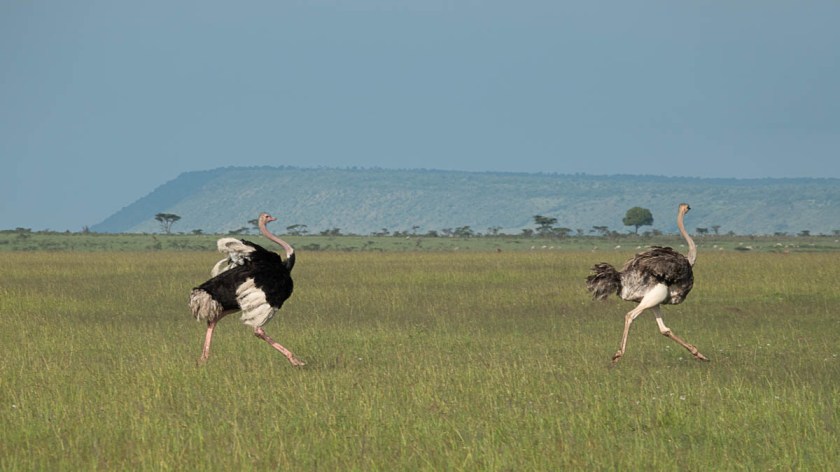
But wild ostriches flourish in the Maasai Mara. Their scientific name is Struthio camelus, and they do indeed hold their head and neck rather like a camel does. They are the world’s largest bird, standing up to 9 feet tall, and weighing up to 350 lbs.

DSC07711

When you drive past in the Land Rover, they take evasive action by running along ahead of and beside you at up to 43mph, using their wings as rudders to change direction:

DSC07720

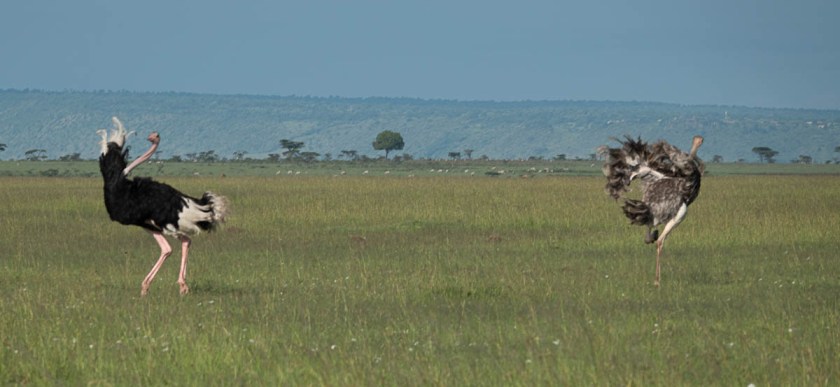
and wiggling their bottoms in a sort of dance as they go:

DSC07721

Their legs are extremely powerful, and a kick can kill a man or indeed a lion. This photo shows both the thigh muscles, and the feathers:

DSC07720

And no, they do not stick their heads in the sand!


Lions couchant

To keep you reading on…

DSC07275

I’ve just returned from a remarkable tripartite trip to Kenya. The first part was a search for the farm near Subukia and the goldmine in Kakamega where my grandfather farmed and prospected 100 years ago, and where my father grew up. The second part was two days in the Maasai Mara, and the third part was a week helping at Saidia Children’s Home in Gilgil.  This is a nature blog, so I will keep quiet about the other parts of my trip, but I will just tell you that I did indeed find the farm and the goldmine, and, more importantly,  that Saidia is a quite remarkable place, which deserves all our support. If you are interested, you can see more here: https://www.orphansupportleague.org

Back to nature. I only had a few days in the wild, and I will start with the most dramatic set of photos: amorous lions!

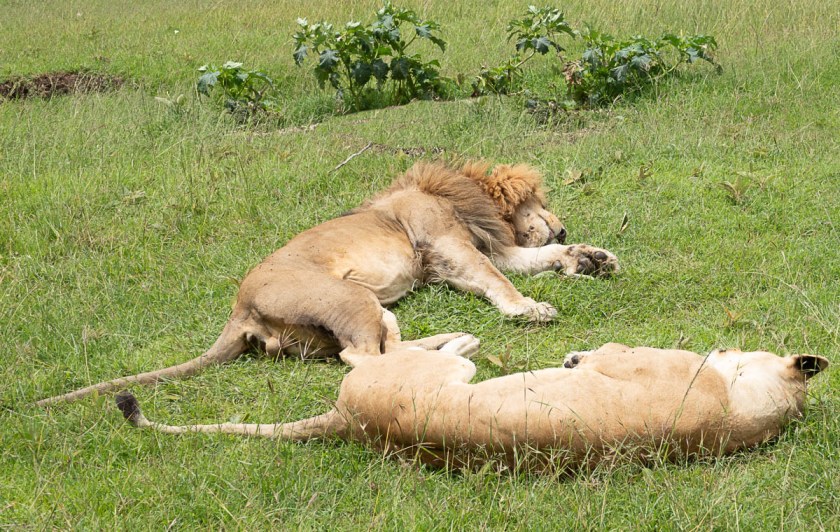
I was with Nemeria, my Maasai guide from Saruni Wild in the Mara North Conservancy. We saw two lions fast asleep:

DSC07252

He told me that a pair like this is there for only one reason: to mate, and that they go off together for 3 or 4 days, and mate “every ten minutes”! So, we settled down to wait. An hour later:

DSC07272

And then the romance unfolded over a grand total of 60 seconds, start to finish. First, a casual overture:

DSC07273

which was not rejected:

DSC07274

and indeed encouraged:

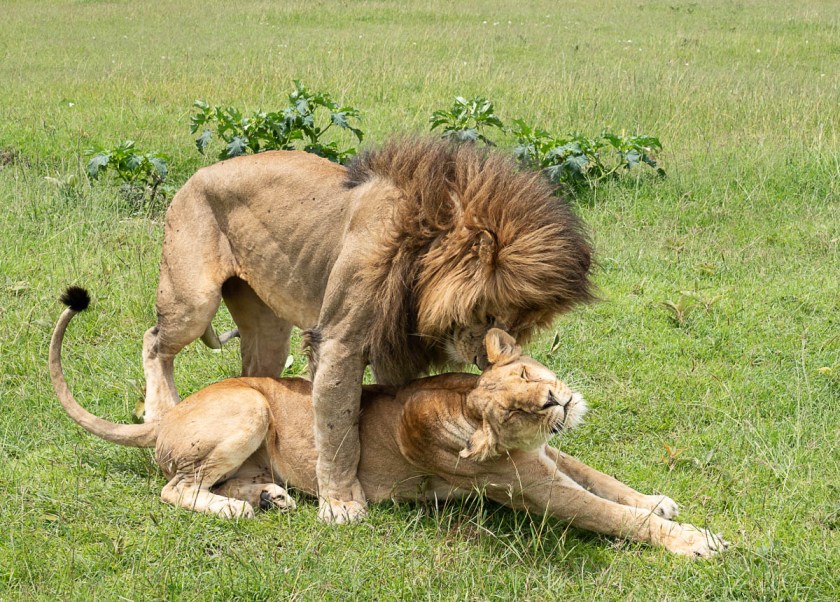
DSC07275

So he got going:

DSC07276

As he was nearly done, a bit of neck-biting:

DSC07292

A triumphant little roar:

DSC07293

And then, exhausted:

DSC07295

They went straight back to sleep:

DSC07296

In case you are wondering whether it was all a bit voyeuristic, you can see that they could not have been less interested in our presence (which was just our one Land Rover, with only me and the guide in it, talking very quietly).

If you think she looks rather pained by the whole thing, lions have barbs on their penis that can be pretty uncomfortable for the female, so you can’t really blame her. Here is a description from the Zambia Tourist Board website:

“The penis is barbed and its withdrawal hurts the female who may twist around and attack the dismounting male. The pain is necessary for feline mating as it is the shock to her system that induces ovulation and permits fertilization.”

In this photo, just after he has withdrawn, you can see that she is in spasm:

DSC07294

Baboons get a grip

[Last post before I head off to Kenya.]

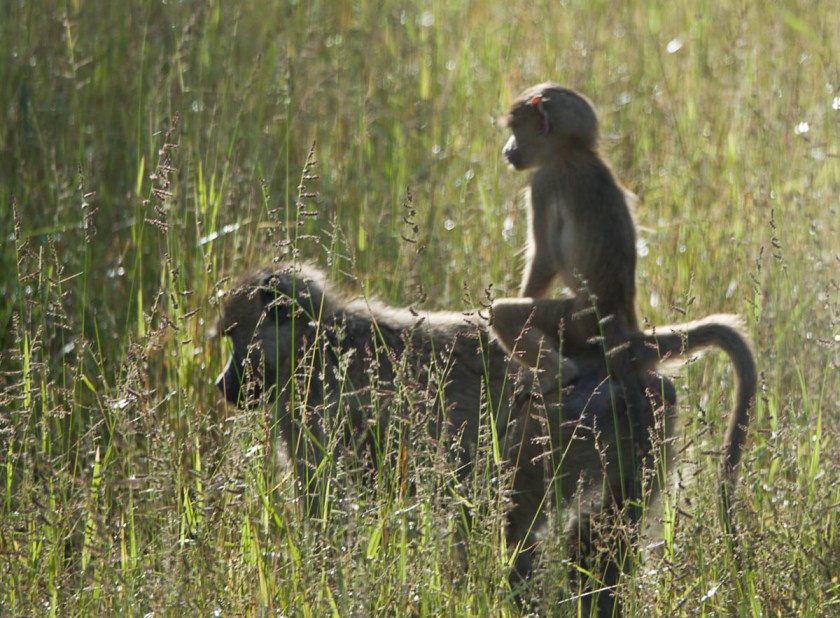
As tiny babies, baboons are carried everywhere, and never seem to fall off no matter how fast their mother runs. Here he is, holding on for dear life, his tiny ear just visible, his miniature tail flying, and his mother’s fur blowing in the wind.

baboon

Or, when they are a little older, they ride jockey-style:

Baboons

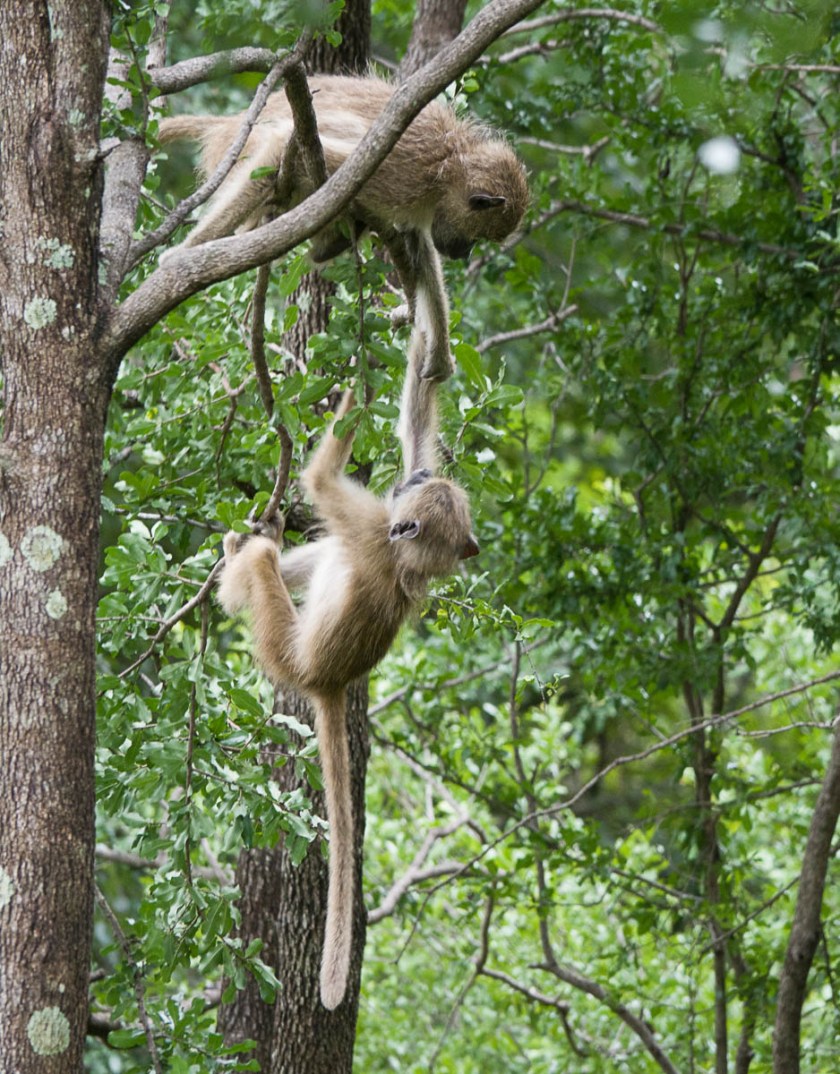
This is all good practice for tree climbing and gymnastics when they become more independent:

BaboonsBaboonsBaboons

These skills are put to good use as adults. This one has climbed a tree to steal a weaver’s nest with, hopefully, eggs or chicks inside:

Baboon with white-browed weaver nest.

Lilac rollers, all fluffed up

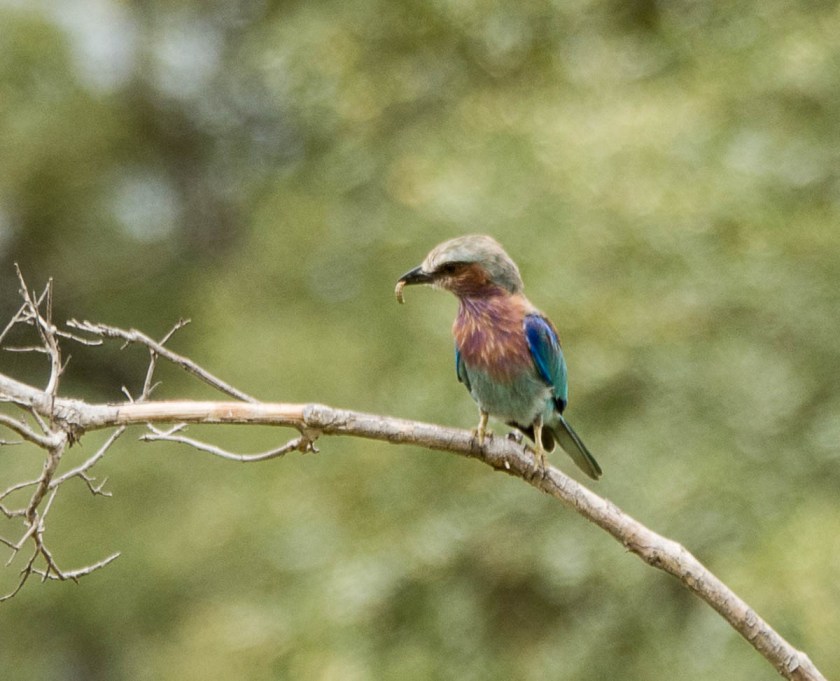
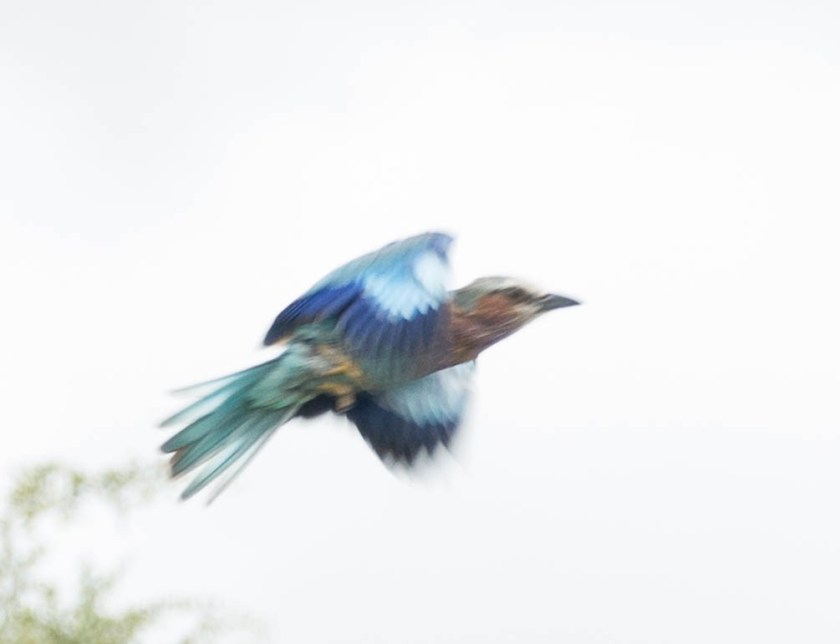
Lilac Rollers live up to their names. Their flight is a soaring, tumbling, acrobatic downwards roll, and their plumage has the most extraordinary colors. They are insectivores:

Lilac-breasted Roller

and on a cool morning, quite something to see, all puffed up with importance:

Lilac-breasted Roller

And look at their wing colours in flight:

dsc05455.jpg

‘Twisting-horned billy-goat deer’

Greater Kudu (Tragelaphus strepsiceros) are dramatically handsome antelopes. Their scientific name means “twisting-horned billy-goat deer”, my title for this posting. Bulls weigh 190–315 kg (420–694 lb), and stand up to 160 cm (63 in) tall at the shoulder.

These two males (only the males have horns)  were part of a bachelor group of three.

Kudu. "The Grey Ghosts".

They were sparring to establish dominance before the upcoming mating season.

Kudu jousting

Occasionally their horns get locked together, in which case both may die. Luckily these two disentangled themselves just fine.

Meanwhile the third male was showing his strength by digging with his horns, as evidenced by the dirt and grass stuck on the ends and on his forehead:

Kudu. He has been diggin as a display of strength, note the grass on his horns.


The horns are not like antlers, they are not shed and regrown each season. They have a maximum of two and a half twists, and this last male is just about there, suggesting he is at least six years old. When the ends of the horns show white, they have stopped growing.

Kudu are called the Grey Ghosts, because they disappear so silently into their woodland habitat.

DSC03243

Parrot landings

[I am in London for three days, before going to Kenya to visit an orphanage run by a friend. I still have plenty of Zambia photos left to share, so I thought I would send one post a day until I leave on Wednesday.  Then I’ll be out of email contact for two weeks, I suspect, and will resume on my return.]

I only saw two types of parrot-like birds in the South Luangwa..

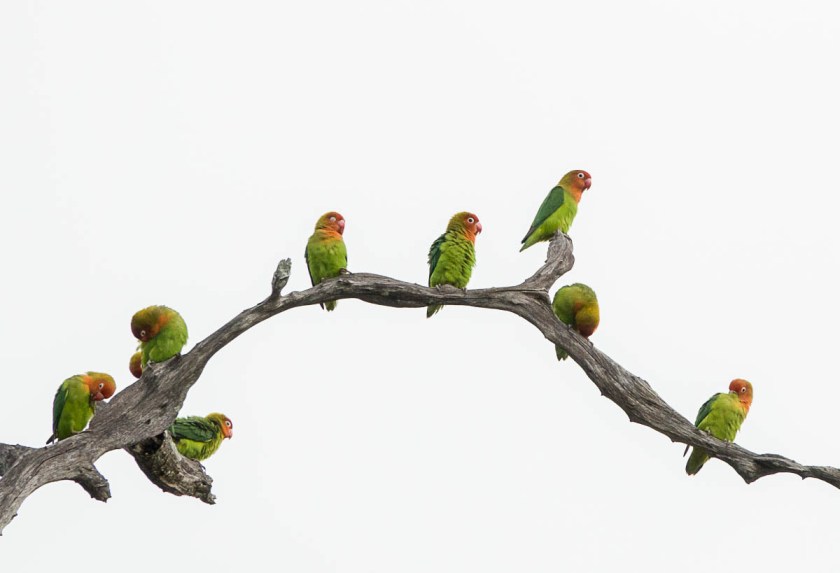
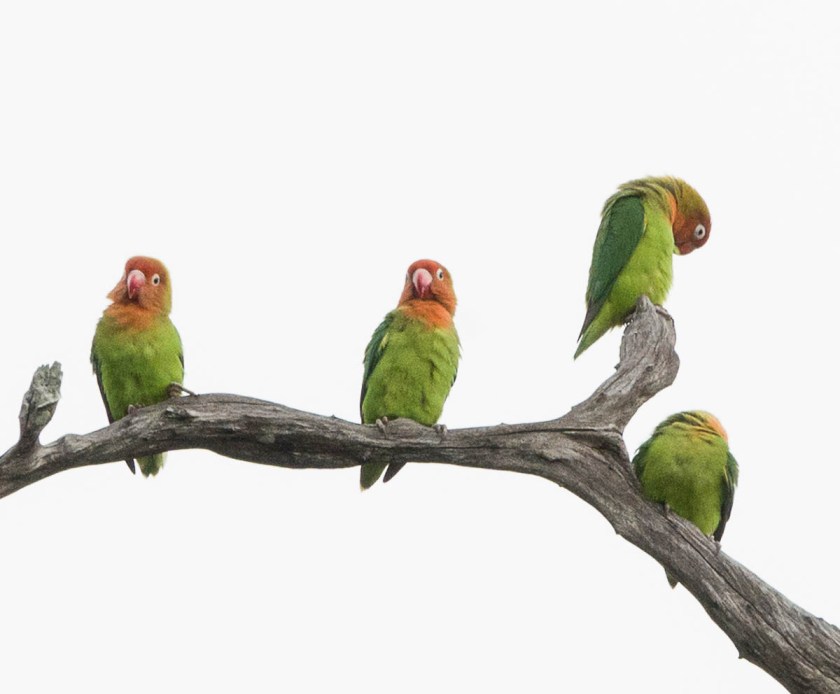
The first was an entire flock of the wonderfully named Lilian’s Lovebirds (Agapornis lilianae), Africa’s smallest parrot at about 5 inches long.Lillian's lovebirds

Lillian's lovebirds

They are Near Threatened, and are endemic to this small area of mopane woodlands. There are thought to be only about 20,000 of these lovely birds left in the wild. I have often wondered who Lilian was, but I have failed to track her (or him?) down. They are monogamous, with the male and female pair forming a tight bond, but in breeding season (when I was there) they collect in larger flocks.

And here is an elegant Cape Parrot, with its enormous bill.

Cape parrot, northern race.

The pair of Cape parrots landed in a tree that was occupied by buffalo weavers, who took quite a dim view of the parrots’ arrival. But after awhile some sort of accommodation was arrived at, and everyone settled down.