The Dangerous Phase

As summer reaches its peak, the nesting season is more or less over, but like teenagers the baby birds are not yet independent. They have mostly left their nests, and sit on branches cheeping urgently for food deliveries. Soon they will have to fend for themselves, and then migrate. Mortality is high in this interlude betwixt the parental home and true adulthood.

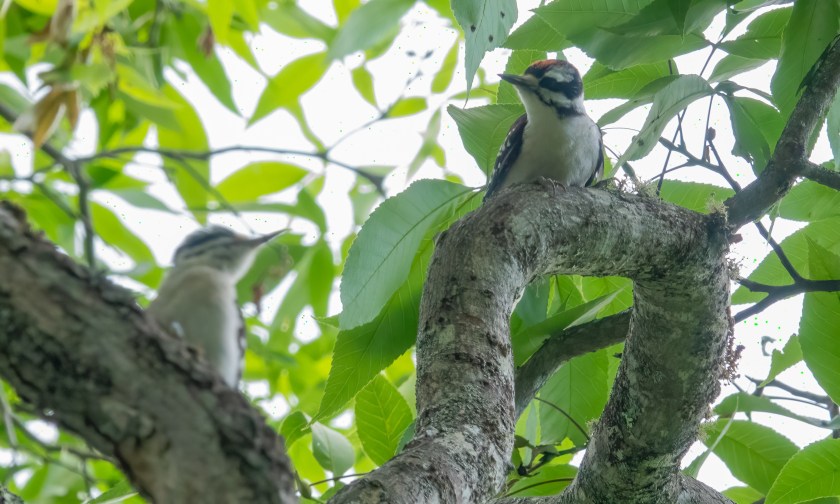
These are some I have seen in the last few weeks. In my big hickory tree, two Hairy Woodpecker chicks hopped around:

Two Hairy Woodpecker fledglings

The House Wren fledglings are still being fed, three days after leaving the nest, and several trees away:

Northern House Wren fledglings

A White-breasted Nuthatch seemed to have only a single chick:

White-breasted Nuthatch and fledgling.

A chickadee had ended up on the ground, but it clambered back up to a low branch shortly after I took the photo.

Black-capped Chickadee fledgling on ground by beaver pond.

The next shot is a food delivery by a Common Yellowthroat mother, right:

Common Yellowthroat fledgling, left, and mother, right

She then pokes it down the fledgling’s throat:

A hummingbird posing on my garden trellis:

Ruby-throated Hummingbird fledgling.

The scaly head feathers are distinctive for juveniles. At this age, you can’t reliably tell if it is male or female; the male’s ruby throat only develops later. However, male fledglings usually have streaks on the throat. so the pure white throat of this bird suggests it is female…

On the water, the ducklings are becoming more independent too. This Wood Duck duckling was nowhere near any adults, with just one sibling.

Wood Duck ducklings

This Hooded Merganser is further along:

Hooded Merganser duckling

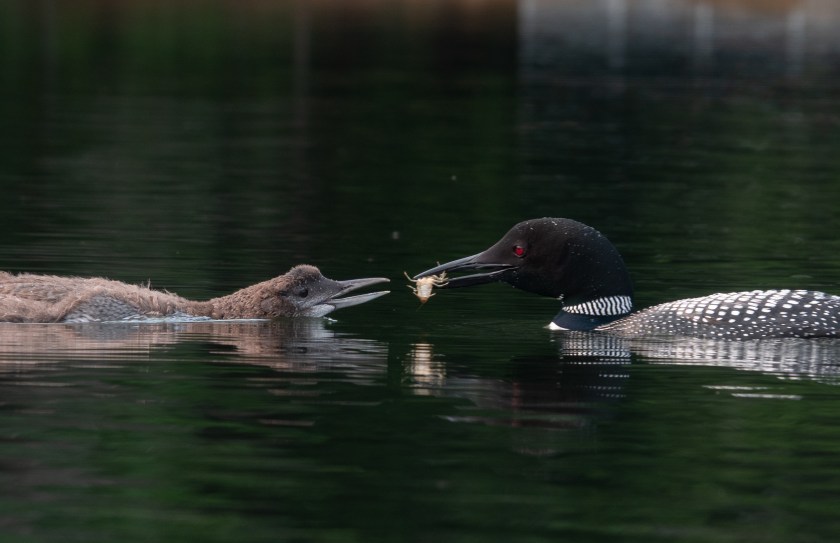
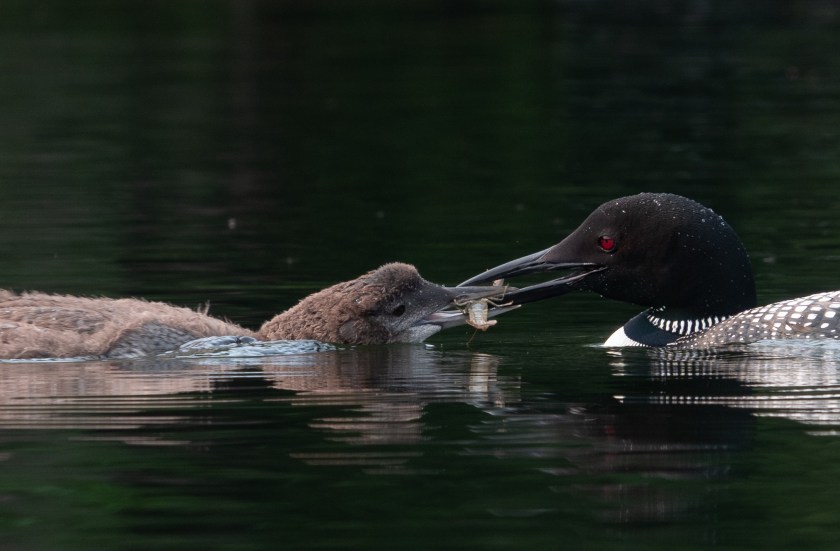
The loon chicks are still being fed, either with (quite large) fish:

Fish delivery
Lunch

or crayfish:

Reaching for a crayfish appetizer
Handover
Complete

You can see that their downy plumage is being shed as the serious feathers underneath take their place.

Watching a new generation flutter out into the world is a special privilege. Cross your fingers and hope for the best.

A Beetle Magical Mystery Tour

[This post is guaranteed to elicit from any under-10 year old an “Ew, gross!” response.]

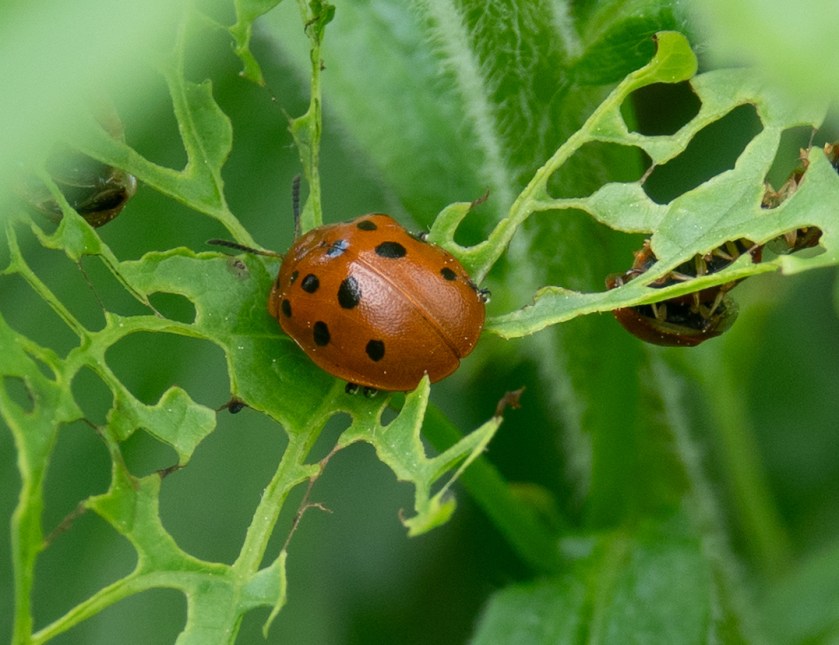
There are at least two different beetles casually called the Milkweed Leaf Beetle. Both are red, and both do indeed eat milkweed leaves, but there the resemblance ends.

The Argus Tortoise Beetle, Chelymorpha cassidea, looks like a ladybug (aka ladybird!) but is a bit bigger at 9 to 12 mm (0.35 to 0.47 in) long compared to 5.5 to 8.5mm for the Harlequin Ladybug.

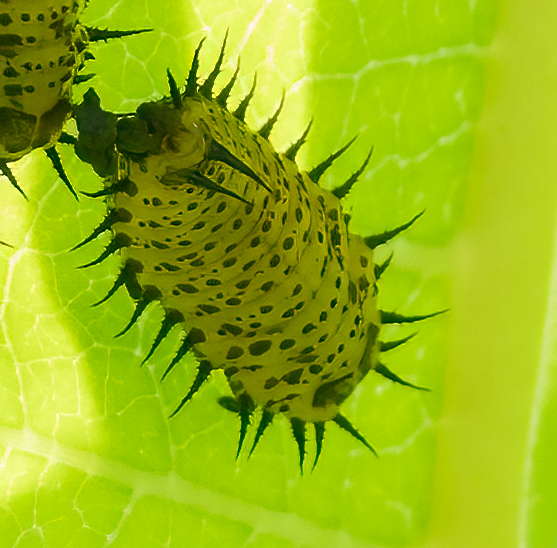
They have the most extraordinary larvae. Here is a trio:

Look at the rightmost one more closely. It has a pair of “horns” at the butt end, called the caudal furca.

Every time it poops, it deposits the output on these horns, building up a substantial lump.

This is called a fecal shield. It curves over the top of the larva like a sort of Roman helmet, and it can be moved or waved around, reminding me of the periscope of the (quite different) Beatles’ Yellow Submarine.

The purpose of this bizarre and rather disgusting construction, seems to be defense against predators (in this case my intrusive camera lens).

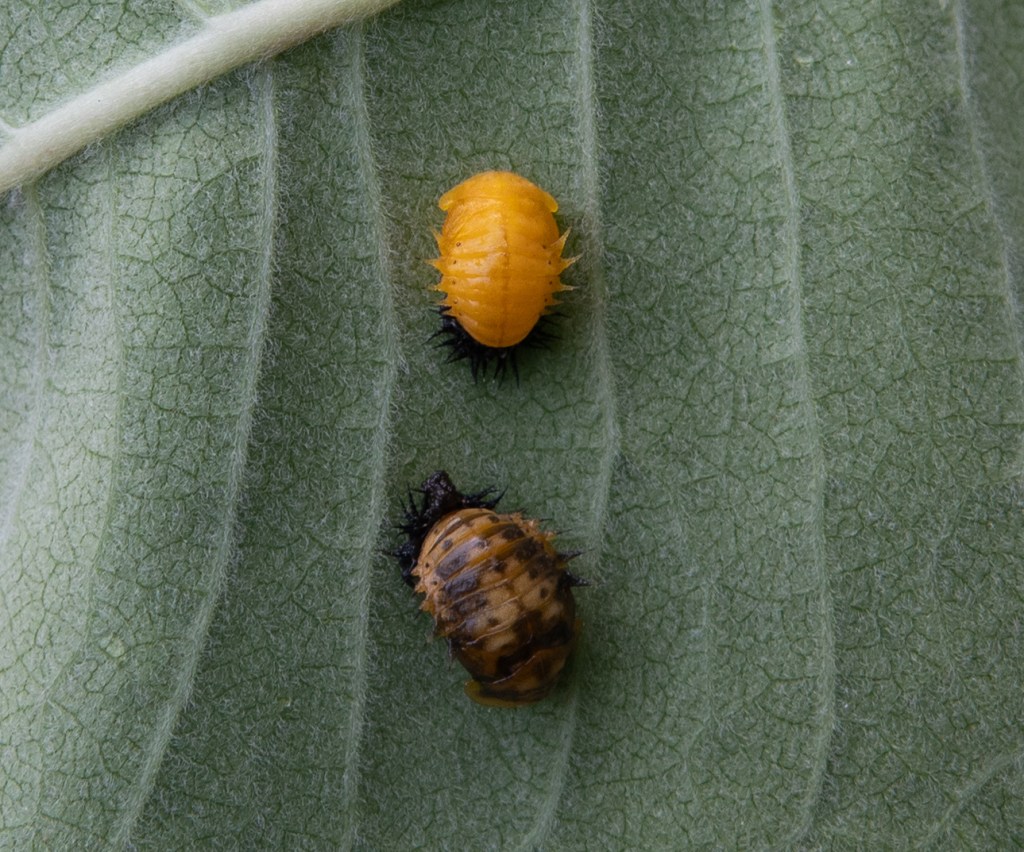
The previous photos were taken at midday on Monday. By 3.04pm on the following day the larva is beginning to form an oval golden pupa, though it is still soft:

At 5.25pm the bottom one has begun to darken, and meanwhile the top one has begun its transformation too:

And by 10.45am the next morning, both have completely changed their color, and hardened into their final pupal forms:

They will drop to the ground, and a new beetle will appear later this summer.

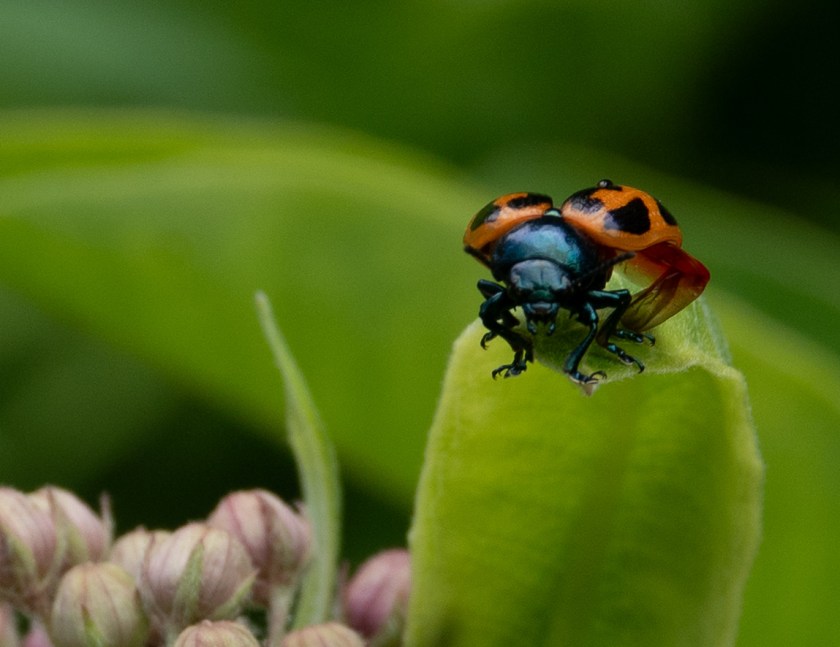
The unrelated Swamp Milkweed Leaf Beetle, Labidomera clivicollis, is also red on the outside:

When it wants to move to a new plant, it goes to a high place:

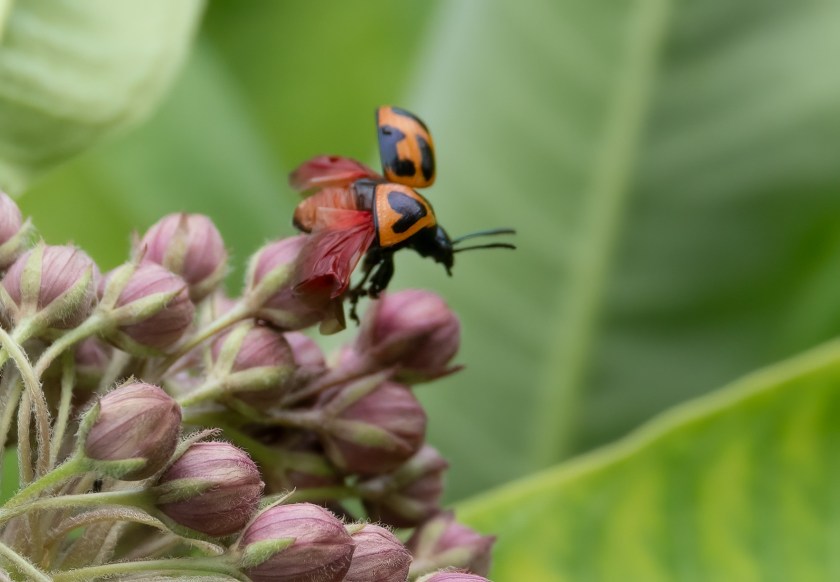
opens those wing cases (elytra):

and unfurls its wings. Lo and behold, they too are red.

An unexpected magical mystery delight.

PS The following one minute video is extremely boring, but shows you that the larvae with their fecal shields are perfectly mobile. For hard-core beetle people only.

Miracles do happen

I have lived in Maine on and off for 43 years, and never seen a bobcat. I have caught them on camera traps, and seen tracks, but that’s it. Until now.

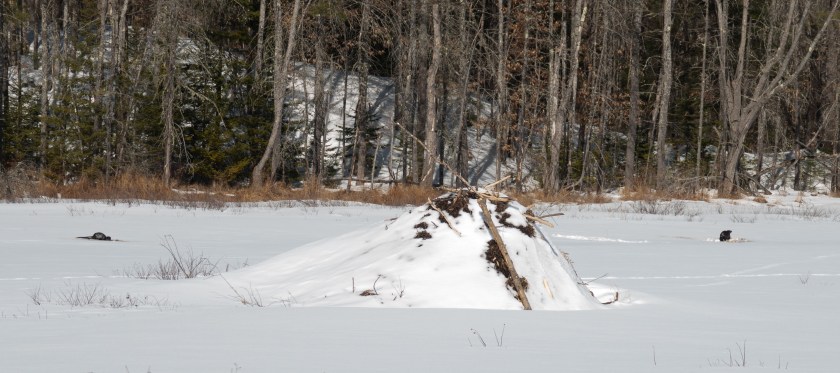
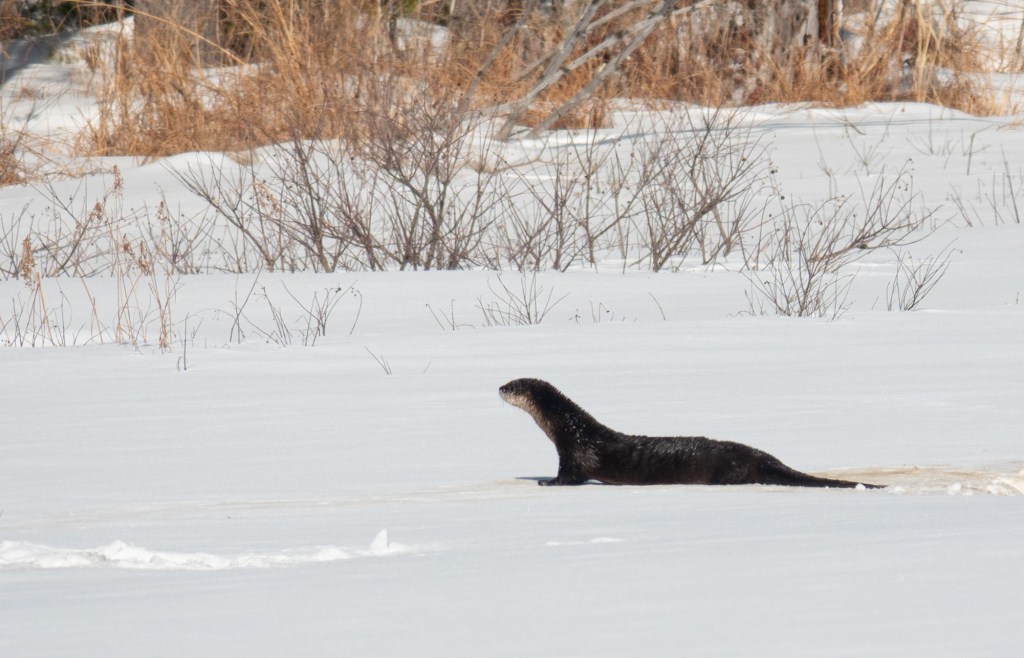
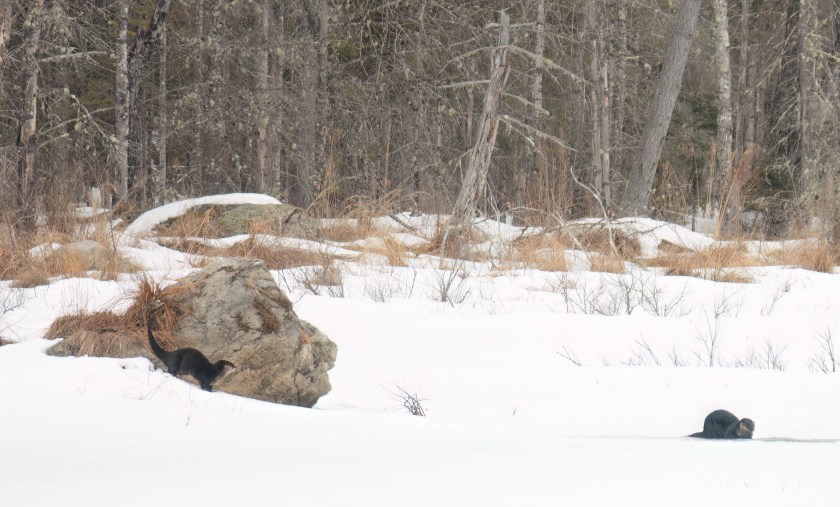
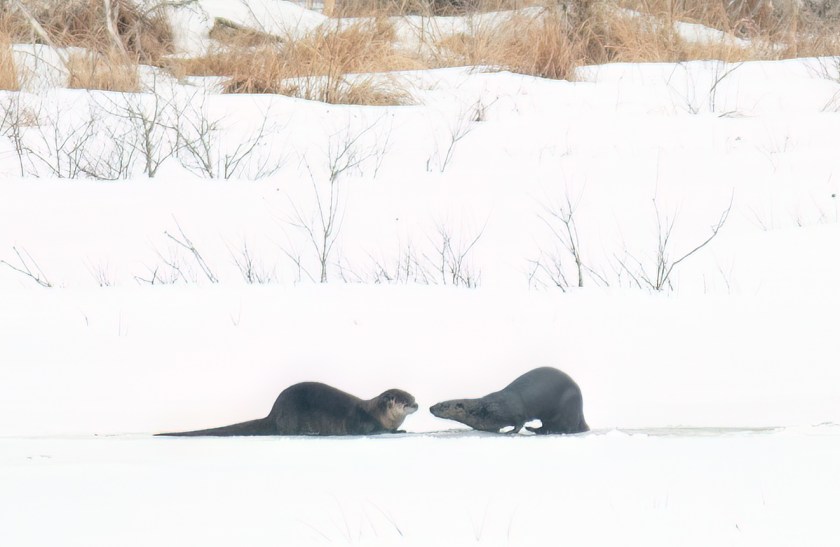
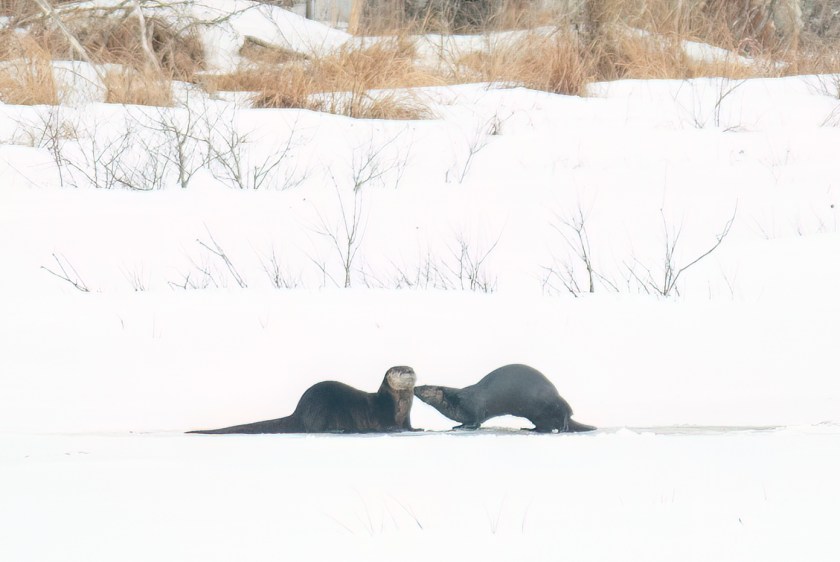
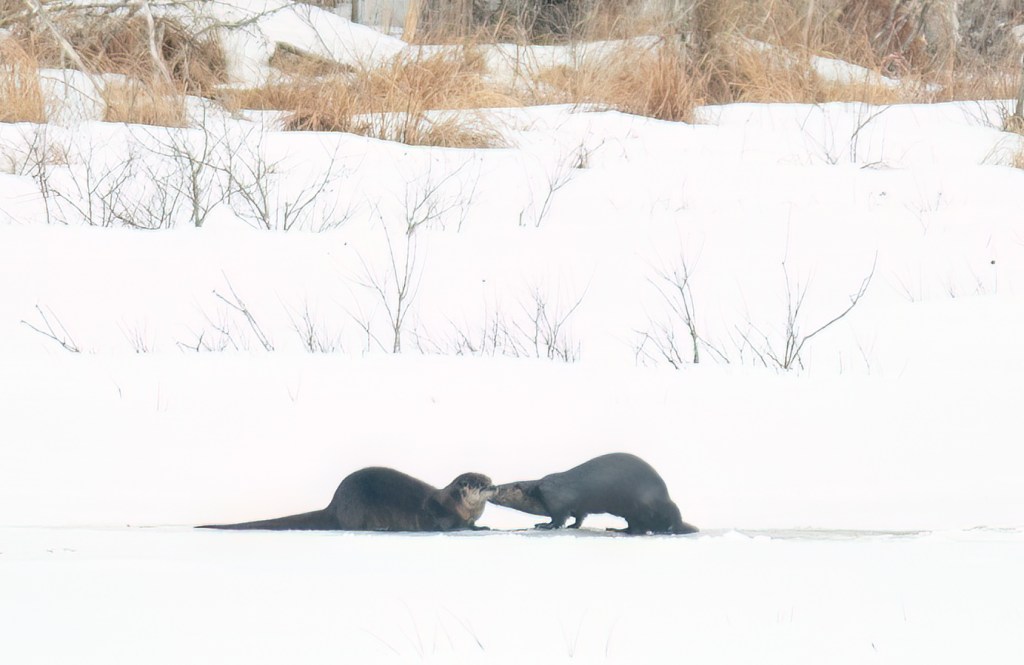
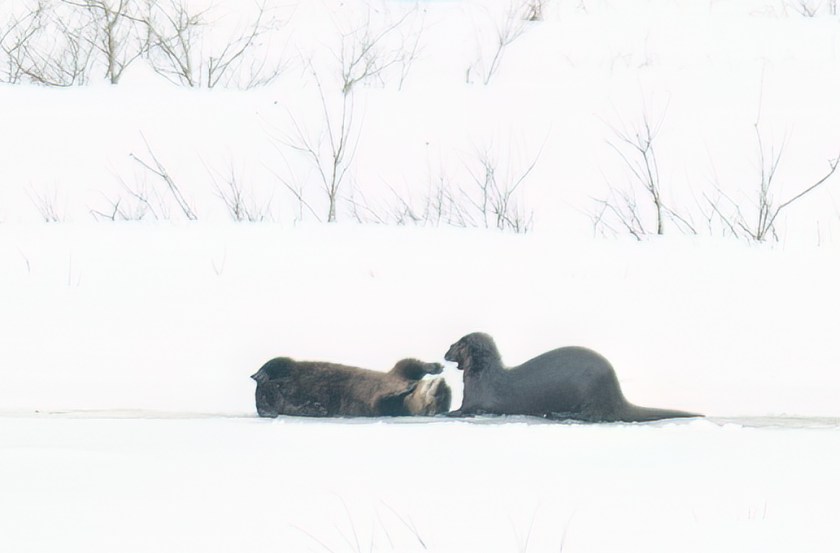
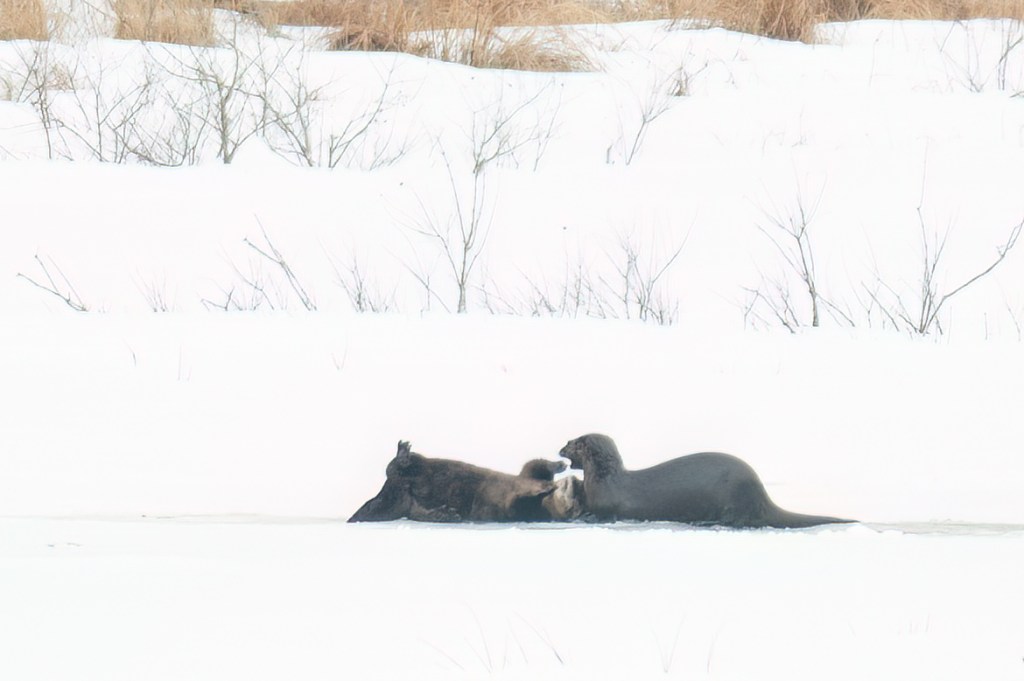
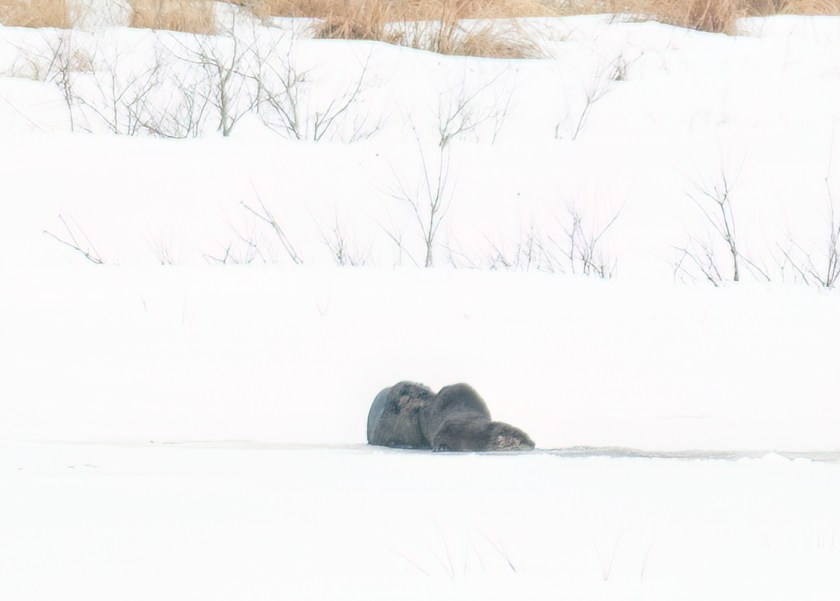
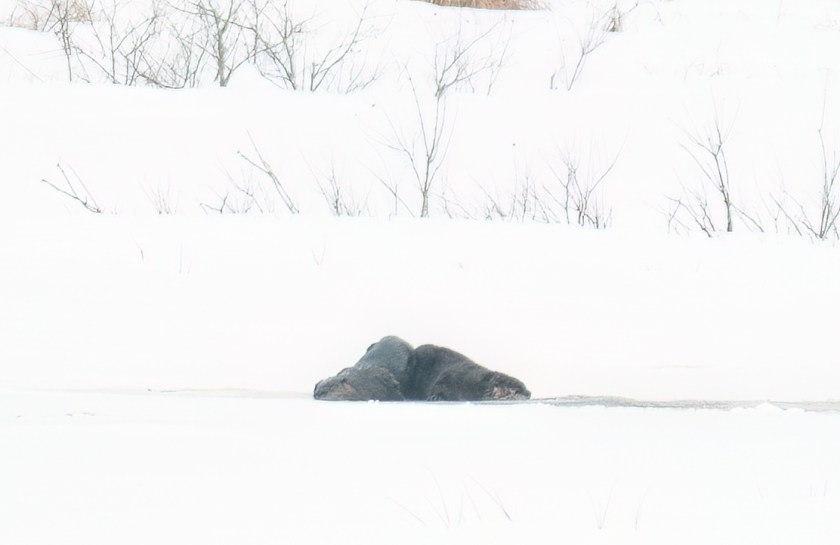
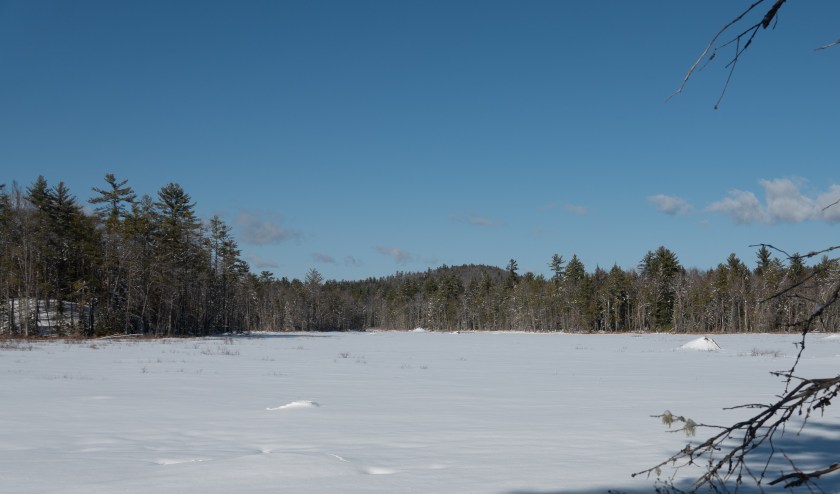
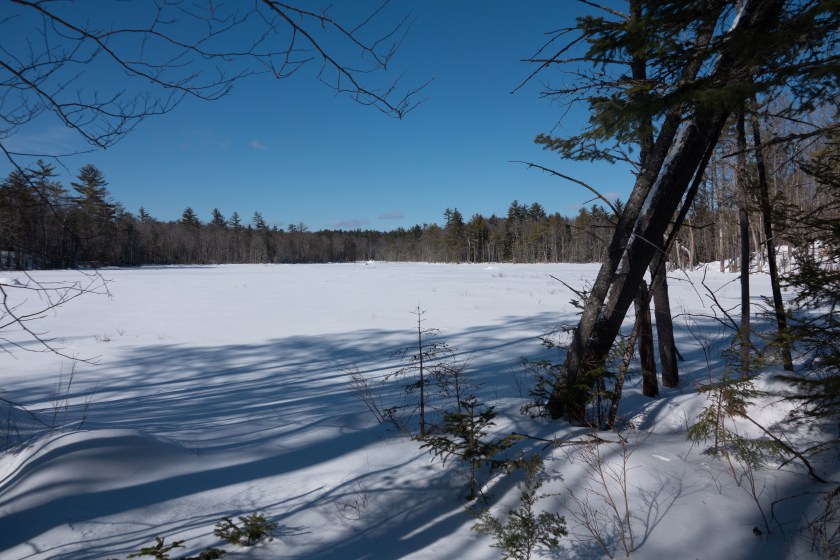
I was out for the second time that day snowshoeing and hoping to see otters. None. I had turned for home, and as always I looked over my shoulder one last time in case they had appeared as I left.

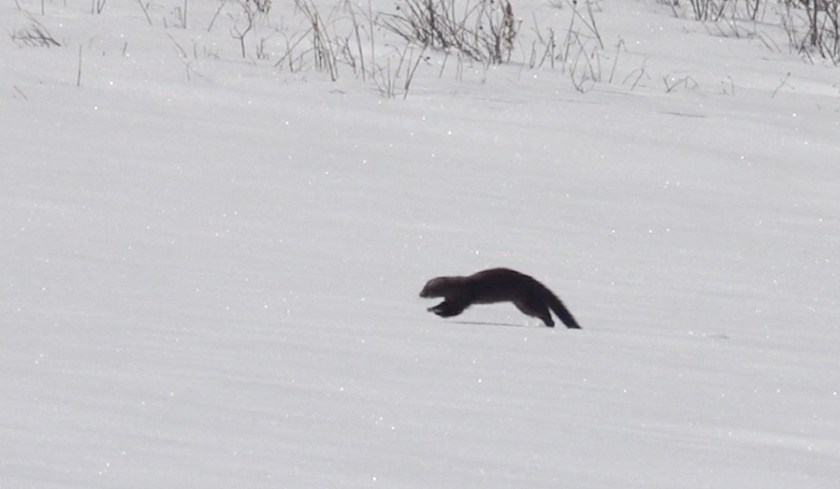
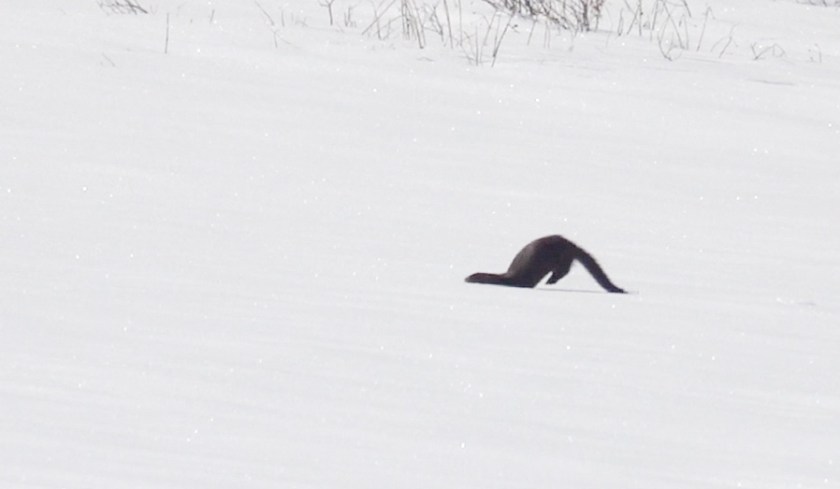
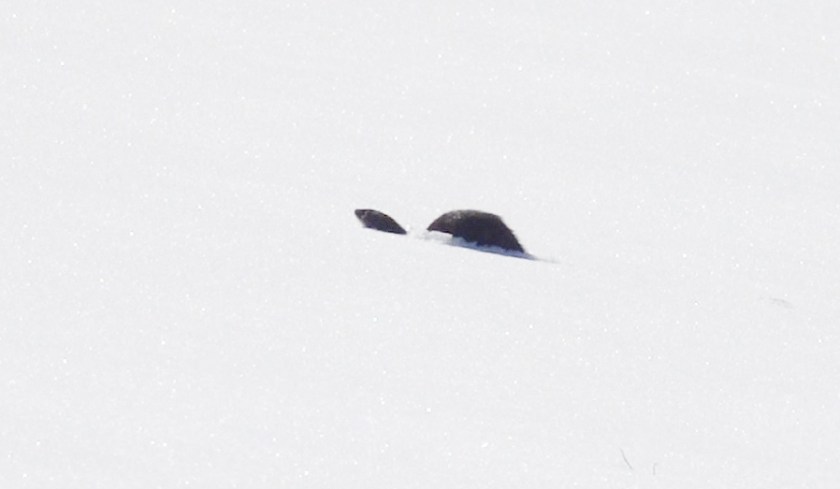
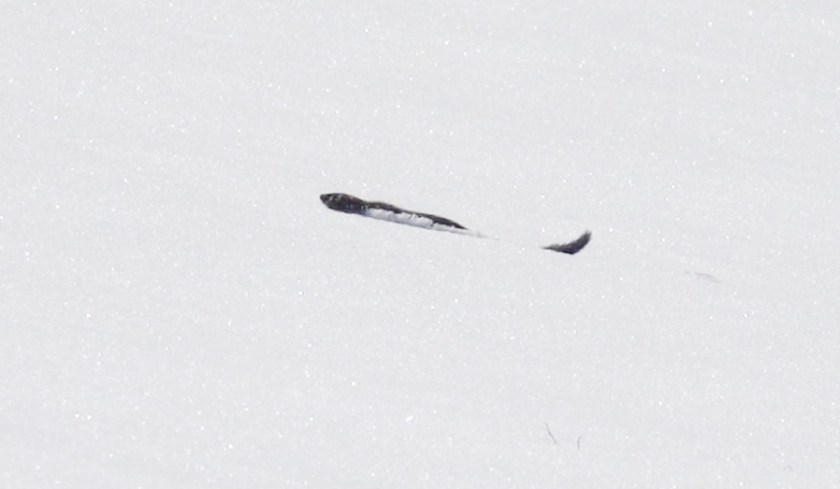
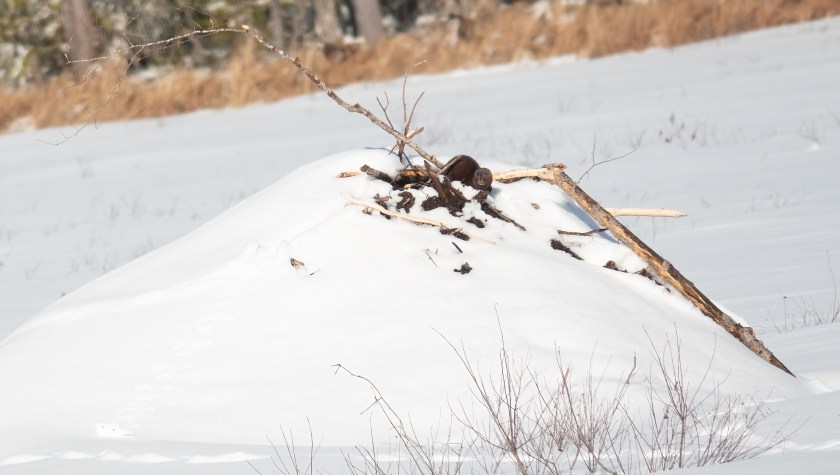
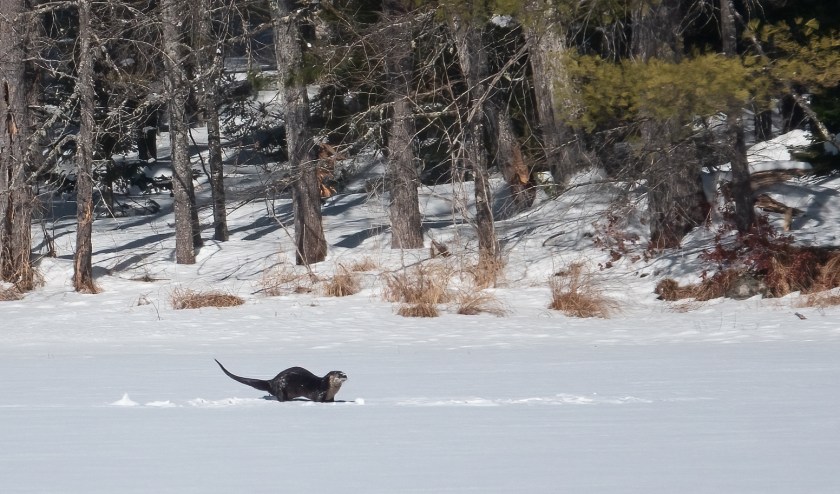
And there one was, on the far side of the pond. So, I headed back out for a closer look:

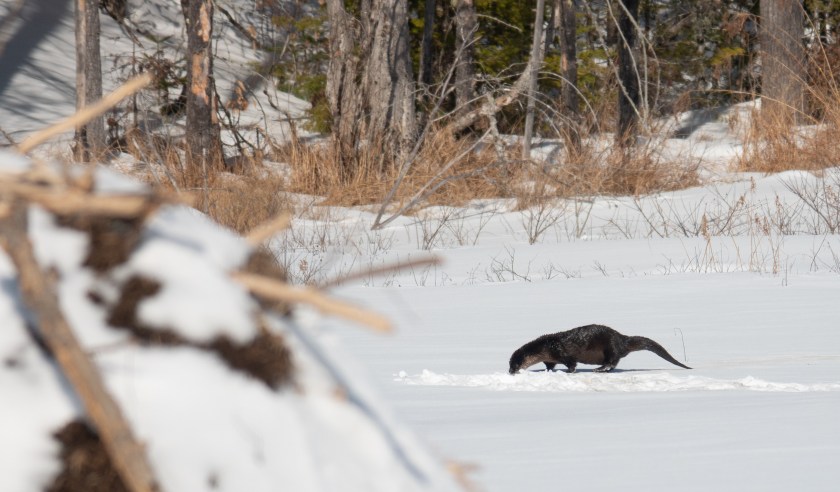
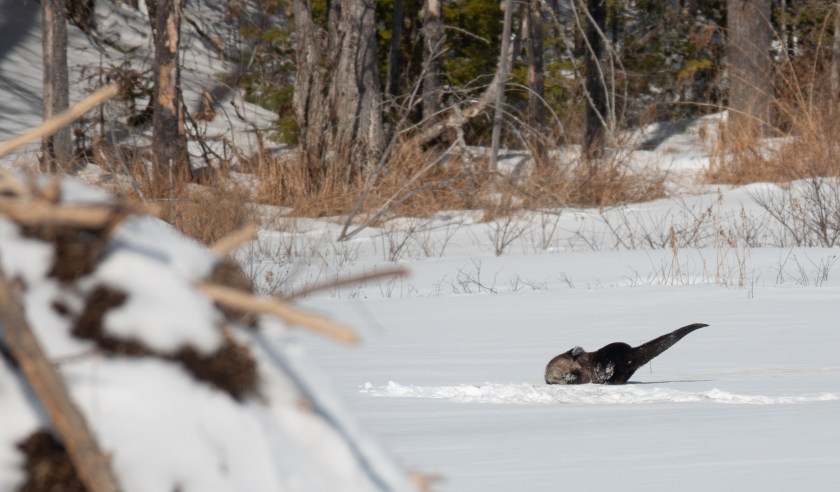
The otter dived under the ice, but there was another shape on the snow, rounder and fluffier:

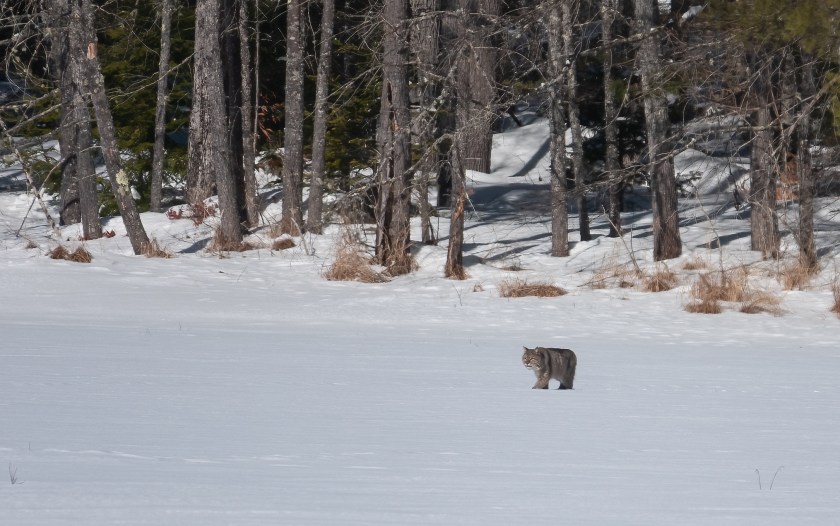
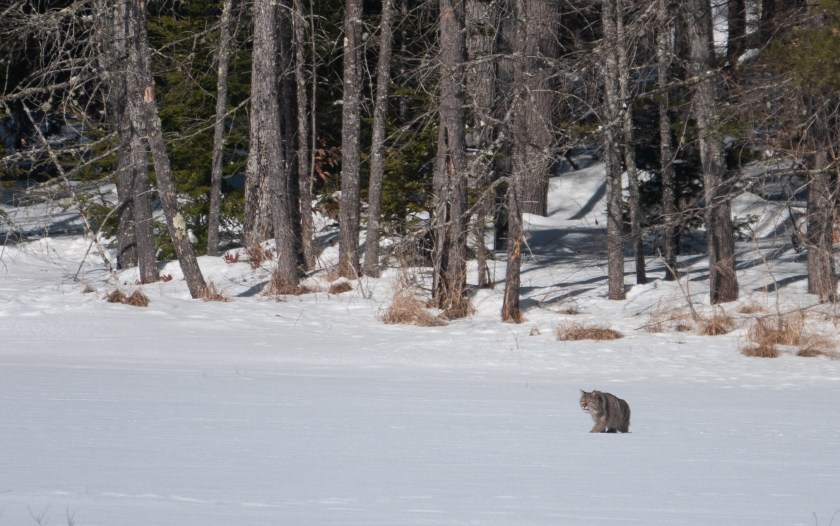
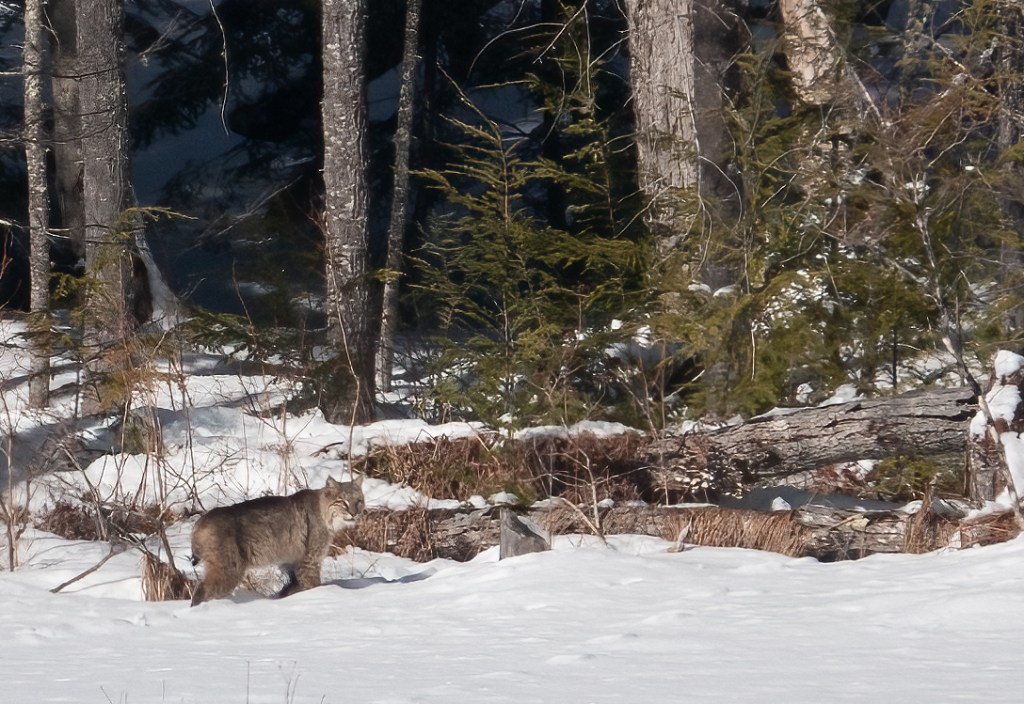
My first ever bobcat, Lynx rufus. I took a few shots from very far away. It was barely moving, carefully placing one silent rear paw in front of the other:

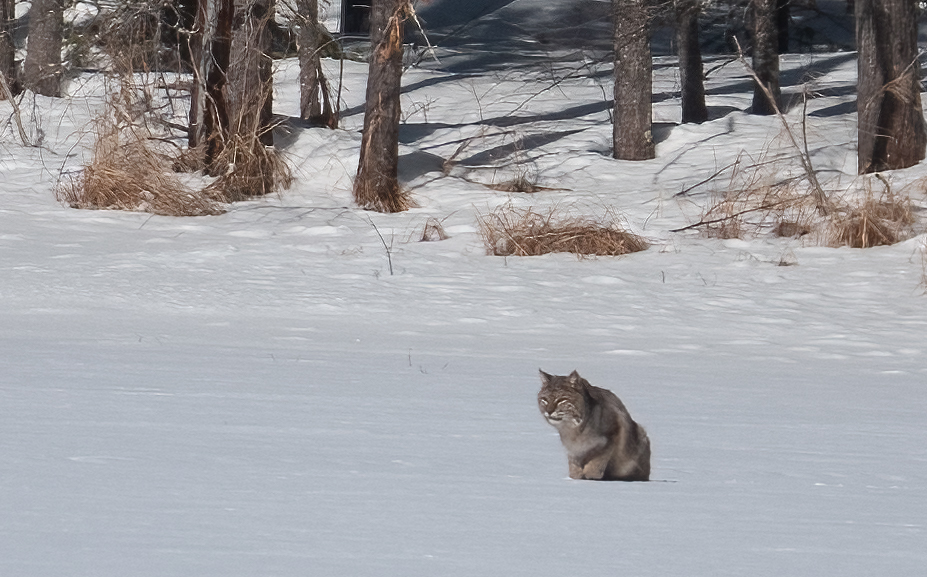
then settling into a crouch:

I wasn’t sure, but I wondered if it was preparing to stake out the otter hole. I was a very long way away, so I moved a little closer. From my new angle, I could see that it was now right next to the otter hole (the disturbed snow to its left):

But it smelled me or heard me or saw me,

and took off, just letting me snatch a short video:

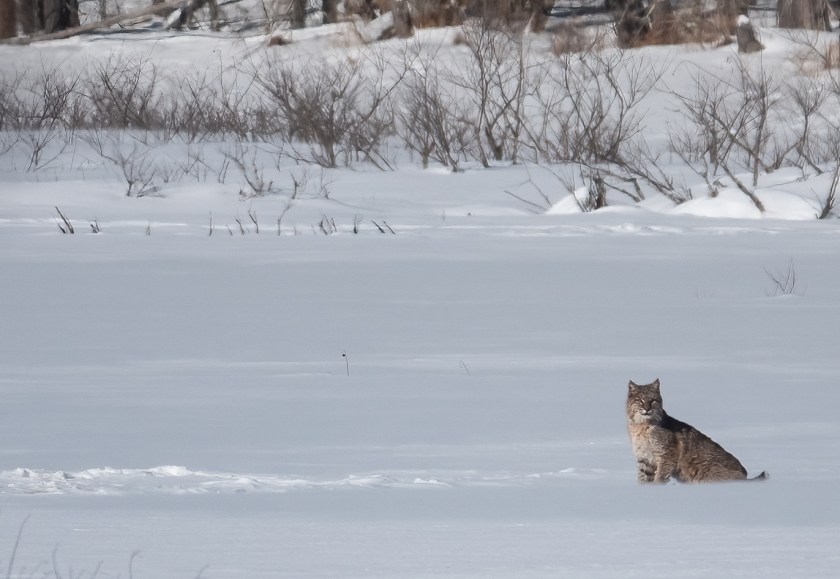
It stopped on the edge of the woods, and looked back reproachfully:

Three minutes of a privileged glimpse into its world.

I have since tried to discover if bobcats hunt otters. There is the occasional reference to otter remains being found in the stomach contents of bobcats, but that’s about it, and these could easily have been either carrion, or very young otters. An adult otter would be a formidable prey, being much the same weight as a bobcat. Look at this video of a bobcat recoiling from an angry otter: https://www.youtube.com/shorts/TJZlFwmdo64

Their main food is snowshoe hares, but they do very occasionally eat fish, so they may have been trying to steal the otter’s catch. See Newbury and Hodges 2018 for more on their diet. Bobcats’ feet don’t cope well with deep snow (unlike Canada Lynx), and we have had plenty of snow this winter, at the northern edge of their range, so my bobcat may be very hungry indeed.

Scott Lindsay, Regional Wildlife Biologist at the Maine Dept. of Inland Fisheries & Wildlife, agrees that it was unlikely to be hunting otters, and he tells me that bobcats are curious, and it was probably just checking things out.

PS Maine has a total bobcat population of around 1500, and a female’s home range is about 23 square kilometers. So it is not surprising that they are hard to see! There’s some useful,information here, including how you tell the difference between a bobcat and a Canadian Lynx.

https://www.maine.gov/ifw/fish-wildlife/wildlife/species-information/mammals/bobcat.html