Got the blues

Western Maine is a low key, laid back sort of place, not flashy or full of itself. But these three birds seem to have escaped from exotic lands, flaunting their azure plumage in our Northern forests.

My first is (I think) an Eastern Bluebird, because he had a rusty belly when he flew up into a tree:

Eastern Bluebird

I do concede however, that I could be wrong: maybe he too is …. ..the same as my next bird.

My second is a male Indigo Bunting, Passerina cyanea, singing from the treetops on June 9th. This is completely typical: they sing from the highest point they can find, all summer.

DSC07066

There is a recoding and rather a good description of their song and how they learn it here:

https://www.allaboutbirds.org/guide/Indigo_Bunting/sounds

I am so pleased someone named it the Indigo Bunting instead of the Blue Bunting: how often do you get to use the word indigo, unless you are reciting the colors of the rainbow, or are into natural dyes. And its Latin name is cyanea, after another great color word, cyan! When they are just fledged, the blue just peaks through their beige feathers, but this week this teenager was on the same tree that his father liked, two months ago, so I can  be confident of its identity.

Juvenile indigo bunting

My third is the American Bluejay, Cyanocitta cristata, noisy, arrogant, and a year-round resident up here.

Bluejay

He has a fine crest, not raised in this photo.

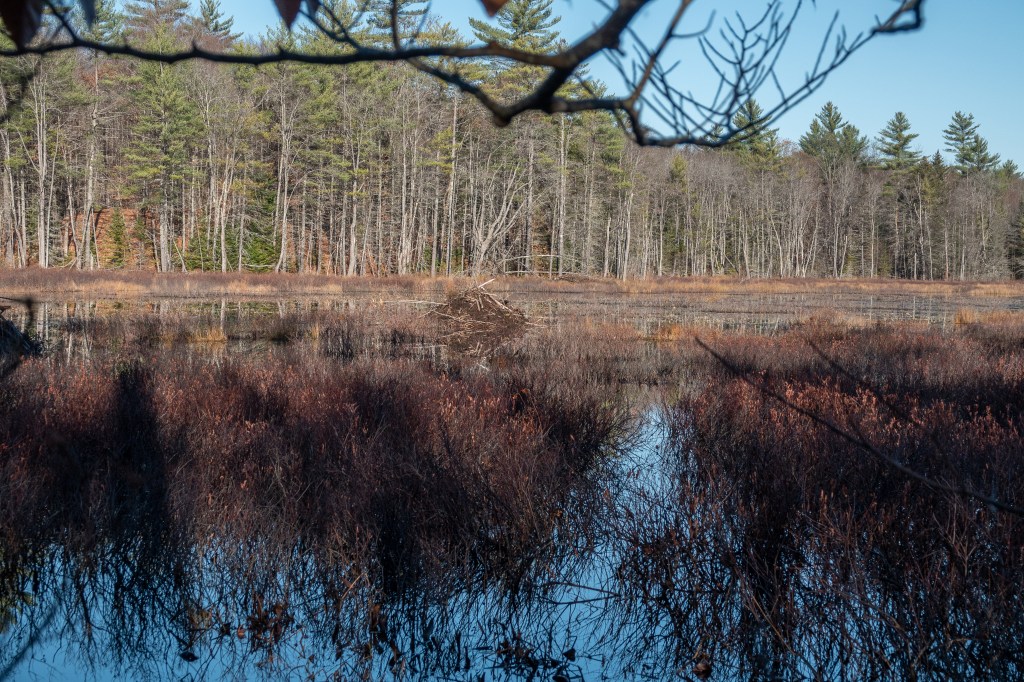
One last blue vision: a wild native Blue Flag Iris, Iris versicolor. There was a big clump in the swampy area at the edge of my beaver pond on June 10th, and although they are purplish blue, I consider them as qualifying for this post by virtue of their name:
Blue flag iris, I. versicolor

Look close, and  marvel:

Blue flag iris, I. versicolor

For me, these birds and flowers are a cure for the blues.

Beaver buffet

There was so much to tell you about in the spring that I saved this post to send during the dog days of summer, and here we are…

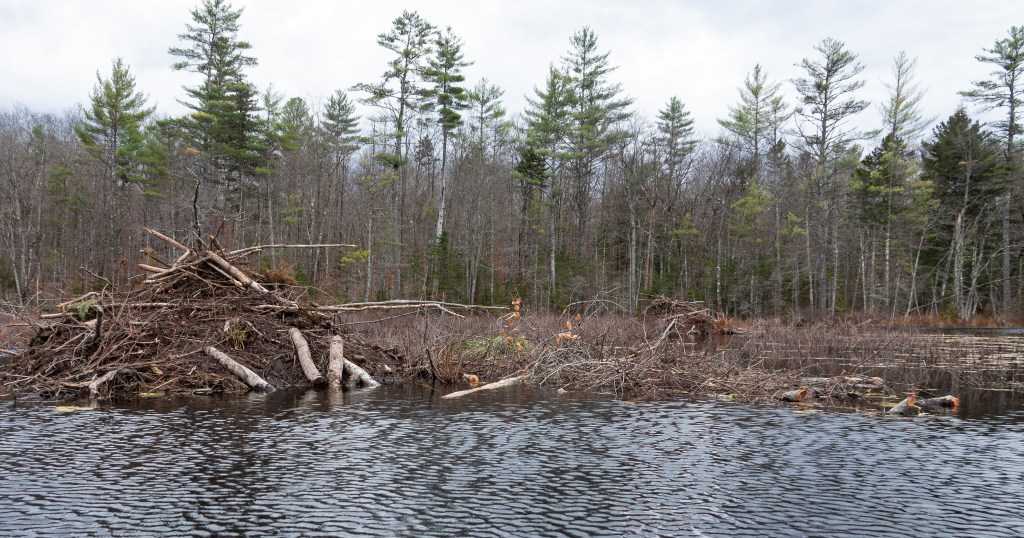
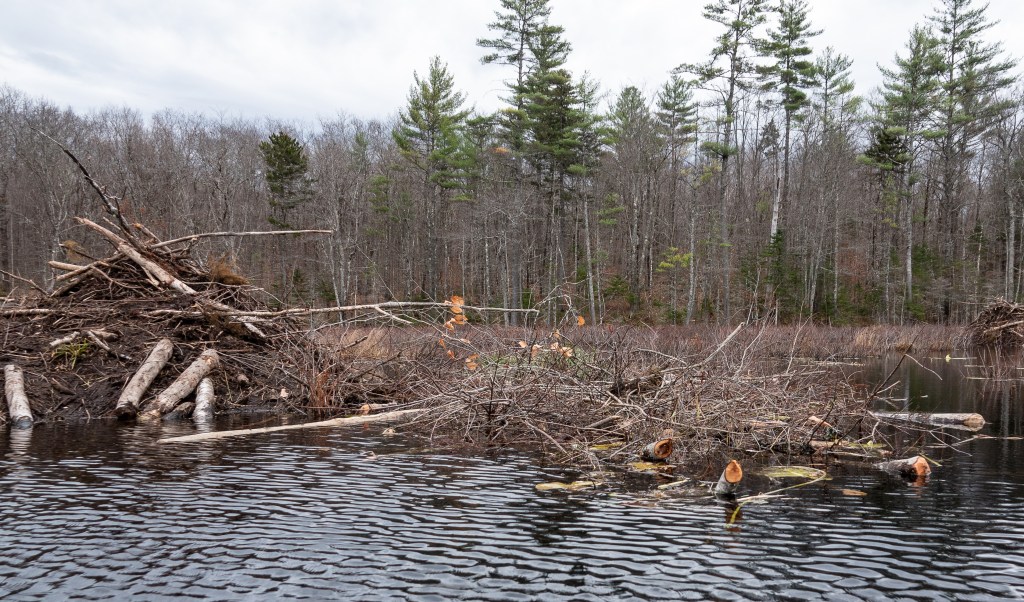
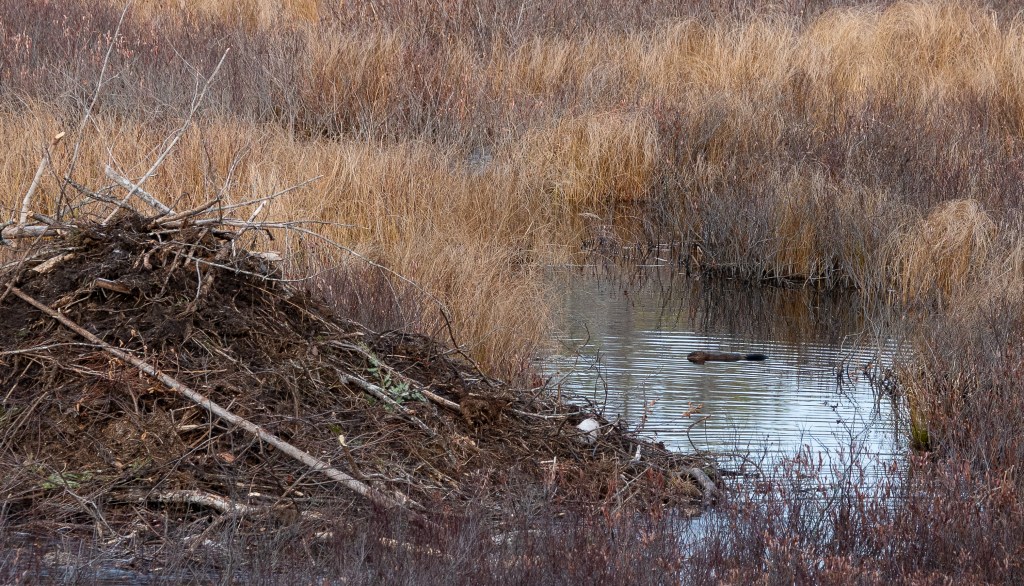
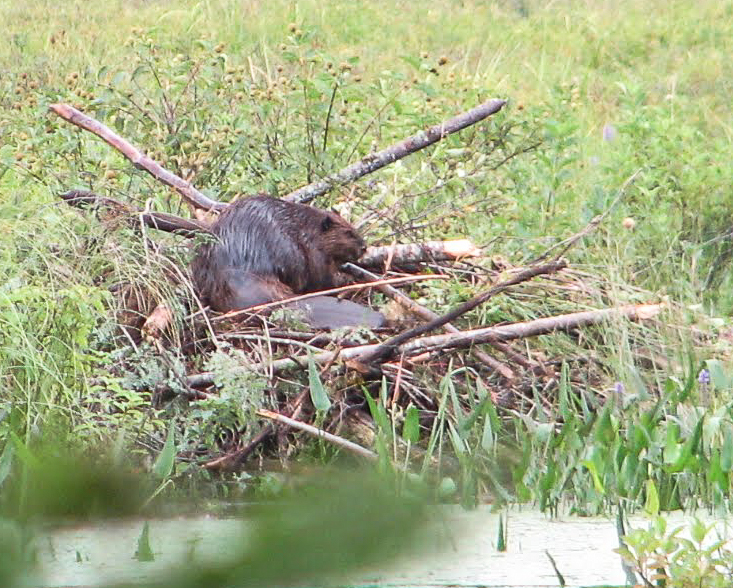
In spring, I expect to see beavers eating green stuff, but this one was still enjoying his hemlock twigs. He or she took it to the shallows, and delicately nibbled at the bark, or rather the cambium beneath the bark.

beaver on granny's pond

His technique reminds me of my grandson eating an ear of corn:

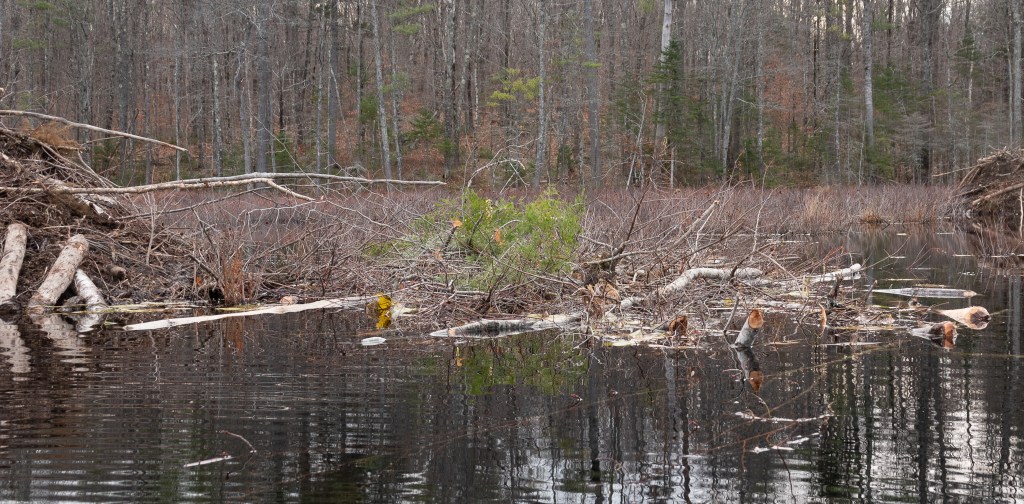
You can find the by-products all round the pond: sticks cut into a convenient length for moving and eating later (think packed lunch), and then denuded of their bark.

beaver on granny's pond

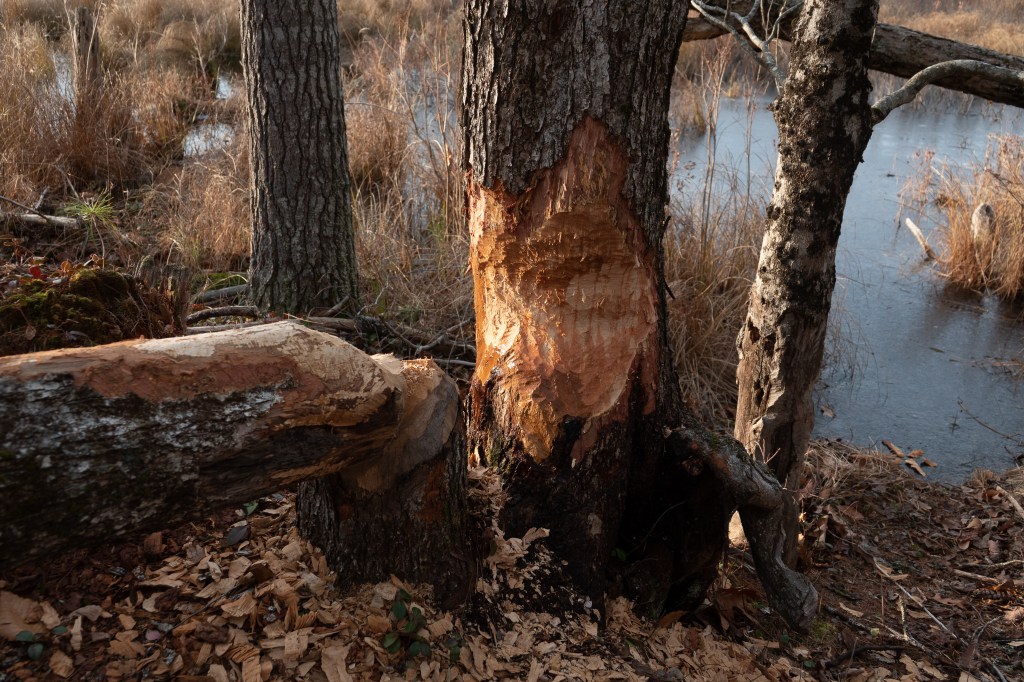
Sometimes they just eat it on the tree, and leave the tree standing:

beaver

In a few days he was back, in the same place, this time with a large white slice of what I think was the root of a cattail (called bulrush in England). These roots (or rather rhizomes) are nutritious, with roughly the protein content of maize or rice.

Beaver eating cattail root

You can see how dexterous they are, though of course they do not have opposable thumbs:

Beaver eating cattail root

The roots of aquatic plants are one of their favorite foods at this time of year, and you can see them floating around the edge of the pond, the result of their depredations.

Spatterdock root eatern by beavers

In this video you can hear him chewing, above the background noise of the stream cascading over the dam:

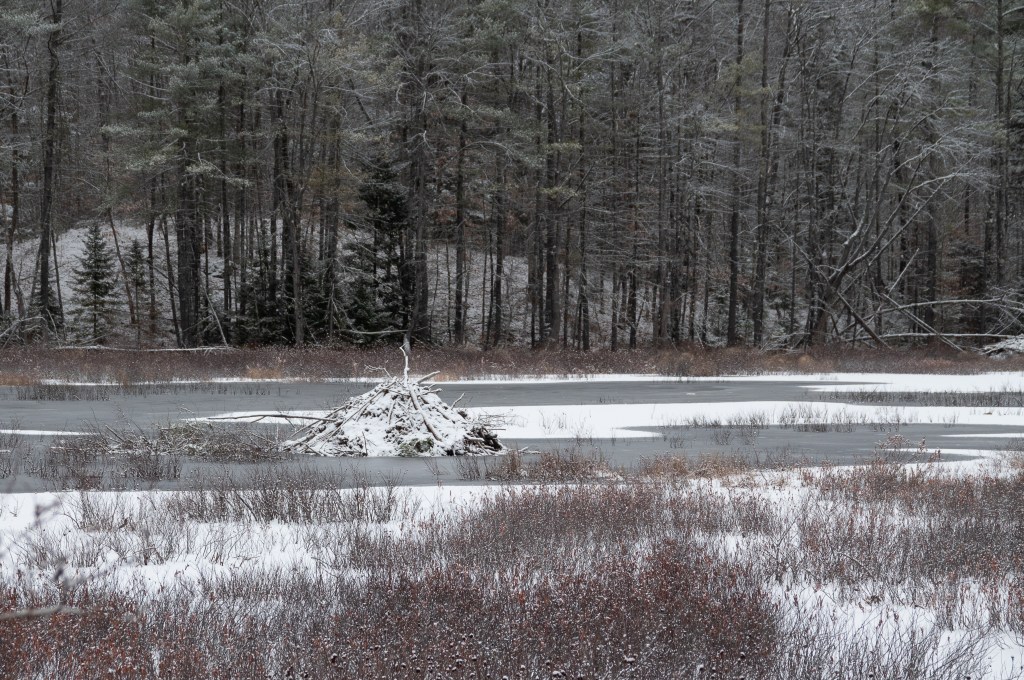
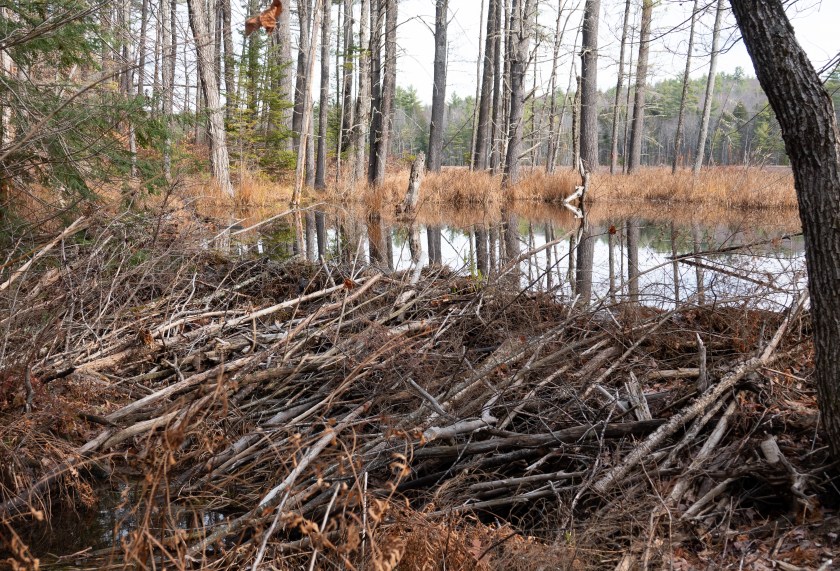
I have not seen him for many weeks, but I am hoping he returns in the fall, getting his lodge and his food supplies ready for winter. Watch this space.


The gardener’s nemesis

Not every post can be about elegant swallows. Sometimes what catches my attention is less obviously appealing.

My father hated greenflies, because they attacked his beloved roses. Greenflies are a type of aphid, and here in Maine we have a number of different species, in a rainbow of colors, including the bright yellow Oleander Aphid, Aphis nerii, common on milkweed:

aphids

and these ruby red ones, probably Uroleucon nigrotuberculatum.

DSC00188

If you can suspend your distaste, they turn out to be rather interesting.  They reproduce partly by parthogenesis: the adult female produces live young, clones, without the need of a male. In the autumn, they also reproduce sexually: rather like modern humans, there is no one right way.

Although most aphids don’t have wings, as you can see in the photos above, if the neighborhood gets too crowded the female cleverly gives birth to some offspring with wings, and these then fly off to populate a new plant instead of adding to the throngs on the current one.  The biggest one below has wings:

DSC00170

If you are a gardener, you are no fan of aphids, but if you are an ant, your attitude is entirely different! Some species of ants actually farm aphids for their honeydew:

Ants farming aphids

The aphid sucks sap from the plant, sometimes in huge quantities. Because it can’t digest it all, it excretes a sweet sugary liquid, called honeydew. The ants use their antennae to stroke the aphids, which encourages the secretion of the honeydew, which the ants then drink. The aphids below are tiny, but just visible on the leaf stalk, and the top ant is reaching out to stroke one:

aphids

The aphids benefit because the ants protect them from predators such as ladybugs, and also move them from wilting to healthy plants. In some species, the ants will store aphid eggs in their nests through the winter and then put them back on the plants in the spring. This partnership is an example of what biologists call mutualism, since both parties benefit from the arrangement.

The spiky cornicles that project from the abdomen are used to exude pheromones for defense purposes; the honeydew is, rather off-puttingly, exuded from the rectum!

If you have read this far, congratulations: you too are obsessed by natural minutiae.

Learning to swallow

I started this blog three years ago, with photos of tree swallows nesting in an old martin house:

https://eyesonthewild.blog/2017/07/23/first-blog-post/

But tree swallows are really supposed to nest in dead trees, hence the name. This summer, on June 21,  they were nesting by my big beaver pond, something I hadn’t yet noticed, but luckily Mary Jewett’s sharp eyes spotted it. See the holes in this dead tree?

Tree swallows

The parents come and go with food, wedging themselves into the smallish holes:

DSC08824

And squeezing out again once the food has been delivered:

DSC08828

Sometimes a nestling sticks their head out, so the adult takes the opportunity to ram a large dragonfly right down her offsprings’s throat.

DSC08807

The youngster seems a little uncertain how to handle this rather large dragonfly :

DSC08808

But he gets a grip, and the mother checks before leaving:

DSC08811

And the nestling bravely gets it down:

DSC08815

No messing about pretending to be an airplane for 5 minutes when feeding your toddlers: just force it down their gullets.

DSC09040

Maybe human parents should pretend to be swallows, not airplanes?

Much of the feeding is done in a brief encounter while the adult remains more or less on the wing. The chick gets ready:

DSC09023

and the food is transferred:

DSC09016

Occasionally they take a well-earned rest:

DSC08883

A Bullfrog and his Water Shield

Beauty is in the eye of the beholder. This is an American Bullfrog, looking as though he is waiting for his girlfriend, complete with floral offering.

American Bullfrog

He sounds like this:


The tiny pink flower belongs to a plant named after the shape of its leaf, Water Shield, Brasenia schreberi,

DSC00385

On my  pond  it covers huge areas at this time of year:

Water Shield

The unimposing flowers repay closer scrutiny. Water Shield is pollinated by the wind. The flowers have a two-day blooming period. On the first day, the functionally female flower extends above the surface of the water and exposes the pale pink receptive stigmas.

Water Shield

The flower then recedes below the water surface and on the following day re-emerges as a functionally male flower. It is taller now, and the darker red anther-bearing filaments are extended beyond the female carpels:

Water Shield

The anthers release the pollen, presumably to find a younger female flower, and the flower is then withdrawn below the water where the fruit develops.*

As you can see, they have a clear jelly all around the stalk, which persists as they grow taller. The underside of the leaves is also coated with it. This may be to deter grazing snails, though it doesn’t stop the beetles that eat the leaves from the top!  Despite this jelly, or maybe because of it, the leaves are a delicacy in China.

* This excellent description is paraphrased from Wikipedia. Don’t you love/hate the fact that even in the plant world, older males seek younger females, even if it is only the difference one day makes?

Butterflies: seeing double

Provided one doesn’t feel like a peeping tom, photographing butterflies is often easiest while they are mating. It is a prolonged process, indeed sometimes they fly around while conjoined, but not surprisingly they prefer to stay put.

This summer I have seen three species that I haven’t identified before.

First, the Viceroy, Limenitis archippus (or Basilarcia archippus). Perfectly named, because it is a deliberate copy of the Monarch. Monarchs are poisonous, but Viceroys are not. Their nearly identical color and patterning deceives birds into leaving them alone too.

Viceroy

The Great Spangled Fritillary, Speyeria cybele,  has silvery dots on the underwing, alluded to in its common name. I think it looks like a little girl’s party dress.  They are seen here mating in late June, but they then disappear, and reappear to lay their eggs in late August or September on violet leaves.

Great Spangled Fritillary

The Inornate Ringlet, Coenonympha tulle inornata,  has a very unflattering name, and I can’t work out why. Possibly because the eye marking on the wing is faint instead of dramatic??

Inornate Ringlet

In this era when the climate is changing, we expect to find species moving northwards, but this butterfly has been moving south from Canada. The first ones in Maine were seen in 1968, and now they are abundant all the way down to Massachusetts.

Finding each other out there in the fields and forests isn’t easy, but these six have done it.  Happy days.


Prickly encounter

The Porcupine by Ogden Nash

Any hound a porcupine nudges
Can’t be blamed for harboring grudges.
I know one hound that laughed all winter
At a porcupine that sat on a splinter.

Porcupines are not popular around here, because they chew on wooden structures, and in New England the houses and barns are built of wood. They are largely nocturnal, so I don’t see them very often. But the other day I emerged from the woods with the dog, who luckily was on a leash, and in the field, back to us and quietly munching, was a sizable porcupine.

porcupine

The dog was frantic to go and make friends, not at all a good idea, but I wanted to get closer too, to take pictures, so I slowly moved in, and the porcupine either didn’t know or didn’t care that I was there. They have dreadful vision, but a good sense of smell, so here it is realizing there might be something different in the air (me and my beagle):

porcupine

Eventually, some walkers came up the road, the porcupine turned away from them and towards me, and realized that retreat was wise.

porcupine

They don’t run, they just waddle, and then they erect those spines in a great halo:

porcupine

porcupine

They do not shoot their spines, but they detach very easily if the barbed end gets stuck in an unlucky dog. Their defense strategy, which often means standing their ground, turning their back and relying on those spines, doesn’t always work. I once saw one in the middle of a dirt road. He stood stock still, and tried this strategy on my truck, but the truck was unimpressed.

They can have up to 30,000 quills on the back and tail, but the face and belly are free of spines, leaving them vulnerable to fishers and coyotes. The ferocious claws enable them to climb trees, and in the winter they eat mainly hemlock needles and bark, and will climb high to do so.

porcupine

Some years ago walking in my back woods I met this baby. The mother must have been off foraging, and had left it on a fallen tree, so I got very close, and it was quite quite charming:

porcupine

PS Unlikely though it may seem, spines have evolved more than once. New World Porcupines, like this Erethizon dorsatum, have evolved their spines entirely independently from Old World Porcupines, though both are rodents. And hedgehogs are even more distantly related, not being rodents at all.  The Australian Echidna is a monotreme, an egg-laying mammal. And then there is the Porcupinefish… A lovely example of convergent evolution.

My Lady’s Slippers

I saw my first one of these orchids about 45 years ago, but still every time I can’t quite believe they really grow in our northern forests:

Pink Lady's Slipper orchids Slipper

They are 6-12ninches tall, and each flower is up to two inches long.  The pouch is a single petal, the labellum, grossly enlarged and modified. In the photo below, a tiny moth stretches out its minuscule proboscis towards the nectary, but it can’t quite reach.

DSC06984

The officially named Pink Lady’s Slipper Orchid, Cypripedium acaule, can sometimes be white instead:

Pink Lady's Slipper orchids Slipper

The root of lady’s slipper was used as a remedy for nervousness, tooth pain, and muscle spasms, and as a sedative.  These sound to me like traditional “women’s complaints”, and I wonder if there is an actual effective compound in the roots, or if it was all because of the lascivious shape of the flower, rather as some cultures believe that long rigid rhino horns ‘cure’ impotence. Does anyone know?

There is also a different yellow species, Cypripedium calceolus, which is even more spectacular:

IMG_0550

The twisted side petals remind me of the payes sidelocks as worn below by Michael Aloni, star of Shtisel:

600e2abd88b8c576322238bd1d1ea12e

These yellow orchids do grow wild here, but I photographed these in the wildflower garden at Halls Pond Gardens in Paris, Maine (yes, really), and I’d like to dedicate this post to the memory of the delightful, modest and hugely knowledgable Mark Brandhorst, creator of the garden, who tragically died unexpectedly this spring. All these orchids are hard to grow, but he had the greenest of fingers.

P.S. Some more detailed information from the US Forest Service website, By Patricia J. Ruta McGhan:

” In order to survive and reproduce, pink lady’s slipper interacts with a fungus in the soil from the Rhizoctonia genus. Generally, orchid seeds do not have food supplies inside them like most other kinds of seeds. Pink lady’s slipper seeds require threads of the fungus to break open the seed and attach them to it. The fungus will pass on food and nutrients to the pink lady’s slipper seed. When the lady’s slipper plant is older and producing most of its own nutrients, the fungus will extract nutrients from the orchid roots. This mutually beneficial relationship between the orchid and the fungus is known as “symbiosis” and is typical of almost all orchid species.

Pink lady’s slipper takes many years to go from seed to mature plants.  Seed-bearing harvest of wild lady’s slipper root is not considered sustainable. Pink lady’s slippers can live to be twenty years old or more.

Pink lady’s slippers also require bees for pollination. Bees are lured into the flower pouch through the front slit, attracted by the flower’s bright color and sweet scent. Once inside, the bees find no reward, and discover that they are trapped, with only one point of escape. Inside the pouch, there are hairs that lead to a pair of exit openings, one beneath each pollen mass. The bee must pass under the stigma, so if it bears any pollen from a visit to another flower, it will be deposited before picking up a fresh load on the way out.”

The fifth and final phoebe installment: Launched

As they got bigger and bigger, it was hard to see how they could fit into the nest.

DSC08346

It got very hot, and the exhausted mother joined them for a rest:

phoebe chicks

One evening, two of them were sitting right on the edge of the nest.

phoebe chicks

and the next morning, 14 days after I first photographed them, instead of five there were three,

Phoebe, just fledging or fledged today

Ominously, underneath the nest there was a sizable garter snake, attracted  by the smell of their droppings, and living in hope that one would fall and be easy pickings.

At 11.45am I came back from the post office, hands full, no camera, and as soon as I opened the door three flustered panicked fledglings took off over my head, milled around under the eaves, and then were gone.  The parents immediately appeared, calling frantically, but the nest was empty.

Phoebe, just fledging or fledged today

And then I saw the snake, no bulge in his middle, so they all got off scot-free. An hour or so later, this fledgling was perched in the branches of a nearby weeping willow sapling, none the worse for wear.

Phoebe, just fledging or fledged today

I hear them around, and the conscientious parents should now be feeding the fledglings for a while longer.

I will miss them.

Phoebes 4: seeing inside the nest

[If you are getting tired of my phoebes, there is only one more post to go, and then I will not show you birds for a week or two!].

By now the chicks are getting bigger, and true feathers are starting to come in. It looks as though all five are still there.

Phoebe

Although the phoebes above the hanging basket tolerate my photography from the kitchen window, and the chicks are unable to escape my lens even if I am nearby, the adults don’t come to the nest if I am out in the open. The nest is under a little roof, so it can’t be seen from a distance, I have to get close. Copying the BBC Wildlife team, who always tell you something about how they got the footage, I thought I’d show you my amateur solution

I remembered a birder once telling me that a car made an excellent improvised hide.  So I parked my truck near the nest, rolled down the window, and sat quietly inside. For about ten minutes they were wary, but then they settled, and all the shots that show an adult on the nest were taken by this subterfuge. Here is the setup:

phoebe nest setupShe (or maybe he) brings in a choice morsel, like this grub:

Phoebe

or this dragonfly:

Phoebe with food

And then delivers it to her chick:

Phoebe

Deliveries are fast, she rarely hangs around. This one was a big moth:

Phoebe with food

and it is delivered by air (the moth is blown flat against his beak by the speed of takeoff):

Phoebe with food

Deliveroo and Grubhub, you’ve met your match.