To keep you reading on…

I’ve just returned from a remarkable tripartite trip to Kenya. The first part was a search for the farm near Subukia and the goldmine in Kakamega where my grandfather farmed and prospected 100 years ago, and where my father grew up. The second part was two days in the Maasai Mara, and the third part was a week helping at Saidia Children’s Home in Gilgil. This is a nature blog, so I will keep quiet about the other parts of my trip, but I will just tell you that I did indeed find the farm and the goldmine, and, more importantly, that Saidia is a quite remarkable place, which deserves all our support. If you are interested, you can see more here: https://www.orphansupportleague.org
Back to nature. I only had a few days in the wild, and I will start with the most dramatic set of photos: amorous lions!
I was with Nemeria, my Maasai guide from Saruni Wild in the Mara North Conservancy. We saw two lions fast asleep:

He told me that a pair like this is there for only one reason: to mate, and that they go off together for 3 or 4 days, and mate “every ten minutes”! So, we settled down to wait. An hour later:

And then the romance unfolded over a grand total of 60 seconds, start to finish. First, a casual overture:

which was not rejected:

and indeed encouraged:
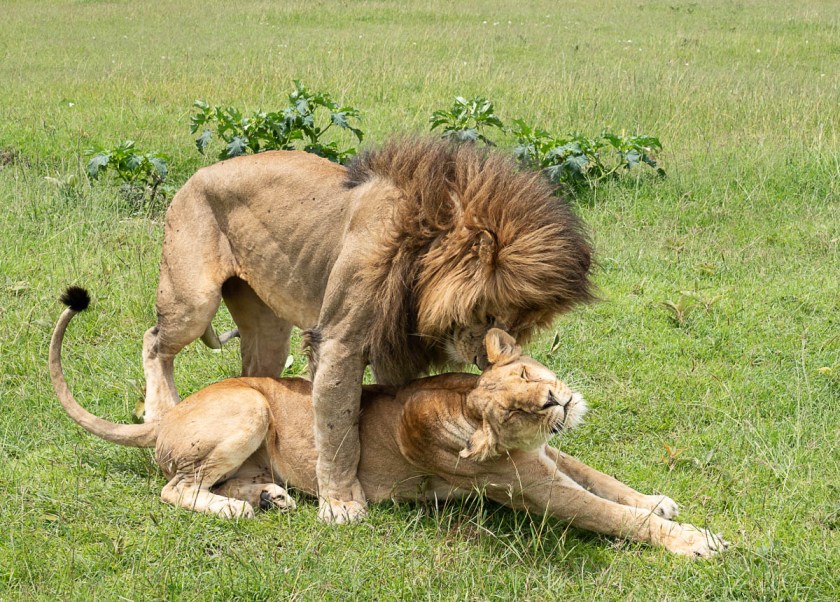
So he got going:

As he was nearly done, a bit of neck-biting:

A triumphant little roar:

And then, exhausted:

They went straight back to sleep:
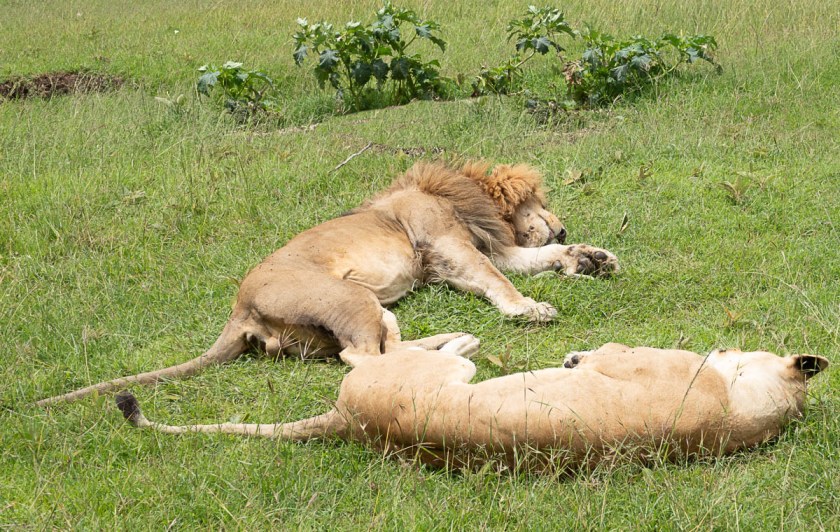
In case you are wondering whether it was all a bit voyeuristic, you can see that they could not have been less interested in our presence (which was just our one Land Rover, with only me and the guide in it, talking very quietly).
If you think she looks rather pained by the whole thing, lions have barbs on their penis that can be pretty uncomfortable for the female, so you can’t really blame her. Here is a description from the Zambia Tourist Board website:
“The penis is barbed and its withdrawal hurts the female who may twist around and attack the dismounting male. The pain is necessary for feline mating as it is the shock to her system that induces ovulation and permits fertilization.”
In this photo, just after he has withdrawn, you can see that she is in spasm:






 The young are carried under the mother’s’ bellies:



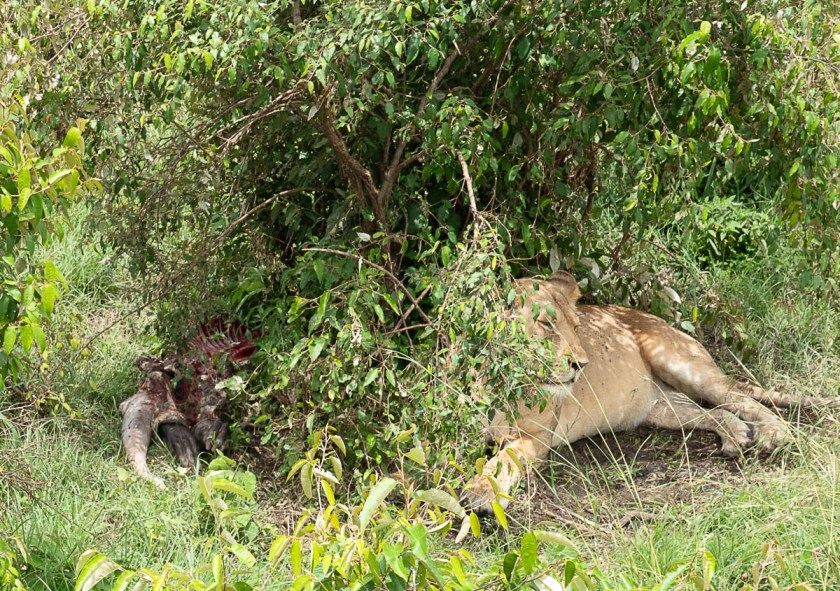
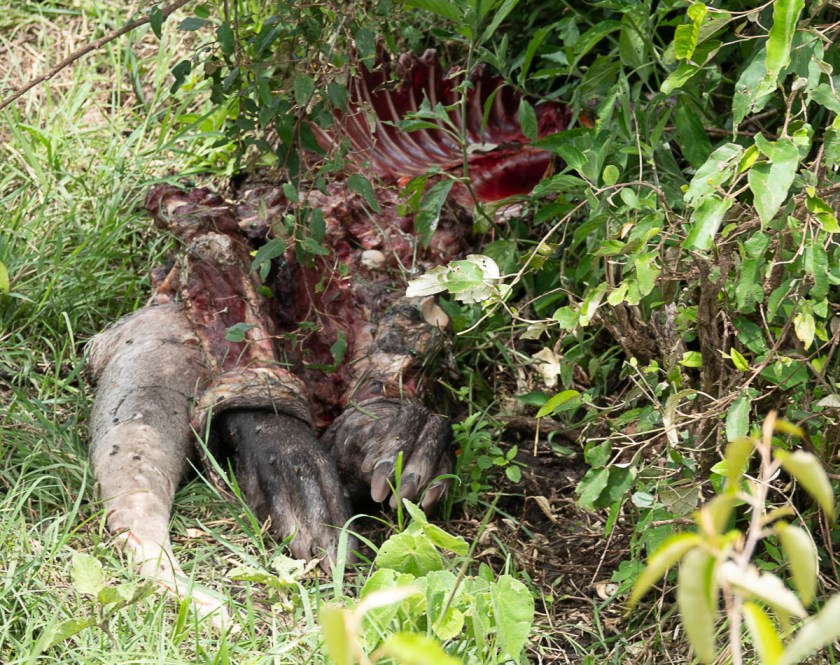 Nature really is “red in tooth and claw.”
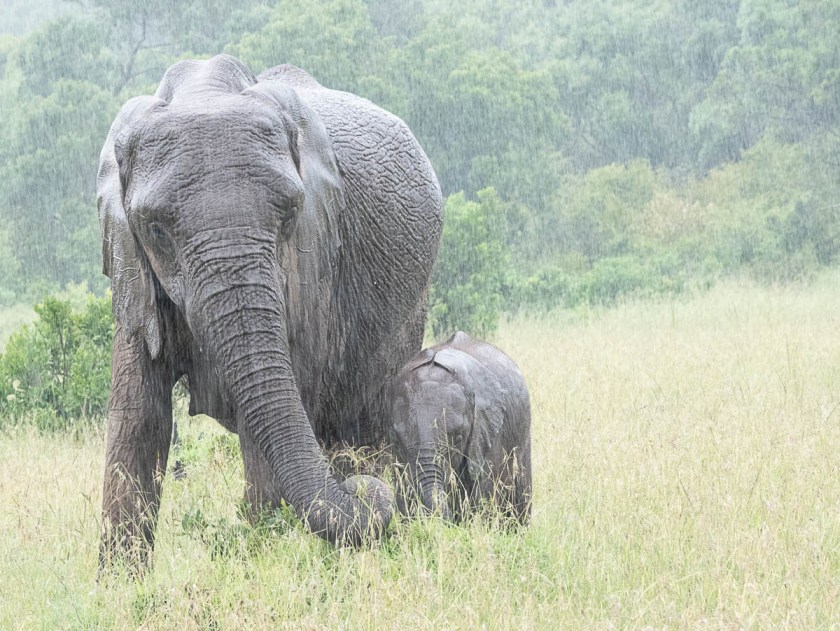 But at least the rains mean good long grass to eat: