The past few weeks have been prime time for nesting birds and their young. No matter what the adults eat, the diet of a baby bird is pretty much entirely arthropods – insects, moths, caterpillars, spiders, and the like – foods that are high in protein, perfect for growing bones and muscles.
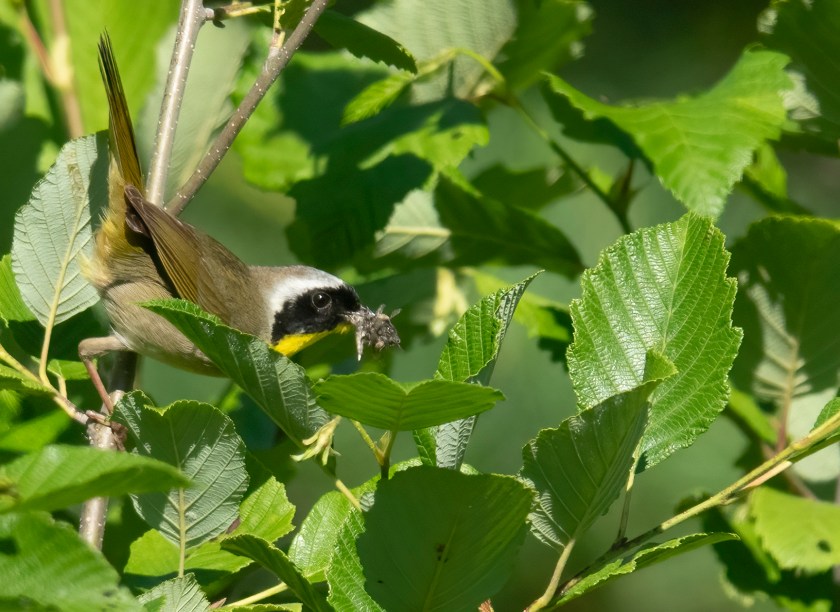
If a bird catches an insect for its own consumption, it usually eats it right away. So if it is carrying the insect around, the odds are high that it is on its way to feed its babies. A Common Yellowthroat male, with an unidentifiable insect:
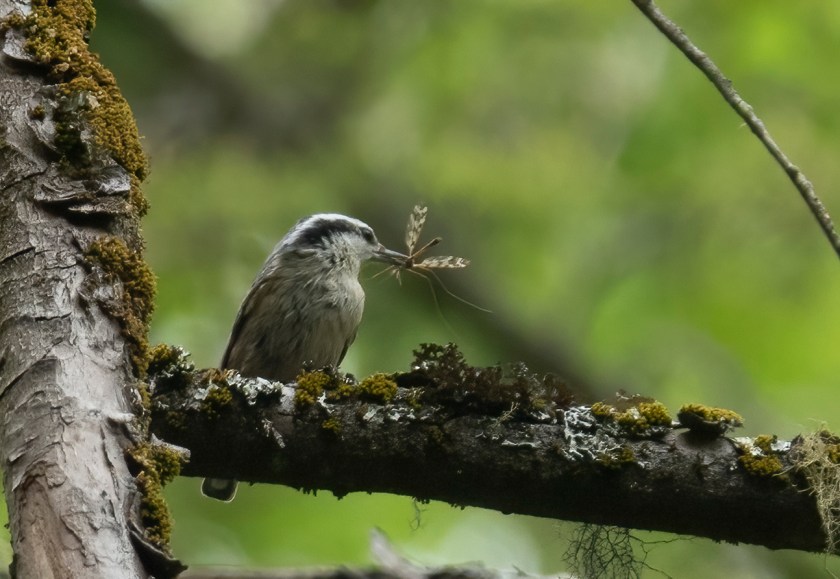
A female Red-breasted Nuthatch, deep in the woods, has caught a Cranefly. (The adults eat conifer seeds in winter, but arboreal arthropods in the breeding season). Only the male actually has a red breast!
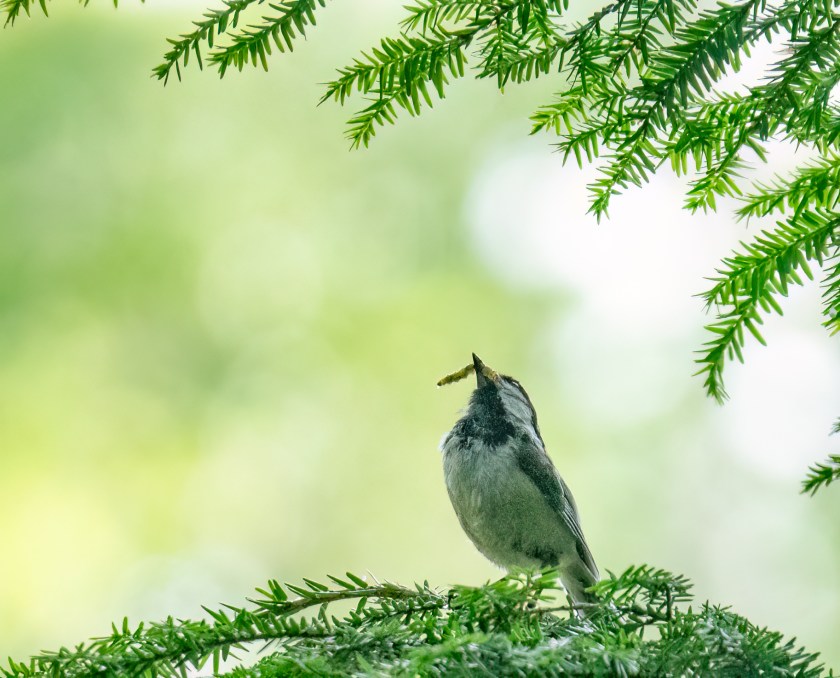
A Chickadee with a juicy caterpillar:
To see birds feeding the babies directly, you have to know where the nest is. The easiest way is to have a nesting box. These two Northern House Wrens came and went all day long with insects for the unseen young in the interior.
As they got bigger, they stuck their heads out in an importunate plea for food:

A sizable insect:
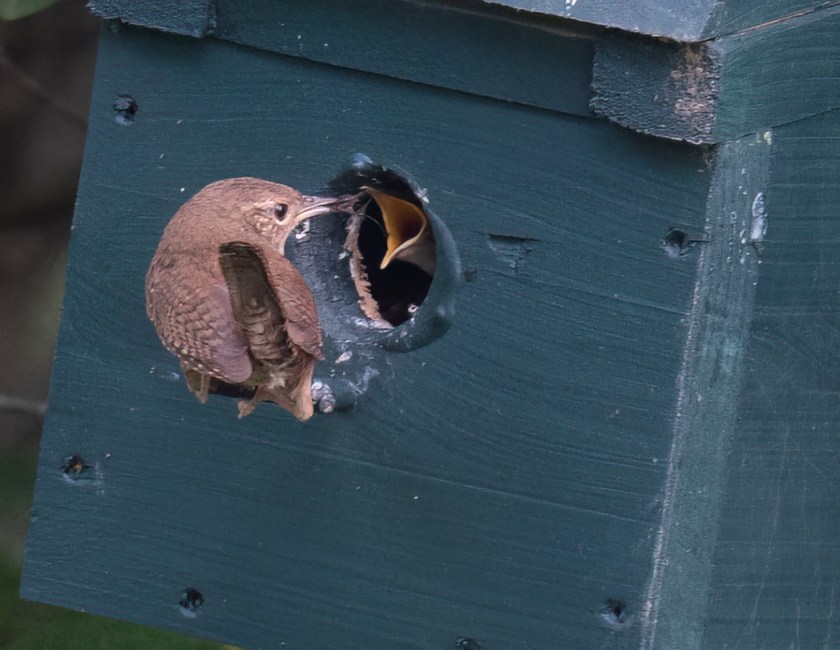
placed right in the baby’s mouth:
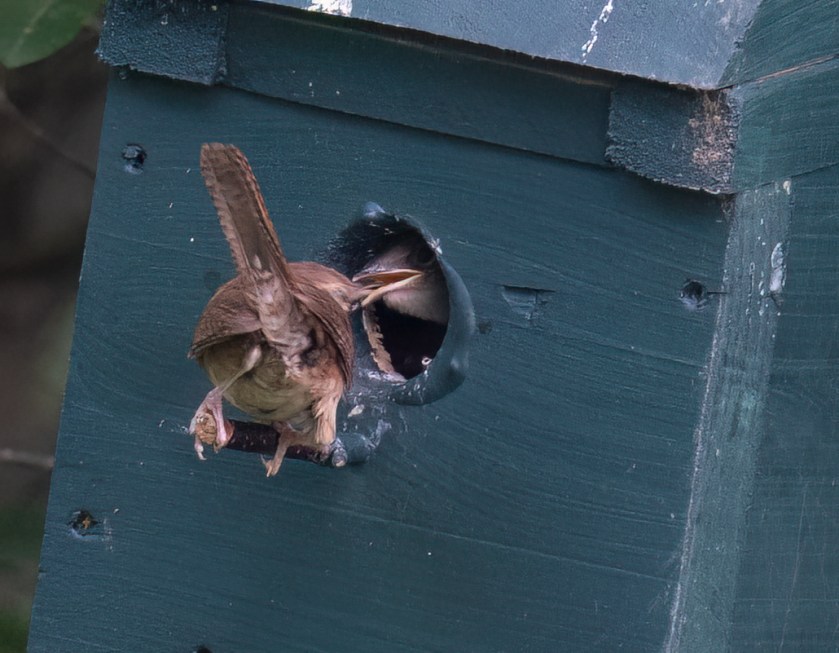
Occasionally, the two parents failed to coordinate, and arrived simultaneously, creating a traffic jam:
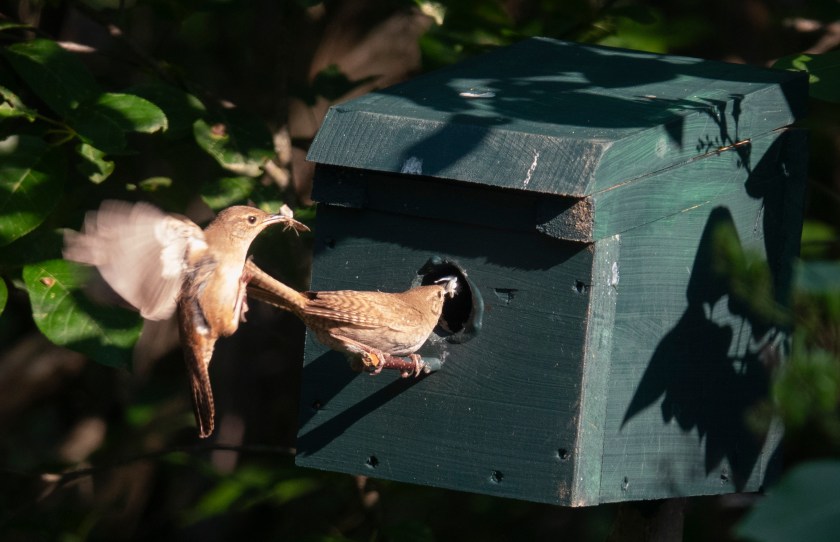
A polite dance ensued. ‘You first.’
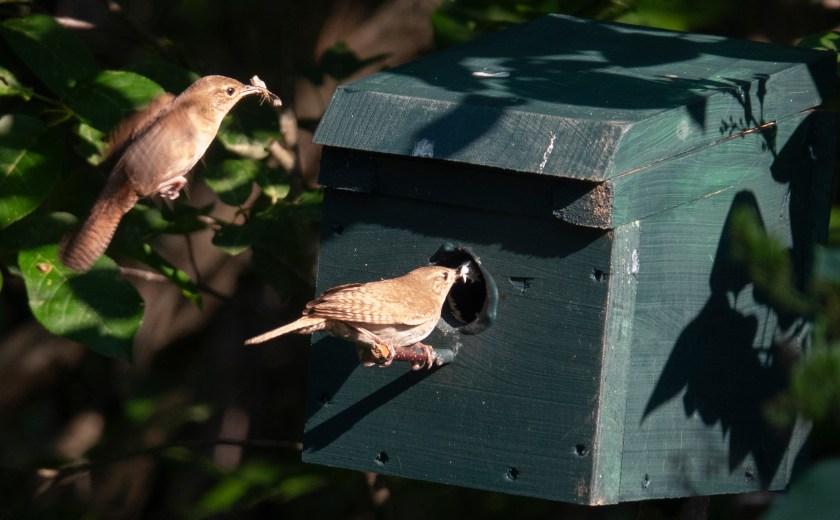
‘I’ll wait’:
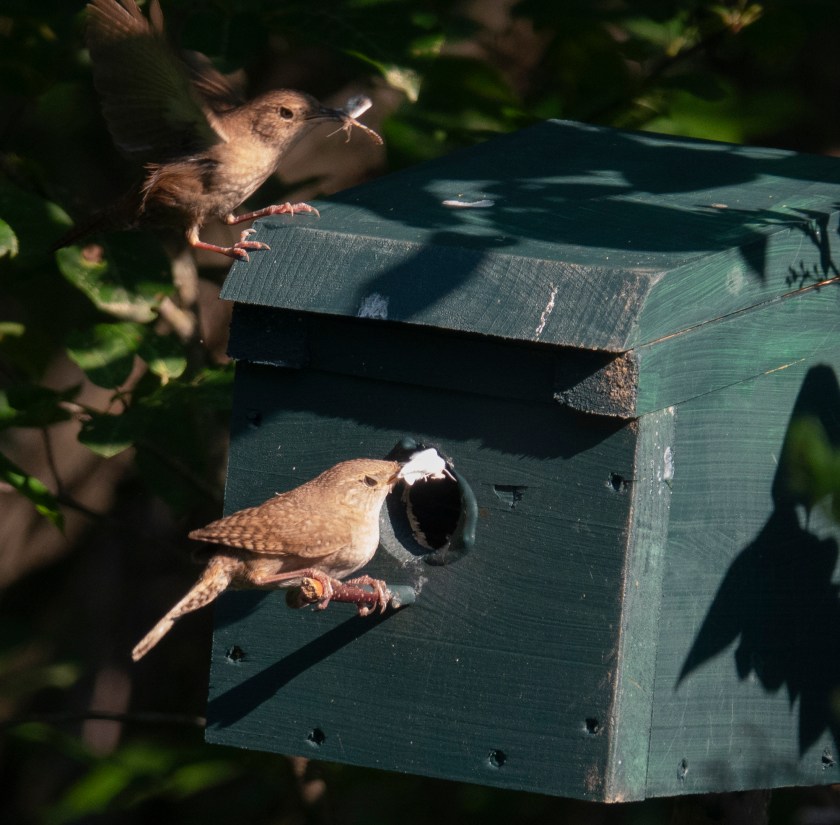
‘No, yours is bigger’:
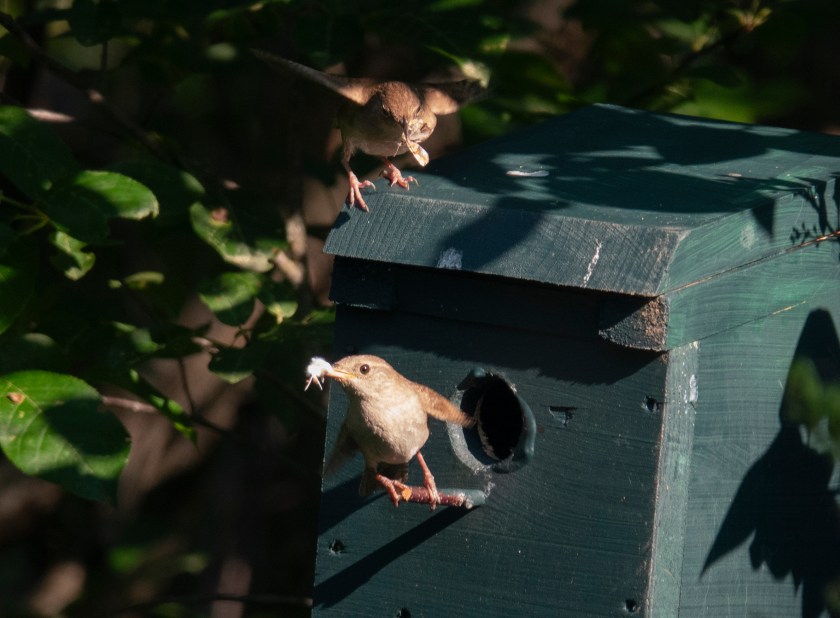
‘All right, here I come’:
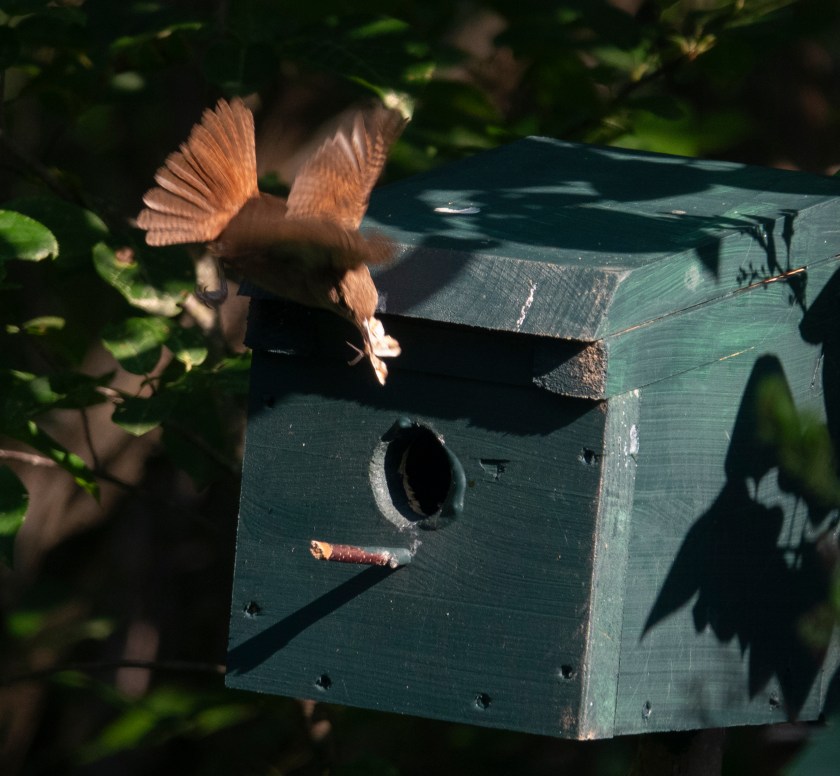
Eventually, the young will fledge, leaving the nest but staying nearby and still dependent on the adults for food.
Tufted Titmouse adults eat 2/3 insects, and 1/3 seeds and mast, but they feed their young with insects, including bees. This one is feeding its fledgling, about 30 feet up in the trees.
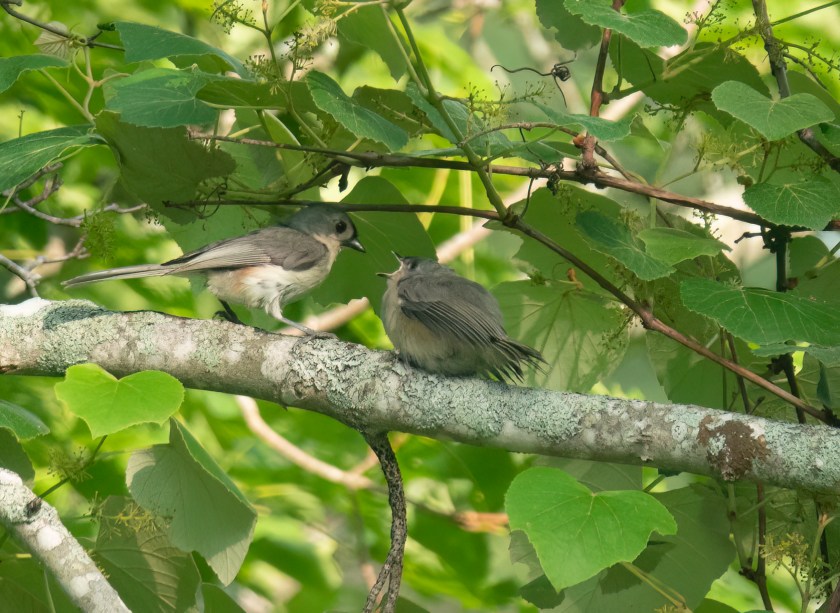
It has a bee or wasp of some kind:
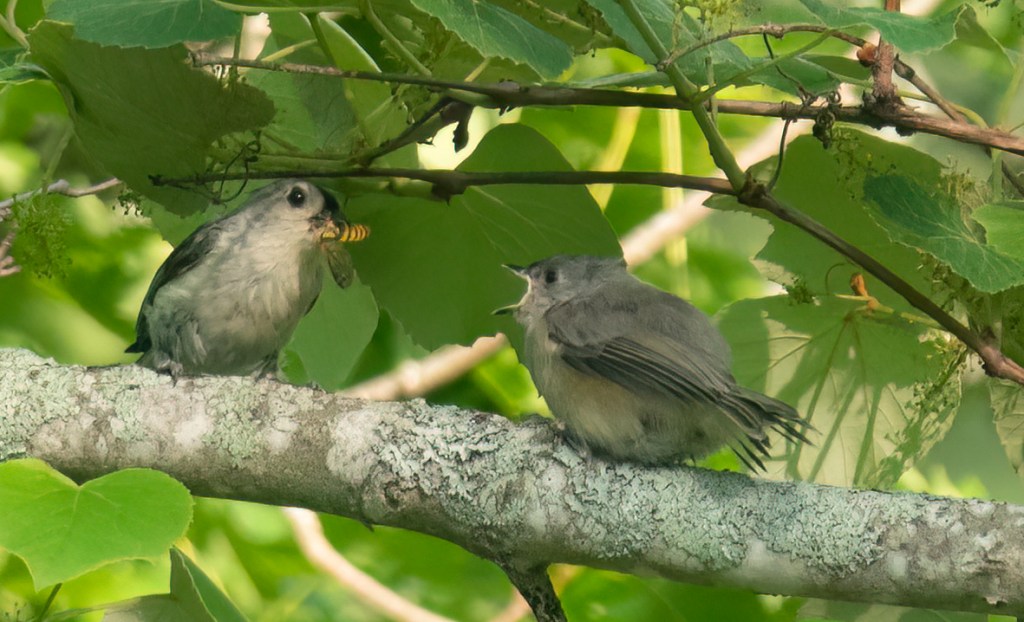
which the baby struggles to swallow unassisted:
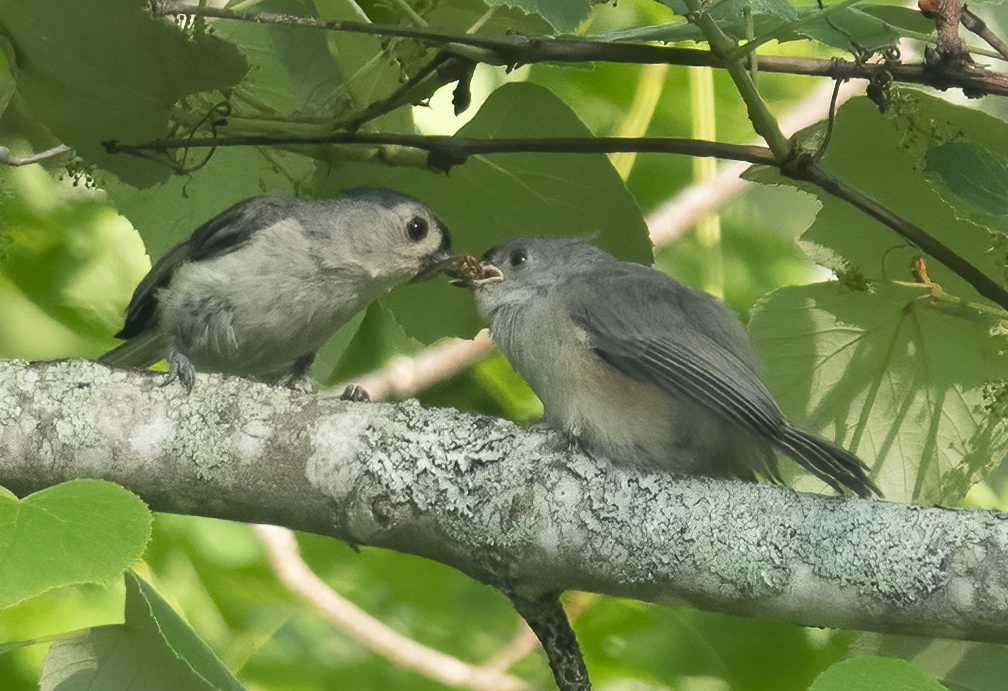
The next generation is well provided for.

