[My final Costa Rica blog post, I think.! Then back to Maine.]
On the Pacific side of Costa Rica, we saw two juvenile White Ibises (or if you prefer, ibes (Latin), ibides (Greek)!), Eudocimus albus. They were hunting for crustaceans in the shallows of a small river:
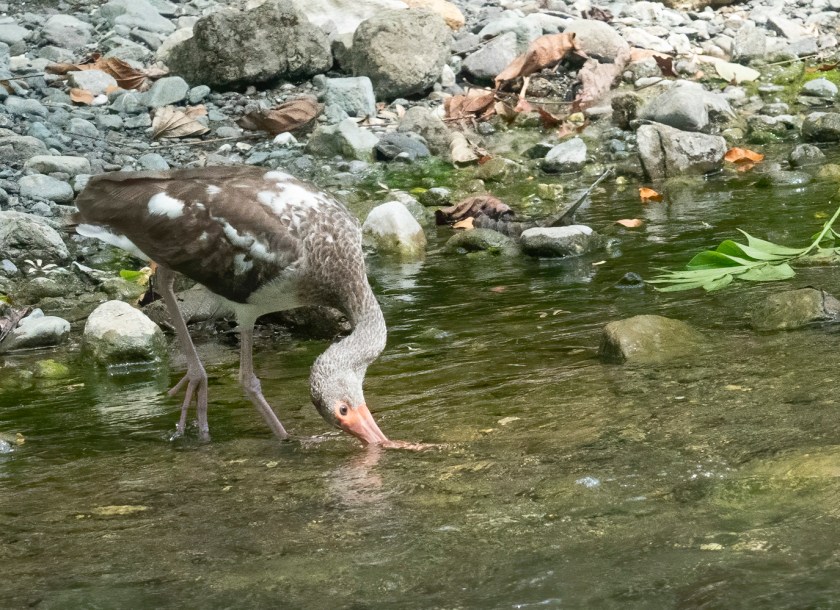
Their eyes focus on the tip of their beak, but they mostly forage by touch. The left-hand one found something:
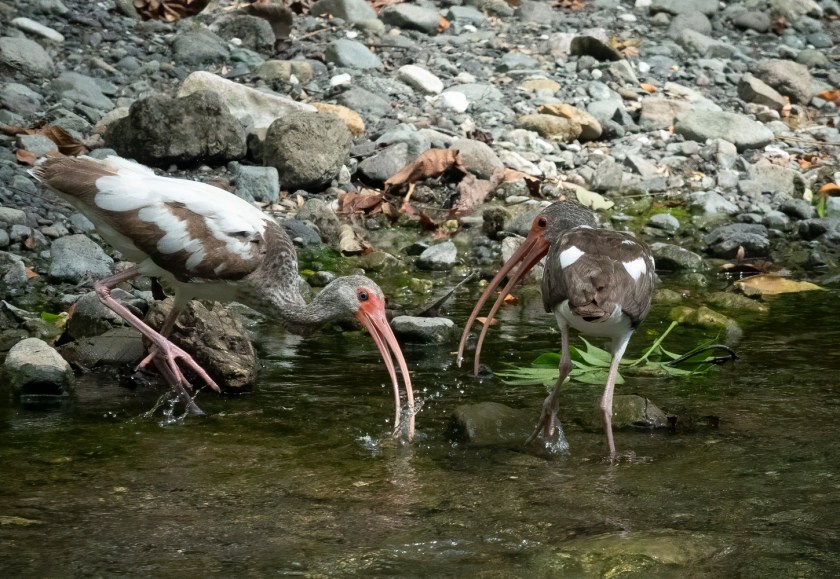
and a tussle ensued:
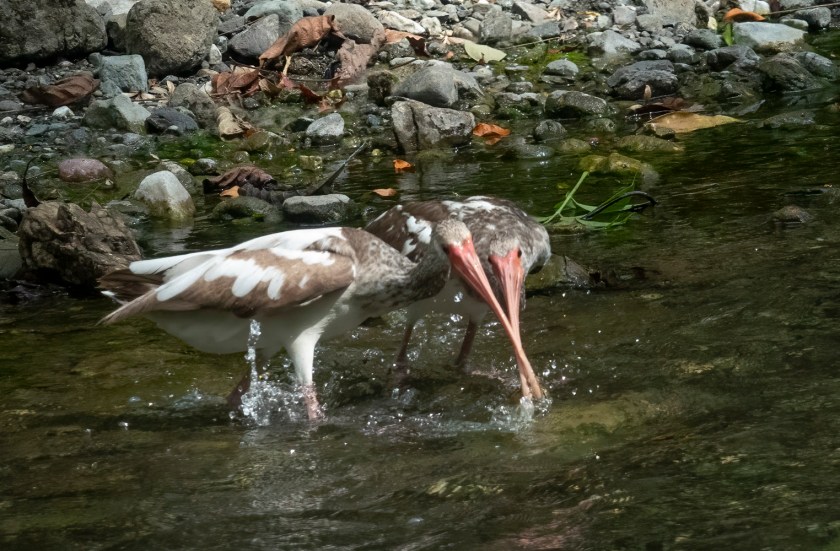
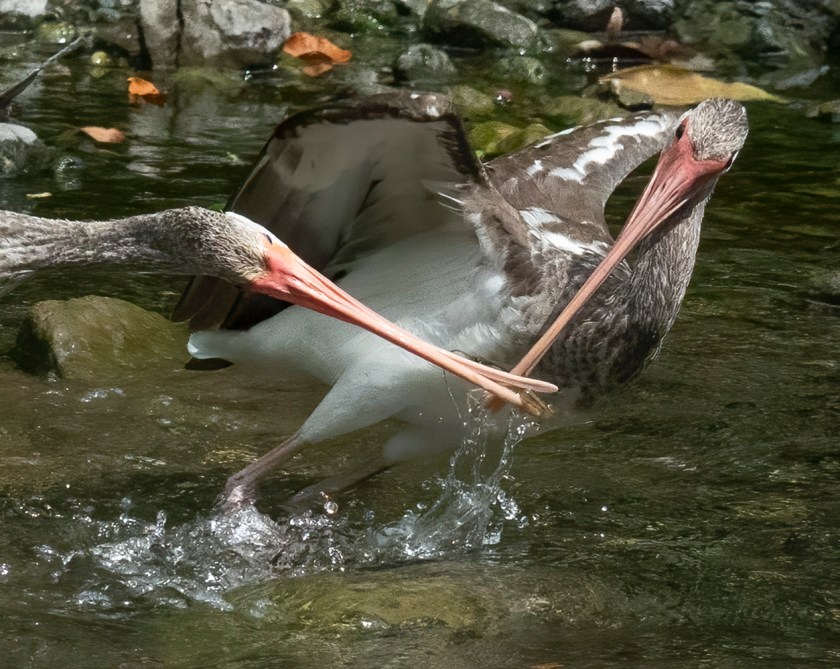
The original finder hung on, and brought up a crayfish:
Drifting around the canals on the Caribbean side, in Tortugero National Park, there was a diverse heron population. My favorite was the Boat-Billed Heron, Cochlearius cochlearius. It has large eyes, and is mainly nocturnal:
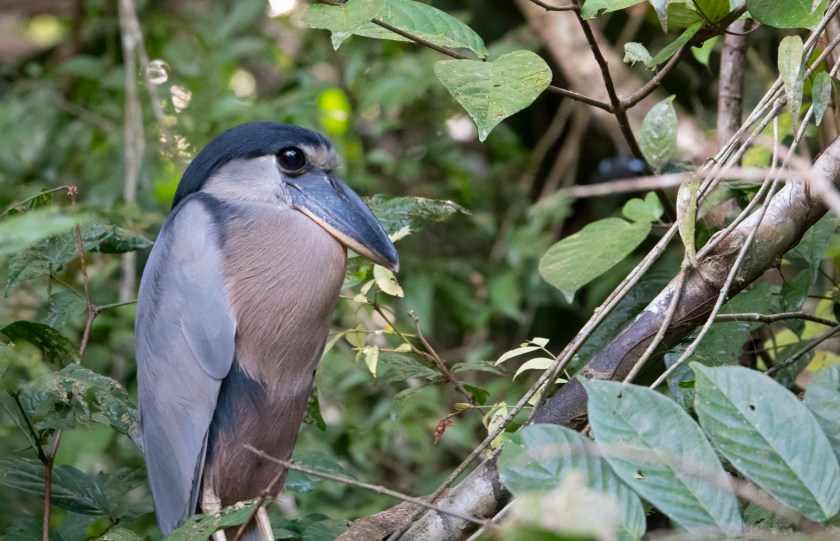
It gets its name from the keeled bill:
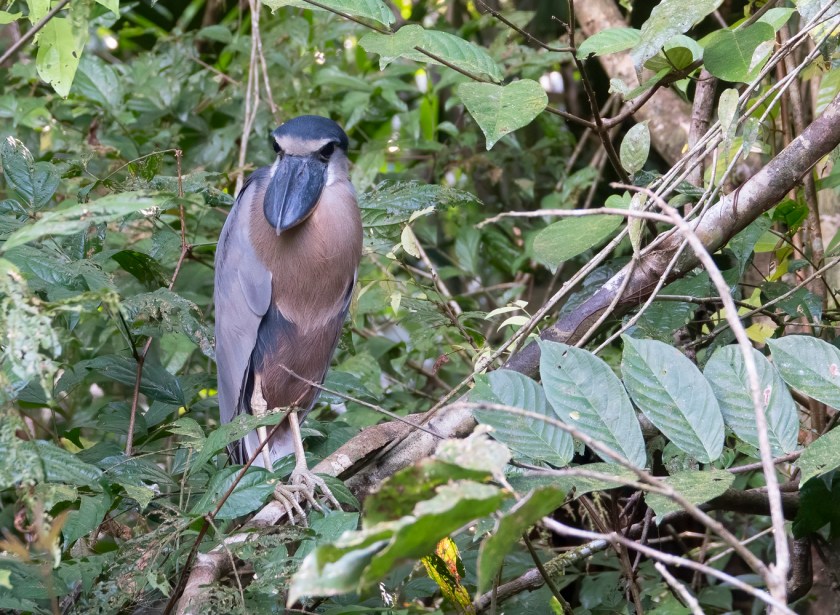
The unusual bill is used as a scoop: the bill is lowered partly underwater and the bird walks forward, thrusting it in front. No other heron species does this.
We saw many Little Blue Herons, Egretta caerulea. As juveniles, they’re purest white:
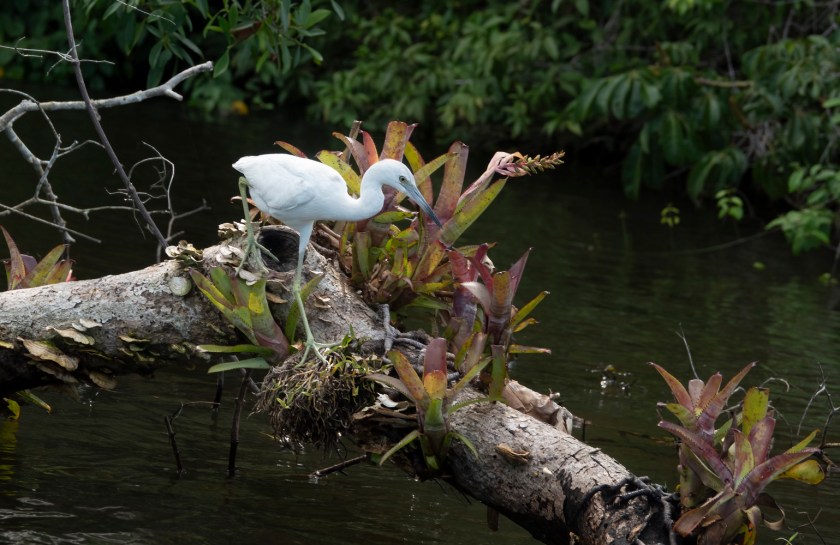
poking around on a fallen tree amongst the bromeliad plants:
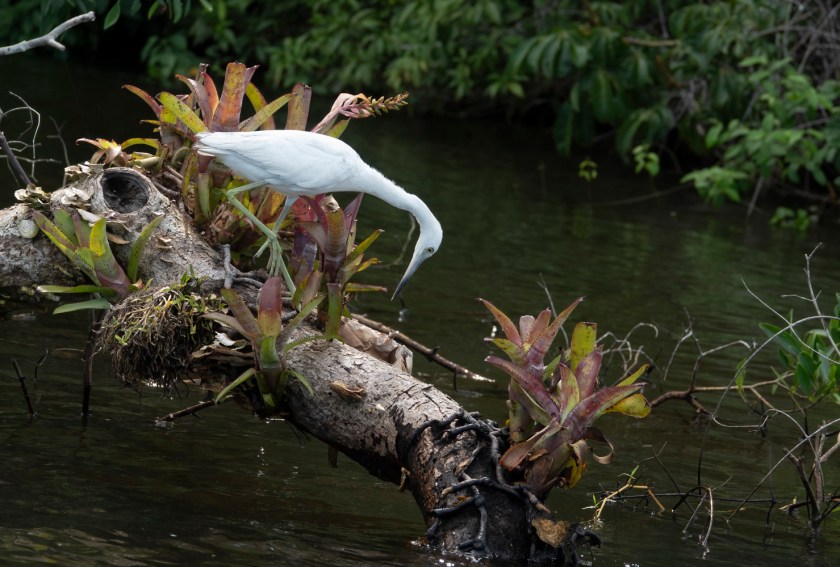
but more skittish that the Boat-billed Herons:
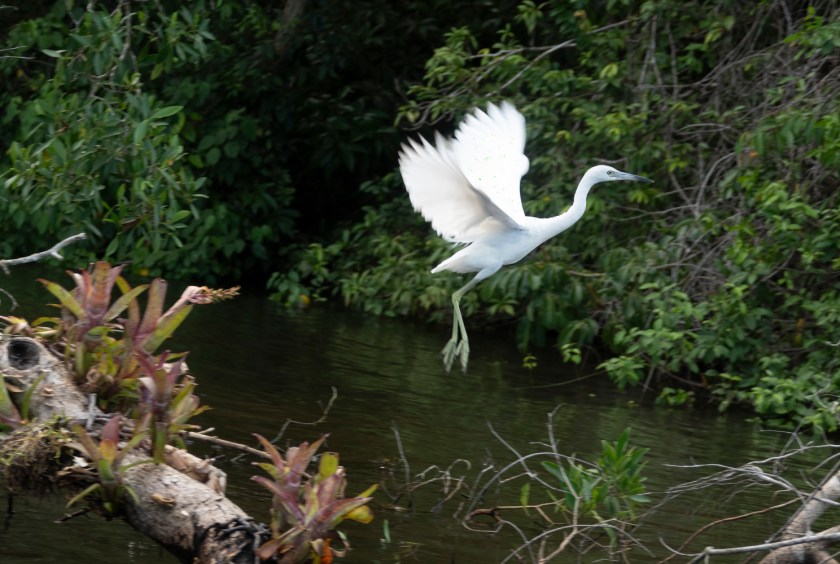
As they get older, their virginal white becomes splotchy:
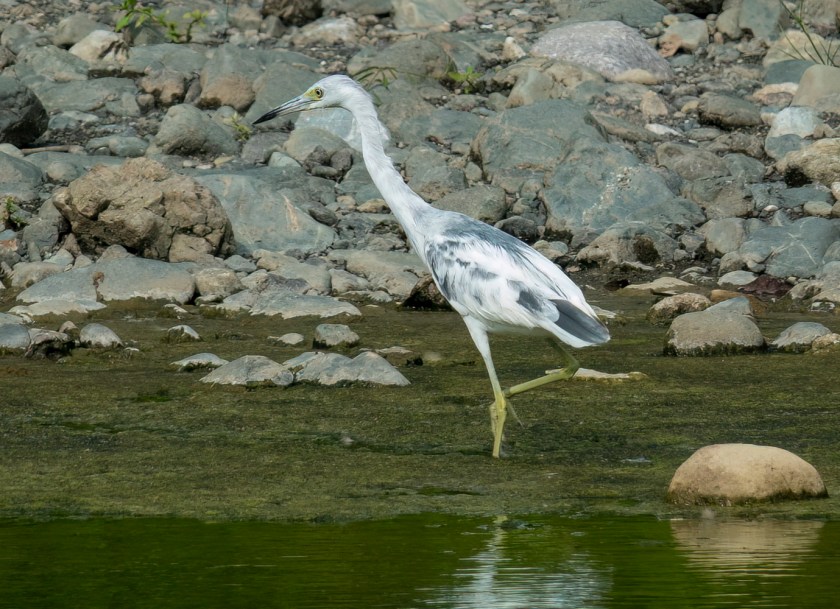
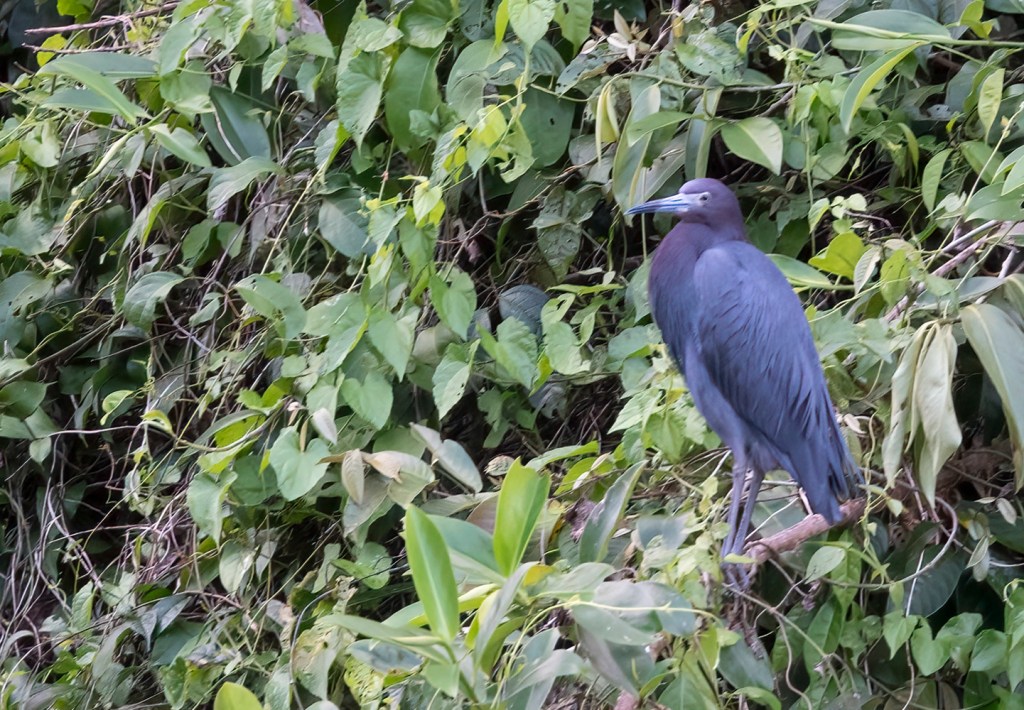
until it is entirely displaced by the adult purplish slaty blue grey:
The Bare-throated Tiger Heron, Tigrisoma mexicanum, hung around the dock. This is not a wall-painting, but a real live heron:
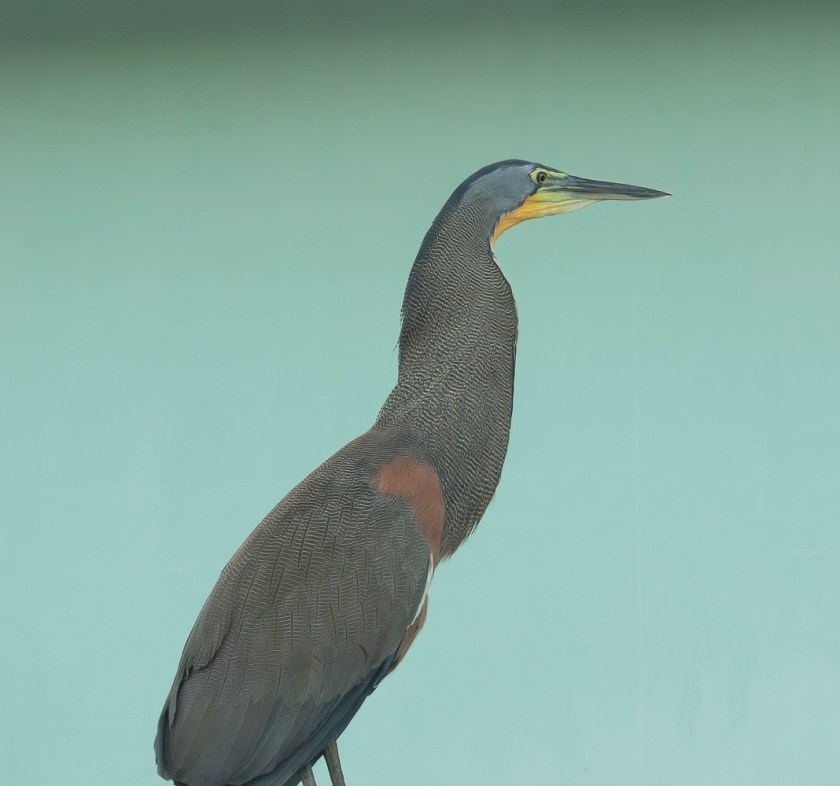
From time to time it lifted its head, and gave forth its call:
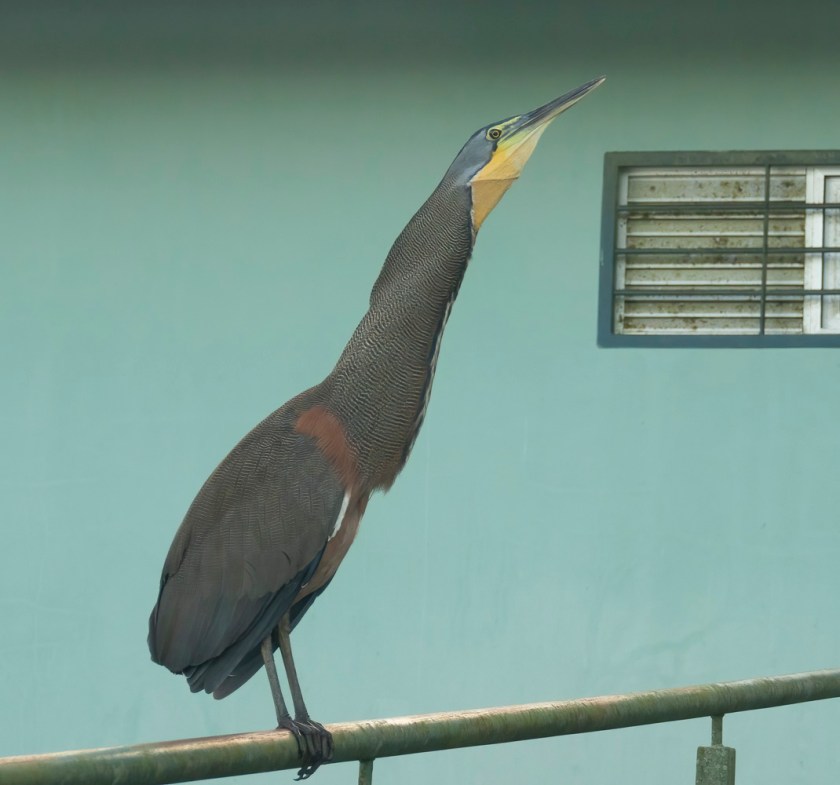
They sing especially at dusk or dawn, and in the breeding season: listen to this video, which I’ve placed on YouTube in the hope that works (let me know if it doesn’t): https://youtu.be/pwoeHLOaHwM
Perhaps the most technicolor bird was this denizen of the littoral vegetation, the Purple Gallinule, Porphyrio martinica:
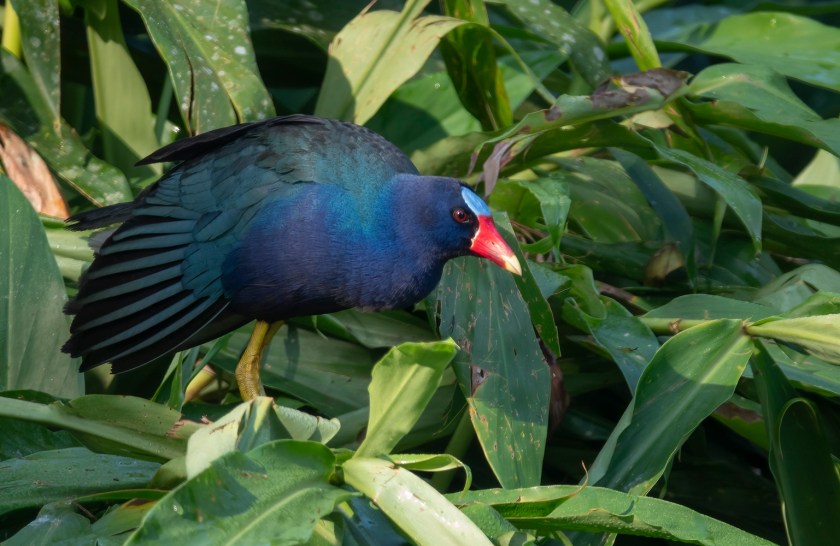
Like its drabber cousin, the Gray-cowled Wood Rail, Aramides cajaneus, it walks on floating vegetation and overhanging bushes:
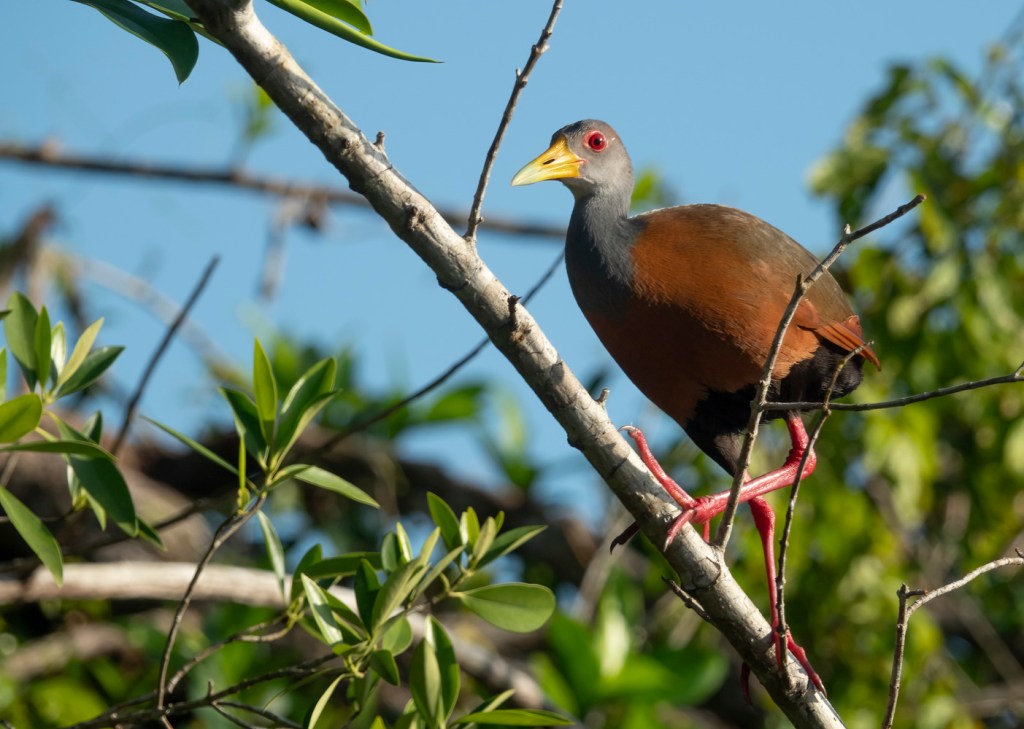
PS Costa Rica’s location means it often serves as the southernmost part of the range for North American Species, like the White Ibis, and the northernmost part of the range for South American species, like the Gray-cowled Wood Rail. But yet other species are limited to Mexico and Central America, like the Bare-throated Tiger heron.

