The Yellowbilled Stork (Mycteria ibis), which stands about a meter tall, lives along waterways, and in grasslands:
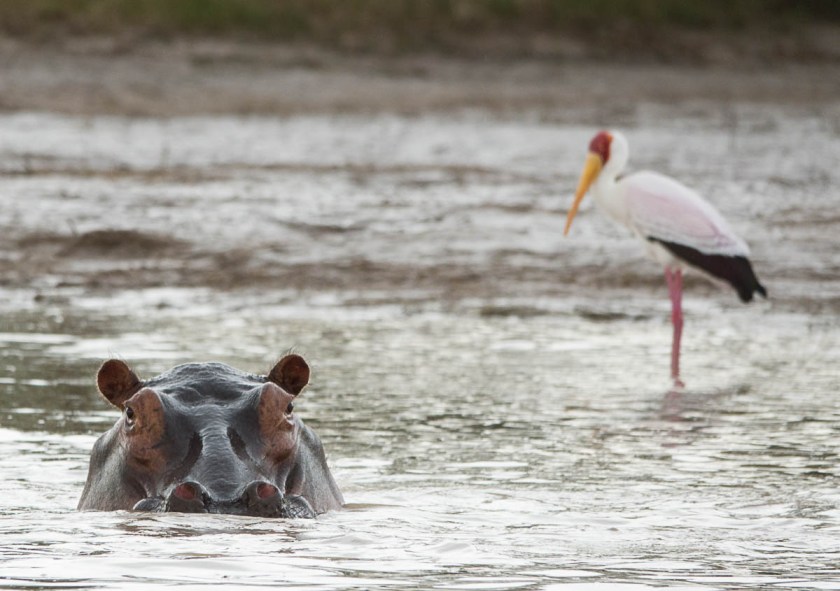
They like water between 10-40 cm deep; any deeper, and they can’t hunt effectively. In the breeding season, the normally white plumage transforms into a sugared-almond pink tutu:
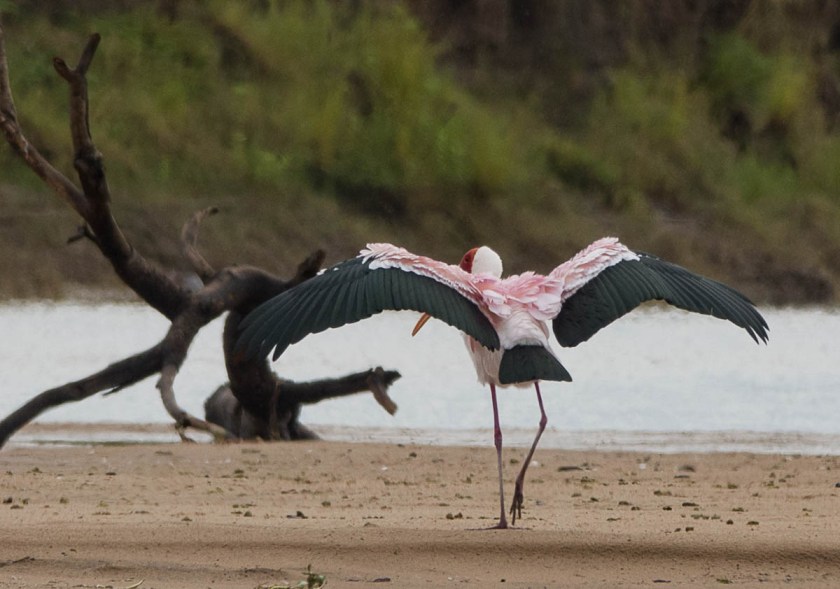
They gather in huge colonies in the treetops to nest.

(NB: All the remaining photos were taken from this same spot with my zoom, so some are not great.)
The males ran a non-stop delivery service of nesting materials: they are years ahead of Amazon’s drone fleet:
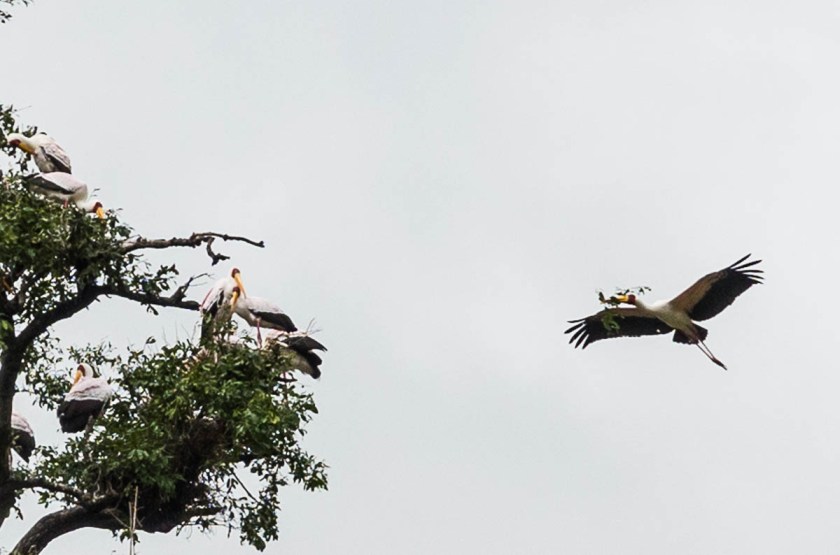
When I was there, they were mainly nest-building and beak-clacking in their noisy courting rituals,

but some seemed to have already found their mates:

and this female was settling in, while her spouse stood sentinel:
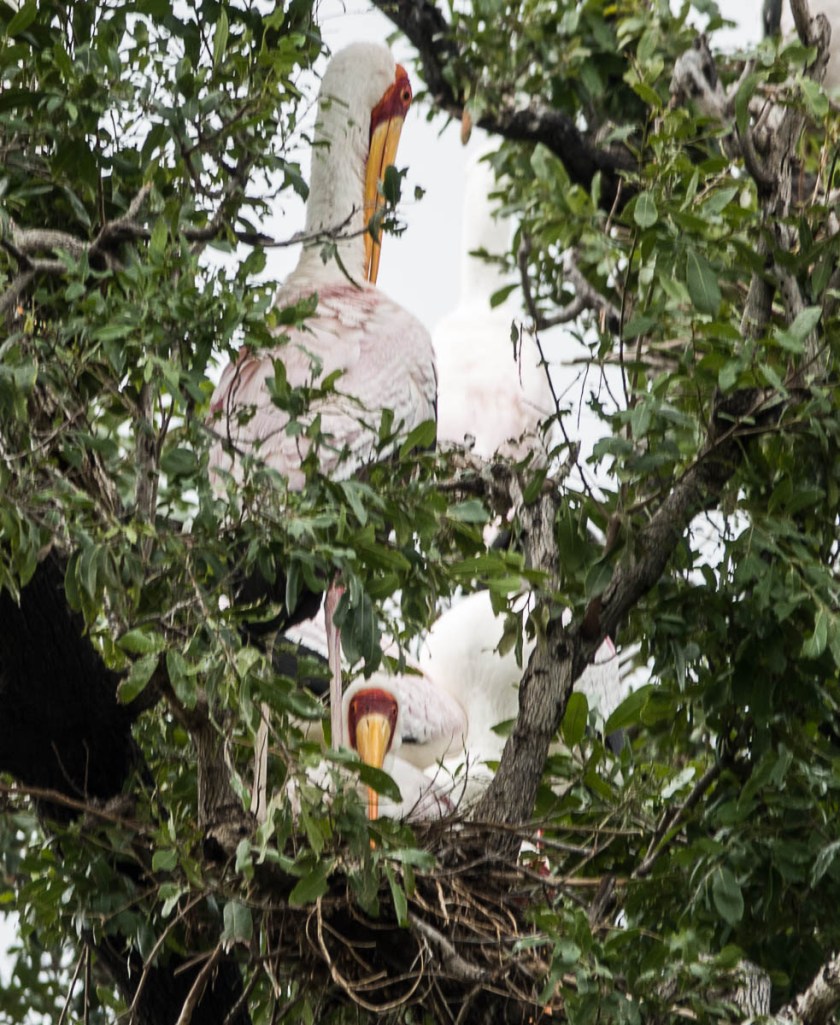
The German common name of this species is ‘Nimmersatt’, meaning ‘never full’, due to the eating habits of the nestling: it increases from 60 grams to 500 grams in weight within the first ten days of life. Imagine if a human baby increased 100-fold in ten days from 6lbs to 500lbs.. (There may be a Hollywood movie idea in there somewhere?)
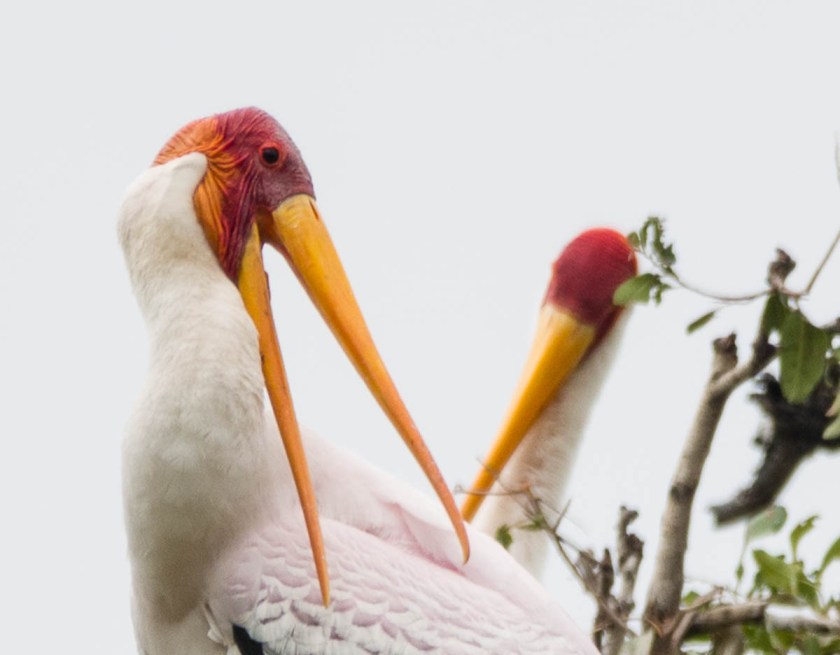
The chicks must be both greedy and brave to eat food regurgitated from this fearsome naked red head and lethal bill










 The wear and tear suggests that not only the pads come into contact with the ground or tree, but sometimes the whole tarsus. I have found photos of leopards descending trees head first, which they often do, and it does indeed sometimes look like the whole tarsus touches the trunk. I’ve also wondered whether they make extensive contact when they push off in one of their powerful leaps (up to 20 feet forwards, or 10 feet upwards). If anyone can shed light on this, I’d be interested.



 Eyes on the Wild