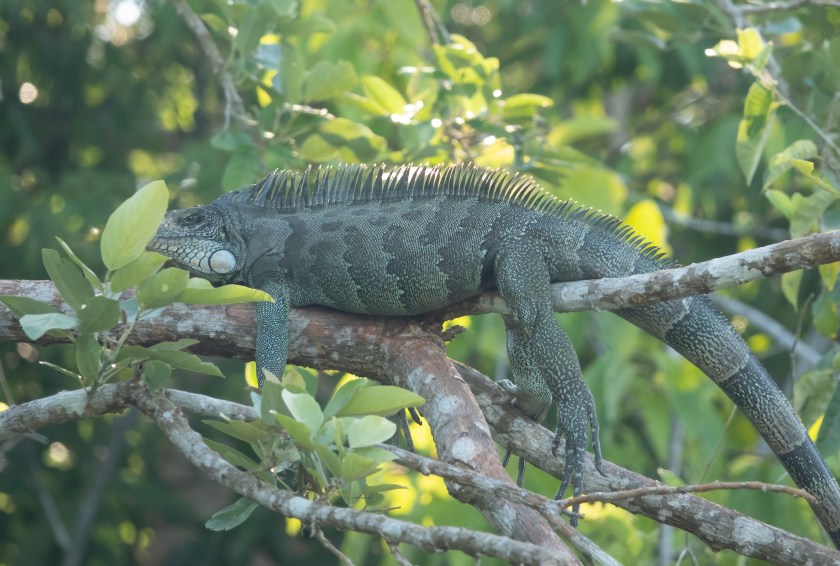
The rainforest is also populated by various lizards and amphibians. The Green Iguana is large, lazy, and well-camouflaged:
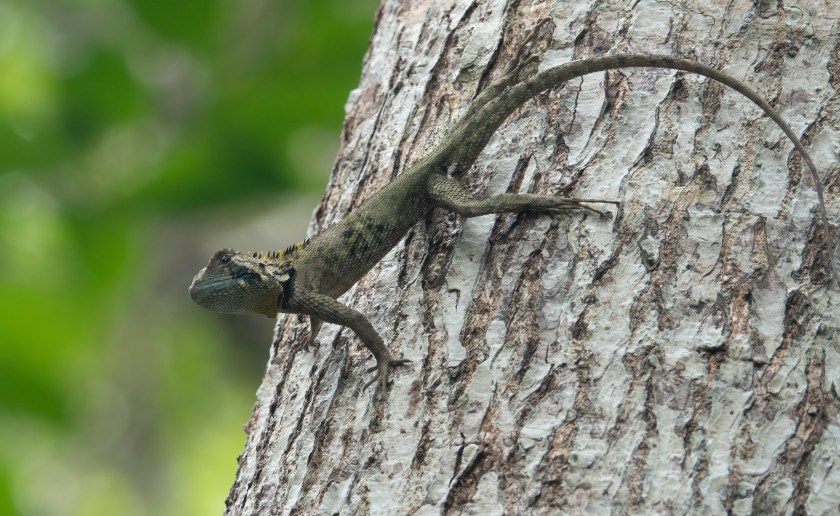
The Blue-lipped Lizard, Plica umbra, is small and feisty:
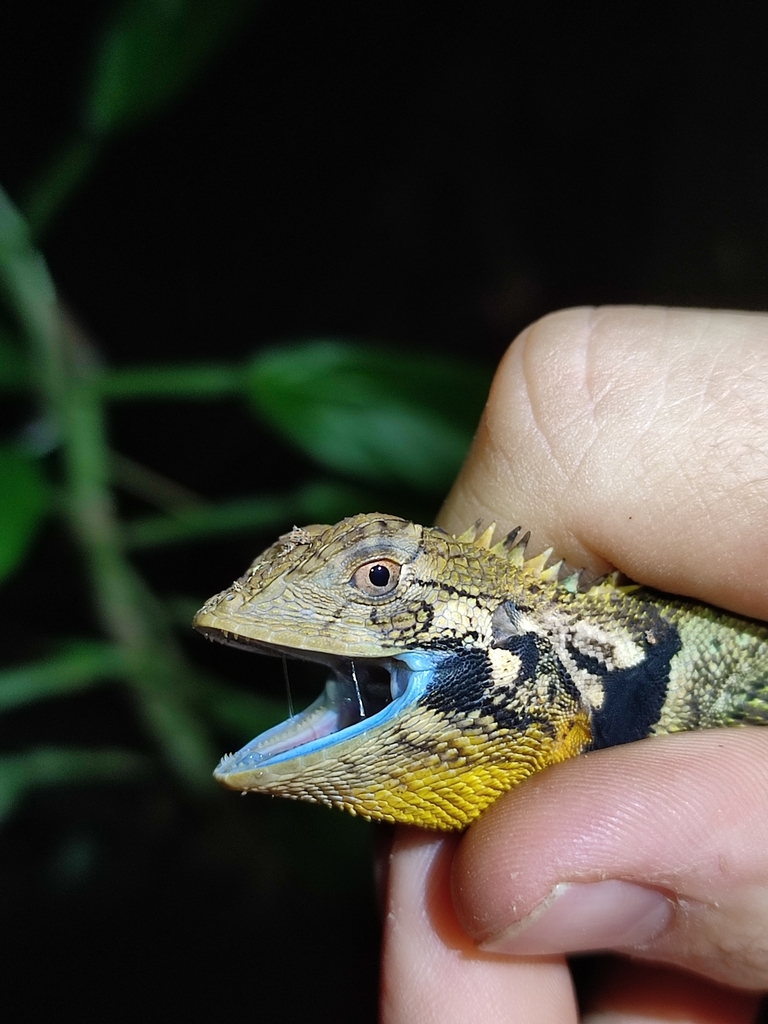
Its name comes from the color of the inside of its lips, which we didn’t see, but when I was identifying it after we got back I saw this photo on iNaturalist:
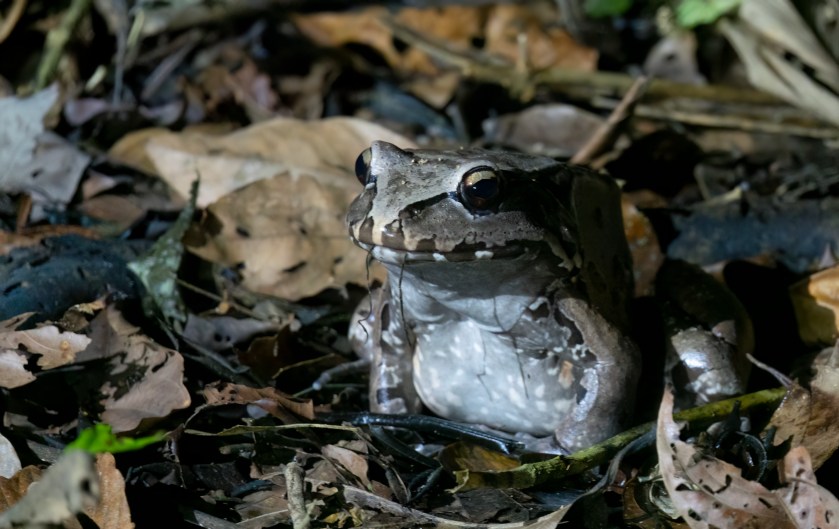
The Smoky Jungle Frog, Leptodactylus pentadactylus, is locally called the Common Bullfrog, but it is quite unrelated to our northern bullfrogs. It sits stolidly on the forest floor, often near several others, and waits for a chance meal:
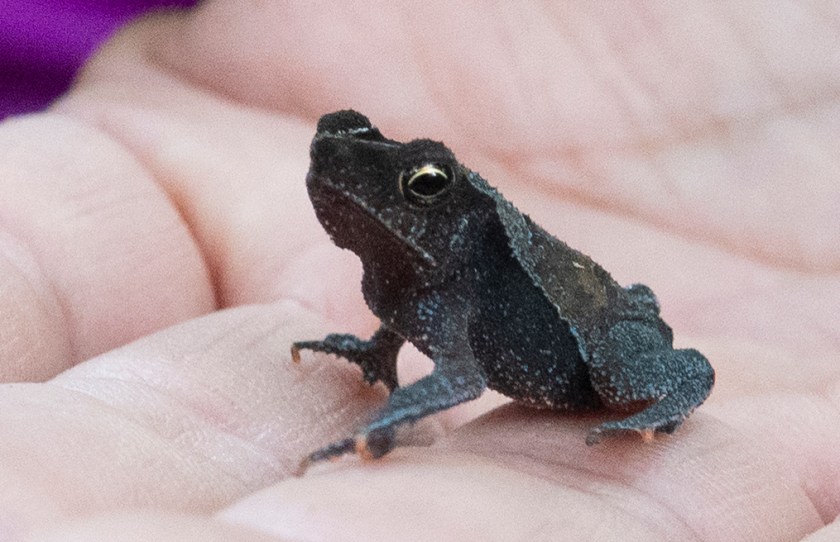
The Beaked Toad is even smaller than the North American Spring peeper
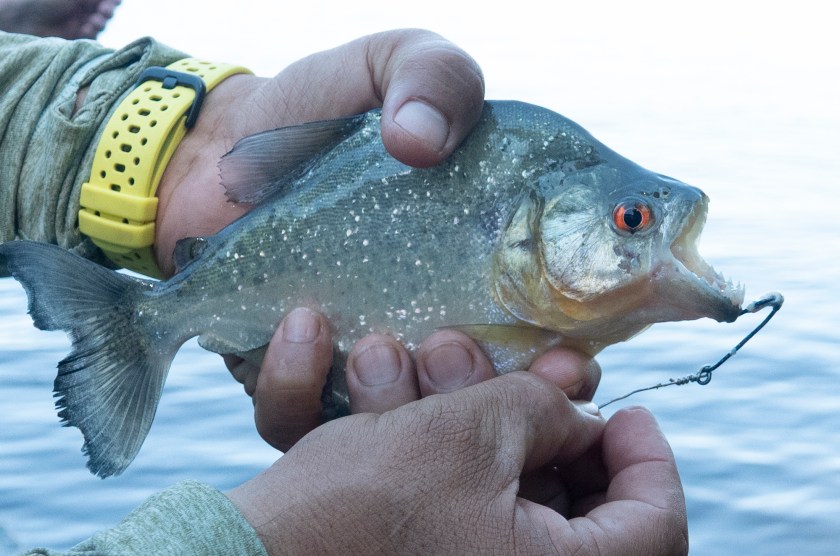
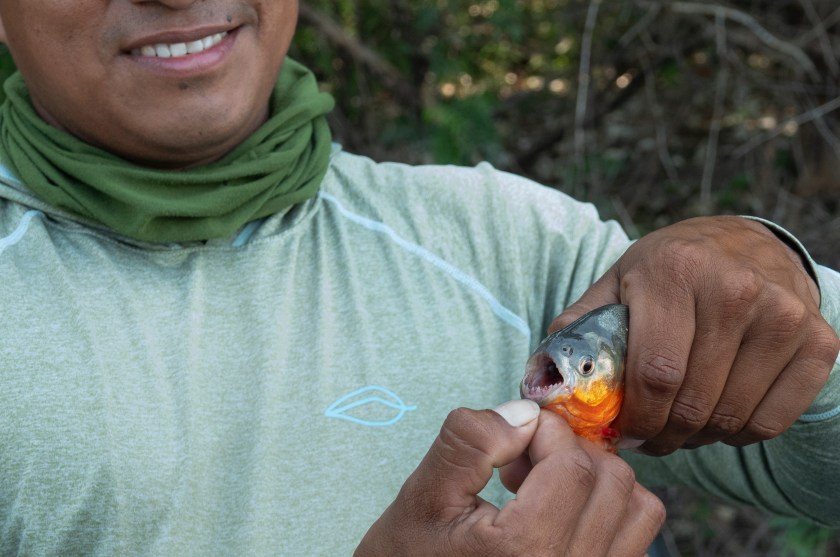
And of course the river has its own inhabitants, like Piranha (these are my catches, later released!):
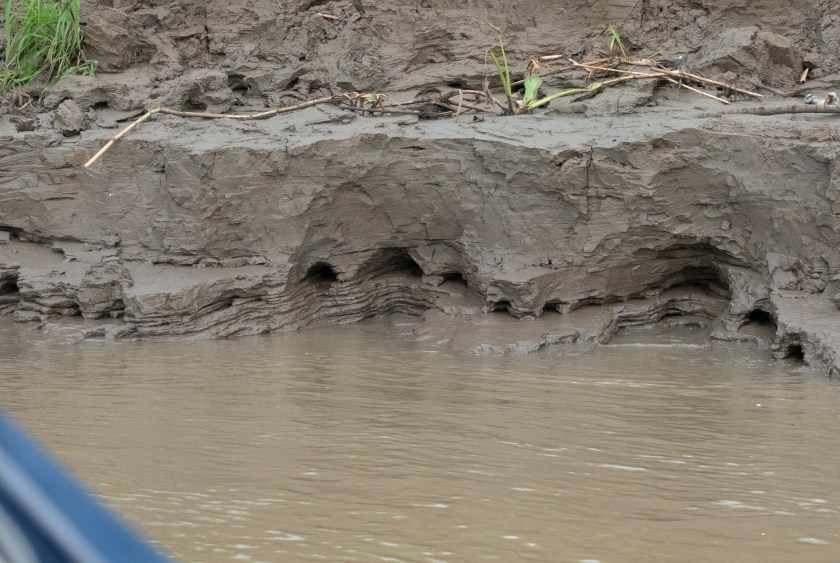
There are giant catfish, which make holes in the banks to lay their eggs. The holes get exposed when the water is low, and may be used by lizards or birds:
We were also delighted to see both species of freshwater dolphins: the Amazon River Dolphin, aka the Pink Boto, Inia geoffrensis, and the smaller Gray Dolphin, aka the tucuxi, Sotalia fluviatilis. I only managed to get a photo of the latter:
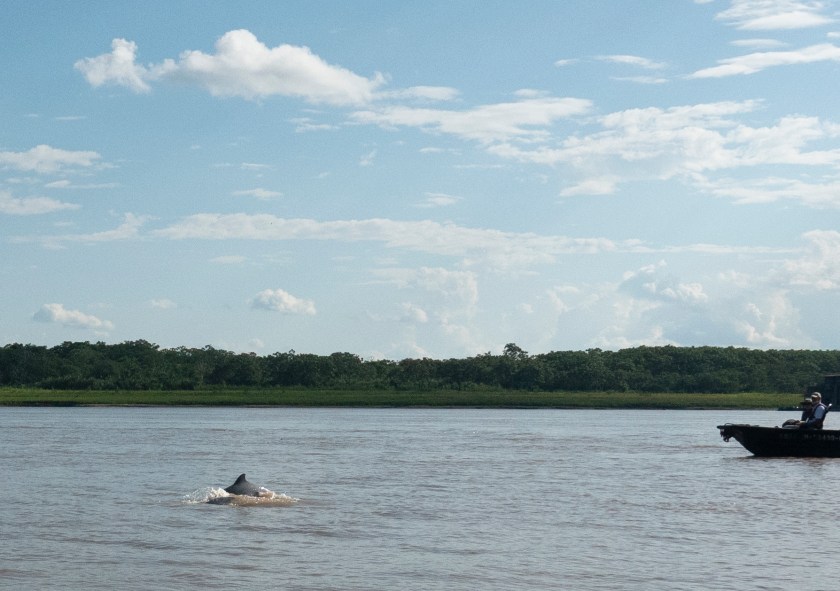
The Pink Boto, which can be over 8 feet long, doesn’t often jump, and comes up less often. The local people believe it is bad luck to kill one, which offers them some protection. The IUCN classifies both species as Endangered, with the threats including pollution, hydroelectric dams, and some targeted hunting.
The Pacaya-Samiria National Reserve, where we were, is a sanctuary, but they are protected throughout Peru, and the penalty for killing one is three years in prison.

