We were still in Peru, but now further north and east of the Andes for three days, drifting along on the Ucayali River, a tributary of the Amazon:
The Sungrebe, Heliornis fulica, is a most unusual bird. It’s not actually a grebe, despite its name.
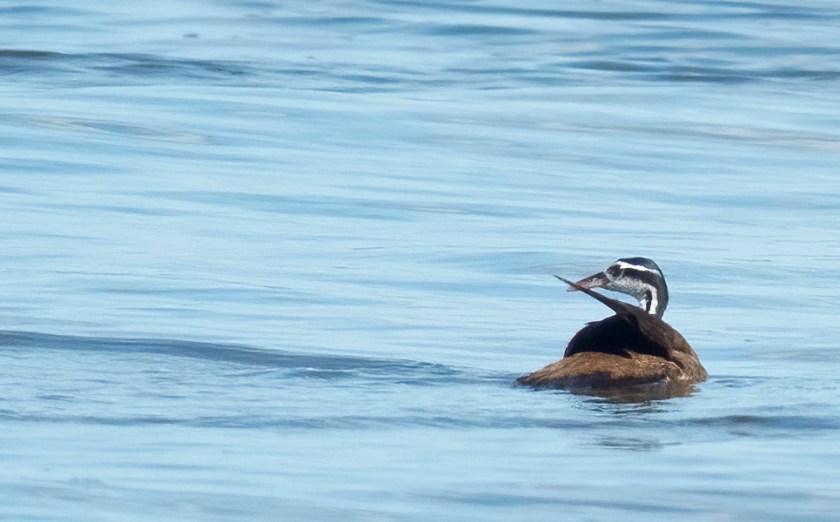
A shy bird of the Amazon basin, it only weighs about 130g, or 4oz. When disturbed, it flies low over the water:
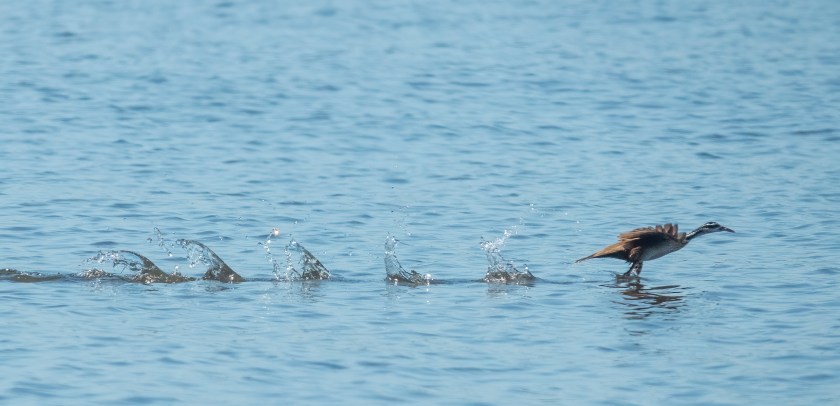
Its tail in flight is bigger than most other aquatic birds:
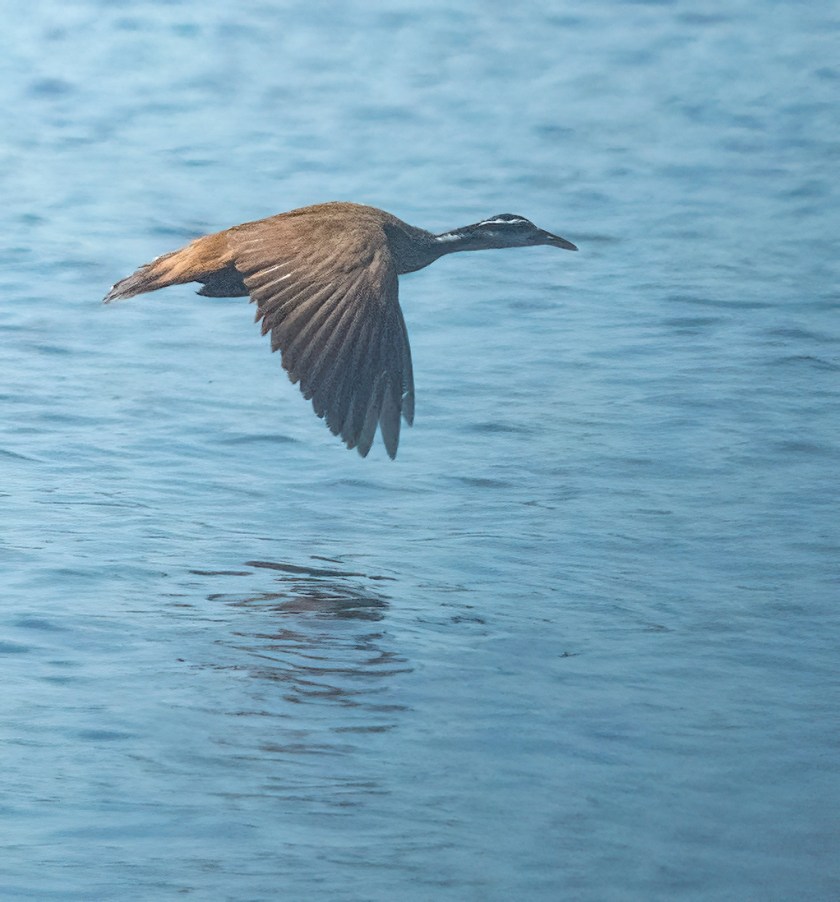
It is most closely related to the rails, but its main claim to fame is a unique child-rearing adaptation found in no other bird in the world.
The Sungrebe egg incubation period is very short, 10-11 days, and the young are born completely featherless with only partly formed bills and feet. They are helpless. So the father takes charge. Cornell’s Birds of the World explains: “After hatching, the male parent is more active in caring for the young, sheltering them in a shallow pocket under his wing, which is formed by a pleat of skin. The pocket is made more secure by the feathers on the side of the body. The young are carried this way even during swimming and flying.”
I highly recommend this discussion of how this might be done:
https://tetzoo.com/blog/2018/11/29/pouches-of-the-sungrebe
As they get a little older, they may carry them on their back, like loons do:
Back in the day, we thought men who carried their babies around were fearless, breaking gender stereotypes, and seriously cool.
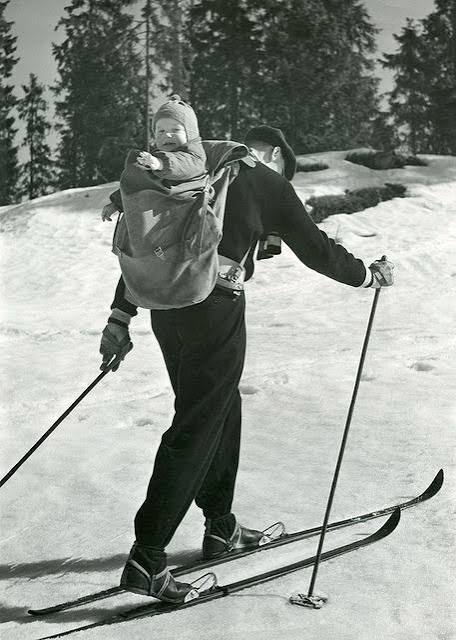
And indeed they were, but it turns out Sungrebes got there first.

