Crane Flies are harmless, elegant insects that I sometimes find on my porch screens in the mornings.
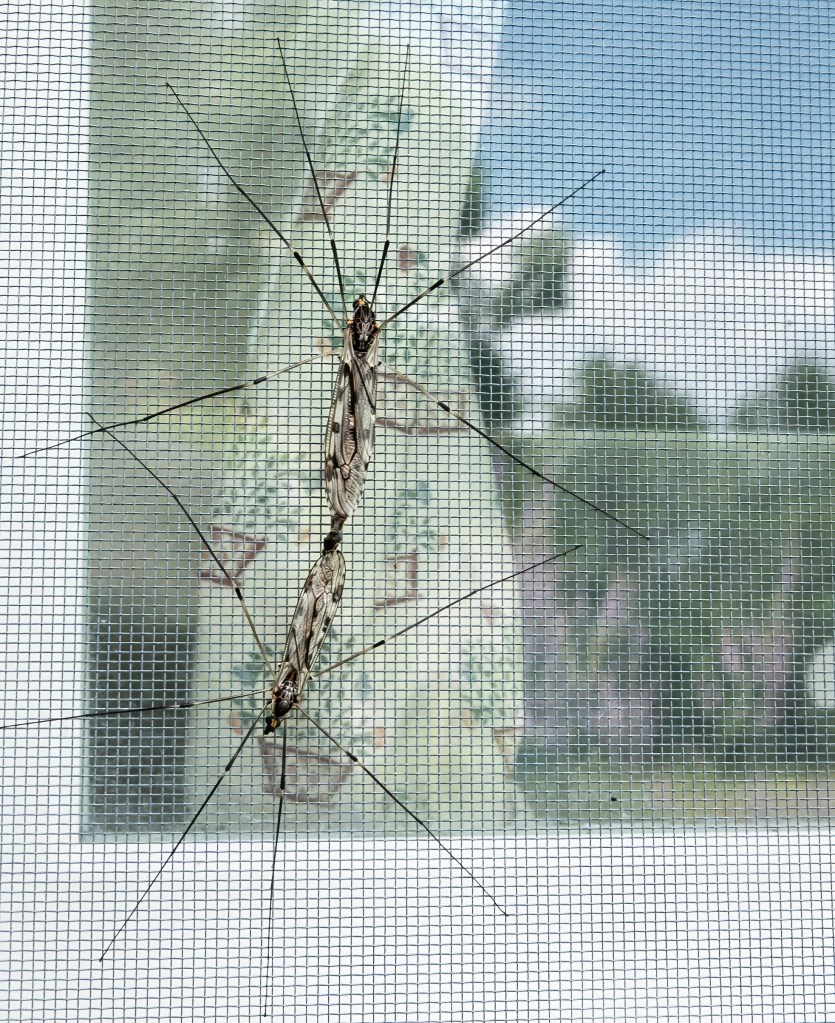
The product of this encounter will be first an egg, then a larva (called a leatherjacket), then a pupa. They emerge from their pupa, and gradually dry out into their adult form:
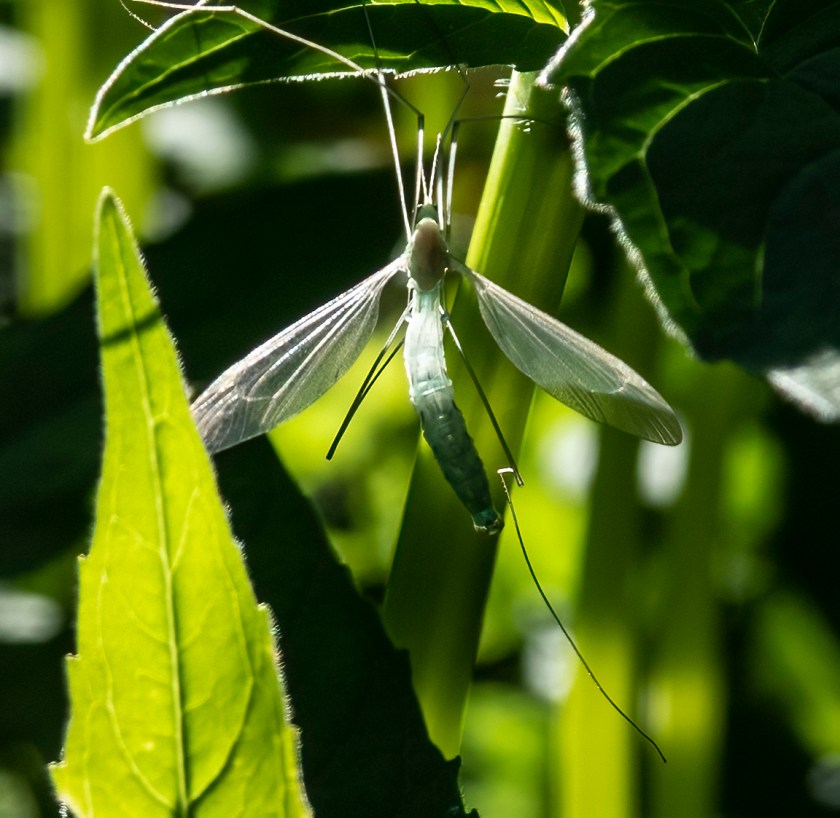
Most of them have no functioning mouthparts and are unable to eat as adults, living only a few days, and focussing entirely on sex. They come in a range of shapes and sizes, this is a Giant Cranefly, Pedicia albivitta, whose body is 1.5 inches long::
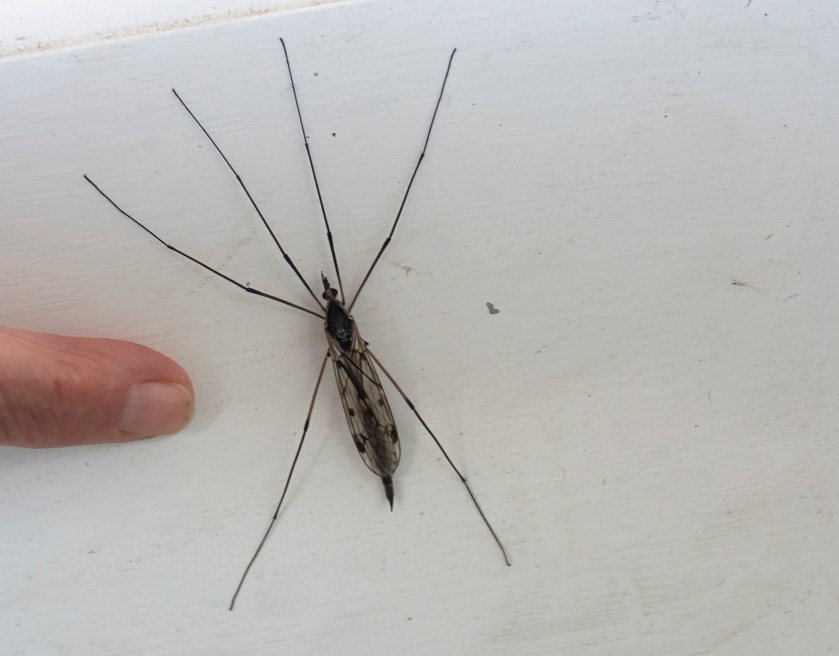
Most Crane flies have elaborately veined wings like this Tipula dorsimacula:
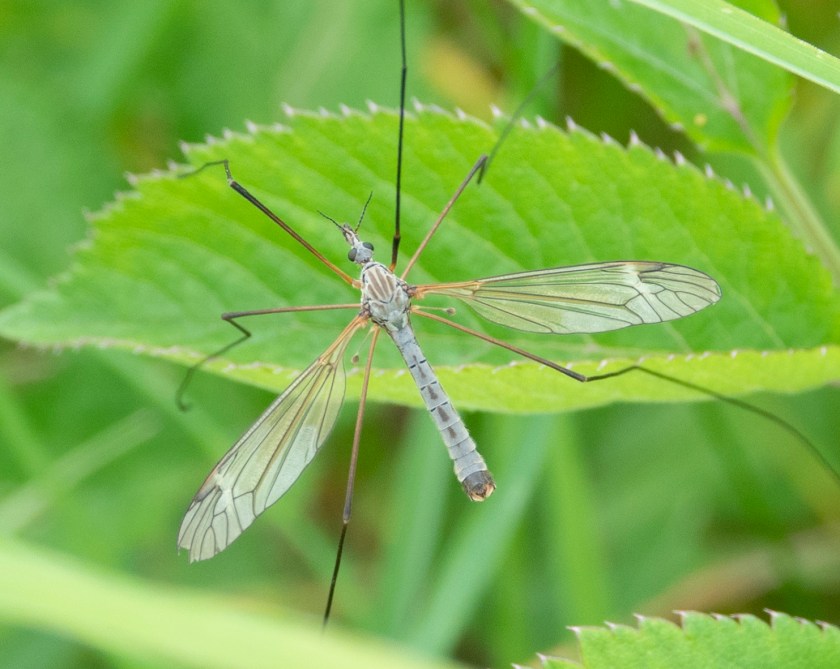
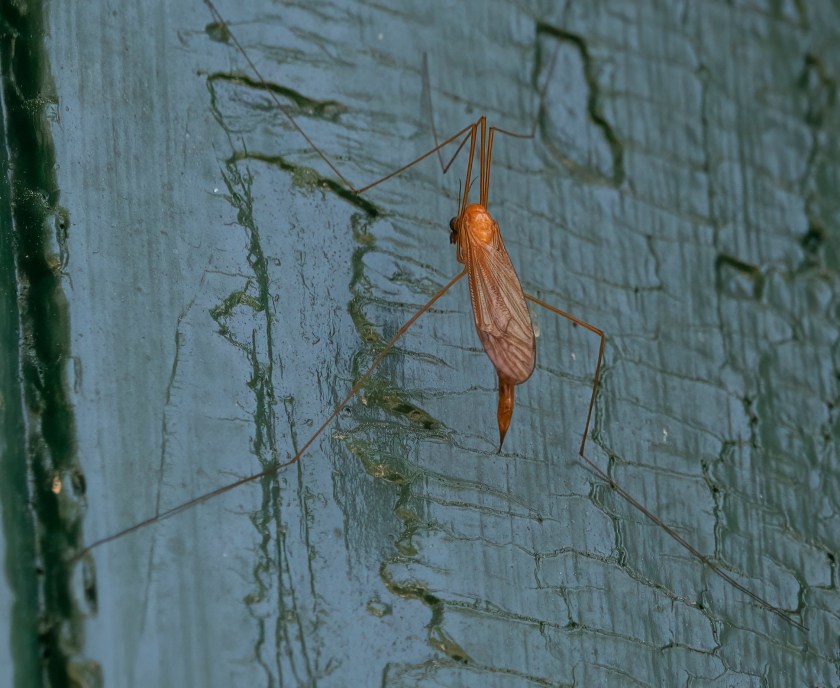
Most have subdued coloring, but not all. This is a Ferruginous Tiger Crane Fly, Nephrotoma ferruginea:
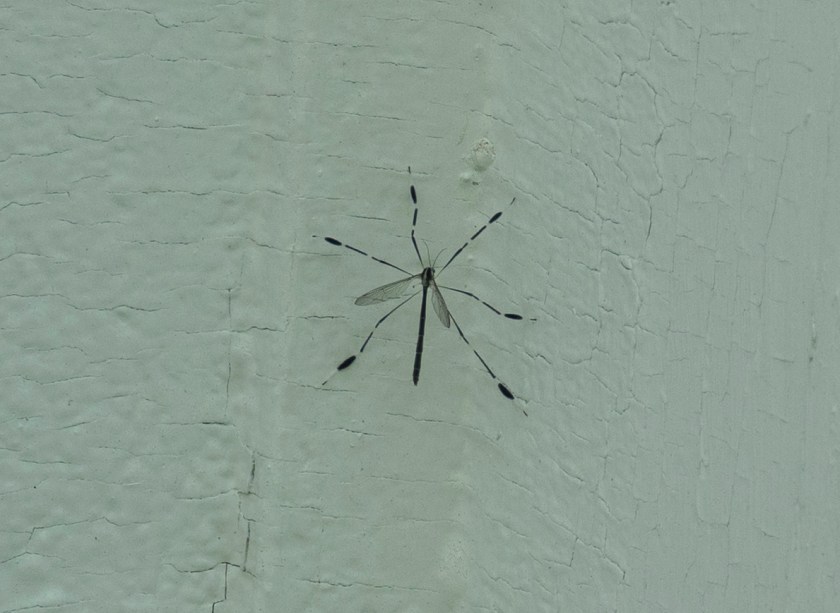
Some are smallish, this Eastern Phantom Crane Fly, Bittacomorpha clavipes, has a 0.5 inch long body:
Geranomyia rostrata is an even smaller crane fly with a body length of about 0.16 inches. Its claim to fame is that it actually has functional mouthparts, and feeds on nectar as an adult. It does this with its unusually long, black, proboscis that can be more than half as long as its body.
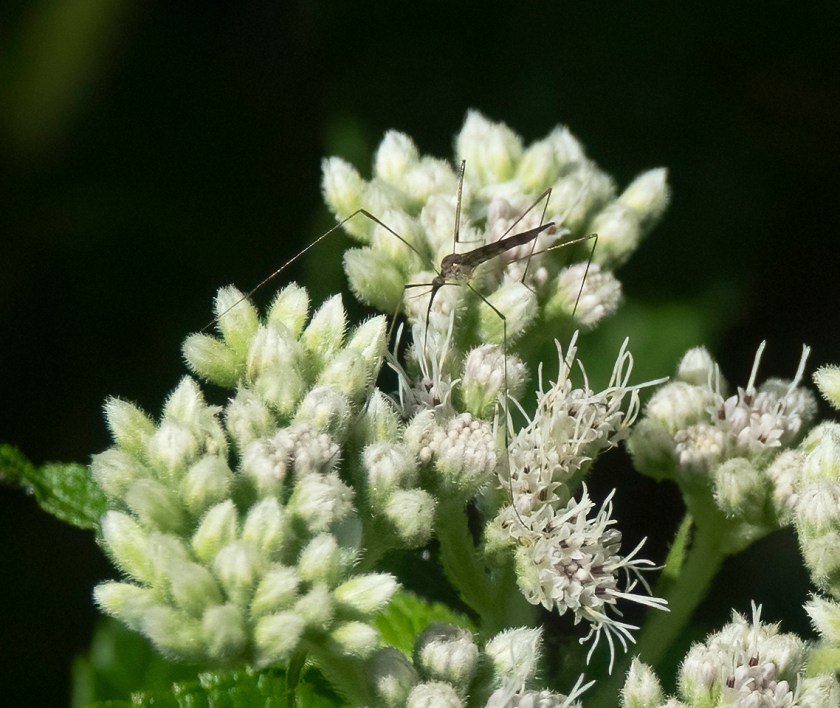
It is usually near water, and this one was feeding on a Common Boneset flower.
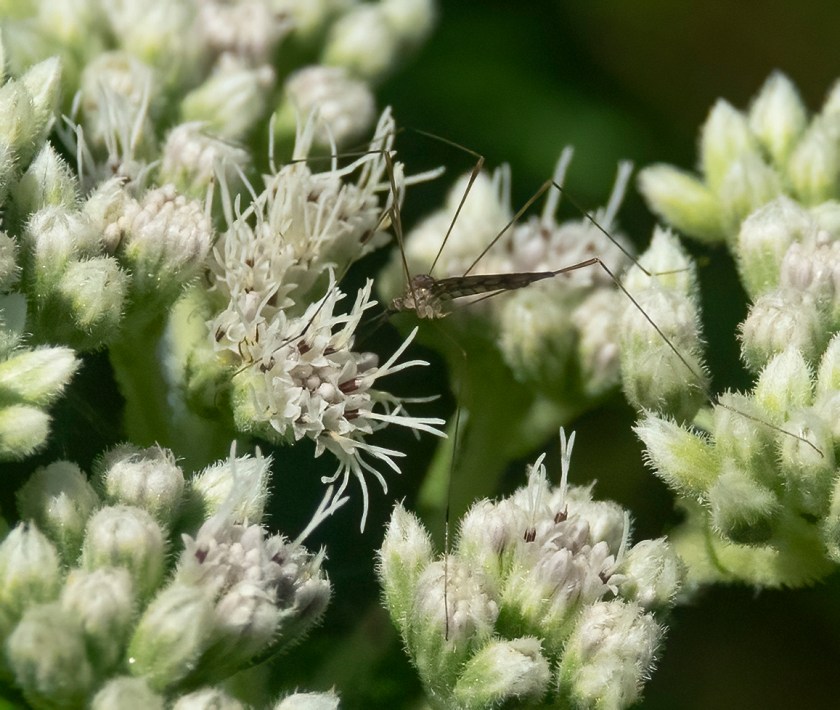
While it feeds it bounces or bobs up and down, doing squats as it repeatedly jabs its proboscis into the florets.
Those extraordinarily long delicate legs are what is called “deciduous”. Just like the leaves on a tree, they can be easily detached from the body if a predator pounces, and like a lizard’s tail they can go on twitching to distract the predator. Unlike a lizard’s tail, they do not re-grow. Luckily, this one still has all six legs.

