The iNaturalist app (iNat) has transformed how I and many others interact with nature. BiN (Before iNat) I would see something, and spend hours with one of a shelf-full of books trying to work out what I had seen. Now, I photograph it, enter a location, and show iNat the picture. And it knows! Or at least it gives me a shortlist of possibilities. It also shows me a map of where else it has been seen. Occasionally, mainly for small insects, it turns out it has hardly ever been seen in Maine, and I think, proudly, that I have documented a rarity. But have I??
Numbers can be low for many reasons other than real rarity; here are some of those reasons:
- a thinly populated area, with few observers, true of my corner of Maine
- it is only just starting to colonize an area, for a variety of reasons, so it may be locally rare but globally common
- it lives in inaccessible environments such as marshes, or high in trees
- it is drab and commonplace, so no-one thinks to submit an observation (house spider, ant)
- it is hard to see and photograph, because it is very tiny, or well-camouflaged, or never stops moving
- its numbers are indeed dropping, for environmental reasons such as climate change or habitat loss
I’ll show you a “rarity” or two, but hang onto that scepticism. One encouraging (but not at all conclusive) indication of rarity is that most of them don’t even have a common name! They have all been recorded 5 or fewer times in Maine. I’ve ranked them by the total number of observations, starting with the ones MOST often recorded, and ending with what might be the rarest:
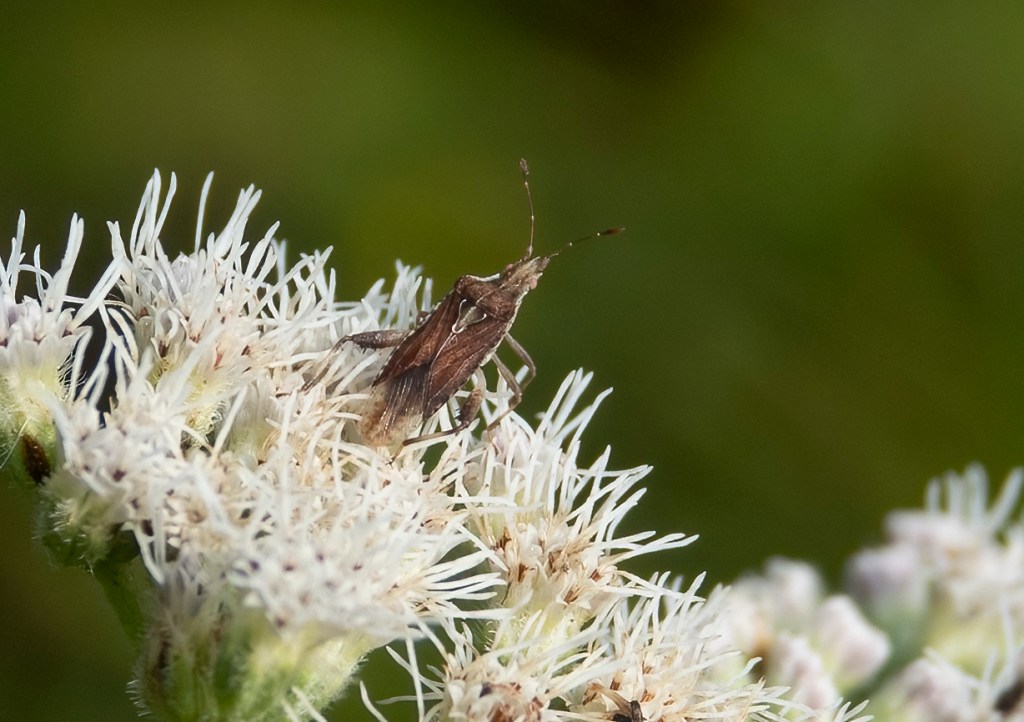
Harmostes fraterculus has 1161 total observations, 5 in Maine. It is on a Common Boneset flower.
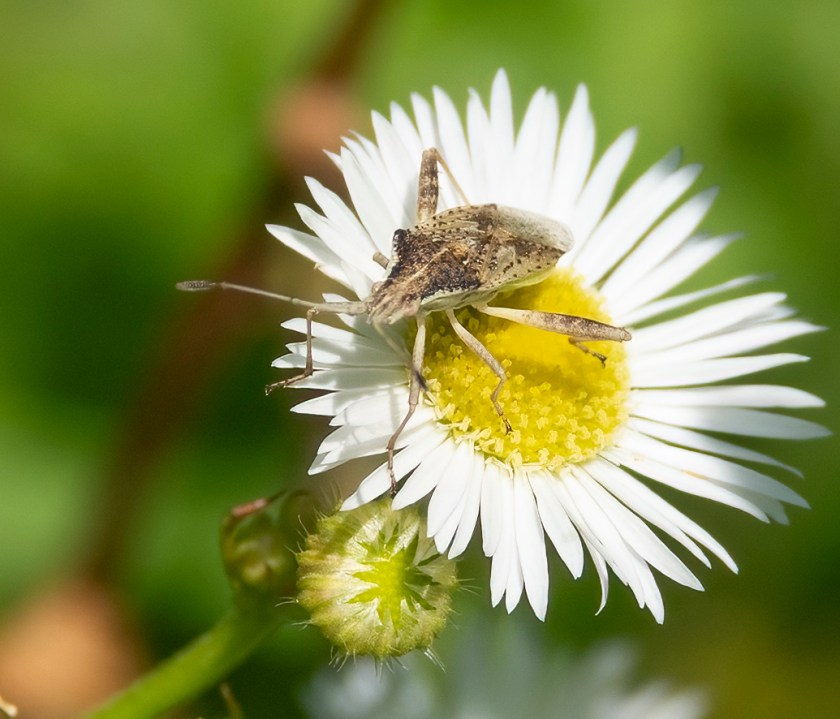
This is compared to 5800 for the closely related Harmostes reflexulus, including dozens in Maine:
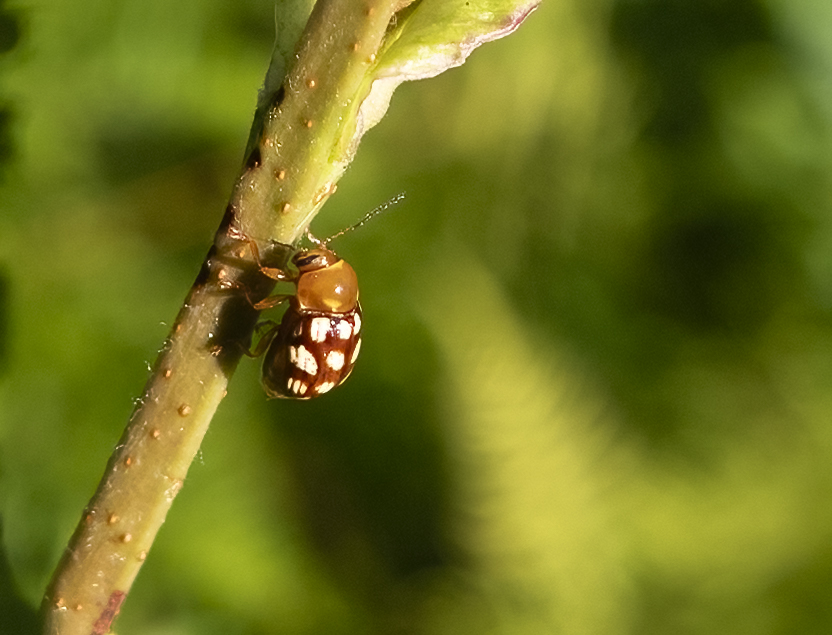
Fourteen-spotted Leaf Beetle, Cryptocephalus guttulatus, has 667 total, only 1 other in Maine. This seems to be the extreme northern edge of its range. A result of climate change?
Stictopleurus punctiventris has 198 total observations, mainly in Canada. Only 5 others in Maine, 4 of them this year.

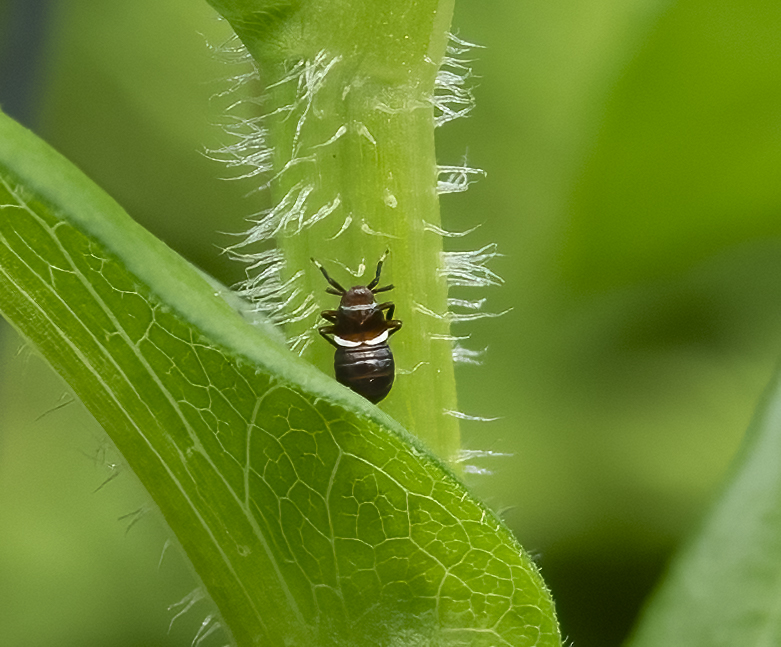
Pissonotus basalis has a mere 29 total observations, from Tennessee to Nova Scotia. None in Maine, except for me. This seems to be the best candidate for a real rarity, but it is very, very tiny, 3mm or o.1″and it also moved fast, so who knows.
To put all this in context, Maine has 370,421 observations of 6114 species of insects, and the most common observation, the Monarch Butterfly, has 4,523 observations. I suspect it would have far more but everyone knows what they are looking at, so they do not think to ask iNaturalist.
Do try it, it is a wonderful app, and you are contributing to citizen science when you upload an observation.

